
The rapid growth of the humanoid robot industry is placing extraordinary pressure on the legal rules that govern personal information. As humanoid robot systems become more capable, more embodied, and more deeply embedded in homes, hospitals, factories, logistics networks, rescue operations, and research environments, the amount and variety of data they collect continue to expand. This expansion makes it increasingly difficult to predict, at the moment of collection, exactly how information will be used later. A legal analysis of this shift argues that the purpose principle in personal information protection law now requires systematic reexamination. The central challenge is not whether the purpose principle should survive, but how it can be adapted so that it supports innovation in humanoid robot development while preserving meaningful protection for individuals.
The analysis begins from a simple but powerful observation: the humanoid robot industry is not merely another data-intensive sector. It combines artificial intelligence, advanced manufacturing, new materials, multimodal sensing, embodied interaction, and real-time decision-making. A humanoid robot may collect visual, auditory, tactile, environmental, biometric, emotional, and behavioral data. It may process that data locally, in the cloud, or across a distributed network. It may use the data to navigate, to serve, to assist, to monitor, to learn, and to improve. The same humanoid robot may serve multiple purposes in a single day, and those purposes may change as the user, environment, and task change. Under these conditions, the traditional legal demand that processing have a specific, explicit, and legitimate purpose before collection becomes both more important and more difficult to apply.
The governance question is therefore not a narrow compliance question. It is a structural question about how law, standards, technical design, and market incentives can be aligned. The analysis warns against two extremes. One extreme is a rigid reading of purpose limitation that treats every new use of data as a fresh legal event requiring new consent. The other extreme is an open-ended reading that allows data to be collected and reused without meaningful limits. Between these extremes lies a more practical path: scenario-based standardization, clearer rules for secondary use, and a deliberate openness toward research and development. That path is especially important for the humanoid robot sector, where technical change is fast, data dependency is high, and public expectations about privacy and safety are still evolving.
1. The Humanoid Robot Industry and the Data Demand Shock
In late 2021, China released its 14th Five-Year Robot Industry Development Plan, setting out the significance and goals of robot industry development. The plan helped lay a foundation for the rapid rise of the robot sector. A humanoid robot is described as a complex system integrating artificial intelligence, high-end manufacturing, new materials, and other advanced technologies. It represents another profound transformation in how humans produce and live, and it is expected to reshape industrial development patterns. The speed of the humanoid robot industry is closely tied to the rules that govern it. Yet the purpose principle in personal information protection has struggled to keep pace with the humanoid robot industry’s needs, creating pressure for adjustment.
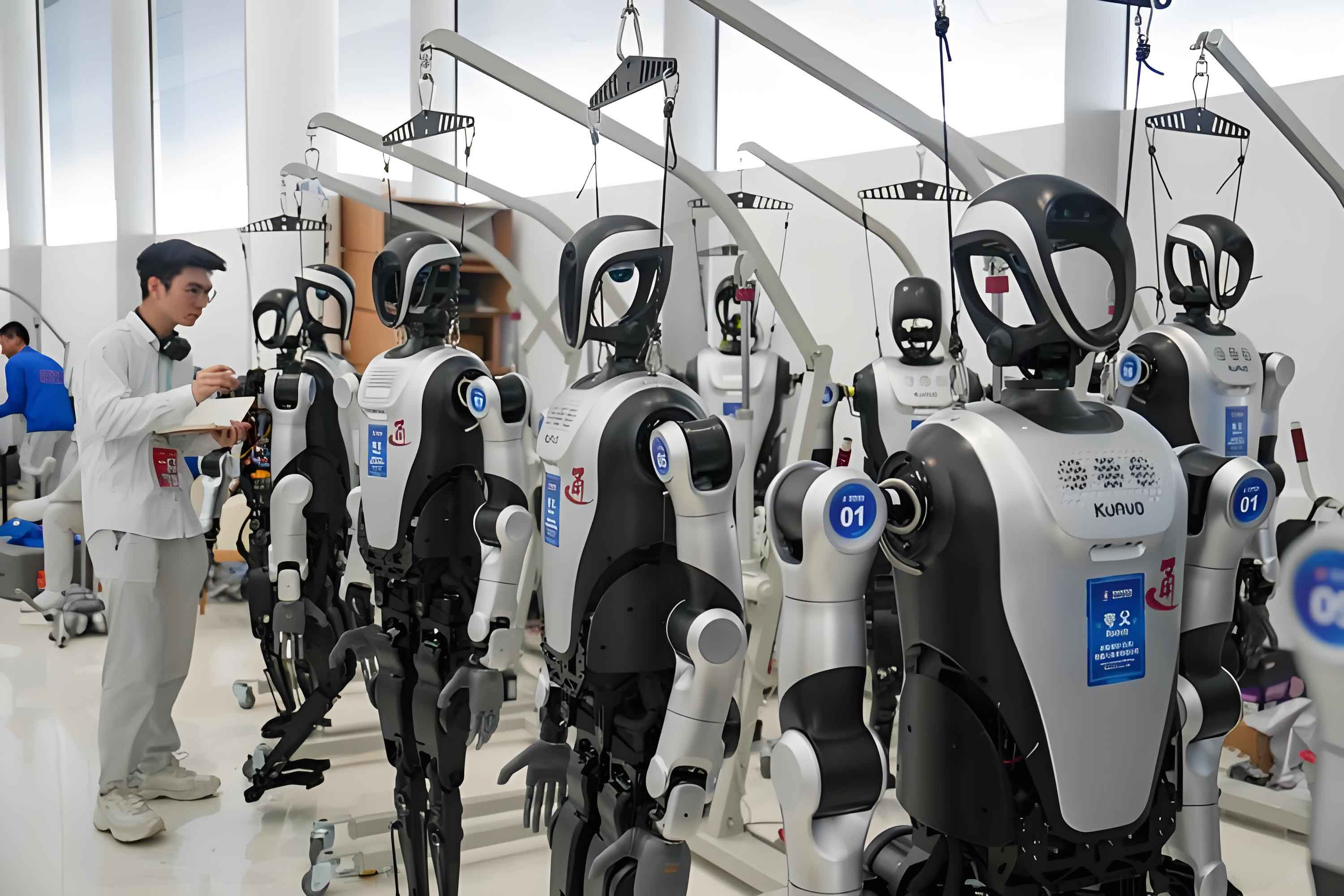
The data demand shock comes from the nature of humanoid robot operation. A humanoid robot relies on visual, auditory, tactile, and bodily sensing systems. It uses cameras, microphones, sensors, and actuators to gather information about its environment and the people within it. It may collect images, text, voice, force, heat, electromagnetic signals, and other multimodal data. These data may be used to train algorithms, improve large models, optimize movement, support navigation, recognize objects, understand speech, infer emotion, and enable safer interaction. In service industries, a humanoid robot may feed real-time scene variables into digital management systems, supporting systematic operations. In future collaborative work, a humanoid robot may need two-way communication with humans, self-monitoring, and safety awareness, all of which depend on extensive data collection.
The feedback loop between data, algorithms, and processing power is central to the humanoid robot economy. More data improves machine learning and algorithm training. Better algorithms make a humanoid robot more useful, which generates more interaction, which generates more data. This cycle can produce significant benefits, but it can also concentrate data in the hands of a few large platforms. When a humanoid robot is connected to cloud services, app ecosystems, operating systems, and websites, personal data may be combined across contexts for hundreds of unspecified purposes. The result can be a form of data hegemony, where scale and scope economies entrench market power and reduce contestability. The purpose principle is one legal tool for limiting this concentration. By requiring a clear purpose at the point of collection, it acts as a valve that controls how much personal information can lawfully enter a processing system. But that same valve can also slow the accumulation of data that drives humanoid robot learning.
This tension explains why the purpose principle is controversial in data-intensive industries. Its essential function is to slow down and discipline the accumulation of data. Big data analytics, by contrast, often thrives on continuous accumulation and unexpected correlation. Industry groups have argued that strict purpose limitation can harm artificial intelligence development. One marketing association in Belgium reportedly described the purpose principle under the General Data Protection Regulation as an obstacle to artificial intelligence. The concern is that machine learning systems learn by detecting correlations in data rather than by following pre-programmed rules. The necessary volume and relevance of data for an algorithm often cannot be known in advance. Predefining purposes and limiting correlational discovery may therefore reduce the performance of advanced systems.
Complex models often require more data for training and validation. Different refined goals require different data types and ranges. In medical settings, a lower-limb exoskeleton humanoid robot may assist patients with spinal cord injury, brain injury, or lower-limb movement disorders. It may use gyroscopes, accelerometers, and electromyographic signals to infer human movement intention. In real time, it must judge how well a movement is being achieved. If data minimization is applied too strictly, computational precision may suffer, and the humanoid robot may fail to calculate motor strategies accurately. In home care, a humanoid robot may perform many tasks and therefore have multiple purposes that are difficult to describe precisely in advance. In rescue operations, outdoor environments are unstructured, targets are randomly distributed, and terrain is uneven. Natural factors can strongly interfere with a humanoid robot’s work. A single fixed purpose may be impossible to define before deployment.
| Humanoid Robot Data Modality | Typical Collection Source | Potential Processing Purpose | Regulatory Pressure Point |
|---|---|---|---|
| Visual data | Cameras and depth sensors | Navigation, recognition, safety, interaction | Facial features, bystander data, environmental inference |
| Audio data | Microphones | Voice commands, emotion inference, communication | Voice biometrics, background conversations, consent scope |
| Tactile and force data | Pressure and force sensors | Grasping, physical assistance, safety limits | Bodily contact, health inference, secondary research use |
| Biological and health data | Wearables, exoskeleton sensors, medical devices | Rehabilitation, monitoring, personalized care | Sensitive data, necessity, storage duration |
| Location and environmental data | GPS, LiDAR, thermal sensors, electromagnetic sensors | Mapping, navigation, rescue, logistics | Tracking, worker monitoring, public space surveillance |
| Behavioral and preference data | Interaction logs, usage history, feedback | Personalization, model training, service improvement | Purpose creep, secondary use, compatibility assessment |
2. The Origins and Internal Structure of the Purpose Principle
The purpose principle has deep roots in privacy and data protection law. It draws from Article 8 of the European Convention on Human Rights, which protects private life and permits interference only when there is a legal basis and a legitimate aim. The Council of Europe’s Convention 108 later established basic data protection principles, including lawfulness, fairness, adequacy, and purpose limitation. At that stage, purpose limitation also governed the scope of data collection. Data collection was to be limited to the minimum necessary for a predefined purpose.
The OECD Guidelines on the Protection of Privacy and Transborder Flows of Personal Data, adopted in 1980, stated that the purpose of data use should be specified before collection and allowed processing compatible with the initial purpose. Although the guidelines separated collection and use, they did not emphasize data minimization in either stage. They only generally required limits on personal data collection.
The General Data Protection Regulation in the European Union treats purpose limitation and data minimization as general principles. Under the GDPR, the collection stage requires specific, explicit, and legitimate purposes. Exceptions include archiving in the public interest, scientific or historical research, and statistical purposes. The post-collection use stage is governed by data minimization: processing must be adequate, relevant, and limited to what is necessary for the purposes. Purpose limitation usually applies across the entire data lifecycle, from collection to use, disclosure, deletion, or anonymization. Minimization includes three requirements: relevance, adequacy, and necessity. Adequacy may require more data, while relevance limits quantity, and necessity limits the types and amount of data needed for a specific scenario.
A second dimension of purpose analysis concerns later processing. Using collected personal data for a new purpose requires a legal basis. That basis may be fresh consent, a clear legal obligation, or another recognized function. If no such basis exists, the new purpose must be assessed for compatibility with the original purpose. Some scholars describe the European approach as narrow at the entrance and wide at the exit, combining strict collection rules with flexible reuse rules to balance industry development and personal information protection. European countries apply different compatibility standards. Belgium uses a reasonable expectations standard. Germany and the Netherlands use a balancing test. The United Kingdom and Greece use transparency, legality, and fairness standards. Purpose limitation and minimization together shape the basic European rules for personal data processing.
China’s Personal Information Protection Law places both purpose limitation and minimization under the purpose principle in Article 6. The law requires a clear and reasonable purpose, processing directly related to that purpose, the least intrusive means among available options, and a proportional balance between the promoted personal or public interest and the rights affected. For sensitive personal information, there must be a specific purpose and sufficient necessity, along with strict protection measures. If a processor uses personal information beyond the original purpose, the later processing is treated as a separate processing activity or a change of purpose, requiring new consent. China also uses security standards to specify the purpose principle in particular scenarios. The Information Security Technology Personal Information Security Specification, for example, outlines the purpose principle through business relevance, collection frequency, and the quantity of personal information collected.
Logically, purpose limitation and minimization are inseparable. Without a prior purpose limitation, there is no basis for measuring minimization. The point of minimization is to realize purpose limitation throughout later processing. Minimization is therefore a necessary logical result of purpose limitation. Both aim to reduce risk by limiting the types and amount of data that can be lawfully processed. For this reason, the analysis treats purpose limitation and minimization together as the purpose principle.
3. Why Humanoid Robot Data Processing Strains the Purpose Principle
The evolution of AI interaction systems has moved from cloud-based virtual assistants to edge-side virtual assistants and now to embodied humanoid robot systems. Cloud assistants rely on remote computing and storage. Edge assistants use local sensors and devices to provide personalized and scenario-based services, improving response speed and reducing cloud data risks. A humanoid robot is a more advanced form of AI interaction. It imitates human appearance, uses actuators to perform gestures and movements, and interacts with users in a more realistic, natural, and emotional way.
A humanoid robot combines general-purpose prototype platforms and general artificial intelligence models with multimodal perception. It can precisely feed back environmental information. Through sensors, it obtains and processes multimodal information in real time to support human-robot interaction, environmental perception, and task execution. During this process, a humanoid robot may collect visual data through cameras, audio data through microphones, and tactile and environmental data through sensors. Images, text, voice, force, heat, and electromagnetic data may all be used to train algorithms and improve large model performance. The front-end data collection function of a humanoid robot is therefore extremely important. Intelligent algorithms can optimize decisions under specific constraints, monitor scene variables, and support digital and systematic management in service industries.
The value conflict between industry development and the purpose principle is clear. The purpose principle protects personal information by regulating the source of collection. It makes collection more transparent and orderly. It also supports notice and consent by requiring processors to inform individuals about the purpose, type, and duration of processing. As governance deepens, users may develop a clearer and more unified understanding of corporate data collection standards. Privacy policies may become more standardized. Trust in information processors may then reflect trust in the state’s governance capacity. A humanoid robot collects large amounts of personal information, including voice, facial features, fingerprints, identity, preferences, habits, and emotions. The purpose principle is one of the legal gates and control variables for such collection.
At the same time, algorithmic updates improve the intelligence of a humanoid robot. Better algorithms allow it to understand language, intention, needs, and feedback. This improves interaction quality and effectiveness. In turn, it promotes further data accumulation. Data accumulation feeds machine learning and algorithm training, which supports further algorithmic iteration. Processors can aggregate information from different datasets, making data more concentrated. In some cases, analytics services combine personal data across applications, operating systems, and websites for hundreds of unspecified purposes. Processors, algorithms, and data form a stable and long-term positive feedback loop. Under these overlapping factors, data hegemony can emerge. Large platforms use data technology, massive data accumulation, and analytics to optimize, predict, and solidify aggregation and user stickiness. Scale and scope economies become more pronounced, discouraging potential competitors and reinforcing data dominance.
The purpose principle is also important for preventing monopoly risks arising from data accumulation. Data-driven economies of scale and scope can create super-platforms. The output of such platforms across multiple markets may be efficient, which challenges traditional antitrust theory. Determining whether a processor harms users is no longer only a matter of output and price. It also requires examining whether users’ choices and other legal rights are harmed, and whether innovation and market competition are suppressed. If personal information processors strictly observe the purpose principle, they can help limit the continuous concentration of data, maintain market order, and ultimately benefit consumers.
Yet the value of data lies in continuous accumulation. This is inherent to data itself. The purpose principle is often criticized for conflicting with the analytical and exploitative goals of the big data era. In practice, purpose limitation can restrict not only technology but also social development. The essence of the purpose principle is to slow data accumulation, which conflicts with the internal demands of big data development. Industry opposition is therefore unsurprising. Data may produce maximum value when processed without a predefined purpose. This is especially true in artificial intelligence, where machine learning systems learn from data rather than follow pre-programmed rules. Machines often learn by detecting correlations in aggregated data. The necessary amount and relevance of data for an algorithm often cannot be known in advance. Predefining purposes and limiting correlational association can therefore be harmful to machine learning.
Advanced systems with complex models usually need more data for training and validation. Different refined goals require completely different data types and ranges. In medical scenarios, a lower-limb exoskeleton humanoid robot may be used for patients with spinal cord injury, brain injury, or lower-limb movement disorders. It uses gyroscopes, accelerometers, and electromyographic signals to perceive human behavioral intention. It must judge in real time the degree to which a movement is achieved. If data minimization is emphasized too strongly, computational precision cannot improve, and the humanoid robot cannot accurately calculate all motor operation strategies. In practice, personalized analysis and algorithm introduction usually aim to improve technology or services, not merely to provide a corresponding service. From an industry perspective, preserving developmental purposes while giving users a right to opt out may be a more rational regulatory approach. In many privacy statements, personalized recommendation has already become an independent purpose. The application of a humanoid robot varies by scenario. In medical scenarios, the purpose of processing personal information is relatively single and easier to describe precisely. In home care, however, a humanoid robot often performs complex work, so its purposes are multiple and difficult to describe precisely in advance.
4. Definitional and Enforcement Problems in Humanoid Robot Contexts
Different scenarios require different types and amounts of personal information, which directly affects whether functions can be realized. Purposes for processing personal information can be divided into commercial purposes and other purposes. Other purposes relate to legal responsibilities or public functions, such as assisting in the fight against telecommunications fraud, withholding individual income tax, or identifying relevant subjects in administrative enforcement or judicial litigation. Commercial purposes can be divided into implementing product and service functions and further optimizing product and service functions. In commercial optimization, what is necessary to improve user experience depends on the chosen anchor point. For example, to optimize products and services, a processor might consider search volume or usage frequency. If one is chosen, that information may be used to train an AI model that directly affects results, making it necessary for improving user experience. But how much personal information should be retained for a specific performance goal depends on many factors, including the prediction method, underlying algorithm, existing user data, and all other databases available to the service provider. The result of minimization therefore depends heavily on the underlying algorithm.
Minimization is difficult to define in practice. The legality of the purpose principle includes two elements: institutional legality and value legitimacy. Value legitimacy means that collecting personal information must have a sufficient value basis and reasonably balance the interests of the data subject and the processor. The judgment of value legitimacy depends on individual cases, and the specific context changes with social development and legislative shifts. Some local laws have explored purpose limitation further. The Shenzhen Special Economic Zone Data Regulations, for example, require that personal data storage periods be the shortest necessary for the processing purpose and that a least-privilege access control strategy be established, so that authorized personnel have the minimum processing authority within their responsibilities. Although this regulation refines the purpose principle by defining storage duration, number of personnel, and authority, questions remain about how each indicator should be measured.
There is also a technical problem. When considering which personal information should be minimized in an application, the underlying assumption is often that system data is static. But for a given individual, minimized personal information may constitute training data for other individuals’ systems. In other words, minimizing one user’s personal information may affect system performance for other users. Precise minimization is therefore difficult to achieve. If collection stops because of minimization, but a user’s interests change significantly, accuracy requirements may demand more personal information. In rescue humanoid robot applications, unlike single-condition indoor tasks, the outdoor natural environment is complex and variable. Work targets are randomly distributed, object forms are diverse, and terrain fluctuates. Natural factors strongly interfere with operation. Different variables produce different effects during a rescue humanoid robot’s work. Different industries have different data dependencies. In personalized analysis and decision-making, data demand is enormous. In industrial scenarios, machine learning often relies on secondary use of data. The development of the Internet of Things and AI technology depends on massive data processing. Uniform regulation of data collection and processing could therefore be devastating for some data-dependent businesses. The judgment of legitimacy is not static. Its standards are fluid. The difficulty of clearly defining purpose, combined with dynamic evaluation of purpose reasonableness, makes the purpose principle highly uncertain.
5. Secondary Use: Direct Connection Versus Compatibility
For the purpose of personal information processing, China’s Information Security Technology Personal Information Security Specification states that the use of personal information must not exceed the scope of direct or reasonable connection. The specification treats reasonable connection as an exception to the purpose principle, requiring no separate consent. For reasonable connection, the specification provides only a non-exhaustive list. Using collected personal information for academic research or for describing the overall state of natural, scientific, social, and economic phenomena is considered reasonably connected with the collection purpose. To prevent expansion, the specification requires de-identification of results when providing them for academic research or description. The later Personal Information Protection Law limits the relationship between processing behavior and processing purpose to direct connection. Some scholars argue that compatibility has a broader scope than direct connection, and that direct connection requires later processing to strictly follow the original purpose, potentially hindering big data industry development and an innovative society. Others argue that China’s direct connection standard tightly links purpose and behavior, enabling highly controlled use of personal information. This differs from the flexible mainstream standards outside China.
In reality, direct connection and compatibility address different questions. China’s personal information protection design tends to require processors to explain purpose and use once and for all. Direct connection is a test of the relationship between purpose and use. It determines the types and amounts of personal information a processor may handle. It does not directly address later use for other purposes. For personal information already collected and used for another purpose, Article 22 of the Personal Information Protection Law requires new consent. China’s legislation therefore leaves little room for secondary use of personal information.
| Dimension | Direct Connection Approach | Compatibility Approach | Implication for Humanoid Robot Governance |
|---|---|---|---|
| Legal focus | Whether processing is directly related to the original purpose | Whether a new purpose is compatible with the original purpose | A humanoid robot may need both initial limits and structured reuse rules |
| Entry control | Strong: collection must be tied to a clear purpose | Strong: collection must have specified legitimate purposes | A humanoid robot’s multimodal collection requires clear scenario definitions |
| Reuse flexibility | Limited: new consent is generally required | More flexible: compatibility factors guide reuse | A humanoid robot’s algorithm training and safety testing need predictable reuse exceptions |
| Judicial burden | Difficult because relevance is gradual, not binary | High because multiple factors must be weighed case by case | Scenario standards can reduce uncertainty for humanoid robot applications |
| Risk of overbreadth | May block beneficial secondary use | May weaken the purpose principle through broad interpretation | A humanoid robot regime should avoid both rigidity and open-ended reuse |
Judicial practice still needs greater consistency. In one case, a court found that personalized course recommendation based on analysis of personal information was not directly related to the purpose of providing course services, but was an optimization function to improve user experience. In another case, a court held that, under legal conditions, a processor could reasonably use user relationship information accumulated through an app in related products. The processor collected gender, region, and WeChat friend relationship information mainly to increase the social sharing attributes of its product, consistent with its product positioning, and therefore did not violate the necessity principle. In most practical scenarios, it is difficult to find behavior and purpose that are completely unrelated. Relevance is a gradual judgment with degrees of difference. Very few scenarios require only a yes-or-no judgment. This makes direct connection difficult to determine in practice.
China currently lacks clear rules for secondary use of personal information. If a processor wants to use information in a new scenario, it must generally obtain new consent. This reduces the scenarios in which personal information can be used, raises the cost of collecting personal information, and may cause immeasurable harm to artificial intelligence and the humanoid robot industry. The purpose principle is essential for protecting individual rights and market order, but regulation should not be a one-size-fits-all requirement that strictly surrounds a single predefined purpose. Nor is it possible to abandon the purpose principle as industry has sometimes requested. Personal information protection protects not only natural persons’ personal information rights, but also information freedom, freedom of expression, and freedom of commercial activity. The key is to achieve a dynamic balance between personal information security and these interests. In large-scale humanoid robot application scenarios, achieving this balance is difficult and demanding.
6. The Limits of Translating Law into Code for Humanoid Robot Governance
The broad use of artificial intelligence creates opportunities and challenges for technology and human life, and it raises new demands for legal regulation. Human-technology interaction disrupts the subject-object dichotomy that places humans at the center. Law is shifting from remedial rights protection to ex ante regulation. Legal automation and retroactive systems may be embedded in code to safeguard freedom and dignity in a digital and intelligent society. Yet compared with large-scale risk management for artificial intelligence, front-end regulation of data collection suffers from value conflicts and implementation difficulties. Some researchers try to use quantitative tools to explain the purpose principle, but many problems remain. To make the purpose principle concrete for humanoid robot governance, scenario-based standards may be necessary.
A humanoid robot is a comprehensive result of mechanical engineering, computer engineering, and other fields. In human-robot interaction, the front-end product’s capture of user personal information is similar to personal information processing by conventional processors. Before collecting user personal information, it must follow the platform privacy policy authorization structure and obtain user authorization. Because users often ignore privacy policies and permission requests, processors may exaggerate actual data needs and over-collect user data at runtime. This situation, combined with doubts about enforcement of the purpose principle, has led to the rise of privacy inspection tools. These detection methods try to build abstract language models and use quantitative means to fill enforcement gaps, imagining a model in which law is realized through code. Technically, the main approaches are purpose constraints and access control.
Purpose constraint methods quantify operation permissions on specific digital resources through constraints and express them as Boolean expressions. The Open Digital Rights Language, or ODRL, can describe conditions under which users are allowed to perform specific operations such as viewing, copying, editing, or distributing digital content. It can manage data use permissions according to predefined purposes. This makes ODRL flexible and powerful for digital rights management and can help ensure compliance with the purpose principle. Some research divides purposes into abstract and concrete types and permits access only when the requested purpose matches the resource’s preset purpose.
Access control, specifically purpose-based access control, or PBAC, makes access decisions based on the purpose for which user personal information is to be used. Purposes may include running reports, conducting audits, or creating new applications. PBAC is often used to help processors comply with different data privacy laws and regulations. Through PBAC, processors can demonstrate granularity of data access and more precisely describe how data is collected, stored, processed, and shared, ensuring compliance with purpose limitation and other requirements.
These quantitative attempts can partially detect whether processing behavior matches a preset purpose, but they face serious problems. First, ODRL is usually static. It determines usage permissions and restrictions when digital content is published or distributed, and it cannot dynamically adjust to different users, environments, scenarios, or needs. A humanoid robot operates dynamically. It needs to update the content its data system captures based on user feedback. ODRL cannot easily meet this dynamic demand. Second, PBAC is usually based on abstract purposes and allows users to obtain permissions for a series of possible operations. This can make it difficult to precisely match changing and hierarchical purposes. For example, in diffuse intrinsic pontine glioma research, different analysis procedures must align with specific research goals and permission limits for a brain tumor medical information sharing consortium. Current PBAC may not effectively handle such serialized, strongly correlated, and time-limited data processing. Existing PBAC models often rely on user-declared purposes and grant permission for single actions. Higher-order purposes such as scientific research may include multiple consecutive steps, which are difficult to map precisely to technical implementation under current PBAC frameworks.
The main reason the purpose principle cannot be quantified is the ambiguity of language and the fluidity of information scenarios. First, the purpose itself can be interpreted differently. Judging a speaker’s intention and semantics depends heavily on context. More abstract purposes can map to multiple levels of concrete purposes, making textual analysis more difficult. Second, compatibility judgments depend on context and human rational judgment. Fluidity means compatibility must be assessed case by case. The boundaries among principles are not fixed once and for all; they are open and dynamic. When principles conflict, one right may have to yield to another, or both may have to compromise. When innovation arrives in batches beyond a certain rate, technological development forces fluidity to become a major feature of social development. The coordination between supportive structures and adaptive change affects the entire institutional system. Important values that support the personal information protection system should be expressed as principles, while adaptive change should occur through standards. In fast-changing technological fields, standards should be reviewed annually to determine whether revision is needed.
7. Scenario-Based Standardization for Humanoid Robot Applications
Standards are a form of social self-governance. They are developed through consultation and consensus, and their makers and forms are plural. They have soft-law attributes. In cybersecurity and data governance, standards are widely used to concretize rights and obligations in legislation. Although standards are not formal legal sources and have no formal binding force, their behavior-oriented and signaling functions allow courts and administrative agencies to cite them and produce normative effects. They can also become benchmarks for administrative agencies when determining facts. Administrative agencies may directly rely on standards to take informal regulatory measures such as warnings, interviews, and administrative inspections. In private law, standards matter because they affect product liability. Under special legal provisions, standards can constitute necessary grounds for finding behavior unlawful, and compliance with standards can support a defense. National and industry standards for humanoid robots are therefore not only guides for healthy industry development but also important bases for judging whether parties have fulfilled legal obligations.
Improving precision and safety has always been an important goal for humanoid robots. A humanoid robot needs technologies such as全域? No. It needs全域? Let us avoid non-English. It needs global perception, navigation planning, and intelligent control of different data variables to achieve dexterous and precise work. More types of work activities are often based on massive data, such as processing aimed at trend analysis. In such activities, providing and filtering data alone cannot meet application requirements. A caregiving humanoid robot may begin training algorithms with user voice data to predict health conditions. It may also need SLAM mapping and deep learning for autonomous navigation. Therefore, in addition to the personal information of the person being cared for, a caregiving humanoid robot may need large amounts of other information, including some personal information of individuals other than the subject, to function properly. In a simple medicine delivery process, a caregiving humanoid robot must accurately recognize the environment and obstacles to navigate automatically to a set target and place a medicine box. After delivery, it often needs to feed collected information back to a cloud management platform for further analysis, learning, and safety management. Such behavior is already a necessary functional extension in humanoid robot development and application. More comprehensive data can better support the primary goals of protecting life and health in medical and care scenarios. In this context, direct connection should be understood more broadly. As long as different types of personal information processing remain within the same scenario, and the possible consequences and legitimate rights are protected, other factors need not be overemphasized. For scenarios involving medical care, employment, law enforcement, and public management that affect human dignity and basic rights, higher requirements should be placed on model credibility and safety, with corresponding market access and technical audit systems.
Logistics and work scenarios should more strictly control the connection between personal information collection and purpose. AGV logistics robots can load goods autonomously, move to target positions according to wireless signals, open doors, and change floors without traditional rail systems. A logistics humanoid robot may need location information, contact information, and even payment information. In robot work scenarios involving employment relationships, monitoring other employees should be strictly prohibited. Scholars have tried to summarize factors that the purpose principle should consider in intelligent monitoring scenarios involving employment: whether there are alternatives that cause less harm to personal information rights; time limits on monitoring; spatial limits on monitoring; limits on information types; limits on the quantity of information; and limits on storage duration.
Digital standardization aims to achieve safety, controllability, efficiency, and convenience. Technically, standards should be as digital as possible. They may include calculation and measurement methods, and even scientific solutions such as axioms and formulas. Purely linguistic descriptions expand the space for analogy and make the scope of application unclear. Standard-setting should also avoid directly establishing rights and obligations in too many cases. That approach formally resembles legislation but remains difficult to operationalize and has limited value for concrete problems. In addition, the absence of technical solutions and the dominance of textual expression expand the space for analogy and make the scope of application unclear, undermining safety goals. National and industry standards covering common information types and processing purposes should be formed by referring to specifications such as information security technology terminology, encouraging processors to adopt standardized definitions and descriptions. It is also necessary to optimize existing standardization workflows and improve the efficiency of developing and promoting advanced applicable standards. Collaboration mechanisms among standardization technical organizations across the upstream and downstream of the industrial chain and various links of the industrial ecosystem should be established and improved to jointly advance the development and implementation of key standards for future industries.
Because scenarios are dynamic and goals differ, it is difficult to directly set a minimum value for a given scenario in law. Some scholars propose limiting the minimum scope necessary for processing purposes to personal information processing that causes harm or loss. The theoretical basis for this limiting interpretation is that when network platforms process personal information within a directly related scope, they should maximize the interests of the data subject and avoid harm or danger. However, actual harm and danger remain difficult to prove in personal information protection. Some scholars propose treating risk itself as damage: evaluating it based on the cost of insurance against risk and combining it with case-by-case balancing. In personal data breaches, for example, courts could consider the possibility and consequences of future harm, data sensitivity and exposure, and the availability of preventive measures. Judicial activity is not a purely numerical system. Legal regulation cannot be directly converted into code. Emerging industries do need standards first. But standards cannot fundamentally replace judicial decision-making, nor can they truly solve enforcement difficulties of the purpose principle. Reconstructing China’s purpose principle with the help of scenario-based standards is an urgent issue.
| Humanoid Robot Scenario | Primary Purpose Pattern | Data Intensity | Recommended Standard Focus |
|---|---|---|---|
| Medical rehabilitation humanoid robot | Movement assistance, health monitoring, therapy support | High and sensitive | Safety, clinical validation, sensitive data safeguards, broader same-scenario use |
| Home care humanoid robot | Multiple: companionship, medication delivery, emergency response, navigation | High and multimodal | Layered purposes, user control, bystander safeguards, dynamic consent options |
| Logistics and industrial humanoid robot | Transport, loading, navigation, workplace coordination | Moderate to high | Strict relevance, prohibition of worker surveillance, location and payment safeguards |
| Rescue humanoid robot | Search, rescue, environmental adaptation, real-time decision support | Very high and unpredictable | Scenario-based flexibility, safety-critical data rules, post-incident review |
| Research and development humanoid robot | Model training, testing, correction, simulation | Very high | Open research purpose, de-identification, ethical review, development-application distinction |
8. Rebuilding the Purpose Principle for Humanoid Robot Ecosystems
The word purpose itself is highly uncertain. Even teleological interpretation in law is controversial. Compared with other interpretive methods, purpose-based interpretation gives courts greater discretion because the intent or purpose behind a legal text has significant elasticity. Courts may consider politics, economics, society, public policy, and public interest when determining the purpose of a legal provision. China’s Personal Information Protection Law limits purpose. First, a purpose that complies with the purpose principle must be explicit and lawful. In practice, an explicit and lawful purpose must be identifiable. Overly vague and broad expressions can hollow out purpose limitation and deviate from its regulatory purpose and effect. Google was penalized because its privacy policy stated that personal information would be used for product development, market innovation, and advertising. The Information Protection Working Group found that such wording did not allow users to be sufficiently informed about the processing of their personal information. Even if user consent was obtained, it could not be recognized as a legal basis for using personal information. Maintaining sufficient awareness for personal information subjects is an important means of privacy protection. In an era when personal information protection rules were not yet sound, the purpose principle was often hollowed out by generalized expressions. General purposes such as improving user experience and marketing filled privacy agreements, but such expressions did not help users’ right to be informed.
Some scholars argue that a good faith principle for data and information processors should be added to the general provisions of China’s Personal Information Protection Law. One requirement would be that even if the fluidity of data processing activities gives processors significant information advantages, they must not engage in uncontrolled strategic abuse of the weaknesses of data subjects. From this perspective, the meaning of the purpose principle is more about forcing processors to think and weigh purposes before and during processing, and to impose internal constraints on their own behavior. Legal interpretation must also start from the intent and structure of the provision itself.
Platform processing of personal information fundamentally aims to use personal information to promote more transactions. Providing basic services is only a shallow and secondary purpose. Building user circles, forming internal ecosystems, and providing media services are deeper and core business logics and personal information processing purposes. In this sense, a minimum scope that only provides basic functions has limited guiding significance. Regulating processors solely on that basis may ultimately constrain related business development. China’s recommended national standard, Information Security Technology Basic Requirements for Mobile Internet Applications Collecting Personal Information, divides purposes into basic business functions and extended business functions according to actual commercial development needs. Basic business functions are the business functions that achieve the user’s main purpose for using the app. Extended business functions are other business functions beyond the basic functions. As a business develops, an extended business function may become a new basic business function after it matures. Personal information necessary for the normal operation of basic business functions is called necessary personal information. Combined with the definition of direct connection in the Personal Information Security Specification, necessary personal information is the minimum scope for the normal operation of basic business functions.
The standard’s appendix divides personal information collection and business function realization into three types. The first type is necessary personal information. Without it, basic business functions cannot operate normally. This is the minimum scope for user consent. The second type is non-necessary but related personal information. This type relates to extended business functions. It is directly related to the service provided, but it is optional and can be refused or withdrawn by the user. The third type is unrelated personal information, which has no direct connection with the purpose of the service provided. Without it, any business function can operate normally and service quality is unaffected. These three types construct personal information use rules based on business functions. For necessary personal information, processors may collect it, and the subject cannot refuse, otherwise basic functions cannot be realized. For non-necessary but related personal information, processors may collect it, and the subject may refuse or withdraw consent. For unrelated personal information, processors have no right to process it. Although the three types appear clear, they are difficult to align logically with the Personal Information Protection Law. The law requires collection to be limited to the minimum scope necessary for the processing purpose. Under the recommended standard, only necessary personal information collection falls within the minimum scope after user consent. Non-necessary but related personal information occupies an awkward position. Some scholars suggest forming a meso-level methodology for determining necessity rather than using the division between basic and extended business functions. Through judicial interpretations and enforcement cases, the corresponding meaning of necessity in different business scenarios can be gradually enriched and specified.
The explanatory notes of the recommended standard show that enterprises have high expectations for using non-necessary but related personal information. To meet compliance requirements, the definition of this category uses wording consistent with legislation: directly related. At the same time, the standard shows a determination to defend personal information security. It does not directly recognize this category as within the minimum necessary scope, and how to apply it is unclear.
There is thus a substantive conflict between the expansion needs of real business and strict standard-setting. A feasible path is to treat non-necessary but related personal information collected for extended business functions as a separate purpose. The classification of personal information collected for this purpose should not be enumerated one by one within the minimum scope. Instead, it should be defined in a generalized way through standards in each scenario.
First, standards for humanoid robots should be set according to different application scenarios. Whether different purposes have value legitimacy should not be a generalized question but should be judged in specific scenarios. Different scenarios also have specific scenario values, such as health in medical scenarios and efficiency in trade scenarios. Consistency within a scenario as a privacy indicator or measurement standard can better address privacy challenges.
Second, standards should be as one-directional as possible and avoid introducing too many interactive factors. The categorization of action interactions needs to be limited to narrow and stable social situations or scenarios. Otherwise, complex constitutive factors of multiple actors will push the topological structure of actors toward institutionalization. The meaning of institutionalization is to predict the behavior of both parties, but the goal of standardization is actually to regulate the processor’s behavior in one direction. Therefore, the behavior of the personal information subject and interaction with the processor should not affect the standard for processing personal information. Institutionalized rules apply not only to specific events but also to all such events within their spatial and temporal scope and have general characteristics. Compared with technology, legal norms are more universal and do not adhere to specific scenarios or technology types. Processing information according to generalized requirements may involve different weights of parameters and produce different results. For example, improvement is a vague concept. If AB testing for performance evaluation is used to judge product updates, forming a quantitative basis requires choosing metrics, obtaining values, and aggregating differences at a certain level. Whether the goal is sales, user satisfaction, or clicks is a completely different target and necessarily leads to different minimization requirements. When divided into concrete scenarios, technical goals become more targeted and feasible.
Third, a comprehensive and three-dimensional standard-setting scheme should be introduced. For artificial intelligence robots in different scenarios, regulation requires not only legislation and standards but also licensing and certification requirements for AI-driven legal tools and their suppliers, so that suppliers are responsible for the reliability of their technology and performance. Given the possibility of enormous harm caused by artificial intelligence robots, laws such as Russia’s Grishin Bill, the European Parliament’s draft report with recommendations to the Commission on Civil Law Rules on Robotics, and the Civil Law Rules on Robotics mention classification and registration of intelligent robots and propose mandatory insurance and mandatory funds under a management model combining industry self-governance and state supervision.
9. Abandoning the Incompatible Compatibility Standard
Today, criticism of the GDPR is growing. Critics argue that the GDPR, especially regarding cross-border data, shows a formalistic turn, making data protection a complex, opaque, and time-consuming procedure controlled by technocrats. At the same time, practice is paying more attention to the public value of data. Because data sharing can achieve more social effects, more discussion is extending toward relaxing purpose limitation.
As an important means of secondary use of personal information, compatibility has long been regarded as a gold standard. But in reality, European countries are gradually downplaying the application of compatibility standards. Article 6(2) and (3) of the GDPR allow member states to regulate processing and specify the purpose limitation principle through national legislation. However, national legal systems differ. Civil law countries represented by Germany tend to make clear and specific provisions on basic rights, while common law countries have less clear definitions of basic rights, giving legislators more room to legislate beyond rights limitations. Compatibility standards are applied differently with different intensity across EU countries, giving the purpose limitation principle a certain elasticity. The United Kingdom is more inclusive of collection purposes and allows multiple information collection and use behaviors for monitoring purposes. Germany, by contrast, distinguishes specific scenarios for information collection for monitoring purposes, such as responding to immediate threats, general and special prevention, and investigation and prosecution of criminal cases, with different regulatory attitudes toward different purposes. In addition, the UK’s definition of policing purposes is very vague. Compared with Germany’s rigorous legislation, exemptions from the purpose limitation principle have more definite certainty. The UK includes medically related research in a list of medical purposes and excludes the application of personal information legislation. As practical elasticity increases across countries, the purpose principle under the GDPR risks being hollowed out.
Although scholars have called for introducing the EU compatibility standard, that path is not suitable for China. First, the compatibility standard requires consideration of too many factors, increasing the difficulty of judicial practice. The GDPR does not define compatibility in detail. It only lists possible factors, requiring case-by-case judgment. The Article 29 Working Party, now the European Data Protection Board, issued guidance interpreting several standards in the GDPR and provided more detailed guidance from the following dimensions: the relationship between different purposes, with stronger links suggesting greater compatibility; the relationship between the data subject and the controller, including power imbalance and reasonable expectations; data sensitivity, including sensitive data or criminal offense data; possible consequences of secondary processing; and appropriate safeguards, including but not limited to encryption and pseudonymization. As noted, each factor cannot be judged statically. It requires comprehensive judgment based on the influence of each element in different scenarios. As humanoid robot technology develops, these factor judgments will increasingly burden judges. Second, a dynamic compatibility standard prevents consumers from having stable expectations, making privacy expectations even less possible.
In fact, China already has effective practices for secondary use of personal information. The personal information processing behavior mentioned in the Digi case, creating a database for testing and correction, faces no obstacle in China. This is because China’s Personal Information Security Specification already considers the need to process personal information to maintain product and service safety and stability and treats it as a situation that does not require authorization and consent. The core of secondary use of personal information is whether the subject must reauthorize. If all secondary processing that deviates from directly related purposes must obtain subject consent, the cost of information use will inevitably rise. On the other hand, information processing for purposes such as maintaining product safety and auditing should not consume judicial resources for compatibility judgment. Directly listing reasonable secondary use under specific scenarios as exceptions to the requirement of individual consent can better stabilize privacy expectations and support healthy industry development. The application of law itself carries the task and role of evolving law. This process never ceases. The result of evolution at each stage is the current law. What influences the result of evolution includes not only the normative meaning expressed by past legislators, but also the judiciary that executes law, the administrative agencies that enforce law, and the public that participates in legal life. In this sense, standards are better suited, with their flexible posture, to crystallize shared privacy expectations and gradually put them into writing. They can examine the relationship between processing behavior and purpose from a scientific and rational perspective and exclude processing behaviors that conform to technological development and social patterns from situations requiring consent.
10. Keeping Research Purposes Open for Humanoid Robot Innovation
New quality productive forces depend on integrating scientific and technological innovation resources and leading strategic emerging industries and future industries. Artificial intelligence technology is an important part of new quality productive forces. New quality productive forces involve novel fields and high technology content. Innovation-driven development is key, representing a major leap in the evolution of social productive forces. To maintain the internal driving force of innovation and reduce the institutional cost of processing personal information, scientific research purposes are often treated as exceptions to the purpose principle. However, the GDPR does not define scientific research in detail. Research and development work by academic institutions and external public funding agencies may be considered scientific research, but whether private company research and development falls within scientific research remains debatable.
Many companies structurally separate research and development departments, but their ultimate goal is often to put research results into product production and services. The GDPR does not actually limit the subjects of scientific research. If compliance were judged on this basis, market entities might set up separate research and development departments to circumvent restrictions on secondary use. Another path is government-supported scientific research projects led mainly by commercial entities. In the United Kingdom, for example, the government launched a one-billion-pound artificial intelligence development package to support artificial intelligence development in academia and business, formed an artificial intelligence council to promote coordination and growth in related industries, and formulated a plan to support public sector use of artificial intelligence. The government supports artificial intelligence by helping and coordinating industry-funded artificial intelligence and machine learning projects in universities. For example, R2 Data Labs of McKinsey, QuantumBlack, Amazon, and Rolls-Royce conduct technical research by supporting artificial intelligence academic projects. The United Arab Emirates recently established the Artificial Intelligence and Advanced Technology Council to oversee the implementation and development of artificial intelligence policies and strategies related to research, infrastructure, and investment. Although such research may directly serve commercial applications, it also meets the GDPR definition of scientific research and is not subject to the purpose principle. The UK Information Commissioner’s Office, in its data protection guidance, explains processing purposes related to research and specifically emphasizes that the interpretation of purpose should be as broad as possible. For example, many organizations without legal obligations, whether private or third-sector, may also be considered to have a lawful basis if they archive for public interest purposes. The ICO specifically emphasizes that processing personal data for scientific research purposes should be interpreted broadly, including technology development and demonstration, basic research, applied research, and privately funded research.
Scientific research purposes also include artificial intelligence development. Even if the later commercial need is to place a product on the market, earlier large model development may still be regarded as scientific research, so personal information collection is not affected by the purpose principle. Artificial intelligence technology is extremely data-dependent. Large amounts of data are important for training accurate artificial intelligence operations. There is no unified interpretation of what constitutes artificial intelligence technology research and development. However, the European Parliament and Council Regulation laying down harmonized rules on artificial intelligence, known as the Artificial Intelligence Act, defines artificial intelligence as broadly as possible, including software developed using one or more techniques and approaches, and software that relies on a set of human-defined objectives or can produce outputs such as content, predictions, recommendations, or decisions that influence the environments they interact with. These techniques include machine learning methods, including supervised, unsupervised, reinforcement, and deep learning; logic- and knowledge-based methods, including knowledge representation, inductive programming, knowledge bases, deductive engines, symbolic reasoning, and expert systems; and statistical methods, including Bayesian estimation, search, and optimization methods. The Artificial Intelligence Act also gives the Commission power to revise or expand the scope of these artificial intelligence technologies. To achieve comprehensive regulation of artificial intelligence technology, the Act tends to expand the definition of artificial intelligence. However, because the definition of artificial intelligence technology is broad, more private sector data processing may be classified as developing artificial intelligence technology purposes. If this continues, the purpose limitation principle may be completely emptied. Even for exceptions that do not require compatibility testing, personal information processing must still be based on fairness and legality and have appropriate safeguards.
There are also many frontier fields involving joint development across countries. For example, space service robots introduce shared mental models in human-robot teaming. A shared mental model is a distributed structural model that includes the knowledge and functions needed for successful teamwork, such as monitoring goals and task status, evaluating team performance, inferring performance beliefs and intentions, tracking task priorities, and adjusting based on knowledge. Mental models enable machines to understand human psychological states and cooperation needs under dynamic human feedback, forming a human-centered and human-compatible collaboration process. Future space missions will rely on teams of humans and machines with complementary capabilities, and may even include multinational support service teams. Maintaining openness in the concept of scientific research is of great significance for subsequent data use.
Many current Chinese regulations recognize the importance of distinguishing development research from commercial application. For example, the Interim Measures for the Management of Generative Artificial Intelligence Services, jointly issued by the Cyberspace Administration of China and seven departments, emphasize an inclusive and prudential policy orientation. They limit the regulatory object to generative artificial intelligence services rather than technology research and development or internal enterprise use, which are non-public application scenarios. This reflects an open approach of being broad on research and tight on application, encouraging the orderly and innovative development of generative artificial intelligence. Compared with commercial application, scientific research finds it more difficult to predefine the purpose of data collection. It can be foreseen that distinguishing development research from commercial application will be key to future institutional design. Keeping scientific research purposes open is necessary to seize opportunities in the future humanoid robot competition.
11. Conclusion: Supportive Structures and Adaptive Change in Humanoid Robot Governance
Fuller long ago proposed the core dilemma of institutional design: a general problem in social design is how to balance supportive structures and adaptive variability. This dilemma remains the starting point for thinking about institutional design. Technological development can rapidly reduce the cost of violation or provide new tools or channels for illegal behavior. At the current stage of artificial intelligence development, pulse-like legislation is not appropriate. Existing legal provisions should be applied to tort cases involving such technologies as much as possible, with the minimum degree of new legislation and amendment. Procedural technical transformation of existing legislation should be used where possible. In terms of model, the European Union and Germany have directly modified civil rules and traffic regulations to add rules for unmanned driving. That was a hasty choice made when facts were unclear and problems to be solved were not obvious. It neither encourages innovation nor helps protect citizens’ rights. Some scholars propose that existing government departments should establish relevant industry technical standards, safety standards, and personal data protection standards, referring to industry-developed standards in the United States and comprehensively considering public interest and personal rights protection principles. On this basis, legislation should be continuously strengthened to achieve the dual goals of personal information protection and industrial development.
Of course, technology not only produces disruption; it also attempts to do good. Many technologies are used to achieve data minimization, such as outlier detection, which identifies users and removes noise and rare anomalies from data; feature selection, which removes features that do not substantially contribute to or even harm learning tasks; and active learning, which incrementally selects data that need labeling or adding to a model. These technical means substantially reduce data use. In the long run, these choices are based not only on real business needs but also convey a company’s regulation of its own behavior and responsibility for maintaining the Internet ecosystem.
Directly converting legal principles into code may be a wishful thinking of lawyers. From a technical perspective, the speed of Internet development has surpassed the rhythm of life in all previous eras. Managing it with an equally static model will only lag far behind changes in lifestyle and become a shackle on technology. Principles still have meaning, and they constantly resist the temptation to cross bottom lines. Breakthroughs are an inevitable requirement of current technological development. This contest between technology and privacy actually requires us to rethink the boundaries of personal rights: what we should insist on, and what we cannot yet give up.
| Key Term | Relevance to Humanoid Robot Governance |
|---|---|
| Purpose principle | The legal requirement that personal information be collected and used for clear, legitimate, and related purposes, with minimization and limits on secondary use |
| Humanoid robot | An embodied AI system that collects multimodal personal and environmental data and operates across multiple dynamic scenarios |
| Personal information protection | The legal and policy framework for safeguarding individual rights while enabling lawful data use |
| Standardization | The use of technical and security standards to make abstract legal principles operational in specific humanoid robot scenarios |
| Scenario-based regulation | A governance approach that tailors data rules to medical, home care, logistics, rescue, and research uses of a humanoid robot |
| New quality productive forces | An innovation-driven development concept that supports openness toward research and development in humanoid robot and AI industries |
The future of humanoid robot governance will not be determined by a single legislative text or a single technical standard. It will emerge from the interaction of law, standards, market practice, judicial decisions, and public expectations. A humanoid robot that can see, hear, move, assist, and learn will inevitably generate data that are personal, sensitive, contextual, and predictive. The purpose principle remains valuable because it forces decisions about data use to be made with justification, transparency, and accountability. But the purpose principle must be reconstructed for a world in which purposes are layered, dynamic, and sometimes unknown at the point of collection. Scenario-based standards, clear exceptions for reasonable secondary use, and a deliberate openness toward scientific research offer a practical path. They allow the law to preserve supportive structures while accommodating adaptive change. In the humanoid robot era, the goal is not to choose between innovation and privacy. The goal is to design a governance system in which humanoid robot innovation can proceed without treating personal information protection as an afterthought.