
As a researcher deeply engaged in robotics and artificial intelligence, I have witnessed the remarkable evolution of humanoid robot technology over recent years. In this article, I will comprehensively analyze the development, key technologies, trends, and military applications of humanoid robots from my first-person perspective. The integration of AI, autonomy, and robotics has propelled humanoid robots from mere concepts to practical systems, with profound implications for both civilian and military domains. I aim to provide an extensive review, utilizing tables and formulas to summarize critical aspects, while emphasizing the term ‘humanoid robot’ throughout to highlight its significance.
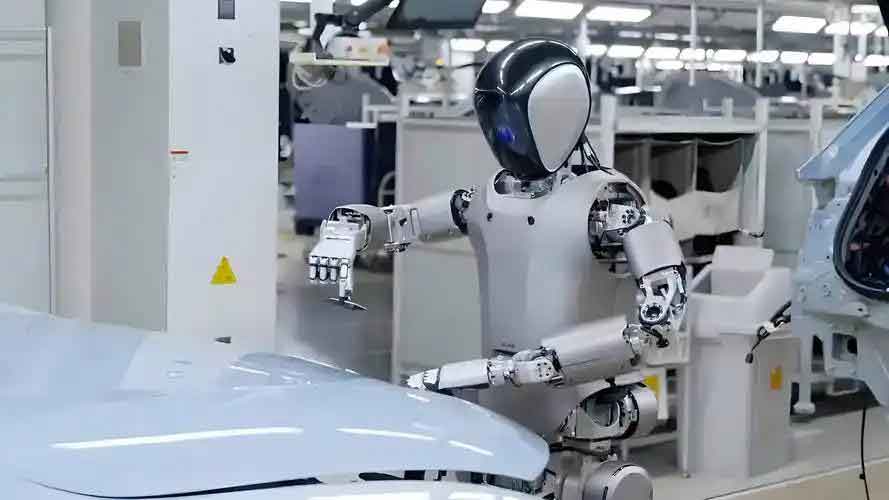
Humanoid robots are sophisticated systems designed to mimic human appearance and functionality, leveraging advanced technologies to perform tasks in diverse environments. My analysis begins with the current state of development, where I observe that nations like the United States, Russia, and Japan have made significant strides. For instance, military-focused humanoid robots, such as those developed for battlefield rescue and fire support, demonstrate enhanced mobility and autonomy. In the civilian sector, humanoid robots are being deployed for social services, logistics, and industrial applications, driven by cost reductions and intelligence improvements. To illustrate, I present Table 1, which summarizes key humanoid robot models and their characteristics, reflecting the diversity in design and application.
| Country | Robot Name | Category | Key Features | Degrees of Freedom | Estimated Cost | Primary Applications |
|---|---|---|---|---|---|---|
| USA | Atlas | Military/Research | High agility, running, jumping, obstacle avoidance | 28 | High (over $100,000) | Disaster rescue, construction |
| Russia | Fedor | Military | Dual-handed shooting, autonomous learning | Approx. 30 | Not disclosed | Fire support, emergency operations |
| USA | Optimus | Civilian | Low cost, high simulation, autonomous navigation | 200+ | $20,000 (projected) | Logistics, manufacturing, service |
| Japan | HRP-5P | Civilian | High-fidelity motion, assembly capabilities | 37 | High (research prototype) | Industrial assembly, research |
| USA | Digit | Civilian | Semi-autonomous navigation, payload capacity | Not specified | $250,000 | Warehousing, logistics |
From my perspective, the advancement of humanoid robot technology hinges on several core areas. First, in joint design, the transition from single-degree-of-freedom structures to multi-degree-of-freedom hybrid configurations has been crucial. The kinematics of a humanoid robot can be described using forward kinematics equations, where the position and orientation of the end-effector are derived from joint angles. For example, for a serial chain with n joints, the transformation matrix is given by: $$ T_n^0 = \prod_{i=1}^{n} A_i(\theta_i) $$ where \( A_i \) represents the homogeneous transformation matrix for joint i, and \( \theta_i \) is the joint angle. This allows humanoid robots to achieve human-like motion, with higher degrees of freedom enabling more dexterous tasks, as seen in Optimus with over 200 degrees of freedom.
Second, power drive optimization involves balancing cost, size, weight, and power. Most humanoid robots use electric motors with reducers, but pneumatic muscles are also explored. The torque required at a joint can be modeled as: $$ \tau = I \alpha + b \omega + mgd \sin(\theta) $$ where \( \tau \) is torque, \( I \) is inertia, \( \alpha \) is angular acceleration, \( b \) is damping coefficient, \( \omega \) is angular velocity, \( m \) is mass, \( g \) is gravity, \( d \) is distance, and \( \theta \) is joint angle. This equation highlights the challenges in designing efficient drives for humanoid robots, where minimizing weight while maximizing power is key to mobility.
Third, sensor fusion for perception integrates visual, auditory, and tactile data. Humanoid robots employ cameras, LiDAR, force sensors, and emerging electronic skin to emulate human senses. The fusion process can be represented using Bayesian inference: $$ P(state | sensor data) = \frac{P(sensor data | state) P(state)}{P(sensor data)} $$ This enables humanoid robots to perceive environments accurately, enhancing their ability to navigate and interact. For instance, machine vision in humanoid robots often surpasses human capabilities in grayscale resolution, allowing for precise target detection in military scenarios.
Fourth, autonomous control leverages AI for decision-making. Reinforcement learning algorithms, such as Q-learning, are commonly used: $$ Q(s,a) \leftarrow Q(s,a) + \alpha [r + \gamma \max_{a’} Q(s’,a’) – Q(s,a)] $$ where \( Q(s,a) \) is the action-value function, \( \alpha \) is learning rate, \( r \) is reward, and \( \gamma \) is discount factor. This empowers humanoid robots like Fedor to learn autonomously and perform complex tasks, such as weapon handling. Additionally, I summarize key technologies in Table 2, emphasizing their impact on humanoid robot performance.
| Technology Area | Description | Mathematical Representation | Impact on Humanoid Robot |
|---|---|---|---|
| Joint Design | Multi-degree-of-freedom structures for human-like motion | $$ \theta = [\theta_1, \theta_2, …, \theta_n]^T $$ for n joints | Enables dexterous manipulation and locomotion |
| Power Drive | Optimization of motor and reducer systems | $$ P = \tau \omega $$ for power output | Reduces weight and cost, improves efficiency |
| Sensor Fusion | Integration of multiple sensors for perception | $$ z = h(x) + v $$ with \( z \) as sensor data, \( x \) state, \( v \) noise | Enhances environmental awareness and accuracy |
| Autonomous Control | AI-driven decision-making and learning | $$ \pi(a|s) = \text{softmax}(Q(s,a)) $$ for policy | Increases adaptability and intelligence in tasks |
Looking ahead, I identify several trends shaping the future of humanoid robot development. The structural humanization trend is evident in designs that closely mimic human anatomy, with increasing degrees of freedom. For example, the hand of a humanoid robot can be modeled with multiple joints, allowing for precise grasping. The grasp force can be calculated using: $$ F = k \Delta x $$ where \( F \) is force, \( k \) is stiffness, and \( \Delta x \) is displacement. This enables humanoid robots to handle delicate objects in military or civilian settings. Autonomy is another critical trend, driven by AI and supercomputing. Humanoid robots are evolving from remote-controlled systems to fully autonomous entities, capable of learning from environments. The control law for autonomous navigation might involve PID control: $$ u(t) = K_p e(t) + K_i \int_0^t e(\tau) d\tau + K_d \frac{de(t)}{dt} $$ where \( u(t) \) is control input, \( e(t) \) is error, and \( K_p, K_i, K_d \) are gains. This allows humanoid robots like Optimus to perform complex movements autonomously.
Cost reduction is a pivotal trend, as high costs have hindered mass adoption. The total cost of a humanoid robot can be broken down into components: $$ C_{total} = C_{motor} + C_{reducer} + C_{sensor} + C_{controller} + C_{other} $$ where each term represents cost contributions. With advancements in manufacturing, costs are projected to drop significantly, making humanoid robots more accessible. For instance, by leveraging automotive parts, Optimus aims for a $20,000 price point. I project that as costs decrease, humanoid robots will become ubiquitous in various sectors.
In military applications, humanoid robots offer unique advantages that I analyze from my viewpoint. Their battlefield perception capabilities exceed human limits in some aspects, such as machine vision for target detection. The signal-to-noise ratio in sensors can be expressed as: $$ SNR = \frac{P_{signal}}{P_{noise}} $$ which humanoid robots optimize for clear reconnaissance. Adaptability to complex terrains is enhanced by bipedal locomotion, modeled using zero-moment point (ZMP) criteria for stability: $$ x_{ZMP} = \frac{\sum m_i (g z_i – \ddot{z}_i x_i)}{\sum m_i (g – \ddot{z}_i)} $$ where \( m_i \) is mass element, \( g \) gravity, and \( x_i, z_i \) positions. This allows humanoid robots to traverse uneven ground, unlike wheeled counterparts.
Collaborative作战 capability enables humanoid robots to work alongside soldiers, forming human-machine teams. The effectiveness of such teams can be quantified using synergy metrics: $$ S = \frac{P_{team} – (P_{human} + P_{robot})}{P_{human} + P_{robot}} $$ where \( P \) represents performance. Positive synergy indicates enhanced combat power. Humanoid robots can perform diverse missions, from assault to救援, expanding military operational scope. For example, in fire support, a humanoid robot can aim weapons using inverse kinematics: $$ \theta = J^{-1} \dot{x} $$ where \( J \) is Jacobian matrix, linking joint velocities to end-effector velocity. This precision increases hit probability.
I foresee humanoid robots revolutionizing warfare through manned-unmanned teaming. They can be integrated into adaptive squads, executing coordinated attacks. The tactical advantage can be modeled using Lanchester’s laws for combat: $$ \frac{dR}{dt} = -\alpha B, \quad \frac{dB}{dt} = -\beta R $$ where \( R \) and \( B \) are forces, and \( \alpha, \beta \) are attrition coefficients. Adding humanoid robots shifts these equations, potentially reducing casualties. Moreover, humanoid robots can serve as decoys in urban combat, deceiving enemies and exposing positions. The deception success rate might follow probability distributions: $$ P_{success} = 1 – e^{-\lambda t} $$ where \( \lambda \) is rate parameter, and \( t \) is time. This enhances soldier survivability and mission success.
From my analysis, I derive several insights. The scalable application of humanoid robots will have disruptive effects on society and warfare. As these systems become more affordable and intelligent, they could replace human labor in manufacturing or combat, altering economic and military landscapes. The cost-intelligence nexus is critical; reducing core component costs, such as motors and reducers, while enhancing AI, will accelerate adoption. I estimate that motor and reducer costs account for up to 70% of total expenses, so innovations here are vital. The military application research, through experiments and challenges, fast-tracks实战化, enabling new operational capabilities.
In conclusion, the development of humanoid robot technology is advancing rapidly, driven by interdisciplinary innovations. As I have detailed, key technologies in design, power, perception, and control are maturing, while trends point toward greater humanization, autonomy, and affordability. The military potential of humanoid robots is vast, offering enhanced感知, adaptability, and collaboration. I believe that continued investment and research will unlock transformative applications, making humanoid robots integral to future civilian and defense systems. Through this first-person exploration, I hope to contribute to a deeper understanding of this dynamic field, emphasizing the pivotal role of humanoid robots in shaping our technological trajectory.