
Technology venues across Huizhou became a leading destination for families during the holiday period, as immersive exhibits, public science interactions and hands-on experiences attracted large numbers of parents and children. Visitors encountered a humanoid robot able to play chess and Go, tested brain-controlled drone flight, watched robot dogs respond to commands and moved through science displays that turned complex ideas into activities that could be seen, touched and tried.
The holiday scene reflected a broader shift in how families spend leisure time. Instead of treating technology as something viewed from a distance, venues encouraged visitors to step into the experience. A humanoid robot became a partner in a board game, a lightweight headband translated intention into drone movement, and a science stage turned pressure, temperature and electricity into visible demonstrations. The result was a holiday program in which entertainment and science education reinforced each other.
- A Holiday Program Built Around Participation and Discovery
At the Huizhou Science and Technology Museum, the atmosphere on October 1 was lively and continuous. Children called out as liquid nitrogen produced a sudden cloud of white mist, and others celebrated after clearing another challenge and adding a stamp to their collection cards. The three-day 2026 Huizhou National Day Science Popularization Carnival opened that day and drew widespread participation, especially from young people.
The museum did not rely only on its permanent science galleries. During the holiday, it combined classic exhibition spaces with a science carnival, robot technology lectures and other public science activities. The program was designed to transform scientific knowledge into projects that visitors could watch, play with and operate themselves. For many families, the visit became an opportunity to spend several hours moving between demonstrations, challenges and stage shows.
The carnival was organized around four thematic stops: science and technology for national foundation, research for strong foundations, science and technology for national rejuvenation, and innovation for a strong nation. Each area gave visitors a different entry point into the story of scientific development. In the first area, parents and children paused before displays and models related to major achievements, including the “Two Bombs, One Satellite” program and artemisinin. Adults explained the stories of earlier generations overcoming difficulties, while children listened and looked closely at the exhibits.
The interactive market focused on research foundations was among the busiest areas. Long lines formed for challenges such as the chopstick challenge, the electric maze and the ring balance game. Children held their stamp cards carefully, worked through each task and then ran to the stamping table after success. Their expressions showed that the reward was not only a mark on a card but also the satisfaction of solving a problem under pressure.
At the center of the first-floor hall on October 1, the science show stage became a focal point. Demonstrations including a Magdeburg hemispheres tug-of-war, a liquid nitrogen explosion and a plasma cannon drew applause and exclamations from the audience. The combination of physical drama and clear explanation helped visitors connect scientific principles with effects they could see immediately.
Mr. Zhang, a local resident, said the science show was excellent and that his whole family went on stage to try the Magdeburg hemispheres tug-of-war, which they found impossible to pull apart. He added that the children liked the challenge games, and that each game contained scientific principles, so the experience allowed them to learn while playing. In his view, it was more interesting than simply playing a game without a scientific purpose.
From October 1 to October 3, the carnival attracted more than 12,000 visits. The program allowed young people to experience, in a relaxed and joyful atmosphere, the broader course of scientific and technological development from foundational work to national strength. It also sought to strengthen a sense of national pride by connecting present-day interactive experiences with the achievements and struggles of earlier generations.
The popularity of the museum program showed that public science communication works best when it is not confined to labels and panels. A humanoid robot demonstration, a chemistry-stage surprise or a simple balance challenge can become a starting point for longer conversations between parents and children. In this setting, the humanoid robot was not merely a spectacle. It was a conversation starter about sensing, control, artificial intelligence and the growing presence of intelligent machines in daily life.
- Humanoid Robot Experiences Turn Science Fiction into an Afternoon Activity
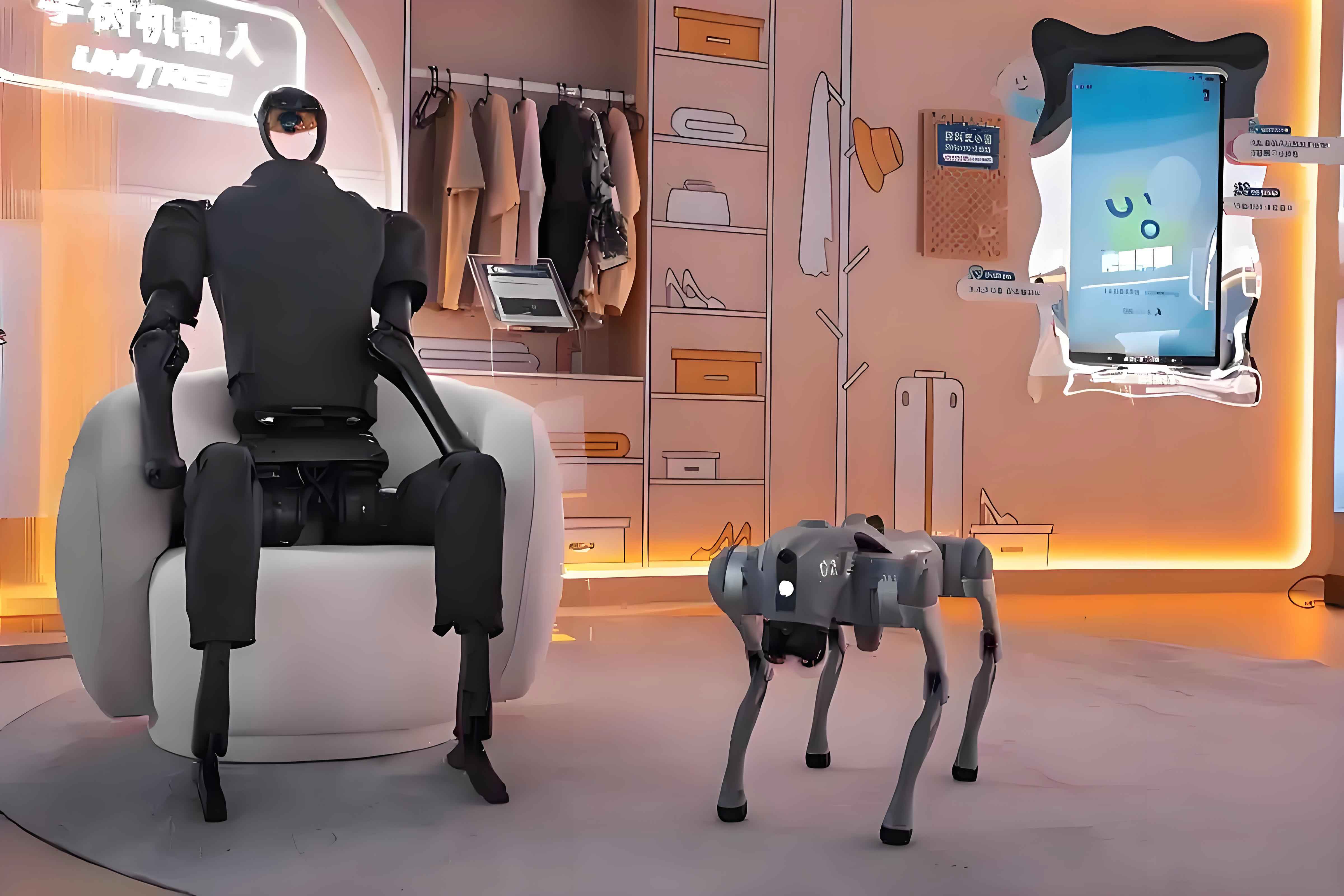
At the Huizhou Future Era Robot 6S Comprehensive Empowerment Center, located at the Huizhou Olympic Sports Center, the holiday opening introduced families to a wide range of robotic systems. The center is an AI science and innovation platform that combines industry services, technology experiences and innovation-oriented study programs. It brings together leading domestic robot brands, including Zhongqing, Unitree and UBTECH, and presents more than 100 varieties and more than 500 robot products.
The product matrix covers a humanoid robot lineup, quadruped robot dogs, industrial robotic arms and commercial service robots. For visitors, the appeal was immediate. At the entrance, two tall Transformers-style figures stood on either side, creating a strong technological atmosphere. Children rushed forward to take photographs, while parents looked toward the exhibition hall where robot dogs, humanoid robot models and mechanical arms waited inside.
In the robot dog application demonstration area, children operated equipment and guided two armored robot dogs through a shooting battle. The scene was tense and exciting, with visitors cheering as the machines responded. In the intelligent exhibit experience area, visitors wore smart headbands to control drone flight by “mind,” or sat in chairs to play chess and Go against machines proficient in multiple board games. The humanoid robot chess partner attracted particular attention because it combined recognizable humanlike form with precise mechanical response.
Brain-controlled drone flight offered one of the clearest examples of how a complex technology can be presented as an accessible experience. A child wearing a lightweight headband could make a drone take off, flip and move horizontally. The activity allowed visitors to encounter the idea of human-machine interaction without needing to understand every technical detail first. The humanoid robot displays nearby added another layer, showing how sensing, decision-making and movement can be combined in one platform.
Ms. Zhao visited on the morning of October 5 with her son and daughter, both in primary school. She said the children were very interested in these hard technologies and black technologies and did not want to leave once they arrived. As she spoke, a black robot dog came over and sat beside her when called, making the two children laugh. The moment illustrated how robot behavior can feel approachable and even playful while still demonstrating advanced control and responsiveness.
Zhuang Peina, manager of the exhibition hall at the Huizhou Future Era Robot 6S Comprehensive Empowerment Center, said projects such as brain-controlled drones, brain-controlled racing cars, human-versus-machine chess and robot combat were very popular with children. On the first day of the holiday, more than 1,000 visitors came to experience the center. The figures reflected strong public interest in direct interaction rather than passive viewing.
The center also provides daily public science lectures, with two sessions each day. The lectures explain artificial intelligence and robot technology in accessible language, making advanced science and innovation knowledge easier to understand and approach. For young people and schools, the center has developed systematic science and innovation study programs and practical training courses. These efforts are intended to help close the “last mile” between robot technology development and real-world application.
For families, the center offered more than a collection of machines. It presented a sequence of experiences in which a humanoid robot, a robot dog, a robotic arm and a brain-controlled interface each revealed a different aspect of intelligent systems. A humanoid robot can demonstrate balance and coordination; a robot dog can show mobility and response; an industrial robotic arm can show precision; and a brain-controlled drone can show how human intention may be translated into machine action. Together, these exhibits created a layered introduction to robotics.
- Reported Participation and Exhibit Highlights
The following table summarizes selected figures and exhibit details reported during the holiday period. It is intended to present the available information in a clear form without adding estimates beyond the reported data.
Reported item Details Science carnival duration Three days, from October 1 to October 3, 2026 Cumulative carnival participation More than 12,000 visits Robot center opening period During the holiday, at the Huizhou Olympic Sports Center Robot varieties on display More than 100 varieties Robot product models More than 500 robot products Robot categories Humanoid robot, quadruped robot dog, industrial robotic arm and commercial service robot First-day robot center visitors More than 1,000 visits Daily public science lectures at the robot center Two sessions each day Integrated services at the robot center Six services, including display experience and science and innovation study Robot brands named at the center Zhongqing, Unitree and UBTECH The table shows how the holiday program combined large public events with focused technology experiences. The science carnival reached a broad audience through stage shows, challenge games and thematic displays, while the robot center offered deeper interaction with humanoid robot platforms, robot dogs, robotic arms and brain-controlled devices. Both formats depended on participation, and both used demonstrations to make scientific ideas concrete.
The humanoid robot category was especially important in this mix. A humanoid robot can capture attention because its form is familiar, yet its capabilities raise questions about sensing, movement, learning and human-machine cooperation. When a humanoid robot sits across from a child at a chessboard, the encounter becomes memorable. The child is not only watching a machine; the child is responding to it, testing it and thinking about what it can do next.
- Why the Humanoid Robot and Robot Dog Exhibits Resonated with Children
The strongest experiences at the venues shared a common quality: they invited action. Children did not simply read about robotics. They guided robot dogs, spoke to machines, wore headbands and waited for a drone to respond. The humanoid robot chess exhibit worked because it combined a familiar game with an unfamiliar opponent. The robot dog battle worked because it turned control into a game. The brain-controlled drone worked because it made an invisible signal visible through flight.
For younger visitors, the appeal often began with movement. A robot dog that walks, sits or responds to a call is immediately engaging. A humanoid robot that moves its arm or reacts during a board game creates a sense of presence. Once attention is captured, explanations can follow. Parents can explain that the machine uses sensors, motors, control algorithms and software. Children can connect the explanation to what they have just seen, which makes the scientific content easier to remember.
The humanoid robot also served as a bridge between fantasy and engineering. Many children encounter humanoid robot characters in films, games and animated stories. Seeing a physical humanoid robot in an exhibition hall changes the experience from imagination to observation. Visitors can notice the joints, the frame, the sensors and the way the machine balances. They can see that the humanoid robot is not magic but a carefully engineered system with limits as well as capabilities.
The robot dog demonstrations added a different kind of appeal. Their four-legged movement is agile and expressive, and their ability to respond to commands makes them feel almost like companions. When a black robot dog walked over and sat beside Ms. Zhao, the children laughed immediately. That reaction is valuable in public science communication because it creates an emotional opening. A child who laughs at a robot dog is more likely to ask how it works and more likely to remember the answer.
The brain-controlled drone and brain-controlled racing car activities introduced another theme: human-machine interaction. Visitors could see that a machine may respond not only to buttons or joysticks but also to signals read from the body. The experience did not require visitors to master the underlying science. Instead, it gave them a direct feeling for the idea that human intention can be translated into machine behavior through sensing and computation.
For parents, the combination of play and learning was a major attraction. A humanoid robot chess game can teach strategy and patience while also raising questions about artificial intelligence. A robot dog battle can develop hand-eye coordination while introducing control systems. A science stage show can create excitement while demonstrating pressure, temperature and electricity. The holiday visit therefore offered both recreation and informal education.
- A Public Platform for Science, Industry and the Humanoid Robot Sector
The Huizhou Future Era Robot 6S Comprehensive Empowerment Center represents a model in which public science communication and industry development are presented together. Its stated role includes industry services, technology experience and science and innovation study. By displaying products from multiple robot brands and categories, the center gives visitors a broad view of the robotics sector while also providing a venue for companies and schools to connect with public audiences.
The presence of a humanoid robot lineup within this platform is significant. The humanoid robot sector has attracted attention because humanlike form factor creates possibilities for interaction in homes, workplaces, service environments and research settings. At the same time, the public can also see robot dogs, industrial robotic arms and commercial service robots. This wider context helps visitors understand that robotics is not a single product but a field with many forms and applications.
The center’s daily lectures and study programs support this broader mission. Two public science lectures each day break down artificial intelligence and robot technology into language that general audiences can follow. Systematic science and innovation study programs and practical training courses are designed for young people and schools. The aim is to connect exhibition experience with deeper learning and to help move robot technology from demonstration toward application.
This approach reflects a practical understanding of public interest. A humanoid robot display can draw a crowd, but the crowd also needs explanation, context and pathways for further learning. A robot dog can make children laugh, but the experience becomes more valuable when it is linked to mobility, sensing and control. A brain-controlled drone can seem like a futuristic trick, but it can also introduce the idea of human-machine interfaces. The center combined these elements into a single visit.
The exhibition also showed how a humanoid robot can coexist with other robotic forms in public communication. The humanoid robot may be the most visible symbol of advanced robotics, but robot dogs can demonstrate agility, industrial arms can demonstrate precision, and commercial service robots can demonstrate practical utility. By presenting all of these categories, the center gave visitors a more complete picture of the field.
- Science Communication That Families Can Share
The holiday programs at both the museum and the robot center showed that families value experiences they can share. Parents and children moved through challenges together, watched stage demonstrations together and discussed what they had seen. In some cases, adults tried the activities themselves, as with the Magdeburg hemispheres tug-of-war. In other cases, children took the lead and explained to their parents what they had learned.
This shared quality is important for public science communication. When an exhibit creates a conversation, the learning can continue after the visit. A child may ask why a drone moves when a headband is worn, why a robot dog can sit on command, or why a humanoid robot can play chess. Parents do not need to have all the answers. The value lies in the curiosity that the experience produces and in the encouragement to look further.
The humanoid robot chess activity was a clear example of this dynamic. A board game is familiar to many families, and chess or Go carries a sense of strategy and concentration. When the opponent is a humanoid robot, the familiar game becomes a new experience. Children must observe, think and respond. Parents can watch and discuss the machine’s behavior. The humanoid robot becomes part of a family conversation about intelligence, rules and technology.
The robot dog activities created a different kind of shared moment. Children operated equipment while parents watched, laughed and sometimes joined in. The machines moved in ways that were easy to read and react to, which made the experience accessible even to younger visitors. The brain-controlled drone added a sense of wonder, while the science stage added spectacle. Together, these elements created a holiday visit with variety and rhythm.
For venues, the lesson is that public science communication benefits from a mix of formats. A humanoid robot demonstration can attract attention. A challenge game can sustain participation. A stage show can create a shared high point. A lecture can provide explanation. A study program can extend the experience. When these formats are combined, visitors can move from excitement to understanding and from understanding to further interest.
- The Humanoid Robot as a Gateway to Deeper Technology Learning
The repeated presence of the humanoid robot across the holiday experience illustrated its role as a gateway technology. A humanoid robot can draw visitors toward questions about artificial intelligence, mechanical design, sensing, control and human-machine interaction. It can also serve as a memorable symbol of innovation. For children, that symbol may become a starting point for future study. For parents, it may become a way to discuss how technology is changing work, services and daily life.
At the robot center, the humanoid robot was displayed alongside robot dogs, robotic arms and commercial service robots. This arrangement helped avoid treating the humanoid robot as an isolated novelty. Visitors could see that different robot forms are suited to different tasks. A humanoid robot may be designed for environments built around human needs, while a robot dog may be suited to mobility across uneven ground, and an industrial robotic arm may be suited to repeated precision tasks. Commercial service robots may be designed for interaction and support in public spaces.
The center’s combination of display, experience and study also reflects the idea that innovation requires both public understanding and industry application. Visitors can encounter a humanoid robot in an exhibition hall, but the longer-term value depends on research, training and practical use. The daily lectures and study programs are intended to support that longer-term value by making technology knowledge more accessible and by offering structured learning opportunities.
The holiday programs also demonstrated that science venues can be important partners in this process. Museums and technology centers can reach families who may not seek out technical information on their own. They can present a humanoid robot in a welcoming environment and allow visitors to engage at their own pace. They can use stage shows and games to lower the barrier to entry and then provide lectures and exhibits for those who want to go further.
For young visitors, the experience may be remembered as the day they played chess with a humanoid robot, controlled a drone with a headband, or watched a robot dog sit on command. For the wider community, the significance lies in the accumulation of such experiences. Each visit can contribute to greater familiarity with robotics and artificial intelligence. Each conversation can help turn curiosity into understanding.
- A Holiday Snapshot of Rising Public Interest in Robotics
The holiday period offered a clear snapshot of rising public interest in robotics and interactive science. The science carnival attracted more than 12,000 visits over three days, and the robot center recorded more than 1,000 visits on its first holiday day. These figures do not capture every conversation, question or moment of surprise, but they indicate that technology experiences have become a significant part of holiday planning for many families.
The humanoid robot was one of the most visible symbols of this interest. It appeared in displays, in games and in discussions about the future of technology. Yet the holiday experience was not limited to one machine. Robot dogs, robotic arms, brain-controlled devices and stage demonstrations all contributed to a broader understanding of what modern science and technology can offer. The humanoid robot helped open the door, while the surrounding exhibits gave visitors more to explore.
The programs also showed how public science communication can be both festive and substantive. A holiday audience expects enjoyment, and the venues delivered it through competitions, shows, challenges and interactive exhibits. At the same time, the experiences carried scientific content. Pressure, temperature, electricity, sensing, control and artificial intelligence were presented not as abstract terms but as phenomena that visitors could observe and discuss.
For families, the result was a holiday activity that combined leisure with learning. Children could play, compete, watch and ask questions. Parents could join in, explain and discover alongside them. The humanoid robot, the robot dog and the brain-controlled drone each offered a different entry point, and together they created a rich environment for informal science education.
As technology continues to develop, the role of such venues is likely to remain important. Public understanding of the humanoid robot, robotics and artificial intelligence will depend not only on technical breakthroughs but also on opportunities for people to see, try and discuss these systems in accessible settings. The holiday programs in Huizhou provided exactly that kind of opportunity: a place where advanced technology became an experience that families could share.