
The use of the humanoid robot in education is attracting attention as schools, teachers, students, and families look for new ways to strengthen classroom engagement and develop practical skills. A recent analysis of the educational application of the humanoid robot describes a technology that brings together artificial intelligence, mechanics, computer science, communications, control systems, and mechanical engineering. When applied carefully and scientifically in teaching, the humanoid robot can help create a more comfortable learning environment and can encourage students to take a more active role in their own learning, according to the analysis.
The discussion places the humanoid robot within the wider growth of robot education. As modern science and technology develop rapidly, robot education has become a subject of increasing interest, and the humanoid robot has gradually entered classroom teaching. The analysis states that the humanoid robot has gained recognition from institutions, teachers, students, and parents. It also argues that applying the humanoid robot to classroom instruction can improve management teaching efficiency, auxiliary teaching efficiency, and hosting teaching efficiency. At the same time, the humanoid robot can stimulate learning interest and learning enthusiasm, support curriculum reform, and contribute to educational outcomes and students’ all-round development.
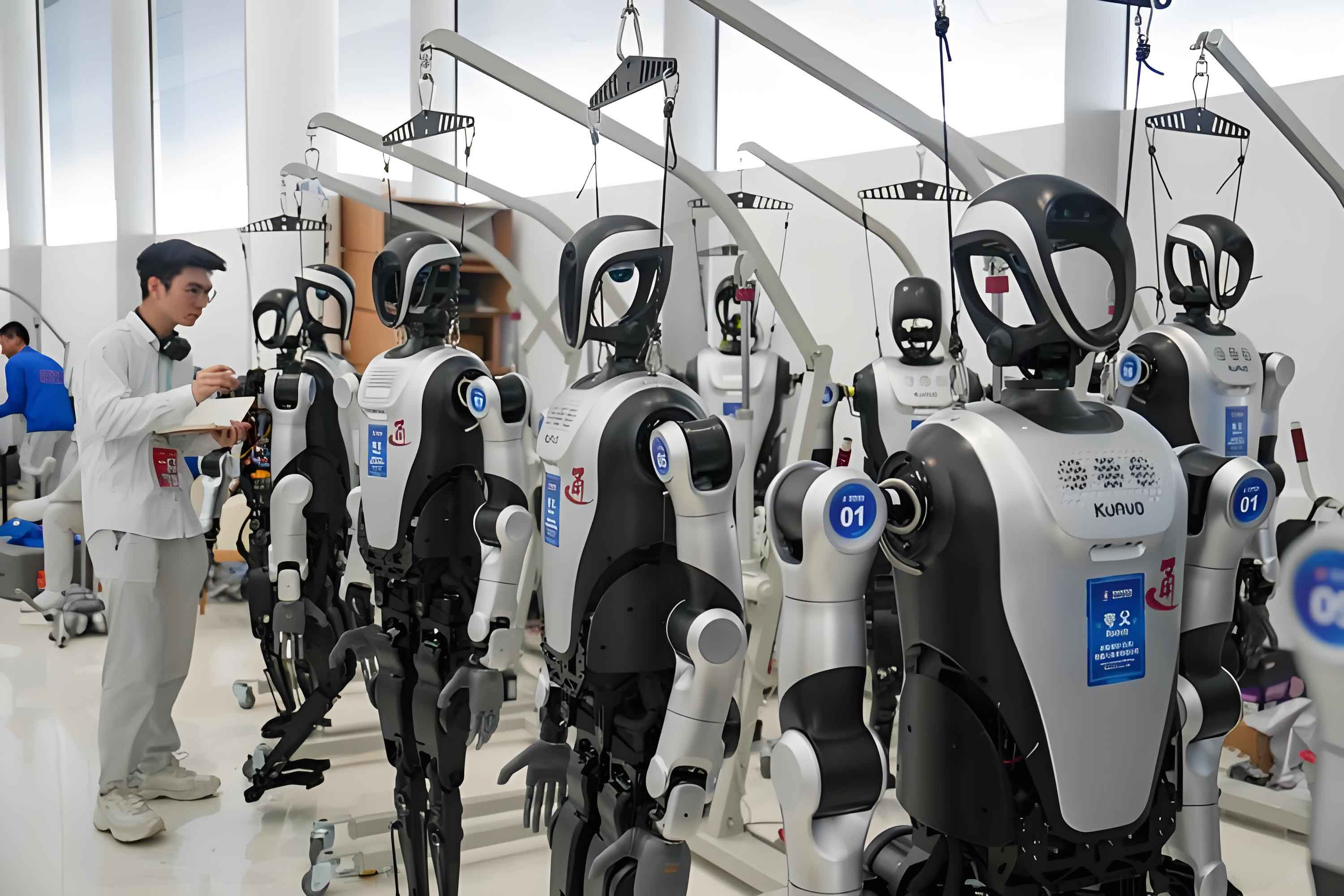
This interest does not mean that the humanoid robot is already a mature and universal classroom tool. The analysis presents both the educational value of the humanoid robot and several obstacles that limit its wider use. It notes that humanoid robot technology remains at an early stage in the domestic context described, that the education sector has not yet given the humanoid robot widespread attention, and that product development has sometimes followed older industrial thinking. Understanding these problems is presented as a condition for realizing the educational potential of the humanoid robot and for improving the quality of education and teaching.
1. Humanoid Robot Learning Moves From Demonstration to Curriculum Exploration
The humanoid robot is described as a high-technology platform that combines several disciplines. Its educational significance therefore extends beyond a simple demonstration tool. The humanoid robot can serve as a focus for learning about artificial intelligence, mechanics, computer science, communications, control, and mechanical design. For schools, the humanoid robot offers a way to connect abstract knowledge with concrete action. Students can see how programs, components, movement, and feedback interact in a physical system. The analysis emphasizes that the humanoid robot should be applied reasonably and scientifically in education, rather than being treated only as a novelty.
The classroom role of the humanoid robot is also described in terms of teaching efficiency. The analysis refers to management teaching efficiency, auxiliary teaching efficiency, and hosting teaching efficiency. These categories suggest that the humanoid robot can support classroom organization, assist instruction, and take part in leading learning activities. The humanoid robot may help teachers manage learning tasks and may also serve as an engaging subject of study. The analysis states that the humanoid robot can stimulate students’ learning interest and learning enthusiasm, which can support curriculum reform and student development. In this sense, the humanoid robot is presented as a potential contributor to teaching quality and to broader educational change.
However, the analysis does not present the humanoid robot as a replacement for teachers or as a complete curriculum in itself. Its value depends on how the humanoid robot is integrated into teaching. The humanoid robot must be connected to clear learning goals, appropriate tasks, and guided reflection. The analysis stresses that the humanoid robot should be applied in a reasonable and scientific manner. This means that the educational use of the humanoid robot should be planned rather than improvised. The humanoid robot can support learning only when its role is understood by teachers and when students are given meaningful opportunities to build, program, operate, and debug the device.
The movement of the humanoid robot into education also reflects a broader shift in robot education. The analysis notes that the humanoid robot is no longer entirely mysterious to students and has entered their daily learning lives. Robot classroom teaching has become a core part of information technology education in many institutions, according to the analysis. The humanoid robot can therefore help popularize robot knowledge among students. This popularization is not limited to technical facts. It also includes understanding how the humanoid robot works, how its parts function, how programs control its behavior, and how teams can solve problems when the humanoid robot does not perform as expected.
2. Five Educational Values Identified for Humanoid Robot Programs
The analysis identifies five main educational values of the humanoid robot. These values are logical thinking, problem analysis and solution, hands-on practice, innovation, and team collaboration. Each value is connected to a different part of humanoid robot learning. Together, they show why the humanoid robot can be more than a machine in the classroom. The humanoid robot becomes a learning platform through which students develop habits of thought, practical skills, and cooperative behavior.
2.1 Logical Thinking Through Humanoid Robot Programming
The first value is the development of logical thinking. The analysis states that an important part of applying the humanoid robot is program writing. For the humanoid robot, the program is described as its thinking. This comparison highlights the central role of programming in humanoid robot education. Before students can make the humanoid robot operate, they must understand its working principles and the functions of its various components. They must also ensure that the program they write contains no logical errors. If the logic of the program is flawed, the humanoid robot will not run correctly.
During program writing, students’ logical thinking ability is said to improve without their necessarily noticing it. This is an important point about the humanoid robot as an educational tool. The humanoid robot gives students immediate feedback on the logic they have created. When the humanoid robot fails to move, turns incorrectly, or stops unexpectedly, students must examine the sequence of instructions and the relationships among conditions, actions, and outcomes. The humanoid robot thus turns programming logic into something visible and testable. Students learn to order steps, identify causes and effects, and correct errors in a structured way. The humanoid robot is not only the object of instruction but also a partner in developing disciplined reasoning.
The analysis also implies that programming the humanoid robot requires more than memorizing commands. Students must understand how the humanoid robot’s parts function and how the program communicates with those parts. This combination of conceptual understanding and procedural thinking makes the humanoid robot a rich environment for logical development. The humanoid robot can help students move from vague ideas to precise instructions. It can also help them recognize that a correct result depends on a correct sequence. In this way, the humanoid robot supports the kind of logical thinking that is useful across subjects and beyond school.
2.2 Problem Analysis and Solution Through Build, Program, Run, and Debug
The second value is the development of students’ ability to analyze and solve problems. The analysis explains that making the humanoid robot is an important part of humanoid robot teaching. The process is complex and includes several stages: building, programming, running, and debugging. If any stage has a problem, students cannot successfully complete the humanoid robot. This makes the humanoid robot a practical setting for problem-solving. Students cannot rely only on theory. They must observe the humanoid robot, identify the source of a fault, and decide what to change.
In the process of making the humanoid robot, students must learn to analyze problems and optimize the humanoid robot according to actual conditions. This is a key educational outcome. The humanoid robot may not behave as planned because of a construction issue, a programming error, a component limitation, or an environmental factor. Students must consider multiple possibilities and test their assumptions. The humanoid robot therefore encourages a systematic approach to problem analysis. Students learn to separate symptoms from causes, to make adjustments one step at a time, and to evaluate whether a change has improved the humanoid robot’s performance.
The analysis states that students’ ability to analyze and solve problems is improved through this work. The humanoid robot provides a concrete context in which problems must be solved rather than merely described. When the humanoid robot fails, students have a reason to investigate. When the humanoid robot succeeds, students can reflect on the decisions that led to success. This cycle of build, program, run, and debug is central to the educational value of the humanoid robot. It helps students develop persistence, careful observation, and practical judgment. The humanoid robot thus becomes a vehicle for learning how to learn from failure and how to improve a system through repeated testing.
2.3 Hands-On Practice Through Humanoid Robot Construction and Operation
The third value is the development of hands-on practice ability. The analysis describes humanoid robot practice teaching as a process in which students operate the equipment themselves. This process requires both thinking and doing. Students must not only consider what the humanoid robot should do but also physically assemble, adjust, and operate it. The humanoid robot therefore strengthens students’ practical ability and supports their later development.
The humanoid robot is particularly useful because it makes practice unavoidable. Students cannot complete the humanoid robot by listening alone. They must handle parts, connect components, check positions, and observe movement. The humanoid robot responds to physical actions as well as to programs. This response helps students understand that ideas must be implemented carefully. A small mistake in assembly or a loose connection can affect the humanoid robot’s behavior. By working with the humanoid robot, students learn precision, patience, and responsibility for their own work.
The analysis presents hands-on practice as a foundation for other educational outcomes. Logical thinking becomes more meaningful when students can test their programs on the humanoid robot. Problem-solving becomes more concrete when students can manipulate the humanoid robot and observe the results. Innovation becomes more realistic when students can build and modify the humanoid robot. Team collaboration becomes more effective when students share physical tasks and coordinate their actions around the humanoid robot. In this way, hands-on practice with the humanoid robot connects the intellectual and practical dimensions of learning.
2.4 Innovation Through Humanoid Robot Design and Modification
The fourth value is the development of innovation ability. The analysis states that a main purpose of humanoid robot teaching is to fully enhance students’ innovation ability. In the process of building and improving the humanoid robot, some parts cannot be produced by students themselves. However, the remaining process requires students to think independently and to practice with their own hands. This combination of thought and action is described as an effective way to develop innovative thinking.
The humanoid robot offers opportunities for modification and improvement. Students can consider how to adjust the structure, how to change the program, and how to make the humanoid robot perform a task more effectively. The analysis does not claim that every student will invent a new humanoid robot. Instead, it emphasizes that the process of thinking and making allows students to develop innovative thinking. The humanoid robot becomes a platform for exploring alternatives. Students learn that existing designs can be improved and that problems can be addressed in more than one way.
Innovation in humanoid robot education is therefore connected to practical constraints. Students must work with the parts and tools available. They must consider what the humanoid robot can realistically do. This makes innovation more than imagination. It becomes a process of designing, testing, and refining within limits. The humanoid robot supports this process because it gives students immediate feedback. When an idea does not work, students can revise it. When an idea works, students can build on it. The humanoid robot thus helps students develop the confidence and habits needed for creative problem-solving.
2.5 Team Collaboration Around Humanoid Robot Projects
The fifth value is the development of team collaboration ability. The analysis notes that humanoid robot teaching is mostly carried out in groups. This format requires group members to cooperate fully and to use collective strength to solve problems that individuals find difficult. In this setting, students can easily improve their team collaboration ability. The humanoid robot becomes a shared project that requires communication, division of labor, and mutual support.
Group work with the humanoid robot reflects the complexity of the task. Building, programming, running, and debugging the humanoid robot can involve different skills and different points of view. One student may notice a construction issue, another may identify a programming error, and another may suggest a way to test the humanoid robot. The analysis emphasizes that group members must work together. The humanoid robot therefore teaches students that complex problems are often solved through cooperation. It also gives them practice in explaining their ideas, listening to others, and agreeing on next steps.
The analysis states that humanoid robot education can popularize robot knowledge among students and that the humanoid robot has entered students’ daily learning lives. This social dimension is important. The humanoid robot is not only a technical object but also a focal point for shared activity. Students learn to coordinate their efforts around the humanoid robot and to take responsibility for a common outcome. The humanoid robot thus supports both technical learning and the development of cooperative attitudes that are valuable in school and in later life.
3. Implementation Challenges Limit Humanoid Robot Adoption
Although the analysis identifies clear educational values, it also describes several problems in the current teaching application of the humanoid robot. These problems concern technology, educational attention, and product development. They help explain why the humanoid robot has not yet become a common classroom resource. The analysis argues that only by fully understanding the problems in the educational application of the humanoid robot can schools and educators give full play to its potential educational value.
3.1 Humanoid Robot Technology Remains Immature
The first challenge is that humanoid robot technology is not yet mature. The analysis states that robot technology is mainly applied in industrial production, which has led to relatively slow development of humanoid robot technology. Different countries also have different requirements for humanoid robot technology, and their development levels are uneven. The analysis gives examples of differing research priorities. Japan has paid attention to the walking method of the humanoid robot, and the humanoid robots developed there are described as outstanding in walking. The United States has placed research emphasis on military robots and intelligent robots, so many humanoid robots developed there are described as powerful military and intelligent machines.
In the domestic context described by the analysis, the development of the humanoid robot is still at a primary stage. Immature technology has led to problems in various aspects of the humanoid robot developed in that context. This point is important for education. Schools need reliable equipment if they are to use the humanoid robot in regular teaching. When the humanoid robot is difficult to maintain, limited in function, or inconsistent in performance, teachers may hesitate to adopt it. The humanoid robot may then remain a demonstration device rather than a sustained learning platform.
The analysis does not suggest that immature technology makes the humanoid robot useless in education. Rather, it suggests that the educational value of the humanoid robot must be considered alongside its technical limits. Teachers need to understand what the humanoid robot can and cannot do. They need to select tasks that are appropriate for the current stage of humanoid robot development. They also need to prepare for technical problems and to use those problems as learning opportunities. In this way, the humanoid robot can still support education even while the technology continues to develop.
3.2 Education Sector Attention and Promotion Remain Limited
The second challenge is that the humanoid robot has not attracted widespread attention from the education sector. The analysis states that robot courses are gradually entering institutions and that more students are participating in robot competitions. This participation helps promote the humanoid robot and robot education more broadly. However, the analysis also notes that robots are relatively expensive and have not received strong promotion from the education sector. Many institutions offer robot teaching only in the form of training classes, interest classes, or extracurricular activities.
The analysis describes a common pattern. Institutions may purchase several sets of robot equipment and arrange for teachers of comprehensive practice courses or information technology courses to provide guidance. Students are then organized to take part in related activities, such as humanoid robot programming activities and humanoid robot assembly activities. Under these conditions, robot teaching is difficult to carry out effectively. The humanoid robot may be available only to a small number of students. It may be used intermittently rather than as part of a coherent curriculum. Teachers may have limited time and support for developing humanoid robot lessons.
The analysis presents this limited attention as a barrier to the educational application of the humanoid robot. If the humanoid robot is treated only as an optional interest activity, its broader educational value may not be realized. The humanoid robot can support logical thinking, problem-solving, hands-on practice, innovation, and teamwork, but these outcomes require sustained learning opportunities. Schools need to consider how the humanoid robot can be integrated into regular teaching rather than remaining an isolated enrichment activity. The analysis does not provide a simple solution, but it makes clear that attention and promotion are necessary for the humanoid robot to move from occasional use to meaningful educational practice.
3.3 Legacy Thinking and Fragmented Brands Slow Humanoid Robot Innovation
The third challenge concerns thinking and product development. The analysis states that more enterprises have begun to research the humanoid robot and to develop new models to adapt to the market. However, the humanoid robot has followed the development thinking of the automobile industry. The analysis points to brands that are too complex and products that lack innovation. These factors are described as unfavorable to the long-term development of the humanoid robot.
This comparison with the automobile industry suggests that the humanoid robot market may be fragmented and may not yet focus enough on educational needs. When brands are too numerous and products lack innovation, schools may find it difficult to choose appropriate humanoid robot equipment. The humanoid robot may be designed with general market goals rather than specific classroom goals. Teachers may then need to adapt the humanoid robot to educational tasks, rather than using a humanoid robot that is already well suited to teaching.
The analysis also notes that institutions need to invest sufficient funds in the initial stage if they are to carry out humanoid robot classroom teaching effectively. Institutions that already lack funding may find it difficult to sustain such investment. The humanoid robot therefore faces a practical financial barrier in addition to technical and educational barriers. The analysis does not present a detailed cost model, but it makes clear that the adoption of the humanoid robot depends on resources. Without affordable, reliable, and educationally relevant humanoid robot products, schools may struggle to maintain long-term programs.
4. Documented Humanoid Robot Education Values and Constraints at a Glance
The analysis can be summarized through the educational values and implementation constraints associated with the humanoid robot. The table below presents the main points described in the analysis without adding numerical claims or external data.
| Category | Documented emphasis | Relevance to the humanoid robot in education |
|---|---|---|
| Logical thinking | Program writing is central; the program is described as the thinking of the humanoid robot; students must understand working principles and component functions. | The humanoid robot gives students immediate feedback on logic and helps them order steps, identify causes and effects, and correct errors. |
| Problem analysis and solution | The humanoid robot involves building, programming, running, and debugging; any stage can affect success. | The humanoid robot encourages systematic investigation, testing, optimization, and persistence when results do not match expectations. |
| Hands-on practice | Humanoid robot practice teaching requires students to operate equipment themselves and to combine thinking with doing. | The humanoid robot strengthens practical ability through assembly, adjustment, operation, and observation. |
| Innovation | Students cannot produce some parts themselves, but other processes require independent thought and hands-on practice. | The humanoid robot supports creative problem-solving through design, modification, testing, and refinement within practical limits. |
| Team collaboration | Humanoid robot teaching is mostly carried out in groups; members must cooperate and use collective strength. | The humanoid robot provides a shared project that requires communication, division of labor, and mutual support. |
| Technology maturity | Humanoid robot technology remains at an early stage in the domestic context described; development levels and research priorities differ across countries. | Technical limits can affect reliability, maintenance, function, and the confidence of teachers considering the humanoid robot for regular teaching. |
| Education sector attention | Robots are relatively expensive; the humanoid robot has not received widespread promotion; teaching often appears as training, interest, or extracurricular activities. | Limited attention can keep the humanoid robot on the margins of the curriculum and reduce sustained learning opportunities for students. |
| Product development thinking | The humanoid robot has followed automobile-style development thinking; brands are too complex and products lack innovation. | Fragmented products and limited innovation can make it harder for schools to select suitable humanoid robot equipment and sustain investment. |
The table reflects the dual character of the humanoid robot in education. On one side, the humanoid robot offers a platform for logical thinking, problem-solving, practical work, innovation, and collaboration. On the other side, the humanoid robot faces technical, institutional, and market constraints. The analysis suggests that neither side should be ignored. If schools focus only on the promise of the humanoid robot, they may underestimate the difficulties. If they focus only on the barriers, they may miss the educational value that the humanoid robot can provide when used appropriately.
5. Humanoid Robot Education Requires Careful Curriculum and Resource Planning
The analysis does not present the humanoid robot as a simple solution to educational challenges. Instead, it shows that the humanoid robot must be placed within a thoughtful teaching plan. Schools considering the humanoid robot need to clarify what students should learn through the humanoid robot. They need to decide whether the humanoid robot will be used for programming, assembly, problem-solving, innovation, or teamwork, or for a combination of these purposes. The humanoid robot should not be introduced only because it is new. It should be connected to specific learning outcomes and to the existing curriculum.
Teacher preparation is also important. The analysis notes that robot teaching may be guided by teachers of comprehensive practice courses or information technology courses. These teachers need time and support to understand the humanoid robot, its components, its programming environment, and its common failure points. The humanoid robot is interdisciplinary, so teachers may need opportunities to share knowledge and collaborate. A teacher who understands both the technical and educational dimensions of the humanoid robot can use it more effectively. A teacher who has limited preparation may use the humanoid robot only for demonstration, which limits its educational value.
Resource planning is another consideration. The analysis states that robots are relatively expensive and that institutions may purchase several sets of equipment. Schools need to consider how the humanoid robot will be shared, maintained, and replaced. They need to plan for the number of students who can work with the humanoid robot at one time. They also need to consider how the humanoid robot can be used across different grade levels or courses. The humanoid robot should be treated as an educational resource that requires management, not as a one-time purchase. Without such planning, the humanoid robot may remain underused or may become difficult to sustain.
Assessment is also part of curriculum planning. The analysis identifies logical thinking, problem-solving, hands-on practice, innovation, and teamwork as educational values of the humanoid robot. Schools can consider how these outcomes will be observed and supported. The humanoid robot offers many opportunities for process-based learning. Students can document their design decisions, explain their programs, demonstrate debugging steps, and reflect on group collaboration. These activities can help teachers understand what students are learning through the humanoid robot. The humanoid robot thus becomes not only a tool for activity but also a subject for reflection and assessment.
6. Addressing Barriers Can Help Humanoid Robot Education Realize Its Potential
The analysis concludes that the humanoid robot has significant potential in education, but that this potential depends on understanding and addressing existing problems. The humanoid robot can help students develop logical thinking through programming. It can help them analyze and solve problems through building, programming, running, and debugging. It can strengthen hands-on practice, support innovation, and encourage team collaboration. These values are relevant to students’ development and to the improvement of educational quality.
At the same time, the humanoid robot faces immature technology, limited attention from the education sector, and product development patterns that may not serve educational needs well. These challenges cannot be ignored. The analysis argues that only by fully understanding the problems in the educational application of the humanoid robot can educators give full play to the potential educational value of the humanoid robot and improve education and teaching quality. This conclusion places responsibility on schools, teachers, technology providers, and education leaders. The humanoid robot needs reliable technology, appropriate products, teacher support, and a clear curricular role.
The broader outlook for the humanoid robot in education is therefore conditional rather than automatic. The humanoid robot has entered classroom discussion and has gained recognition in some settings. It has the capacity to stimulate interest and enthusiasm. It can support curriculum reform and student development. But the humanoid robot will not improve education simply by being present. Its value depends on how it is used, how teachers are prepared, how resources are managed, and how learning is assessed. The humanoid robot can become a meaningful educational platform when its technical limits are recognized, its costs are planned for, and its classroom purpose is clearly defined.
For schools and educators, the analysis offers a balanced message. The humanoid robot should be explored with attention to its educational promise and with awareness of its current limitations. The humanoid robot can support students’ logical thinking, problem-solving, practical ability, innovation, and teamwork. It can also reveal the importance of patience, testing, and cooperation when a complex system does not work as planned. These lessons are valuable in themselves. The humanoid robot therefore deserves continued consideration in education, provided that adoption is guided by evidence, planning, and a clear understanding of the conditions under which the humanoid robot can best serve learners.