
The rapid advance of artificial intelligence has pushed the humanoid robot from speculative fiction into the center of public, industrial, and philosophical debate. The humanoid robot is no longer only a laboratory prototype or a cinematic symbol. It is becoming a candidate for factories, hospitals, police work, care settings, homes, and everyday service environments. As the humanoid robot moves closer to ordinary life, the ethical and responsibility questions surrounding it become more urgent. A humanoid robot may look like a person, move like a person, and even speak like a person, but this similarity does not automatically mean that the humanoid robot can possess human-like ethics or bear responsibility in the same way a human being does. From a historical materialist perspective, the humanoid robot is a social and historical product. Its meaning, use, and regulation are shaped by human labor, social relations, and institutional choices. The humanoid robot can extend human capacities, but it cannot escape its character as an objectified product of human activity. This distinction is central to any serious discussion of humanoid robot ethics and humanoid robot responsibility.
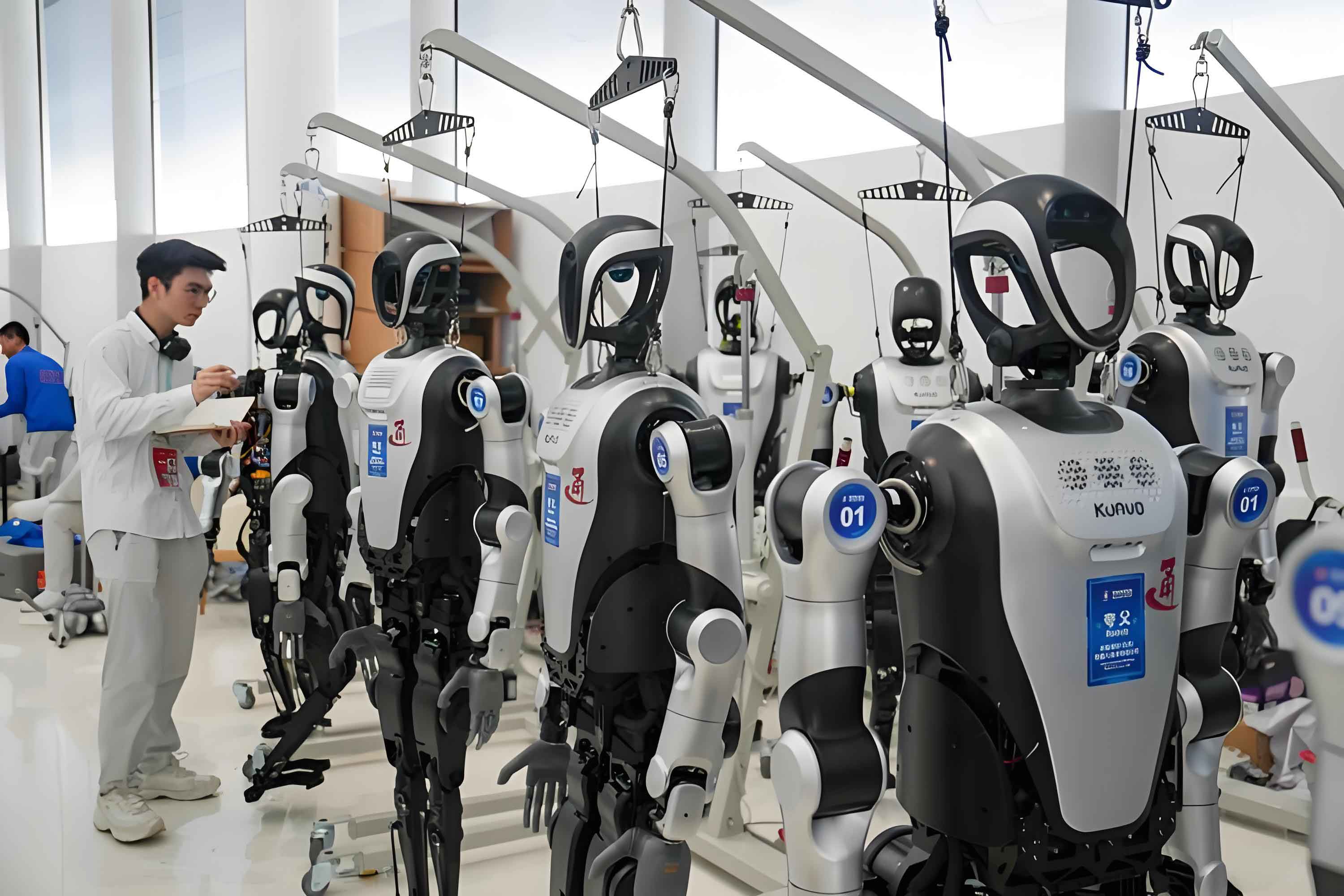
Recent developments show why the humanoid robot is attracting attention. In April 2024, Tesla announced plans to begin selling its first humanoid robot, Optimus, by the end of the following year. In the same month, Boston Dynamics introduced a new all-electric generation of its robot, replacing older hydraulic versions, while Sanctuary AI announced a next-generation humanoid robot named Phoenix. China has outlined plans for large-scale production of advanced humanoid robots by 2025. Agility Robotics has opened a factory in the United States with plans for mass production of its humanoid robot, Digit. These examples do not prove that a fully human-like humanoid robot is imminent, but they do show that the humanoid robot is becoming a serious industrial and social project. The question is not whether the humanoid robot will appear in some form. The question is how society will govern the humanoid robot before its effects become difficult to reverse.
1. The Humanoid Robot Arrives Before Its Ethical Rules
The humanoid robot creates a classic governance problem. In the early stages of a technology, regulation is relatively easy, but the social consequences are not yet well understood. Once the social consequences become clear, regulation is often too late. This is sometimes called the Collingridge dilemma. The humanoid robot sits inside this dilemma. If societies wait until the humanoid robot is widespread, the task of setting ethical and legal boundaries will become far more complex. If societies try to regulate too early, they may not yet know which risks matter most. The humanoid robot therefore demands anticipatory discussion. It demands that researchers, designers, policymakers, and the public consider not only what the humanoid robot can do, but also what the humanoid robot should be allowed to do.
Safety is the first concern. A humanoid robot has a body that can interact with the physical world, including human bodies. Unlike a software system that only produces text or images, a humanoid robot can move, lift, push, carry, and collide. A humanoid robot designed to work near people must be safe in uncontrolled environments. This is especially true when the humanoid robot is intended for care, education, policing, or domestic work. Popular culture often presents the humanoid robot as a threat to human survival, and while such images may be exaggerated, they express a real anxiety. The humanoid robot is a machine with agency-like behavior. If its behavior is unpredictable, poorly tested, or misaligned with human values, the consequences can be physical and irreversible.
Historical materialism helps clarify the point. Karl Marx argued that human beings should prove the truth of their thinking in practice. The humanoid robot is also tested in practice. But practice is not neutral. The humanoid robot is developed within specific economic and social relations. It is funded by particular interests, designed for particular tasks, and deployed in particular institutions. The humanoid robot is not an isolated technical fact. It is a social project. The ethical and responsibility problems of the humanoid robot cannot be solved by engineering alone, because the humanoid robot is already embedded in social purposes before it ever reaches a user.
2. What Is a Humanoid Robot? Definition, Degrees of Similarity, and Anthropomorphism
The word robot comes from a 1920 Czech play by Karel Capek, where robots were made of artificial flesh. Contemporary definitions are different. One influential definition describes a robot as embodied artificial intelligence. Another common framework describes robots through a sense-think-act cycle. A robot must be able to collect data from the external world, process that data, and act on the world. A humanoid robot is a specific kind of robot. It has a human-like form or human-like features. The Oxford English Dictionary definition of humanoid is something that has human form or human characteristics. This means that human likeness is not only about appearance. It can include movement, speech, facial expression, gesture, and behavioral style.
The humanoid robot is not a single fixed category. Human likeness comes in degrees. At one end, a humanoid robot may have a head, two arms, two legs, and a human-scale body, but no one would mistake it for a human being at close range. At the other end, a humanoid robot may be visually indistinguishable from a human in certain conditions, or it may possess important human-like abilities. The ethical risk exists across this entire spectrum. A humanoid robot that looks too human may create false expectations. A humanoid robot that looks almost human but behaves mechanically may create confusion. A humanoid robot that is treated as human may encourage emotional dependence. A humanoid robot that is treated as a mere tool may hide the social consequences of its use.
Anthropomorphism is closely related to human likeness. Anthropomorphism is the human tendency to attribute human-like features to other entities, including animals, natural events, machines, and the humanoid robot. When designers build human-like qualities into a humanoid robot, this can be called anthropomorphic encoding. When users perceive human-like qualities in a humanoid robot, this can be called anthropomorphic decoding. The humanoid robot is especially powerful in this regard because it is designed to trigger human social responses. People may talk to the humanoid robot, trust the humanoid robot, feel sorry for the humanoid robot, or become angry at the humanoid robot. These reactions are not simply mistakes. They are part of how human beings interpret the social world.
There are several reasons why engineers and researchers may want to build a humanoid robot. First, human beings naturally use themselves as a reference point. Human abilities and human form are familiar. Second, people often prefer human-like company. A humanoid robot may seem more approachable than a box with wheels. Third, researchers may use a humanoid robot to better understand human intelligence by imitating human capacities. Fourth, the human-built environment is designed for human bodies. Doors, stairs, tools, furniture, and vehicles assume a human shape. A humanoid robot may fit this environment more easily than other robot forms. Fifth, human beings are used to human interaction. A humanoid robot may be easier to introduce into social settings. Sixth, some applications, such as companion robots, educational robots, or service robots, may seem to require a human-like presence.
Yet a historical materialist perspective warns against treating the humanoid robot as a natural or inevitable creation. The humanoid robot is a product of human labor. It is a material expression of human knowledge, social organization, and economic priorities. Marx described machines and industry as products of human labor, not as independent natural forces. The humanoid robot is no exception. It is a human-made artifact. Its form reflects human decisions. Its purposes reflect human interests. Its risks reflect human institutions. The humanoid robot may appear autonomous, but its autonomy is delegated, limited, and socially shaped.
3. From Robot Ethics to Humanoid Robot Ethics
Robot ethics is a relatively new field. The term roboethics became more visible around two decades ago, linked to the first international workshop on robot ethics in 2004. Before that, ethical questions about robots were discussed, but not always under a single label. Gianmarco Veruggio described the social importance of robot ethics and identified several application areas, including economic consequences such as employment, social impacts, healthcare, unequal access, intentional misuse, and legal questions about who is responsible for a robot’s behavior. Peter Asaro argued that robot ethics can refer to three things: ethical systems built into robots, the ethics of people who design and use robots, and the ethics of how people treat robots. Patrick Lin divided robot ethics into safety and errors, law and ethics, and social impact. These categories overlap, but they help organize the field.
Humanoid robot ethics is not simply robot ethics with a different name. There are at least three relationships between general robot ethics and humanoid robot ethics. First, some issues apply to the humanoid robot and non-humanoid robots alike. Safety, privacy, autonomy, and responsibility belong to this category. Second, some issues are amplified by the human form of the humanoid robot. Privacy is one example. A companion humanoid robot may collect intimate data in ways that an industrial robot does not. Trust and emotional attachment are other examples. Third, some issues are unique to the humanoid robot because it represents a human-like presence. Representation is one example. A humanoid robot may represent a particular social group, gender, race, or role. Relationship ethics is another example. A humanoid robot may be used to replace or supplement human relationships.
| Category | Relation to Humanoid Robot Ethics | Examples |
|---|---|---|
| Shared robot ethics issues | Apply to the humanoid robot and non-humanoid robots | Safety, privacy, autonomy, responsibility |
| Amplified by human form | Human likeness intensifies existing concerns | Data collection by a companion humanoid robot, trust, emotional attachment |
| Unique to the humanoid robot | Arise because the humanoid robot represents a human-like presence | Representation of social groups, replacement of human relationships |
The humanoid robot therefore cannot be reduced to a technical platform. The humanoid robot is a social object. It enters into human relationships. It creates expectations. It may be loved, feared, trusted, or blamed. These reactions matter for ethics because they shape how people act. A humanoid robot that is perceived as a moral agent may be treated as one, even if it is not one. A humanoid robot that is perceived as a servant may be treated as property, even if it looks like a person. The gap between perception and reality is a central source of ethical risk.
4. Can a Humanoid Robot Have Human-Like Ethical Norms?
The first core question is whether a humanoid robot can have ethical norms similar to those of a human being. The short answer from a historical materialist perspective is no. A humanoid robot may be programmed to follow rules, avoid harm, or produce socially acceptable behavior. But human-like ethics is not the same as rule-following. Human ethics involves emotion, conscience, social language, historical experience, moral imagination, and the ability to recognize which problems are worth solving. A humanoid robot can calculate. A humanoid robot can classify. A humanoid robot can optimize. But a humanoid robot cannot fully participate in the social and historical life that gives human ethics its meaning.
There are three basic approaches to implementing ethics in machines. The first is top-down. The humanoid robot is given moral rules derived from ethical theories such as deontology or utilitarianism. The second is bottom-up. The humanoid robot learns ethics from observation, experience, and data. The third is hybrid. The humanoid robot begins with predefined rules and also learns from examples. Each approach has strengths, but each also has serious weaknesses. Top-down approaches struggle with complex real-world situations that were not anticipated by the rule designers. Bottom-up approaches can inherit bias from data and experience. Hybrid approaches combine the problems of both.
| Approach | Core Idea | Main Strength | Main Risk |
|---|---|---|---|
| Top-down | The humanoid robot applies preprogrammed moral rules | Clear rules, predictable in simple cases | Poor preparation for complex, unforeseen situations |
| Bottom-up | The humanoid robot learns ethics from observation and data | Adaptive to context and experience | Bias in learning materials, unstable outcomes |
| Hybrid | The humanoid robot combines rules with learning | Flexibility with some structure | Inherits weaknesses of both approaches |
Consider deontology. A deontological humanoid robot might be designed never to deceive. But deception is not always considered wrong in human life. In medicine, education, and military contexts, deception can be used for protective or pedagogical purposes. A humanoid robot that communicates with a person may need to use white lies or strategic silence to avoid harm or to maintain trust. If the humanoid robot follows a strict rule against deception, it may fail in situations where human beings would judge deception to be acceptable or even necessary. This shows that human ethics cannot be reduced to a simple prohibition.
Consider utilitarianism. A utilitarian humanoid robot would evaluate actions by their consequences. But to do this, the humanoid robot must decide which consequences matter and how to weigh them. Should it consider only human interests? Should it consider animals? Should it consider future generations? Should it consider the distribution of benefits and harms? These are not purely technical questions. They are ethical and political questions. A humanoid robot cannot answer them from within its programming alone. The humanoid robot must be given a value framework, and that framework will reflect human choices.
There is also the problem of virtue ethics. Virtue ethics focuses on character, practical wisdom, and the question of what kind of person one should be. This approach is difficult to translate into programmable rules. It is easier to measure utility or to encode a duty than to design a humanoid robot that is honest, courageous, compassionate, and wise. In the humanoid robot context, the technical mindset may favor rule-based or outcome-based approaches and marginalize virtue-based or non-Western ethical traditions. This is a loss, because human ethics is plural and historically rich. A humanoid robot that follows one narrow ethical framework may not be ethically intelligent in a broader human sense.
Human moral agency has external and internal conditions. External conditions involve recognition by other social members. A humanoid robot may be recognized as a participant in moral practices. Internal conditions involve consciousness, feeling, and mental states. A humanoid robot may be able to recognize human emotions, but recognition is not the same as feeling. A humanoid robot may be able to simulate empathy, but simulation is not the same as empathy. A humanoid robot may be able to report a moral reason, but reporting is not the same as understanding. These distinctions matter because human ethics is not only about behavior. It is about the inner life that gives behavior moral significance.
Some scholars distinguish operational morality, functional morality, and full moral agency. Operational morality is when moral meaning is held by human designers and users. The machine itself does not evaluate moral facts. Functional morality is when the machine can assess and respond to moral challenges. Functional morality has degrees. A machine may have high autonomy but low sensitivity to values, or low autonomy but high sensitivity to values. Full moral agency is the human capacity to be responsible for one’s actions in a robust sense. A humanoid robot may achieve some form of functional morality. It cannot achieve full moral agency in the human sense. The humanoid robot lacks consciousness, feeling, and the social and historical existence that grounds human responsibility.
There is also the problem of social norms. Even if a humanoid robot could follow social norms, doing so could produce problematic outcomes. Seven problems are especially important: norm bias, paternalism, tyranny of the majority, pluralistic ignorance, the path of least resistance, outdated norms, and technology-induced norm change. Norm bias means that different groups have different norms. A humanoid robot that follows the norms of one group may violate the norms of another. Paternalism means that experts decide which norms the humanoid robot should adopt. Tyranny of the majority means that the norms of the majority are imposed on minority groups. Pluralistic ignorance means that people may publicly support norms they privately reject because they fear disagreement. The path of least resistance means that people and machines may continue following old norms even when those norms are no longer justified. Outdated norms may persist long after social values have changed. Technology-induced norm change means that the humanoid robot itself may alter social norms in unpredictable ways.
These problems do not mean that efforts to design ethical humanoid robots are worthless. They mean that the task must be approached critically. Ethical humanoid robot design should not be treated as a one-time technical fix. It should be an ongoing social process. The humanoid robot will need continuous monitoring, calibration, revision, and public deliberation. The humanoid robot cannot be given a fixed moral program and then left alone. Human values change. Social contexts change. The humanoid robot must be governed in relation to those changes.
An example helps illustrate the point. Imagine a person hiking in the mountains with a group. The weather suddenly turns bad. Rocks fall at high speed. The group finds shelter, but one person is still in danger because he is trying to carry a humanoid robot that has stopped working. He leaves his backpack but cannot leave the humanoid robot behind. By the time he decides to abandon the humanoid robot, it is too late. If he had left the humanoid robot earlier, he would have survived. This example shows that emotional attachment to a humanoid robot can have life-and-death consequences. It also shows that the humanoid robot may be treated as a moral patient or companion even when it cannot reciprocate. The ethical problem is not only in the humanoid robot. It is in the human relationship to the humanoid robot.
Another example involves a child who plays with a humanoid robot that looks like a human child. The child learns to interact with the humanoid robot using a certain level of physical force. When the child later plays with human children, he uses the same force and is perceived as violent. The humanoid robot has taught a behavior that is acceptable with a machine but harmful with a human. This shows that the humanoid robot can shape human social learning. The humanoid robot is not neutral. It can train human expectations and habits. A historical materialist view emphasizes that such training occurs within social relations. The humanoid robot may be designed for convenience, but its effects may reach into moral development.
From a historical materialist perspective, human ethics is not an abstract code that can be downloaded. It is produced and reproduced through social practice. Marx argued that free conscious activity is a fundamental human characteristic. A humanoid robot does not have free conscious activity in the human sense. A humanoid robot can process information and act on instructions, but it does not have the kind of social and historical existence that makes human ethics possible. Therefore, a humanoid robot can have operational or functional morality, but it cannot have fully human ethical norms. The humanoid robot may appear ethical. It may behave ethically in many situations. But its ethical status remains derived, limited, and socially dependent.
5. Can a Humanoid Robot Be Responsible Like a Human?
The second core question is whether a humanoid robot can be responsible like a human being. Responsibility is different from following moral norms. A being can behave in a way that seems moral without being responsible for that behavior. In traditional responsibility theory, two conditions are usually required. The first is the control condition. The person must have control over the action. The second is the epistemic condition. The person must know or understand what he or she is doing. A humanoid robot may have some degree of control, but its control is designed, programmed, and constrained. A humanoid robot may have some degree of knowledge, but its knowledge is data-driven, narrow, and not grounded in human understanding. These limitations make it difficult to hold a humanoid robot responsible in the same way as a human being.
The deployment of artificial intelligence tools has created a responsibility gap. When an autonomous or semi-autonomous system causes harm, it may be unclear who is responsible. The designer may not have foreseen the harm. The user may not have controlled the system. The system itself may not be a moral agent. David Gunkel described three responses to the responsibility gap. First, responsibility can always be assigned to humans, no matter how advanced the machine becomes. Second, responsibility can be shared between humans and machines. Third, machines can be given quasi-responsibility. Each response has problems. Assigning all responsibility to humans may ignore the real autonomy of the system. Shared responsibility is difficult when one party is not a moral agent. Quasi-responsibility may be useful in practice, but it is not the same as human responsibility.
| Response to the Responsibility Gap | Core Claim | Main Difficulty |
|---|---|---|
| Human-only responsibility | Humans remain responsible for the humanoid robot | May ignore the humanoid robot’s autonomous or unpredictable behavior |
| Shared responsibility | Humans and the humanoid robot share responsibility | Responsibility sharing requires moral agents on both sides |
| Quasi-responsibility | The humanoid robot can have a limited, functional responsibility role | Not equivalent to human moral or legal responsibility |
The humanoid robot is often considered incapable of being a moral agent. If the humanoid robot cannot be a moral agent, then moral responsibility is excluded. If moral responsibility is excluded, criminal responsibility is also difficult to apply. Criminal responsibility normally requires a subject who can be blamed and punished. A humanoid robot that lacks moral agency cannot be blamed in the human sense. It cannot understand punishment. It cannot reform. It cannot participate in a moral community as a full member. These are not minor technical details. They are fundamental features of human responsibility practices.
Some scholars argue that a humanoid robot might one day cross the threshold of responsibility. They suggest that if a humanoid robot has enough autonomy, intention attribution, and understanding of responsibility, it could be treated as a responsible subject. This argument is theoretically possible, but it faces serious problems. The humanoid robot would need to be built differently from a human being. Its form of responsibility would not be human responsibility. It would require new legal and moral frameworks. It would require new ideas of punishment, repair, and accountability. Even if a humanoid robot could be responsible in some sense, it would not be responsible in the same sense as a human being.
There is also the problem of blame shifting. Companies or individuals may hide behind the humanoid robot. If a humanoid robot causes harm, people may be more willing to blame the machine than to blame the human decision-makers. This can allow bad actors to avoid accountability. The humanoid robot may become a shield. A historical materialist perspective highlights the social and economic interests involved. The humanoid robot is not only a technical object. It is a site of power, profit, and responsibility. The question of who benefits from the humanoid robot is as important as the question of what the humanoid robot can do.
An example can clarify the issue. Imagine a family that buys a humanoid robot as a companion for their only child. The humanoid robot looks like a human child. The child plays with the humanoid robot for several years. When the child enters kindergarten, he plays with other children in the same way he played with the humanoid robot. The behavior is perceived as violent. The parents are concerned. They install cameras and discover that the child is not aggressive. He is simply using the amount of force required to interact with the humanoid robot. The humanoid robot has shaped the child’s behavior. Who is responsible for the misunderstanding? The parents? The designers? The school? The humanoid robot? There is no simple answer. The humanoid robot is part of a network of responsibility, but it is not a responsible agent in itself.
Another example is the mountain hiker. A person risks his life to save a humanoid robot. The humanoid robot cannot feel gratitude. The humanoid robot cannot be held responsible for the person’s death. The humanoid robot cannot be punished. The humanoid robot cannot learn a moral lesson in the human sense. The humanoid robot may have contributed to the situation, but responsibility remains with human agents and human institutions. This does not mean the humanoid robot is irrelevant. It means the humanoid robot must be designed and governed with an understanding of human emotional and social responses.
From a historical materialist perspective, responsibility is a social relation. It is not a property that can be attached to any entity at will. Responsibility emerges from social practices of accountability, blame, punishment, repair, and reconciliation. A humanoid robot may be included in these practices as an object, a tool, or a quasi-agent. But the humanoid robot cannot be a full participant in the same way as a human being. The humanoid robot does not have the social and historical existence that makes human responsibility meaningful. Therefore, in the foreseeable future, a humanoid robot cannot become a fully responsible carrier in the human sense. The humanoid robot may have functional responsibility, but human responsibility remains with human beings and human institutions.
6. Historical Materialism and the Governance of Humanoid Robot Ethics and Responsibility
Historical materialism provides a framework for understanding the humanoid robot as a social product. The humanoid robot is created by human labor. The humanoid robot is deployed within social relations. The humanoid robot is shaped by economic interests, political priorities, and cultural values. The humanoid robot does not determine the fundamental form of society. Rather, society determines how the humanoid robot is used, regulated, and understood. This is a crucial point. Technology is not destiny. The humanoid robot can be used to improve human well-being, or it can be used to concentrate power, displace workers, evade responsibility, and deepen inequality. The outcome depends on social choices.
Marx argued that machines are products of human industry and human will. Machines are not natural forces. They are human-made organs of social production. The humanoid robot is a new kind of machine, but it remains a human-made artifact. The humanoid robot can extend human capacities. It can free human beings from dangerous, repetitive, or exhausting work. It can support care, education, and communication. But the humanoid robot cannot replace the human being as a moral and political subject. The humanoid robot cannot become the source of human values. The humanoid robot must be governed by human values.
A people-centered approach to the humanoid robot requires several commitments. First, the humanoid robot should be designed for human well-being, not only for efficiency or profit. Second, the humanoid robot should be transparent enough that responsibility can be traced. Third, the humanoid robot should be subject to continuous ethical review. Fourth, the humanoid robot should not be used to evade legal or moral accountability. Fifth, the humanoid robot should be integrated into social governance in a way that strengthens human dignity and social trust. Sixth, the humanoid robot should be developed with attention to inequality, access, and power. A humanoid robot that is available only to the wealthy may deepen social divisions. A humanoid robot that is used to monitor and control workers may weaken human freedom. A humanoid robot that is treated as a substitute for human relationships may weaken social bonds.
The governance of the humanoid robot must be adaptive. It cannot rely on a single law, a single ethical code, or a single technical standard. It must combine legal regulation, ethical design, public deliberation, and ongoing monitoring. The humanoid robot will change over time. Its capabilities will change. Its uses will change. Its social effects will change. Regulation must change with them. This is not a reason to avoid regulation. It is a reason to build learning institutions that can respond to new evidence and new problems. The humanoid robot should be governed through iterative, evidence-based, and participatory processes.
There is also a need for strong legal support. The humanoid robot may cause harm. The humanoid robot may collect data. The humanoid robot may make decisions that affect human rights. The humanoid robot may be used in policing, healthcare, education, and employment. These areas require clear rules about liability, privacy, discrimination, and due process. The humanoid robot should not become a legal black box. When harm occurs, it must be possible to identify who is responsible and to provide remedies. The humanoid robot may be a new technology, but it does not create a new universe without law. It creates new questions for existing legal and ethical frameworks.
Historical materialism also reminds us that human beings are not passive objects of technology. Human beings can shape technology. Human beings can choose how the humanoid robot is developed and used. Human beings can insist that the humanoid robot serves human needs rather than narrow interests. Human beings can build institutions that protect human dignity. Human beings can create spaces for ethical reflection and public participation. The humanoid robot is not an independent force that controls human destiny. The humanoid robot is a human project. It can be redirected. It can be regulated. It can be redesigned.
7. Conclusion: Keeping the Humanoid Robot Human-Centered
The humanoid robot is one of the most provocative technological developments of the current era. The humanoid robot promises new forms of service, care, mobility, and interaction. The humanoid robot also raises serious ethical and responsibility questions. Can the humanoid robot have human-like ethics? Can the humanoid robot be responsible like a human being? From a historical materialist perspective, the answer is no. The humanoid robot can have operational morality or functional morality. The humanoid robot can be given rules, trained on data, and designed to behave in socially acceptable ways. But the humanoid robot cannot fully share in human ethics because human ethics is rooted in conscious, emotional, social, and historical life. The humanoid robot cannot be fully responsible in the human sense because responsibility is a social relation that requires moral agency, understanding, and participation in a human community.
This conclusion is not a reason to reject the humanoid robot. It is a reason to govern the humanoid robot carefully. The humanoid robot should be developed in a way that protects human safety, privacy, dignity, and freedom. The humanoid robot should be designed so that responsibility can be traced. The humanoid robot should be deployed with ongoing ethical review. The humanoid robot should not be used to shift blame away from human decision-makers. The humanoid robot should not be treated as a substitute for human relationships where human presence matters. The humanoid robot should be integrated into society in a way that strengthens human well-being.
The historical materialist perspective also emphasizes that the humanoid robot is a social product. Its future is not fixed. Its future depends on human choices. The humanoid robot can be a tool for liberation or a tool for domination. It can support human development or intensify social contradictions. It can be governed democratically or controlled by narrow interests. The humanoid robot is not outside history. The humanoid robot is part of history. The humanoid robot will be shaped by the same social forces that shape other technologies.
For these reasons, the humanoid robot should be approached with both openness and caution. Openness is needed to explore the benefits of the humanoid robot. Caution is needed to prevent the harms of the humanoid robot. The humanoid robot should be allowed to develop within a framework of human-centered governance. This framework should include legal rules, ethical principles, technical standards, public deliberation, and continuous monitoring. It should include the voices of workers, users, designers, ethicists, legal experts, and affected communities. It should be global in scope, because the humanoid robot will cross borders and affect different societies in different ways.
The humanoid robot is not a person. The humanoid robot is not a moral agent in the full human sense. The humanoid robot is not a responsible subject in the full human sense. The humanoid robot is a machine made by human beings, for human purposes, within human societies. If the humanoid robot is to serve humanity well, its ethics and responsibility must remain anchored in human life. The humanoid robot should not be allowed to become a substitute for human accountability. The humanoid robot should not be allowed to become a shield for irresponsibility. The humanoid robot should not be allowed to become a source of new forms of domination. The humanoid robot should be designed and governed so that it contributes to a more humane, just, and sustainable future.
The debate over the humanoid robot is still in its early stages. The humanoid robot is developing quickly. The ethical and legal frameworks are not yet mature. This is precisely why the discussion must continue. The humanoid robot must be studied not only as an engineering achievement but also as a social and moral phenomenon. The humanoid robot must be evaluated not only by what it can do but also by what it does to human relationships, human institutions, and human self-understanding. The humanoid robot must be governed not only by technical experts but also by the public whose lives will be affected. The humanoid robot must be guided by historical materialism, which reminds us that human beings are the creators of technology and the subjects of history. The humanoid robot should serve human flourishing. It should not become a force that diminishes it.