
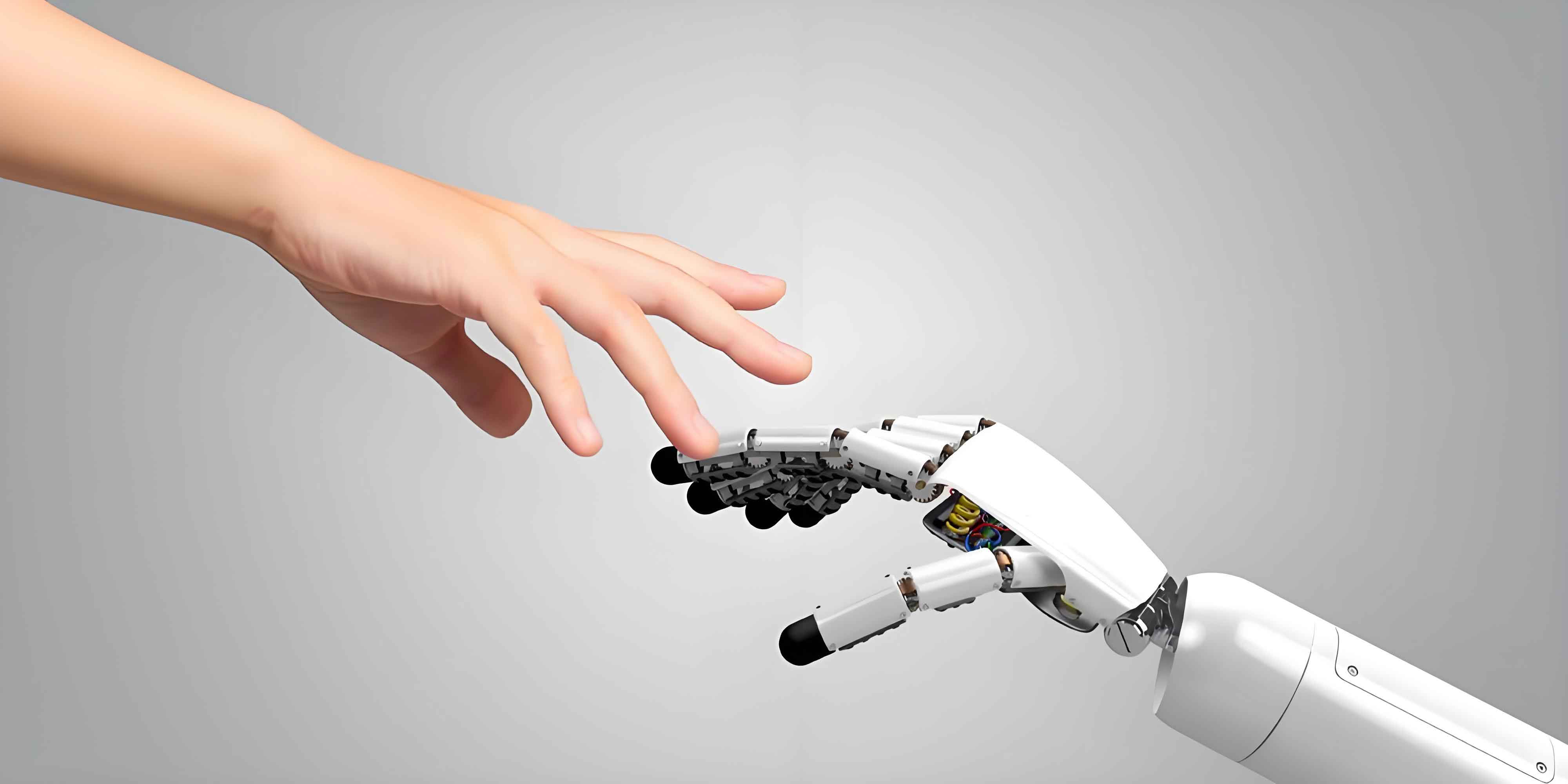
In Beijing, humanoid robots serve as journalists covering legislative sessions; in Changsha, Hunan, they volunteer in community centers wearing red vests; in Zhejiang factories, they transport materials across production lines. Across China, humanoid robots are rapidly transitioning from science fiction to tangible reality, demonstrating versatile applications in diverse settings. This expansion reflects the accelerating momentum within the robot industry, positioning humanoid systems as transformative tools for multiple sectors.
The growth trajectory received significant policy reinforcement when Premier Li Qiang’s March 5th government work report explicitly prioritized “cultivating future industries including biomedicine, quantum technology, embodied intelligence, and 6G.” This marked the first inclusion of “embodied intelligence” in China’s annual policy blueprint. The report further emphasized “vigorously developing intelligent networked new-energy vehicles, AI-powered phones and computers, intelligent robots as next-generation smart terminals, and intelligent manufacturing equipment.” As the primary physical manifestation of embodied intelligence, humanoid robots have captivated both industrial stakeholders and capital markets. Recent investigations into leading enterprises reveal unprecedented dynamism within the robot industry.
1. Surging Market Interest and Capital Inflows
Industry activity has intensified remarkably since late 2023. Zhang Miao, COO and co-founder of Beijing Zhongke Huiling Robot Technology (Lingbao CASBOT), noted: “Starting around late November, we’ve experienced a continuous influx of partnership inquiries, investment offers, and client proposals. Post-Lunar New Year, the humanoid robot sector has reached new levels of attention.” Lingbao CASBOT recently secured over 100 million yuan in angel funding following its November 2024 debut of the full-sized bipedal robot Lingbao CASBOT 01. Zhang confirmed that commercial partners across sectors are proactively engaging with optimism about monetization pathways, reflecting heightened confidence in the robot industry’s viability.
This enthusiasm extends beyond startups. Zhang Mingdi, Deputy General Manager of Inspection Operations at YouiBot, observed after touring four Shenzhen-based humanoid firms: “Application-focused clients consistently evaluate three criteria: whether current technologies meet operational demands, resource investment costs, and economies of scale for mass procurement.” With domestic producers enhancing hardware capabilities while reducing prices, accessibility within the robot industry is improving. Zhang Mingdi, with nearly a decade in robotics, confirms this represents an inflection point for market interest.
2. Expanding Application Horizons
The 2025 Spring Festival Gala spotlighted Unitree’s humanoid robots performing Yangko dances, symbolizing the sector’s cultural penetration. But beyond entertainment, practical implementations are multiplying. Li Junlan, IDC China Research Manager, explained: “Compared to traditional industrial robots, humanoids offer superior environmental adaptability and task flexibility. When augmented by large language models, they deliver intelligent recognition and human-computer interaction capabilities suitable for complex unstructured environments.” She identified immediate deployments in exhibition guidance and retail services, with future expansion into hospitality, medical rehabilitation, eldercare, and domestic companionship. High-risk scenarios like firefighting, disaster response, aerospace, and military operations also present strategic opportunities for the robot industry.
Real-world validations are underway. At Zeekr’s 5G smart factory in Zhejiang, multiple UBtech Walker S industrial humanoids perform coordinated tasks including sorting, material handling, and precision assembly across assembly workshops and quality inspection zones. A UBtech spokesperson confirmed ongoing trials to scale multi-robot collaboration in industrial settings. Li Junlan emphasized that such pilots across manufacturing, logistics, commercial services, and specialty applications represent critical phases in validating the robot industry’s commercial propositions.
3. Commercialization Timelines and Challenges
Despite progress, industry leaders caution that widespread adoption requires further development. Lingbao CASBOT’s Zhang Miao projected: “A significant industry transformation likely needs two to three years. Breakthroughs will occur when companies demonstrate embodied intelligence’s generalization capabilities or refined motion control in specific scenarios, achieving commercial validation.” He acknowledged potential for disruptive innovations accelerating timelines.
Li Junlan cited persistent hurdles: “Key performance areas like stable dynamic balance, fine motor skills, multimodal sensing, energy efficiency, and intelligent decision-making require enhancement. Manufacturing costs must decrease through domestic component supply chain maturation.” Li Jiasheng, Investment Director at Shoucheng Capital, advised focusing on structured environments: “Adoption may fluctuate through technological cycles. Targeting semi-structured scenarios for incremental engineering breakthroughs will accelerate practical applications.” He forecasts that by 2025, several global firms will achieve annual shipments exceeding 1,000 units across research, industrial, and commercial segments. However, C-end proliferation demands additional advancements in technology, supply chains, standards, and regulations before becoming mainstream within the robot industry.
4. Policy Catalysts and Capital Momentum
Government support remains instrumental in the robot industry’s expansion. Multiple provinces including Guangdong, Shandong, Sichuan, Henan, Shanxi, and Chongqing have incorporated “embodied intelligence” into their 2025 policy agendas. Notably, Beijing’s Action Plan for Technological Innovation and Industrial Cultivation of Embodied Intelligence (2025-2027) targets nurturing over 50 core enterprises, achieving mass production exceeding 10,000 units, and establishing a 100-billion-yuan industrial cluster by 2027.
Beijing Economic-Technological Development Area (BDA) exemplifies this push, aiming to become a global hub for embodied intelligence robotics. A BDA representative disclosed plans for 9 application scenarios spanning manufacturing, education, and environmental management, creating 10,000+ robot positions and nearly 5 billion yuan in procurement demand. An April 2025 humanoid robot marathon in BDA will further showcase capabilities.
Capital markets reflect this optimism. The A-share humanoid robot sector has surged nearly 50% year-to-date according to Tonghuashun data. Venture capital activity remains robust; Shoucheng Capital’s Li Jiasheng revealed: “Since early 2024, we’ve invested in multiple robotics projects covering humanoid/embodied systems, medical robots, consumer robotics, and specialized robots.” Policy frameworks also foster supply chain coordination. A recent Shanghai Stock Exchange “Future Industries Salon” convened 20+ listed companies, prospective IPO firms, and financial institutions to discuss component standardization and industrial synergy, highlighting collective efforts to leverage manufacturing advantages while minimizing redundant investments.
As the robot industry evolves from platform development to performance optimization, enterprises are actively testing commercialization models. With sustained policy backing and capital infusion, humanoid robots progressively advance toward mainstream integration, promising transformative impacts across economic and social landscapes.