
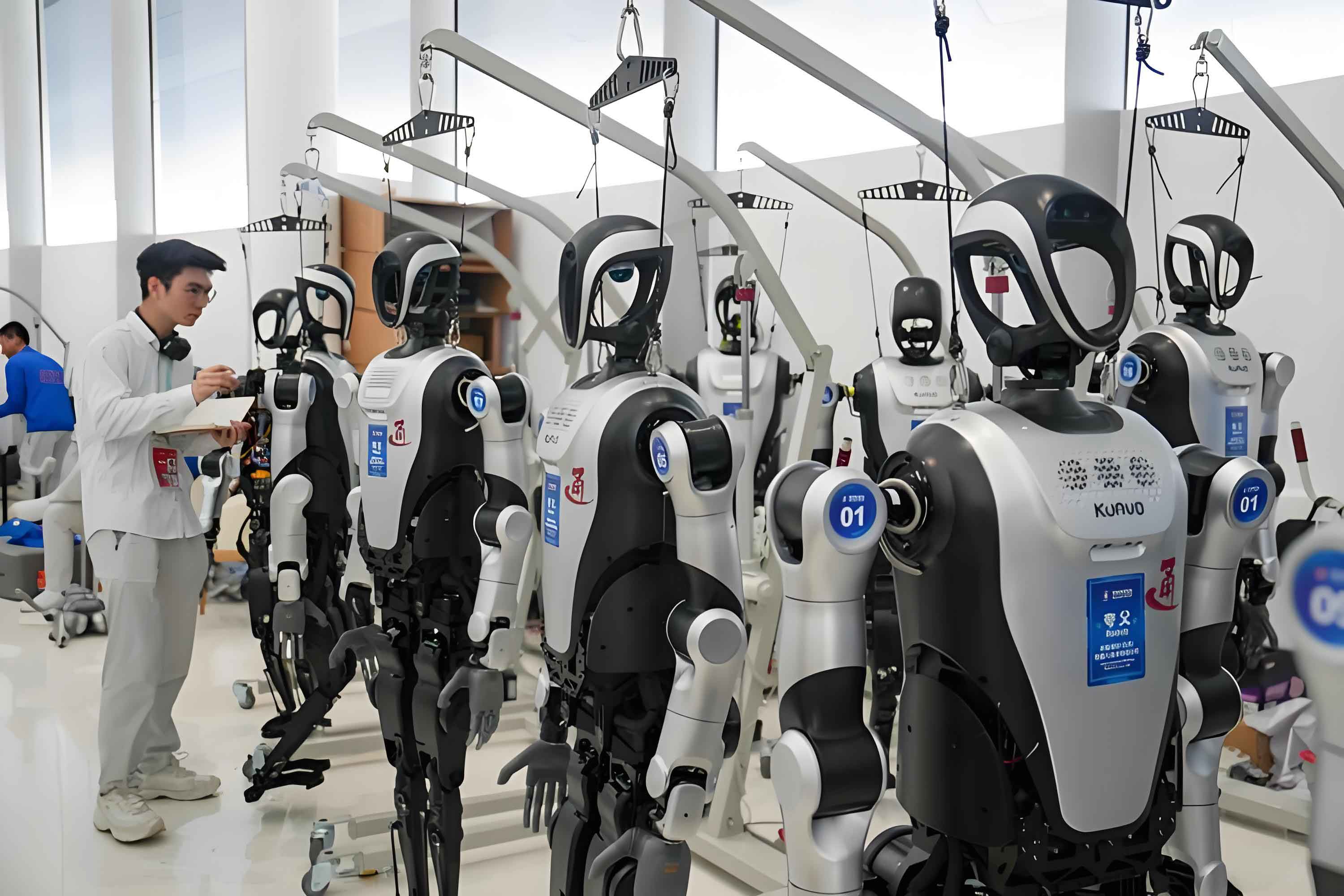
The humanoid robot industry is moving from demonstration models and public excitement toward a harder commercial phase. Shipments are rising, factories are producing more units, and capital continues to flow into the sector. Yet the financial performance of leading companies is not moving in a straight line. Unitree Robotics has seen its share price fall sharply after listing. UBTech Robotics has reported strong revenue growth but remains unprofitable. Zhiyuan Robotics, now the world’s largest humanoid robot shipper in the first half of 2026, is preparing for a Hong Kong listing.
These developments do not point to a simple boom or bust. They point to a more specific question that the humanoid robot industry must answer: when will sales volume, revenue, gross margin and cash flow translate into sustainable profit? The companies building humanoid robot products are now being judged not only on technology and shipment rankings, but also on revenue structure, delivery capacity, customer quality, cost control and the ability to convert orders into cash.
1. A Sharp Valuation Correction for Unitree Robotics
Unitree Robotics became one of the most closely watched humanoid robot companies after its listing. The initial market reaction was intense, but the subsequent decline has been equally dramatic. As of the close on September 3, Unitree Robotics traded at RMB 550.45. That was 49.95 percent below the first-day opening price of RMB 1,110 on August 19. The company’s market value fell from a peak of RMB 444.9 billion to RMB 222.6 billion, a decline of nearly half.
The previous trading day, September 2, Unitree Robotics closed at RMB 546.02. That was the first time the stock fell below half of its first-day opening price. The correction has forced investors to reassess how much future growth was already priced into the humanoid robot company.
| Unitree Robotics Market Indicator | Figure |
|---|---|
| Issue price | RMB 150.80 |
| First-day opening price on August 19 | RMB 1,110 |
| Close on September 3 | RMB 550.45 |
| Decline from first-day opening price | 49.95 percent |
| Close on September 2 | RMB 546.02 |
| Peak market value | RMB 444.9 billion |
| Market value after decline | RMB 222.6 billion |
| Reference post-IPO market value | RMB 60.9 billion |
| September 3 close versus issue price | Approximately 268 percent higher |
| IPO price-to-earnings ratio | 219.23 times |
| Average static price-to-earnings ratio in general equipment manufacturing | 38.56 times |
| Initial tradable shares | Approximately 30.09 million shares |
| Initial tradable shares as share of total capital | 7.44 percent |
The decline does not mean the market has rejected Unitree Robotics entirely. Even after falling by nearly half from its first-day opening price, the stock remained about 268 percent above its issue price of RMB 150.80. Its market value was still about 3.7 times the post-issue reference market value of RMB 60.9 billion. What has changed is the market’s valuation framework for the humanoid robot company.
At the time of listing, Unitree Robotics carried an IPO price-to-earnings ratio of 219.23 times. The average static price-to-earnings ratio for the general equipment manufacturing sector was 38.56 times. Such a valuation reflected not only current revenue and profit, but also expectations that the humanoid robot market would expand rapidly and that Unitree Robotics would maintain high growth.
Those expectations are now being tested. In the first half of 2026, Unitree Robotics reported revenue growth of 48.54 percent year over year. That was still strong, but far below its full-year 2025 revenue growth of 332 percent. The company said that as revenue基数? No. The company said that as the revenue base increased, industry heat moderated and competition intensified, revenue growth slowed. For a humanoid robot company with a high valuation, slower growth can quickly change investor sentiment.
The small initial float also amplified price swings. Unitree Robotics initially had about 30.09 million tradable shares, only 7.44 percent of total shares after issuance. On the first trading day, concentrated capital inflows pushed the stock from its issue price to RMB 1,110. As market enthusiasm cooled, the price retreated. The near-halving of the share price therefore looks less like a complete rejection of the business and more like a correction of an initially excessive valuation.
2. UBTech Robotics: Revenue Doubles, but Profit Remains Elusive
UBTech Robotics offers a different picture. The company has reported rapid revenue growth, especially in humanoid robot products, but it has not yet reached profitability. In the first half of 2026, UBTech Robotics generated revenue of RMB 1.269 billion, up 104.2 percent year over year. Its net loss during the period was RMB 339 million, narrowing by 23 percent compared with the same period a year earlier.
The most striking change came from full-size embodied intelligent humanoid robot revenue. That category reached RMB 590 million, up 1,445 percent year over year, and became the company’s largest revenue source for the first time. The growth shows that demand for more capable humanoid robot systems is emerging, but it also raises questions about cost, delivery and repeatability.
| UBTech Robotics First-Half 2026 Financial Indicator | Figure |
|---|---|
| Revenue | RMB 1.269 billion |
| Revenue growth | 104.2 percent |
| Net loss | RMB 339 million |
| Net loss change | Narrowed by 23 percent |
| Full-size embodied intelligent humanoid robot revenue | RMB 590 million |
| Growth in that category | 1,445 percent |
| Share of total revenue from full-size embodied intelligent humanoid robots | 46.5 percent |
| Gross margin of full-size embodied intelligent humanoid robots | 66.8 percent |
| Contribution to gross profit from that category | Approximately 70 percent |
| Overall gross margin | Rose from 35 percent to 44.7 percent |
| Product and solutions revenue from full-size embodied intelligent humanoid robots | RMB 590 million |
| Revenue from other industry customized intelligent robots and solutions | RMB 569 million |
| Share of full-size category revenue from customized solutions | More than 96 percent |
| Research and development expenses | RMB 303 million |
| Research and development expense growth | 38.9 percent |
| Selling expenses | RMB 238 million |
| Selling expense growth | 6.5 percent |
| Net accounts receivable | RMB 1.680 billion |
| Accounts receivable growth from the end of 2025 | 29 percent |
| Inventory | RMB 985 million |
| Inventory growth from the end of 2025 | Approximately 71 percent |
UBTech Robotics has also given a clearer profitability timetable. Founder, Chairman and CEO Zhou Jian said at an earnings briefing on August 30 that the company would strive to achieve positive single-quarter EBITDA, or earnings before interest, taxes, depreciation and amortization, in the fourth quarter of 2026. However, positive EBITDA is not the same as positive net profit. It excludes several costs that still affect the bottom line, including interest, taxes, depreciation and amortization.
The composition of UBTech Robotics’ humanoid robot revenue deserves attention. The RMB 590 million disclosed as full-size embodied intelligent humanoid robot revenue is described as product and solutions revenue, not pure robot hardware sales. Of that amount, RMB 569 million came from other industry customized intelligent robots and solutions, accounting for more than 96 percent. Industry customization can generate large individual contracts, but different customers have different production lines, processes and environments. Companies often need to invest in deployment, debugging and follow-up services.
Whether customized delivery can gradually become standardized and replicable products will directly affect delivery speed and profit potential. If each project requires significant customization, the humanoid robot business may generate revenue but struggle to achieve scalable margins. If the company can package core capabilities into repeatable products, it can improve both delivery efficiency and profitability.
Research and market investment are still rising. In the first half of 2026, UBTech Robotics spent RMB 303 million on research and development, up 38.9 percent year over year. Selling expenses reached RMB 238 million, up 6.5 percent. At the end of June, net accounts receivable stood at RMB 1.680 billion, up 29 percent from the end of 2025, while inventory reached RMB 985 million, up about 71 percent. These changes may reflect business expansion, inventory preparation for the second half and the consolidation of Fenglong shares. Even so, they mean that after revenue growth, UBTech Robotics still needs to complete collections and inventory digestion before scale can truly become cash and profit.
Zhou Jian said that over the past two years, deliveries and revenue recognition have been significantly concentrated in the second half, with a first-half to second-half ratio of about 3 to 7. The company remains confident in achieving RMB 3.5 billion to RMB 4.0 billion in revenue for 2026. Based on that target, UBTech Robotics would need to generate about RMB 2.231 billion to RMB 2.731 billion in revenue in the second half. Whether it can achieve positive single-quarter EBITDA in the fourth quarter will be the first clear checkpoint for its delivery and cost-control capabilities.
3. Humanoid Robot Shipment Numbers Require Careful Definitions
Shipment data from the humanoid robot sector appears impressive, but the numbers are not always directly comparable. According to Smart Analytics Global, global humanoid robot shipments in the first half of 2026 reached about 19,100 units, up 272 percent year over year. Chinese manufacturers contributed more than 97 percent of those shipments.
Zhiyuan Robotics shipped 8,400 humanoid robots in the first half, up 562 percent year over year, representing 44 percent of global shipments. It surpassed Unitree Robotics for the first time and became the largest shipper. Unitree Robotics shipped 5,900 units during the same period, up 170 percent, accounting for 31 percent. Together, the two companies held about 75 percent of the global market.
UBTech Robotics disclosed an even higher number. Its total humanoid robot sales in the first half reached 16,123 units, up 268.3 percent year over year. However, those 16,123 units cannot all be understood as full-size embodied intelligent humanoid robots capable of autonomously performing complex tasks. Under the statistical definition used by UBTech Robotics, only 921 units were full-size embodied intelligent humanoid robots. Such products must simultaneously meet several conditions: they are not remote-controlled, they are not toys, their brain chip computing power is at least 200T, and their height is at least 160 centimeters. The remaining 15,202 units include remote-controlled, preprogrammed and sub-160-centimeter products.
Unitree Robotics also disclosed a figure of 18,000 units, but this represents a different measure. The company said that as of July 2026, cumulative production of several bipedal humanoid robot models had reached 18,000 units. This is a cross-year cumulative production figure, not first-half 2026 sales. Zhiyuan Robotics previously disclosed that cumulative robot sales exceeded 16,000 units. That figure is also cumulative sales, not the same as first-half shipments of 8,400 units.
| Company | Disclosed Figure | What the Figure Represents | Important Distinction |
|---|---|---|---|
| Zhiyuan Robotics | 8,400 units | First-half 2026 shipments | 44 percent of global shipments |
| Unitree Robotics | 5,900 units | First-half 2026 shipments | 31 percent of global shipments |
| UBTech Robotics | 16,123 units | First-half 2026 humanoid robot sales | Only 921 units were full-size embodied intelligent humanoid robots |
| UBTech Robotics | 921 units | Full-size embodied intelligent humanoid robots | Meets non-remote, non-toy, 200T computing power and 160-centimeter height conditions |
| UBTech Robotics | 15,202 units | Other humanoid robot products | Includes remote-controlled, preprogrammed and sub-160-centimeter products |
| Unitree Robotics | 18,000 units | Cumulative production下线? No. Cumulative production output | Cross-year cumulative production as of July 2026, not first-half sales |
| Zhiyuan Robotics | More than 16,000 units | Cumulative sales | Not the same as first-half shipments of 8,400 units |
All three companies have entered the “10,000-unit” stage, but their statistics cover different periods and definitions: half-year shipments, half-year sales and cumulative production output. Production, shipment, delivery to customers, acceptance and revenue recognition are different stages in commercialization. A humanoid robot that is produced is not necessarily sold. A humanoid robot that is shipped is not necessarily accepted. A humanoid robot that is accepted may still require service and support before it generates repeat revenue.
The value of different robot types also varies widely. A small robot used for performances or education is not the same as a full-size humanoid robot that must enter a factory to perform handling, sorting and loading and unloading tasks. They differ in technical capability, price and delivery cost. As a result, shipment volume alone is a weak basis for judging which company has made more commercial progress, and it cannot be used to directly infer profitability.
4. Unitree Robotics Follows a Different Path
Unitree Robotics has taken a different route from UBTech Robotics. Compared with UBTech Robotics, which provides customized solutions to industry customers, Unitree Robotics has more standardized products and a relatively lean organization. At the end of 2025, Unitree Robotics had 516 employees and generated revenue of RMB 1.699 billion that year, implying revenue per employee of about RMB 3.29 million.
This product and organizational structure has made Unitree Robotics one of the few profitable humanoid robot companies. However, as the company increased investment in embodied intelligence models, robot bodies and new product development, its first-half non-recurring net profit fell 19.34 percent year over year. For Unitree Robotics, the question is no longer whether it can become profitable, but whether it can maintain profit growth while continuing to invest. That is a different challenge from turning a loss into a profit, and it is central to the humanoid robot company’s valuation debate.
A profitable humanoid robot company can still face pressure if profit growth does not keep pace with expectations. Unitree Robotics’ high IPO valuation assumed rapid expansion. If research and development spending rises faster than revenue, or if competition pushes prices lower, the company’s profit margin may come under pressure. The market will watch whether Unitree Robotics can preserve its cost advantages while building more capable humanoid robot systems.
5. Primary Capital Continues to Flow into Embodied Intelligence
While the secondary market reassesses humanoid robot valuations, primary-market capital continues to enter the broader embodied intelligence sector. According to iiMedia Research, China’s embodied intelligence theme recorded 172 investment and financing events in the first half of 2026, with total financing of RMB 109.174 billion. The statistic covers embodied intelligence brains, intelligent mobility equipment, complete machines, core hardware, data ecosystems and industry applications, so the entire amount should not be understood as humanoid robot financing alone.
| Embodied Intelligence Financing Segment | Amount | Share of Total |
|---|---|---|
| Embodied intelligence brains | RMB 59.544 billion | 54.5 percent |
| Intelligent mobility equipment | RMB 19.943 billion | 18.3 percent |
| Embodied intelligence complete machine manufacturing | RMB 14.709 billion | 13.5 percent |
| Core hardware | RMB 11.392 billion | 10.4 percent |
| Data ecosystem | RMB 2.3 billion | Included in approximately 3.3 percent combined with industry applications |
| Industry applications | RMB 1.287 billion | Included in approximately 3.3 percent combined with data ecosystem |
The distribution of capital shows where investors believe near-term value may lie. Embodied intelligence brains received RMB 59.544 billion, about 54.5 percent of total financing. Intelligent mobility equipment received RMB 19.943 billion, about 18.3 percent. Complete machine manufacturing received RMB 14.709 billion, about 13.5 percent. Core hardware received RMB 11.392 billion, about 10.4 percent. By contrast, data ecosystems received RMB 2.3 billion and industry applications received RMB 1.287 billion, together accounting for about 3.3 percent.
Zhang Yi, CEO and chief analyst of iiMedia Research, said that capital in the embodied intelligence field is shifting from broad bets toward leading companies and mid-to-late-stage projects. Investment focus is also moving from simple hardware manufacturing toward decision algorithms, multimodal perception and software systems. In the short term, embodied intelligence brains and intelligent mobility equipment may remain key areas of capital investment. Industry applications, however, will require longer scenario validation cycles before they can reach scale.
The large flow of funds into brains, complete machines and core hardware, compared with the relatively low share going directly into industry applications, suggests that the industry is still in a stage of technology breakthroughs and basic capability building. The ability to mass-produce humanoid robots does not mean they can already create stable value in factories, stores and homes. A humanoid robot may be able to walk, gesture or perform a demonstration, but stable commercial value requires reliability, maintainability, safety and integration with real workflows.
6. What the Next Phase Will Test
The first-half shipment figure of 19,100 humanoid robots proves that the industry is moving from prototype displays toward batch production. More than RMB 100 billion in financing provides capital for model research, core components and production capacity. These are necessary foundations for the humanoid robot industry. They are not, by themselves, proof of sustainable profitability.
After the growth in sales volume, the three leading companies face different problems.
- UBTech Robotics must prove that the high revenue and high gross margin generated by its humanoid robot business can cover continuously rising research and development, sales and delivery costs. Its fourth-quarter EBITDA target will be an early test, but EBITDA is not net profit, and the company still needs to convert revenue into cash.
- Unitree Robotics must use stable profit growth to digest a high valuation. It has already shown that a humanoid robot company can be profitable, but it now needs to show that profitability can survive heavier investment in embodied intelligence models, new robot bodies and intensifying competition.
- Zhiyuan Robotics, while preparing for a Hong Kong listing, will face capital market scrutiny of its revenue structure and profitability. Its shipment ranking is strong, but investors will also examine revenue per unit, gross margin, customer structure, research and development spending and cash flow.
In the next round of competition, the key measures will change. Production output will matter less than whether humanoid robots can complete delivery and acceptance. Order value will matter less than whether humanoid robots can enter real jobs, operate continuously and generate repeat purchases. Revenue growth will matter less than whether companies can convert scale into cash and profit. The critical questions are how much revenue each humanoid robot can generate, how much cost each order requires and when the company can actually make money.
The humanoid robot industry is no longer only about demonstrating technical possibility. It is entering a phase in which companies must show commercial discipline. Shipments, financing and media attention can open the door, but profitability, cash flow and repeatable delivery will determine which humanoid robot companies build lasting businesses. The market’s message is clear: the humanoid robot sector may still have a large future, but each company must now prove its own path to profit.