
The 2025 World Humanoid Robot Sports Meet has emerged as a pivotal event, not merely presenting a series of exhilarating and occasionally amusing technological exhibitions, but serving as a clear reflection of the transformative advancements within the humanoid robot industry. The evolution from hesitant, faltering strides to rapid, agile movements, and from isolated, individual tasks to sophisticated group collaborations, underscores the dynamic progress fueling intelligent manufacturing. This gathering of humanoid robots, where speed, coordination, and intelligence are put to the test, represents both an exploration of current technological boundaries and a preview of future industrial landscapes. The rapid iteration capabilities displayed by these humanoid robot participants, including breakthroughs in autonomous obstacle avoidance, dynamic balance maintenance, and multi-robot communication, highlight the accumulated expertise and innovation in fields such as mechatronics, artificial intelligence, and motion control. Furthermore, the application demonstrations in various scenario-based competitions directly address the practical needs of manufacturing upgrades and social services, revealing the immense potential for humanoid robots to transition from laboratory prototypes to market-ready solutions.
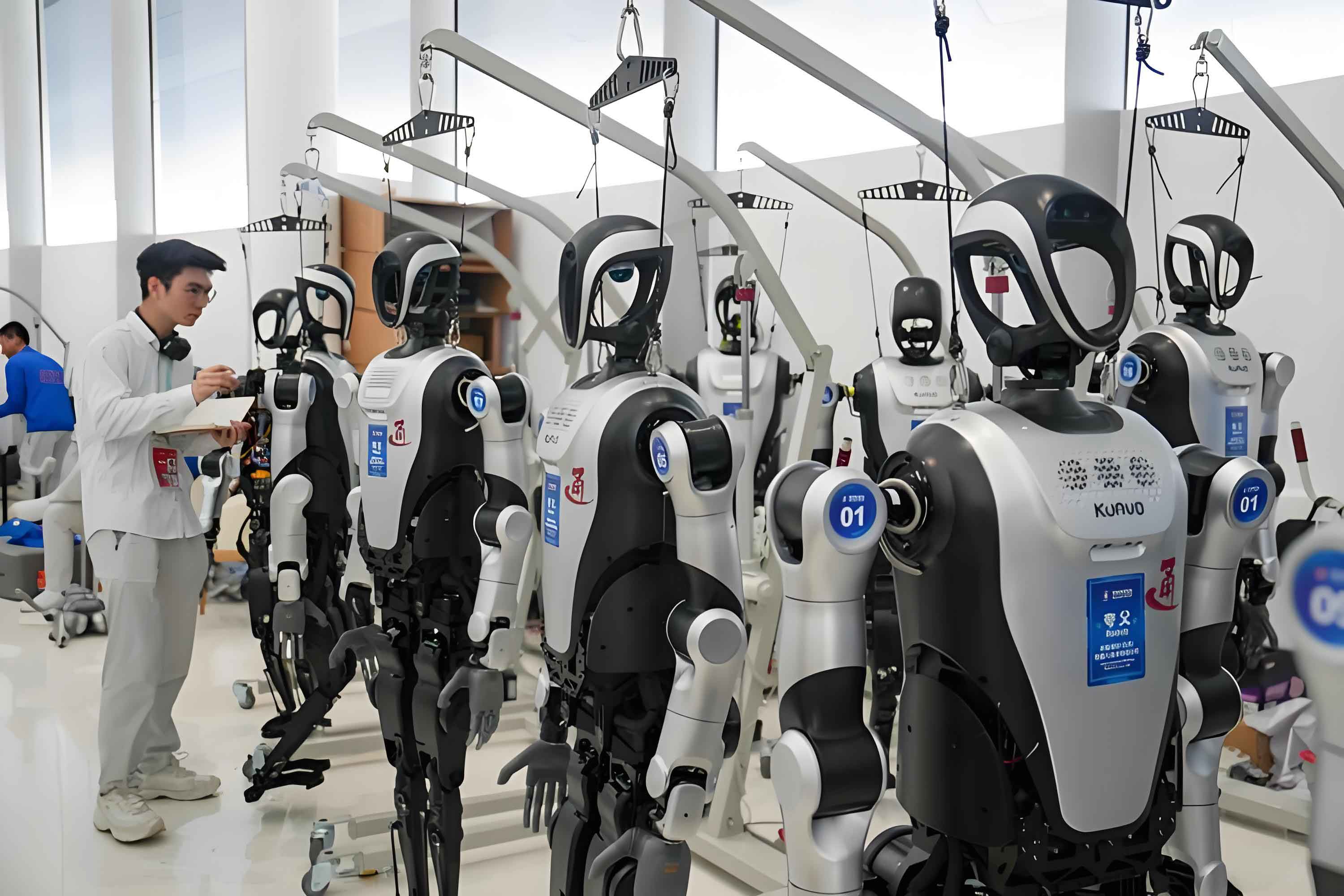
Observers at the event noted that the performances of humanoid robots in challenging environments provide critical insights into their real-world applicability. For instance, the ability of humanoid robots to navigate complex terrains while maintaining stability points to significant improvements in sensor integration and algorithmic processing. These humanoid robot systems are increasingly capable of adapting to unpredictable conditions, a crucial factor for their deployment in industrial settings where precision and reliability are paramount. The demonstrations also emphasized how humanoid robots can work in tandem, executing coordinated tasks that mimic human team dynamics, thereby opening avenues for enhanced productivity in sectors like logistics and assembly. The progress seen in this humanoid robot sports meet is not just about individual machine capabilities but about the ecosystem that supports them, including software development, hardware robustness, and interoperability standards. As humanoid robots continue to evolve, their role in driving efficiency and innovation across multiple industries becomes more pronounced, with this event serving as a testament to the accelerating pace of development in humanoid robot technology.
However, the journey from being a promising contender in such competitions to becoming a staple in industrial and social applications requires concerted efforts from the entire humanoid robot supply chain. The challenges observed on the field, such as unstable gaits and difficulties in executing high-difficulty maneuvers, expose underlying bottlenecks, including reliance on imported core sensors and limitations in real-time algorithm performance. This indicates that the advancement of humanoid robots cannot solely depend on algorithmic innovations but must be grounded in a solid industrial foundation. To address these issues, the humanoid robot industry must focus on systemic breakthroughs in key components, support specialized and innovative enterprises, and foster a collaborative ecosystem that leverages regional supply chain clusters. By doing so, the humanoid robot sector can overcome cost barriers and achieve scalable, cost-effective solutions that meet the demands of diverse applications. The following sections outline strategic directions to transform these humanoid robot potentials into tangible market assets, ensuring that the excitement generated in events like this sports meet translates into sustainable industrial growth.
- Promoting Research Through Competition
The humanoid robot sports meet has vividly highlighted areas where further research and development are urgently needed. Instances of unsteady walking patterns and clumsy executions of complex actions among humanoid robots point to specific technical shortcomings, such as the dependency on imported high-precision sensors and inefficiencies in real-time data processing algorithms. For the humanoid robot industry to mature, it is essential to move beyond sporadic algorithmic breakthroughs and build a resilient hardware and software infrastructure. This involves concentrated efforts on core modules like joint actuation systems, which are critical for the mobility and dexterity of humanoid robots. Encouraging specialized, technologically advanced small and medium enterprises to engage in the development of proprietary technologies is key. These enterprises should aim for high torque density and low-cost production to make humanoid robots more accessible. Leveraging supply chain networks in industrial hubs, such as those in the Yangtze River Delta and Pearl River Delta regions, can help create a more integrated and efficient ecosystem for humanoid robot manufacturing. Addressing cost issues through economies of scale, where increased application adoption fuels further innovation and cost reduction, is vital for the long-term viability of humanoid robots. By using competitions as a catalyst, the humanoid robot sector can identify gaps, set research priorities, and accelerate the development of indigenous technologies that reduce external dependencies and enhance global competitiveness.
In-depth analysis of the humanoid robot performances reveals that stability and precision in movement are often hampered by latency in control systems and insufficient robustness in mechanical designs. For example, when humanoid robots attempt rapid directional changes or load-bearing tasks, the limitations in actuator response times and energy efficiency become apparent. This underscores the need for advancements in materials science and power management for humanoid robots. Collaborative projects between academia and industry could focus on developing lightweight yet durable components for humanoid robots, improving their endurance and operational range. Additionally, investing in open-source platforms for humanoid robot software can foster innovation and standardization, allowing developers worldwide to contribute to and benefit from shared knowledge. The humanoid robot sports meet, therefore, acts as a real-world testing ground, providing valuable data that can inform research agendas and policy support. Governments and private sectors could consider increasing funding for humanoid robot R&D initiatives that align with the challenges observed in such events, ensuring that the humanoid robot industry remains at the forefront of technological evolution.
- Expanding Markets Through Scenario Applications
One of the most significant values of the humanoid robot sports meet lies in its condensed representation of practical application scenarios. The capabilities demonstrated by humanoid robots in areas like logistics handling, warehouse management, and precision control align closely with the evolving trends in manufacturing modernization and social service enhancements. Humanoid robots equipped with advanced perception and decision-making skills can streamline operations in environments such as automotive factories and distribution centers, where efficiency and accuracy are critical. However, if these technological feats remain confined to exhibition spaces, their full potential remains untapped. To bridge this gap, the humanoid robot industry should initiate regular application-oriented challenges that simulate real-world conditions. These could include setting up pilot programs in active settings like new energy vehicle plants or large-scale logistics parks, where humanoid robots can be tested in “robot-for-human” replacement scenarios. Such initiatives would facilitate rapid technology transfer, provide continuous data feedback for iterative improvements, and ensure that research outcomes quickly move from labs to production lines. By focusing on scenario-based development, the humanoid robot sector can better understand user needs, refine product designs, and build trust among potential adopters, thereby accelerating market penetration.
Beyond industrial applications, humanoid robots hold promise in sectors such as healthcare, education, and domestic assistance, where their human-like form factor can enhance interaction and acceptance. For instance, in elderly care facilities, humanoid robots could assist with routine tasks, monitor health parameters, and provide companionship, addressing labor shortages and improving quality of life. The sports meet scenarios that test agility and communication skills of humanoid robots are directly relevant to these fields. To capitalize on this, stakeholders in the humanoid robot ecosystem should collaborate with end-users to co-create solutions tailored to specific contexts. Pilot deployments in diverse environments can generate actionable insights into the reliability, safety, and user-friendliness of humanoid robots. Moreover, establishing certification standards for humanoid robot performance in different scenarios can help build market confidence and drive adoption. By continuously expanding the application horizons for humanoid robots, the industry can unlock new revenue streams and demonstrate the tangible benefits of integrating humanoid robots into everyday operations, ultimately fostering a more robust and demand-driven market for humanoid robot technologies.
- Accelerating the Exploration of Human-Robot Collaboration Models
The ultimate objective of humanoid robot development is not merely to replace human labor but to create synergistic partnerships where humanoid robots act as capable allies. The group collaboration displays at the sports meet offer a glimpse into this future, illustrating how humanoid robots can work together and with humans to achieve complex goals. In manufacturing contexts, for example, humanoid robots could collaborate with human workers on tasks such as精密 assembly or intricate inspection, combining the precision and endurance of machines with the creativity and problem-solving skills of humans. This collaboration can lead to multiplicative efficiency gains, where the combined output exceeds what either could achieve alone. To realize this vision, the humanoid robot industry must prioritize the development of intuitive interfaces and adaptive learning algorithms that enable seamless interaction between humans and humanoid robots. Simultaneously, it is crucial to accelerate the formulation of safety standards and ethical guidelines for human-robot collaboration. These standards should address aspects like physical safety in shared spaces, data privacy, and emotional compatibility, ensuring that humanoid robots can integrate harmoniously into diverse environments. By fostering a culture of co-evolution, where humanoid robots are designed to complement human capabilities rather than simply automate tasks, the industry can pave the way for deeper, more productive human-robot relationships that enhance overall system performance and societal well-being.
Exploring advanced human-robot collaboration also involves addressing the socio-technical challenges associated with humanoid robot integration. For instance, as humanoid robots become more prevalent, workforce training programs will need to evolve to equip employees with the skills to manage and work alongside these machines. Educational institutions and corporations could develop curricula focused on humanoid robot operation, maintenance, and programming, ensuring a smooth transition to collaborative environments. Furthermore, research into affective computing and social robotics can enhance the ability of humanoid robots to understand and respond to human emotions, making interactions more natural and effective. The sports meet demonstrations of coordinated maneuvers among humanoid robots highlight the potential for distributed intelligence systems, where multiple humanoid robots share information and make collective decisions. Applying this to fields like disaster response or construction could lead to more resilient and adaptive operations. By investing in interdisciplinary studies that combine robotics with psychology, sociology, and ethics, the humanoid robot community can develop frameworks that support sustainable and inclusive human-robot ecosystems. This holistic approach will ensure that humanoid robots not only execute commands but also contribute positively to social dynamics, ultimately reinforcing their role as intelligent partners in progress.
In conclusion, the 2025 World Humanoid Robot Sports Meet has vividly illustrated the rapid advancements and immense possibilities within the humanoid robot domain. Each acceleration and innovation on the field contributes to the kinetic energy propelling the industry forward, positioning humanoid robots as vital carriers of new qualitative productive forces. The journey from initial, somewhat clumsy appearances in such events to future widespread utility requires unwavering focus on addressing core technological challenges and fostering pragmatic industrial collaborations. By maintaining a steadfast commitment to research, market-oriented scenario development, and human-centric collaboration models, the humanoid robot ecosystem can drive intelligent manufacturing to new heights. This concerted effort will not only enhance operational efficiencies but also unlock transformative opportunities across sectors, ensuring that humanoid robots evolve from fascinating spectacles into indispensable assets in the global march toward technological excellence and economic resilience. The momentum generated by this sports meet should inspire continued investment, innovation, and integration, solidifying the role of humanoid robots in shaping a smarter, more connected world.
The ongoing evolution of humanoid robot technology demands a balanced approach that combines technical rigor with ethical considerations. As humanoid robots become more autonomous and integrated into daily life, issues such as accountability, transparency, and societal impact must be proactively addressed. For example, in applications where humanoid robots make critical decisions, ensuring explainable AI and robust fail-safes is essential to maintain trust and safety. The sports meet, with its emphasis on performance under pressure, serves as a microcosm for these broader challenges. Industry leaders, policymakers, and researchers should use such platforms to engage in dialogues that shape the future trajectory of humanoid robot development. By prioritizing inclusivity and sustainability, the humanoid robot community can avoid pitfalls and maximize positive outcomes. Ultimately, the success of humanoid robots will be measured not just by their technical prowess but by their ability to enhance human experiences and address pressing global challenges, from labor shortages to environmental sustainability. The 2025 event has set a high bar, and with determined effort, the humanoid robot industry can turn this potential into a reality that benefits all of humanity.