
A teaching-reform study has examined how humanoid robot technology can be integrated into the “Digital Electronics Technology” course to make abstract electronics knowledge more concrete, strengthen practical ability, and support the training of application-oriented talent. The study, published with DOI 10.19392/j.cnki.1671-7341.202528021, focuses on the close relationship between humanoid robot technology and digital electronics, identifies persistent problems in current course teaching, and proposes reforms covering teaching content, teaching methods, and assessment. According to the study, the integration of humanoid robot technology into the course has practical teaching value and theoretical guidance significance, especially for students who need to connect digital circuits, signal processing, control logic, and real engineering scenarios.
Keywords: humanoid robot; digital electronics; teaching reform; curriculum integration
-
Background and rationale for integrating humanoid robot technology
The study places its argument in the context of rapid technological development, where humanoid robot technology has emerged as a forward-looking field that combines mechanical engineering, electronic information technology, computer technology, and other disciplines. A humanoid robot is presented not as a single device but as an integrated platform that demonstrates intelligent behavior and human-like interaction. For a course such as Digital Electronics Technology, which provides foundational support for many high-technology fields, the humanoid robot offers a visible and application-oriented entry point for teaching abstract concepts.
According to the study, integrating humanoid robot technology into the Digital Electronics Technology course has both teaching-practice value and theoretical guidance value. On one side, it can make difficult digital electronics knowledge more vivid and concrete, turning it into application scenarios that students can perceive and touch. Students can see how the knowledge they learn is used in a frontier field, which can stimulate interest and curiosity. On the other side, the integration can help produce composite talent who understand digital electronics principles and can apply them to humanoid robot development, maintenance, and other practical work. This direction is described as closely matching the demand for diversified skills during industrial upgrading and transformation, and it also aligns with the application-oriented talent-training goal of Yan’an University Xi’an Innovation College.
The study also reviews the domestic and international research landscape. Overseas universities and research institutions started earlier in interdisciplinary education integration, and some institutions have tried to incorporate humanoid robot projects into electronics engineering courses, using practice-oriented teaching to guide students through the full robot development process. However, the study notes that there is still room for improvement in the systematic integration of course knowledge. In recent years, domestic education has paid increasing attention to combining frontier technology with foundational courses, and many universities have actively carried out similar teaching-reform experiments. Yet most reform practices have focused on robot competition coaching rather than penetrating deeply into regular course teaching. Key areas such as teaching-method innovation and assessment-system adaptation still need further exploration and expansion.
-
The technological link between humanoid robot technology and digital electronics
The study explains that the hardware system of a humanoid robot is like its physical body. It covers precision mechanical skeletons, diverse sensors such as visual, auditory, and tactile sensing systems, and efficient actuators such as motors and servos. The precise driving, coordinated control, and smooth operation of these hardware devices depend strongly on digital electronics technology. From the software perspective, the humanoid robot software system includes a robot operating system, motion-control algorithms, intelligent decision-making programs, and other key elements. The underlying digital signal processing, complex logic operations, and data storage and reading operations all rely on digital electronics technology. The study uses visual sensors as an example: the large amount of image data collected by a visual sensor must go through high-speed sampling, quantization, and encoding by digital circuits, and then be converted into digital signals that subsequent algorithms can analyze and recognize. Only after analog-to-digital conversion can the humanoid robot achieve sensitive perception and accurate cognition of its surrounding environment.
In the application dimension, the study describes how the microcontroller unit in digital electronics technology generates precise pulse signal sequences according to a preset motion-trajectory algorithm, thereby driving motors and servos to operate at expected speeds and angles and enabling smooth and natural limb movements of the humanoid robot. In the perception-processing stage, the system filters the massive data continuously transmitted by the sensor system, screens and identifies effective information, and helps the humanoid robot judge the state of its environment in real time. In the core of the decision system, intelligent logic modules built on digital logic circuits combine perception information to make decisions.
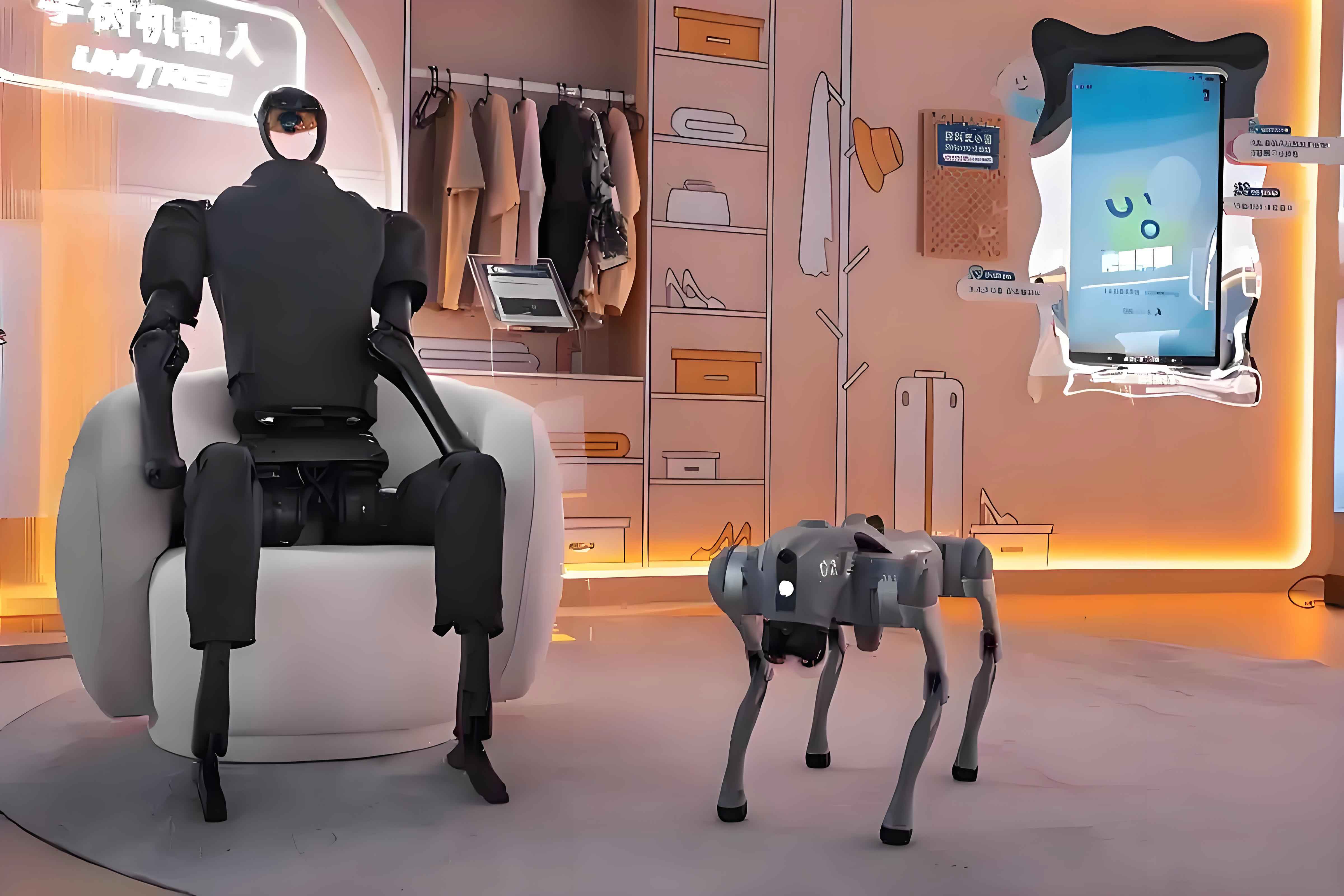
The study therefore treats the humanoid robot as a powerful teaching vehicle for digital electronics. The humanoid robot requires sensing, processing, decision-making, and execution to work together. Digital electronics is not an isolated subject in this process; it is embedded in signal acquisition, data conversion, logic control, motor driving, and system coordination. For students, the humanoid robot makes it possible to see how combinational logic, sequential logic, microcontrollers, sensors, and actuators form a complete information chain. The study argues that this connection can reduce the distance between textbook circuits and complex engineering systems and can help students understand why digital electronics matters in frontier applications.
-
Problems identified in current Digital Electronics Technology teaching
The study identifies several persistent problems in the current teaching of Digital Electronics Technology. These problems are presented as reasons why reform is necessary and why humanoid robot technology can serve as a meaningful integrating theme.
-
Teaching content is disconnected from practical application
The course emphasizes theoretical knowledge, and its theoretical system is relatively complete. However, experimental teaching is often limited to the initial verification stage of circuit building. Students find it difficult to connect classroom knowledge with complex and changing practical application scenarios, which leads to a disconnect between teaching content and practical application. In this context, the humanoid robot can provide a richer application context, but the existing course structure does not fully use such contexts.
-
Teaching methods are relatively single
The traditional teaching method of Digital Electronics Technology is mainly teacher-centered lecturing. Even when some teaching reforms adopt online and offline blended modes, they are often limited to theoretical reform, and students remain in a passive listening state. Although blackboard writing, slides, and auxiliary videos can clearly present theoretical derivation, students lack opportunities for independent exploration. Facing a frontier application field such as the humanoid robot, which is interesting and requires strong practice, a single lecture method can easily dampen enthusiasm and make it difficult to mobilize students to explore the application potential of digital electronics. As a result, teaching effectiveness is not high.
-
The assessment method is not sufficiently comprehensive
The existing assessment system for Digital Electronics Technology focuses on theoretical knowledge. Final closed-book examinations usually occupy a dominant position, supplemented by attendance, regular performance, and experimental scores. Subjective questions generally revolve around concepts, circuit analysis, small circuit design, and simple circuit calculation. They rarely involve in-depth analysis of practical project cases such as the humanoid robot or practical operation assessment. Students therefore tend to memorize theoretical knowledge, neglect the cultivation of knowledge application and innovative thinking, and fail to develop the ability to connect what they learn with frontier technology. After graduation, they find it difficult to adapt to practical requirements.
-
-
Reform goals and principles
The study states that the teaching reform aims to break old patterns and reshape the teaching model of the Digital Electronics Technology course. The goal is to encourage students to deeply master the digital electronics knowledge and skills required by humanoid robot technology. Through project practice, the reform seeks to train students’ hands-on operation ability and cultivate their ability to use digital electronics technology to solve complex engineering problems in humanoid robots, such as optimizing robot motion-control circuit architecture and significantly improving perception data processing efficiency. At the same time, the study emphasizes the importance of igniting innovative thinking and cultivating teamwork spirit so that students can cope with future iterations of humanoid robot technology and contribute to the development of related industries.
The reform also follows a principle of close integration between theory and practice. This principle is intended to ensure that course knowledge teaching and humanoid robot project practice advance together. Students should understand the importance of theory guiding practice and the necessity of practice supporting deeper theoretical understanding through hands-on operation. In this way, the study envisions a positive cycle of “learning by doing and doing by learning.” The humanoid robot is not treated as an isolated demonstration tool but as a carrier for connecting theory, practice, and application.
-
Teaching reform strategies centered on humanoid robot technology
The study proposes a set of reform strategies that use humanoid robot technology as an organizing theme while preserving the core knowledge system of digital electronics. These strategies cover content optimization, method innovation, and assessment improvement.
-
Optimizing teaching content through humanoid robot cases
At the beginning of the course, the study suggests showing videos of hot applications of humanoid robots, such as the dance performance by Hangzhou Unitree Technology’s robots at the 2025 Spring Festival Gala and simulated rescue and relief scenarios. Such examples can attract students’ attention and stimulate their desire to explore the digital electronics technology behind the scenes. When teaching combinational logic circuits, the reform introduces a practical case of humanoid robot hand-motion control and analyzes how logic gates can be used to design circuits that convert finger-grasping action commands. In the sequential logic circuit section, the reform uses humanoid robot walking gait control as a vivid example and explains the key role of counters and registers in generating periodic control signals. In this way, abstract circuit knowledge corresponds precisely to intuitive humanoid robot movements, greatly reducing the difficulty of understanding.
-
Integrating course knowledge points around the humanoid robot workflow
The study attempts to break the limitations of traditional textbook chapters and build a new knowledge-reception system guided by application. It proposes using humanoid robot technology applications as the main line and setting the teaching order according to the smooth workflow from perception to decision-making to execution. Related knowledge points are taught gradually according to application order and teaching rules, while students are helped to build a knowledge system. For example, sensor interface circuit design, digital signal processing algorithms, and microcontroller programming are organically integrated. Students are guided to build a complete robot knowledge chain of “information collection, processing, and response.” This helps them understand how digital electronics technologies work together in different links and how they support intelligent operation of a humanoid robot. The study argues that this approach can comprehensively improve students’ integrated application ability and make their knowledge system more solid.
-
Project-driven teaching with humanoid robot modules
The study designs a series of practical projects covering different functional modules of humanoid robots, such as a simple humanoid robot facial expression control system and an autonomous obstacle-avoidance mobile platform that gives the robot the ability to move through complex environments. Students are divided into groups, and each group takes responsibility for one project from demand analysis and scheme design to circuit building, debugging, and optimization. The humanoid robot thus becomes a project platform rather than a mere illustration. The study reports that this project-driven approach is intended to develop students’ ability to solve problems across disciplines and to apply digital electronics in realistic humanoid robot tasks.
-
Virtual simulation teaching for humanoid robot scenarios
The study proposes that teachers use professional simulation software such as Proteus, Multisim, and MATLAB to create near-real virtual working scenarios for humanoid robots. Students can freely design and test digital electronic circuits in the virtual environment and simulate robot motion control and perception feedback. This approach removes concerns about hardware damage and component shortages and allows repeated debugging and optimization of circuit parameters. For example, when simulating a humanoid robot visual tracking system’s digital circuit, students can continuously change input image features and adjust circuit parameters while observing output tracking effects. They can directly feel how circuit performance changes affect results, thereby improving design ability. The study states that this method can effectively reduce teaching costs and improve teaching safety and repeatability.
-
Group cooperation and role division
The study suggests scientific grouping based on differences in students’ abilities, personalities, initiative, and organizational skills, with each group kept at four to six members. Group members must have clear division of labor and close cooperation. For example, some members are responsible for hardware building, some for software programming, some for document organization and project records, and some for testing and optimization. Groups are expected to exchange progress regularly and solve problems together. In a humanoid robot music performance project, students skilled in circuit design focus on making instrument sound circuits, while students skilled in programming write music playback programs. Through collaboration, the group completes a humanoid robot performance. The study states that this process cultivates teamwork and communication skills, promotes knowledge sharing, and pushes overall learning effectiveness to a higher level.
The study also presents a diversified assessment framework. The reform moves away from a single theoretical examination as the dominant model and builds an assessment system that includes theoretical knowledge, practical ability, project outcomes, and teamwork. The reported weight ranges are shown in the table below.
Assessment component Reported weight range Focus described in the study Theoretical knowledge 30% to 40% Includes humanoid robot application-context questions so that students can apply what they learn. Practical ability 30% to 40% Assessed through experimental operation, project defense, and other practical links. Project outcomes 10% to 20% Scored according to project innovation, functional completeness, and stability. Teamwork 10% to 20% Examines reasonable division of labor, communication effectiveness, and collaborative problem-solving. In addition to diversified indicators, the study emphasizes process evaluation. Classroom performance is assigned a reported weight range of 10% to 20%, project progress 30% to 40%, and experimental reports 30% to 40%. These process-evaluation components are intended to examine participation, hands-on initiative, and text writing. In class, students are encouraged to ask questions and participate in discussions, and their contributions are recorded. Project progress is checked regularly, with timely feedback. Experimental reports are required to record experimental purposes, steps, problems, and solutions in detail so that students develop the habit of documenting their learning process. The humanoid robot projects provide natural opportunities for these process-based assessments because students must plan, build, test, revise, and present their work over time.
-
-
Practical case analysis and teaching effect
The study reports a practical case involving two classes in an electronic information major. One class was set as the experimental group and implemented the reform plan, while the other class served as the control group and continued with the traditional teaching mode for comparison. In the experimental group, the teaching process began with a humanoid robot popular-science lecture intended to light up student interest. In the middle stage, students were grouped according to their strengths and engaged in project-driven teaching, supported by virtual simulation software and regular project reports to share experience and disclose problems. In the later stage, a project achievement exhibition and defense meeting were organized, with diversified assessment and process evaluation running through the whole process. The control group followed the original order of textbook chapters, mainly using teacher lectures and simple experimental verification, and adopted traditional assessment methods.
After one semester of teaching practice, the study compared the two classes in terms of final examination scores, project completion, and learning-interest survey results. The experimental group’s average final examination score was nearly 10 points higher than that of the control group, a significant score advantage. The experimental group also showed stronger innovation ability in practical projects, such as designing a more intelligent humanoid robot gesture recognition system. The learning-interest survey showed that more than 80% of students in the experimental group were interested in the course, far exceeding the near 25% proportion in the control group. According to the study, these results indicate that the teaching reform significantly improved student learning effectiveness and subjective initiative.
Reported comparison area Experimental group Control group Average final examination score Nearly 10 points higher than the control group Reference group for comparison Practical project innovation Showed stronger innovation ability, including a more intelligent humanoid robot gesture recognition system Traditional teaching and simple experimental verification Course interest survey More than 80% of students reported interest Near 25% reported interest The study treats the humanoid robot as a key factor in this improvement. By linking digital electronics content to humanoid robot sensing, decision-making, and execution, the reform gives students a visible application target. The humanoid robot also supports project-based learning, group cooperation, virtual simulation, and process evaluation. The study does not present the reform as free of problems, however. It reports that the practical exploration was not smooth in every respect and that some typical issues emerged during teaching.
-
Problems exposed during practice and improvement measures
The study reports that the number of humanoid robot hardware devices was relatively small, which limited students’ practice time and required queuing, adding extra workload. In addition, some students had a weak foundation and found it difficult to quickly adapt to the pace of interdisciplinary knowledge integration in the early stage of the project. These problems are important because they affect the degree to which humanoid robot technology can be used in regular teaching rather than only in demonstrations or competitions.
To address these issues, the study states that improvements were made immediately. On one side, the institution actively sought school-enterprise cooperation to expand hardware equipment. On the other side, a blended online and offline teaching model was introduced. Basic preview materials were sent before class, and online question-and-answer tutoring was opened after class so that students at different levels could keep up with the reform. The study presents these measures as necessary support for sustaining humanoid robot-based teaching reform and for ensuring that the humanoid robot does not become a bottleneck because of limited hardware or uneven student preparation.
-
Conclusion and outlook
The study concludes that deeply integrating humanoid robot technology into the Digital Electronics Technology course has produced progress in teaching content, teaching methods, assessment methods, and other key areas. Teaching content has moved toward case-based and integrated organization, making knowledge more vivid. Innovative teaching methods have opened up students’ enthusiasm and practical potential. Improved assessment methods more accurately measure gains in students’ comprehensive qualities. The study states that students’ theoretical foundation in digital electronics has become more solid, and they have begun to show ability in humanoid robot practical applications, laying a foundation for future career development.
Looking ahead, the study expects humanoid robot technology to move toward greater intelligence and flexibility. It proposes further expanding the breadth and depth of interdisciplinary integration, introducing frontier knowledge from biology and psychology to improve humanoid robot design. It also calls for stronger international exchange and cooperation, learning advanced teaching concepts and refined technology, and developing more open and challenging practical projects. The overall aim is to help cultivate outstanding talent capable of leading in the humanoid robot era.
For curriculum designers, the study’s account suggests that the humanoid robot can serve as a unifying application theme across digital electronics topics. Combinational logic can be connected to humanoid robot hand control, sequential logic to walking gait control, microcontrollers to motion control, sensors to perception processing, and digital logic circuits to decision-making. When these connections are supported by project work, virtual simulation, group cooperation, and process evaluation, the humanoid robot becomes more than a symbol of technological novelty. It becomes a teaching platform that helps students understand how digital electronics enables complex humanoid robot behavior. The study’s reported results and identified challenges indicate that the reform is both promising and dependent on hardware resources, student preparation, and sustained teaching support. The humanoid robot is therefore presented as a practical route for connecting foundational digital electronics education with frontier engineering application and for preparing students for the evolving demands of humanoid robot technology.