
In this article, I aim to provide a detailed overview of the evolution, core technologies, and future prospects of humanoid robots. As a researcher in the field of robotics, I have witnessed the rapid advancements in this area, driven by breakthroughs in artificial intelligence and related disciplines. Humanoid robots, as human-like intelligent entities, represent a convergence of multiple disciplines, including mechanical engineering, electronics, materials science, sensors, and human-robot collaboration. Their development has progressed from early walking prototypes to sophisticated systems capable of complex tasks, and they are poised to become integral participants in human production and daily life. Throughout this review, I will emphasize the key aspects that define humanoid robots, using tables and formulas to summarize critical points, and ensure the term ‘humanoid robot’ is frequently referenced to maintain focus.
The history of humanoid robots can be traced back to the 15th century, but modern research began in the mid-20th century. I categorize this development into four distinct phases, each marked by significant milestones. The first phase involved initial bipedal walking, exemplified by early prototypes like WABOT-1 from Japan. The second phase focused on system integration, with robots such as ASIMO demonstrating basic human-like interactions. The third phase emphasized advanced mobility, highlighted by Boston Dynamics’ Atlas, which performs dynamic movements in complex environments. The fourth phase, currently in its early stages, centers on industrialization and mass deployment, with Tesla’s Optimus as a leading example. To illustrate this progression, I present the following table summarizing key milestones in humanoid robot development:
| Phase | Time Period | Representative Humanoid Robot | Key Characteristics |
|---|---|---|---|
| 1 | 1960s-1970s | WABOT-1 | First full-scale bipedal walking, basic sensory systems |
| 2 | 1980s-2000s | ASIMO | Integrated walking, gesture recognition, human interaction |
| 3 | 2010s-present | Atlas | High dynamic motion, obstacle navigation, hydraulic actuation |
| 4 | 2020s-onward | Optimus | AI-driven control, cost reduction, industrial application |
From this historical perspective, I observe that humanoid robots have consistently moved toward greater integration, environmental perception, fluid motion, fine manipulation, and industrial scalability. In recent years, countries like the United States, Japan, and China have contributed significantly to this field, with rapid advancements in both academic and industrial settings. For instance, early research in China led to the development of domestic humanoid robots, and current models like CyberOne and WalkerX showcase growing capabilities. As I delve deeper, it becomes clear that the evolution of humanoid robots is not just about hardware but also about the underlying technologies that enable their functionality.
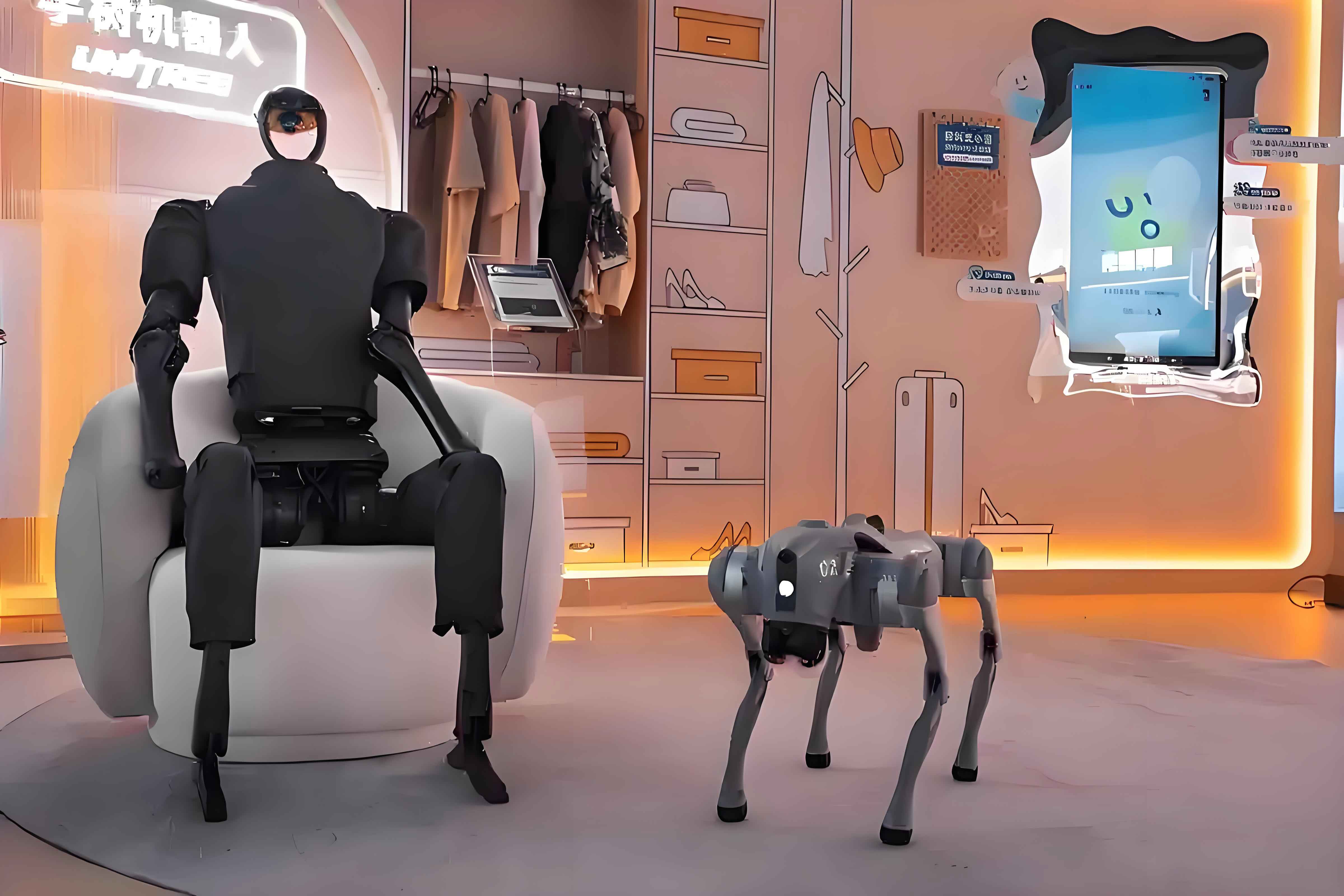
The core technologies of humanoid robots are multifaceted, and I will break them down into several key areas. First, environmental perception relies on sensors and signal processing. A humanoid robot must perceive its surroundings through visual, auditory, tactile, and other sensors. Multi-sensor information fusion techniques combine data from multiple sources to achieve a consistent understanding of the environment. This can be mathematically represented as a fusion process where sensor outputs are integrated based on optimization criteria. For example, if we have sensors $S_1, S_2, \ldots, S_n$ with observations $O_1, O_2, \ldots, O_n$, the fused estimate $\hat{X}$ can be given by:
$$\hat{X} = \arg \min_{X} \sum_{i=1}^{n} w_i \| O_i – H_i(X) \|^2$$
where $w_i$ are weights, and $H_i$ represents the sensor model. This allows the humanoid robot to make precise judgments, essential for effective movement and task execution.
Second, intelligent control is crucial for enabling humanoid robots to perform tasks with human-like precision. Control algorithms, such as model predictive control (MPC), are used to track motions and adjust forces. In MPC, the control input $u(t)$ is computed by solving an optimization problem over a prediction horizon $N$:
$$\min_{u} \sum_{k=0}^{N-1} \left( \| x(k) – x_{\text{ref}}(k) \|^2_Q + \| u(k) \|^2_R \right)$$
subject to system dynamics $x(k+1) = f(x(k), u(k))$ and constraints. This approach helps humanoid robots maintain balance and execute complex maneuvers. Additionally, other algorithms like zero-moment point (ZMP) control ensure stability during walking by regulating the robot’s center of pressure. The ZMP condition can be expressed as:
$$\text{ZMP} = \frac{\sum_{i} m_i (g \times r_i) – \sum_{i} I_i \alpha_i}{\sum_{i} m_i g}$$
where $m_i$ are masses, $r_i$ positions, $I_i$ inertias, and $\alpha_i$ angular accelerations. These control strategies are integrated with hardware components like reducers and motors to support the actions of a humanoid robot.
Third,本体设计 and material工艺 are vital for optimizing the structure of a humanoid robot. With multiple joints and redundant degrees of freedom, the design must balance weight, strength, and flexibility. Advanced materials, such as lightweight alloys or composites, can reduce本体 weight while improving durability. The mechanical design often involves kinematic and dynamic modeling. For a humanoid robot with $n$ joints, the forward kinematics can be described by:
$$T = \prod_{i=1}^{n} A_i(\theta_i)$$
where $A_i$ are transformation matrices based on joint angles $\theta_i$. This allows for precise control of limb positions. Moreover, energy efficiency is a critical consideration, as I will discuss next.
Fourth, energy optimization is a often-overlooked but essential aspect of humanoid robot development. To operate freely in various scenarios, a humanoid robot requires a power source that is compact, lightweight, and high-capacity. The energy density $E_d$ of a battery or power system can be defined as:
$$E_d = \frac{E}{m}$$
where $E$ is the stored energy and $m$ is the mass. Improving $E_d$ while ensuring features like high temperature resistance and low cost is key to extending the operational time of a humanoid robot. Additionally, regenerative braking or energy recovery mechanisms can be incorporated, modeled as:
$$E_{\text{recovered}} = \eta \int P_{\text{dissipated}} \, dt$$
with efficiency $\eta$. This highlights the interdisciplinary challenges in powering a humanoid robot.
To complement these technologies, the main components of a humanoid robot are equally important. I can categorize them into actuators, controllers, and sensors. Actuators include motors and reducers, controllers encompass industrial control systems and AI algorithms, and sensors range from proprioceptive to vision-based. Below is a table summarizing key components and their roles in a humanoid robot:
| Component Type | Specific Examples | Function in Humanoid Robot | Key Features |
|---|---|---|---|
| Actuators | Servo motors, torque motors, harmonic reducers | Provide motion and force for joints | High torque at low speeds, precision |
| Controllers | Model predictive controllers, AI systems | Orchestrate movements and decision-making | Real-time processing, adaptability |
| Sensors | Torque sensors, cameras, LiDAR | Monitor environment and internal states | High accuracy, multi-modal fusion |
| Transmission | Ball screws, planetary roller screws | Convert rotary to linear motion for limbs | Low friction, durability |
| Structural | Lightweight bearings, composite materials | Support body and reduce weight | Compact design, high strength |
For instance, torque motors are favored in humanoid robots for their ability to deliver high torque at low speeds, which aligns with the needs of bipedal locomotion. Harmonic reducers offer high precision but may require improvements in durability. Sensors like torque sensors are integrated into joint assemblies, forming a motor-reducer-sensor package that enhances control. In terms of transmission, ball screws are used for upper limbs due to their efficiency, while planetary roller screws suit lower limbs for impact resistance. Hand joints often employ空心杯电机 for simplicity. These components collectively enable the sophisticated functionality of a modern humanoid robot.
Moving to the产业链, the ecosystem of humanoid robots involves upstream raw materials and core parts, midstream system integration and本体 manufacturing, and downstream application scenarios. From a software-hardware perspective, software includes algorithms and AI systems, typically developed by integrators or brands, while hardware comprises power systems, intelligent sensing systems, and structural parts. The long-term value lies in software, as those who master AI algorithms control the “brain” of the humanoid robot. In the short term, high-value components include harmonic reducers, roller screws, servo motors, and sensors. To illustrate, I present a simplified产业链 breakdown:
| 产业链 Segment | Elements | Description | Value Proposition |
|---|---|---|---|
| Upstream | Materials, motors, sensors, reducers | Supply of basic components and raw materials | High毛利, incremental growth potential |
| Midstream | System integration,本体 assembly | Combining parts into functional humanoid robots | Technical expertise, customization |
| Downstream | Healthcare, manufacturing, disaster response | Deployment in real-world applications | Market expansion, societal impact |
| Software | AI algorithms, control codes | Intelligence and decision-making capabilities | Core competitiveness, future dominance |
| Hardware | Power systems, structural frames | Physical embodiment of the humanoid robot | Reliability, performance |
This产业链 is continually evolving, with advancements in one segment driving progress in others. For example, improvements in sensor technology enhance the perception abilities of a humanoid robot, while better AI algorithms enable more natural interactions. As a researcher, I believe that understanding this ecosystem is crucial for foreseeing trends in humanoid robot development.
Looking ahead, the future of humanoid robots is promising, with potential applications in crisis management, medical services, elderly care, and industrial作业. Unlike wheeled or multi-legged robots, humanoid robots can adapt to human-centric environments without terrain limitations. The concept of embodied intelligence, where AI systems interact seamlessly with the physical world, is gaining traction. Humanoid robots serve as ideal platforms for this, as their human-like form facilitates interaction with existing infrastructure and people. Recent advancements in large language models, such as GPT, are making human-robot communication more intuitive. For instance, a humanoid robot can now engage in topic-specific dialogues or follow指令 based on voice commands. This aligns with the idea that intelligence is inherently embodied and situated, as proposed by early AI thinkers.
From a technical standpoint, humanoid robots will likely benefit from further integration with AI, leading to improved cognitive abilities. The interaction can be modeled as a feedback loop: the humanoid robot perceives the environment via sensors $S$, processes information using AI models $M$, and acts through actuators $A$. This can be expressed as:
$$A(t) = M(S(t), H(t-1))$$
where $H$ represents historical data. Such systems will enable more autonomous and adaptive humanoid robots. Additionally, developments in materials science may yield lighter and stronger components, reducing the energy consumption of a humanoid robot. The energy optimization公式 mentioned earlier can be extended to include dynamic负载:
$$E_{\text{total}} = \int_{0}^{T} \left( \sum_{i} P_{\text{motor},i}(t) + P_{\text{compute}}(t) \right) dt$$
where $P_{\text{motor},i}$ is the power for each joint motor, and $P_{\text{compute}}$ is for processing. Minimizing $E_{\text{total}}$ through efficient design and control will be key for long-duration operations of a humanoid robot.
In terms of societal impact, humanoid robots are expected to become indicators of technological prowess and national strength. They will not only perform tasks but also drive innovations in related fields like machine vision, natural language processing, and human-robot collaboration. For example, the control algorithms developed for a humanoid robot can be adapted to other robotic systems, creating synergies across industries. As these technologies mature, the cost of humanoid robots may decrease, facilitating wider adoption. This aligns with observations from industry leaders who view robots as extensions of AI platforms.
In conclusion, as I reflect on the journey of humanoid robots, it is evident that they embody human aspirations for self-exploration and technological achievement. Through the integration of science, technology, economics, and society, humanoid robots are evolving toward greater precision, agility, intelligence, and natural interaction. They hold the potential to create significant value for humanity, from enhancing productivity to providing companionship. As a participant in this field, I am optimistic about the future, where humanoid robots will continue to break barriers and redefine possibilities. The ongoing research and development efforts worldwide ensure that the term ‘humanoid robot’ will remain at the forefront of innovation, driving progress in countless applications. This review, while comprehensive, only scratches the surface of the dynamic landscape surrounding humanoid robots, and I encourage further exploration into this fascinating domain.