
In the current wave of technological innovation sweeping the globe, the narrative around technology in the A-share market has become increasingly clear. Against this backdrop, the humanoid robot sector has emerged as a focal point for investors. In a recent interview, Li Chaoyu, fund manager of the Fangzheng富邦信泓混合基金, shared his in-depth perspectives on this hot topic, emphasizing the sector’s characteristics as a long-term growth avenue. Li’s insights shed light on why humanoid robots are attracting significant attention and investment, driven by a combination of policy support, economic transformation, and technological breakthroughs.
The strengthening of technology themes in the A-share market, including humanoid robots and computing power, is not accidental. According to Li, this trend results from the interplay of three key factors: policy backing, economic restructuring, and advancements in technology. “The 2025 Government Work Report explicitly called for establishing a growth mechanism for future industry investments, fostering sectors such as biom manufacturing, quantum technology, embodied intelligence, and 6G. Various regions have rolled out action plans, forming a comprehensive support system from top-level design to local implementation,” Li stated. This policy framework provides a solid foundation for the development of humanoid robots, ensuring that the sector receives the necessary impetus to evolve from concept to reality.
China’s economic transformation is deepening, with artificial intelligence (AI) large models and embodied intelligence seen as disruptive products following computers, smartphones, and new energy vehicles. Fields like AI, new materials, and precision manufacturing are becoming new drivers of economic growth. “The technology industry based on AI large models has experienced explosive growth in recent years, a progression that profoundly impacts human society,” Li noted. He cited examples such as the sustained increase in monthly active users and token calls for models like ChatGPT since 2022, highlighting how AI is gradually permeating areas like search, office work, programming, and healthcare. This technological渗透 is paving the way for humanoid robots to become a tangible application, as they represent a convergence of AI and physical automation.
Li has positioned his fund heavily in the humanoid robot industry chain since the end of last year, adjusting the top ten holdings to include stocks related to humanoid robots. He attributes this strategic move to five main factors that underscore the sector’s potential. First, robust policy support is a critical enabler. Cities like Beijing, Shanghai, and Guangdong have launched action plans and industry funds worth billions of yuan, creating a three-dimensional push through “top-level design, scenario-driven initiatives, and financial backing” to accelerate the industrialization of humanoid robots from technological reserves to rapid deployment.
Second, the industry exhibits high growth momentum. “2025 could mark the first year of mass production for humanoid robots. Considering a potential price point of around $20,000 per unit in a mature state, the global humanoid robot industry scale is expected to reach trillions of yuan in the future, making it a sector with a long growth runway and substantial depth,” Li explained. This outlook reflects the vast market opportunities for humanoid robots, as they transition from niche applications to widespread adoption.
Third, humanoid robots are among the most promising scenarios for the practical application of the AI wave. Li analyzed that after substantial capital investment over the past two years, large model training and intelligence have reached new heights. The market is eager to see concrete application scenarios that meet corporate ROI requirements, and humanoid robots, as carriers of embodied intelligence and large models, are poised to become one of the fastest areas for implementation. This alignment with AI advancements positions humanoid robots at the forefront of technological commercialization.
Fourth, China’s manufacturing sector holds a global competitive advantage. As the only country with all industrial categories classified by the United Nations, China boasts a complete closed-loop system from raw material supply and component production to end-product manufacturing, supported by a well-developed logistics network and ample energy supply. Driven by policy and capital synergy, regions like the Beijing-Tianjin-Hebei area, Yangtze River Delta, and Pearl River Delta have formed multiple manufacturing clusters. Domestic robot companies such as Yushu Technology and Zhiyuan Robot are developing rapidly, potentially replicating the success of the new energy industry. This infrastructure strengthens the foundation for humanoid robot production and innovation.
Fifth, demographic changes are fueling demand for automation. The rise of the silver economy is driving rapid growth in needs such as home care, rehabilitation, and elderly companionship, all of which are suitable scenarios for humanoid robot applications. As populations age, the urgency for automated solutions increases, making humanoid robots a viable option to address labor shortages and enhance quality of life.
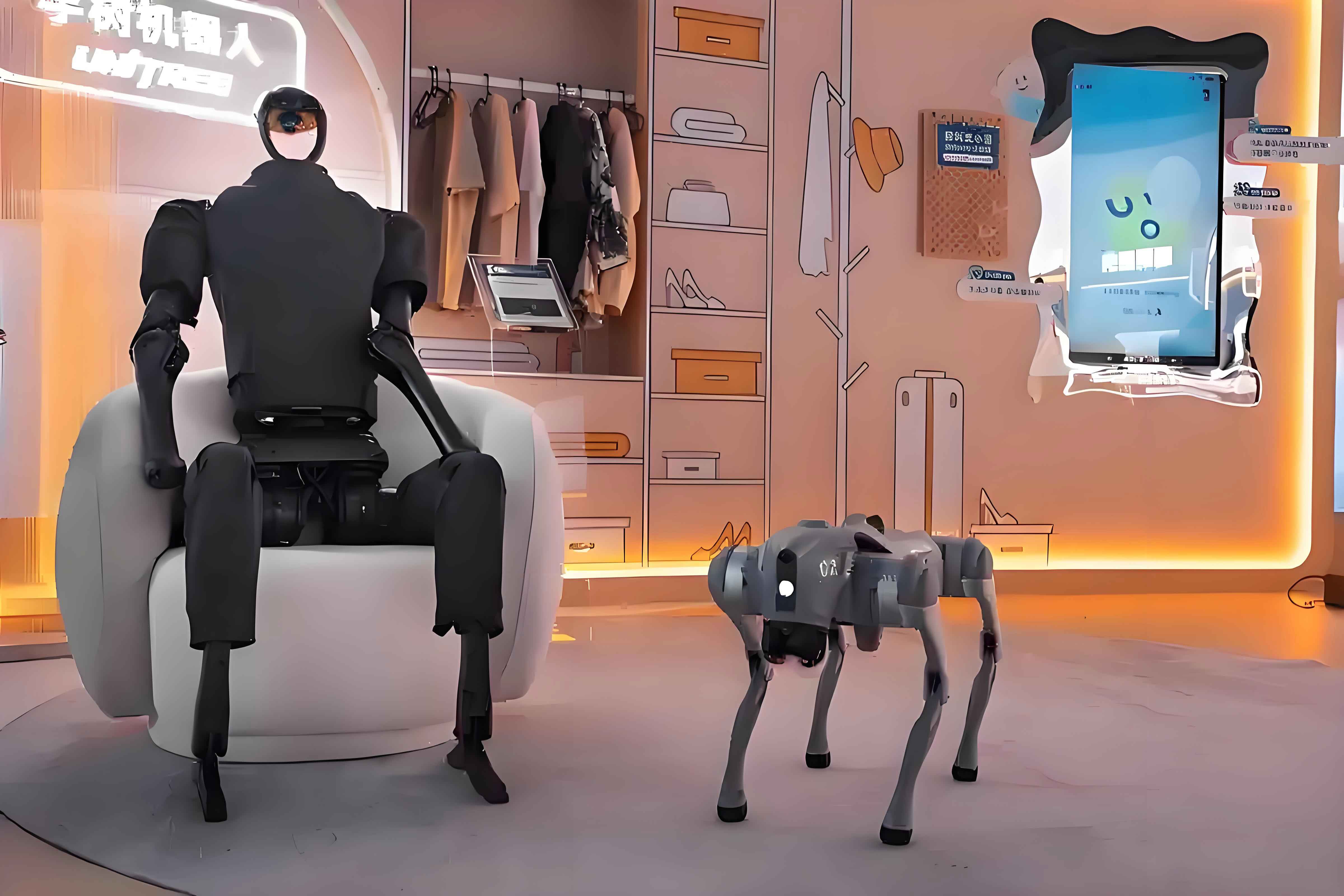
In the fast-evolving technology landscape, Li’s stock selection logic for the humanoid robot sector focuses on “long-term growth potential and sound business models.” He elaborated, “For long-term growth, we consider the industry’s stage, future space, compound growth rate, and the core competitiveness of enterprises. As for business models, sustainability is key, including the stability of indicators like gross margin, net margin, and R&D expenses, as well as operational quality such as return on invested capital, asset structure, bargaining power in the supply chain, and accounts receivable and cash flow.” This approach ensures that investments in humanoid robots are not only growth-oriented but also grounded in financial health and operational efficiency.
Regarding adjustments to holdings, Li emphasized that the primary consideration is corporate fundamentals. “We assess whether a company’s operations align with expectations, if there are changes in strategy, financial health, and the progress of new products, typically making decisions on a quarterly basis. At the same time, valuation is an important reference; even the best companies need to be priced reasonably, and if valuations exceed that, we consider realizing gains. Additionally, overall market risk appetite and liquidity changes are factored in,” he said. This disciplined strategy helps navigate the volatility often associated with emerging sectors like humanoid robots.
Discussing the current market environment, Li believes that the humanoid robot sector still offers good long-term配置 value. “DeepSeek has successfully addressed the cost challenges hindering AI development, with its advantages in cost reduction, efficiency improvement, and open-source access injecting strong momentum into the humanoid robot field. This is expected to significantly enhance core model capabilities in areas such as environmental perception, task planning and decision-making, and continuous evolution. The humanoid robot industry is accelerating its journey from blueprint to reality, and with mass production, both profitability and market valuation could achieve substantial leaps,” he concluded. This optimism underscores the transformative potential of humanoid robots, as they integrate cutting-edge AI with physical automation to solve real-world problems.
The growth trajectory of humanoid robots is further supported by global trends in automation and AI. As industries worldwide seek to enhance productivity and reduce reliance on human labor, humanoid robots offer a versatile solution that can adapt to various environments. From manufacturing and logistics to healthcare and domestic services, the applications of humanoid robots are expanding, driven by advancements in robotics, sensors, and AI algorithms. This versatility makes humanoid robots a key component of the fourth industrial revolution, where intelligent machines collaborate with humans to drive efficiency and innovation.
In terms of policy, the Chinese government’s focus on future industries is not limited to domestic initiatives but aligns with global efforts to foster technological leadership. International collaborations and competitions in the humanoid robot space are intensifying, with countries like the United States, Japan, and South Korea also investing heavily in robotics research and development. This global context highlights the strategic importance of humanoid robots, as they represent a frontier in the race for technological supremacy. For investors, this means that the humanoid robot sector is not just a local phenomenon but a global opportunity with cross-border implications.
Economically, the humanoid robot industry is expected to create new value chains and job opportunities, despite initial concerns about automation displacing workers. By taking over repetitive or dangerous tasks, humanoid robots can free up human capital for more creative and complex roles, potentially leading to higher productivity and economic growth. Moreover, the development and deployment of humanoid robots require expertise in various fields, from software engineering and mechanical design to ethics and regulation, fostering a multidisciplinary ecosystem that drives innovation.
Technologically, the progress in humanoid robots is closely tied to breakthroughs in AI, particularly in areas like computer vision, natural language processing, and reinforcement learning. As AI models become more capable and efficient, humanoid robots can perform increasingly sophisticated tasks, such as navigating unstructured environments, understanding and responding to human commands, and learning from experience. This synergy between AI and robotics is crucial for achieving the vision of general-purpose humanoid robots that can assist in diverse scenarios, from household chores to industrial maintenance.
From an investment perspective, the humanoid robot sector offers exposure to multiple sub-sectors, including component manufacturers, software developers, and system integrators. Key components for humanoid robots include actuators, sensors, batteries, and control systems, each representing a potential investment opportunity. Similarly, software for perception, decision-making, and learning is critical for the functionality of humanoid robots, creating avenues for companies specializing in AI and robotics software. By diversifying across these areas, investors can capture the full value chain of the humanoid robot ecosystem.
However, investing in humanoid robots also involves risks, such as technological uncertainties, regulatory hurdles, and market acceptance. The development of humanoid robots is complex and requires significant R&D investments, with no guarantee of immediate commercial success. Regulations around safety, privacy, and liability for autonomous systems are still evolving, which could impact the deployment of humanoid robots. Additionally, public perception and acceptance of humanoid robots in daily life will play a key role in their adoption, necessitating efforts to build trust and demonstrate benefits.
Despite these challenges, the long-term outlook for humanoid robots remains positive, driven by persistent demand for automation and innovation. As Li Chaoyu highlighted, the sector’s “long坡厚雪”特质—referring to its enduring growth potential—makes it an attractive option for investors seeking sustainable returns. By focusing on companies with strong fundamentals, innovative capabilities, and scalable business models, investors can navigate the dynamics of the humanoid robot market and capitalize on its growth trajectory.
In conclusion, the humanoid robot sector represents a convergence of policy, economic, and technological forces that are shaping the future of industry and society. With continued support from governments, advancements in AI, and growing demand for automated solutions, humanoid robots are poised to become a transformative force in the global economy. For those looking to invest in this space, a careful approach that balances growth potential with risk management is essential, as highlighted by insights from experienced fund managers like Li Chaoyu. As the industry evolves, humanoid robots will likely play an increasingly integral role in our lives, offering new possibilities for efficiency, safety, and convenience.