
The 2025 World Robot Conference (2025WRC) unveiled a future where humanoid robots are no longer a distant dream but a tangible reality, with dozens of these advanced machines working in synchrony on the exhibition floor. At Ubtech’s booth, a group of life-sized humanoid robots efficiently performed tasks in a simulated workshop environment, handling heavy object transportation, item sorting, and even autonomous battery replacement, drawing amused comments from spectators who dubbed them “natural workers.” This spectacle was just one of many demonstrations highlighting the rapid progress in humanoid robot technology, with companies like Accelerated Evolution showcasing soccer-playing robots, Fourier presenting rehabilitation-assistance models, Unitree displaying combat and dancing units, Zhongqing demonstrating running and dancing capabilities, and Magic Atom illustrating industrial assembly line applications such as glue dispensing. These diverse displays underscored significant breakthroughs in the body, brain, and control systems of humanoid robots, driving increased orders from various industry clients and signaling a new era of commercialization.
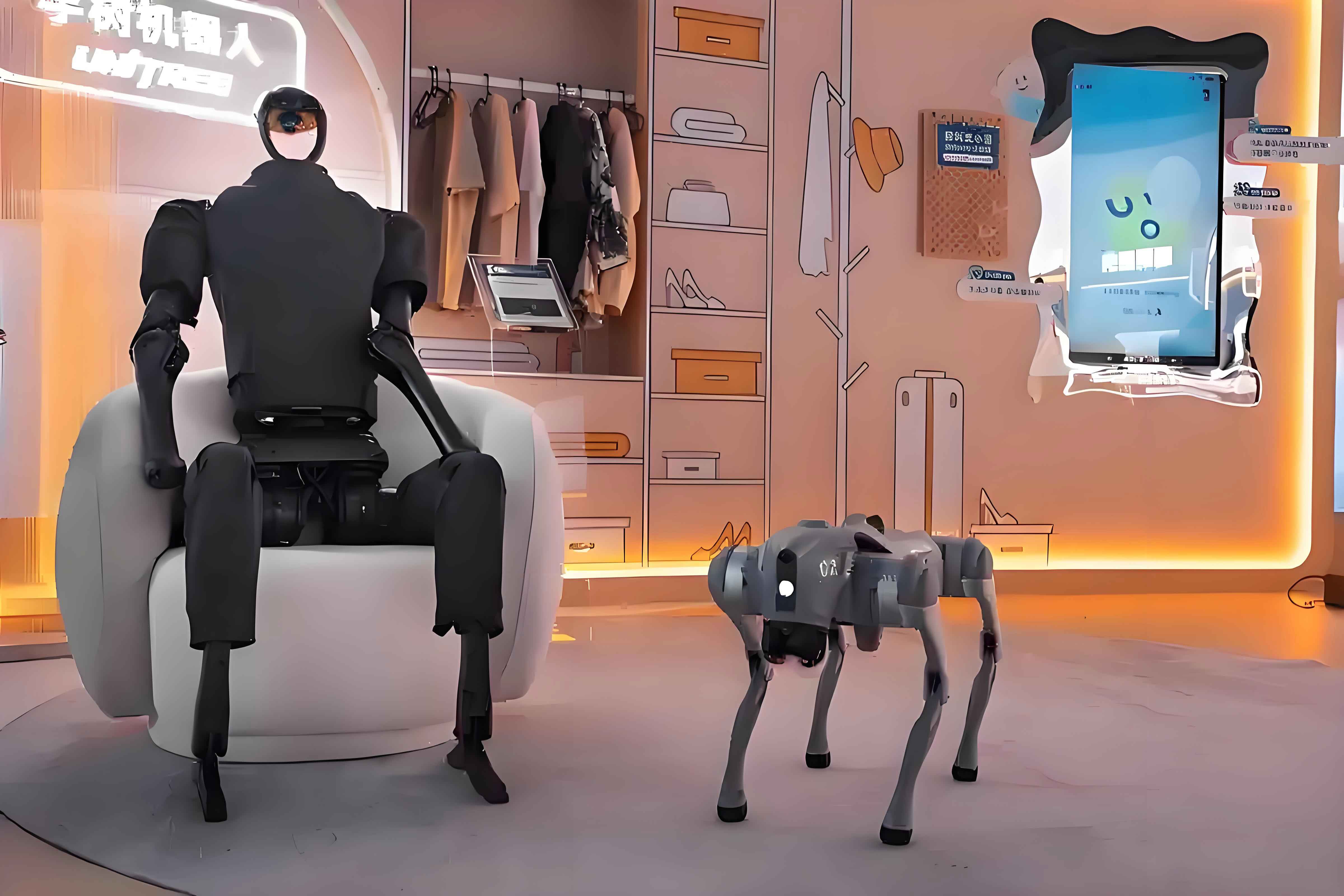
- Diverse Applications and Technological Breakthroughs
The 2025WRC served as a platform for humanoid robot manufacturers to highlight their products’ versatility across multiple domains. Ubtech’s humanoid robots, for instance, operated in a coordinated manner within an industrial setting, emphasizing their potential in logistics and manufacturing. Accelerated Evolution’s humanoid robots engaged in dynamic soccer matches, demonstrating agility and decision-making capabilities, while Fourier’s models assisted in physical rehabilitation, showcasing their utility in healthcare. Unitree’s humanoid robots performed intricate dance routines and combat simulations, illustrating advancements in mobility and balance, and Zhongqing’s units displayed running and dancing feats, appealing to entertainment and service sectors. Magic Atom’s humanoid robots focused on precision tasks like glue dispensing in industrial流水线, highlighting their role in automation. These applications are rooted in improvements in the本体 (body structure),大脑 (artificial intelligence), and小脑 (motion control) of humanoid robots, enabling them to handle complex tasks and adapt to real-world environments. The integration of these technologies has fueled interest from sectors such as guided tours, exhibitions, scientific research, industrial operations, and healthcare, positioning humanoid robots as multifunctional tools for the future.
- Surge in Orders and Production Capacity
The demonstrations at the conference have translated into substantial commercial gains, with humanoid robot manufacturers reporting a notable increase in orders and production scales. On August 10, Zhiyuan Robot announced it had secured an order worth tens of millions of yuan from Fuling Precision, involving nearly 100 units of its Expedition A2-W humanoid robots. This deal marks the first large-scale commercial deployment of humanoid robots in China’s industrial sector and represents a global milestone for智能制造 scenarios. In June, according to China Mobile’s procurement and bidding website, Zhiyuan Robot and Unitree Technology won a humanoid robot order exceeding 1.2 billion yuan from China Mobile (Hangzhou) Information Technology Co., Ltd., further emphasizing the growing demand for these machines.
Unitree Technology, while not disclosing specific order figures for the year, revealed through its founder Wang Xingxing during a speech at 2025WRC that its G1 model is likely the global leader in humanoid robot shipments this year. The company is also advancing the mass production of its new humanoid robot R1, though delivery times may be delayed due to production ramp-up. Ubtech Research Institute Vice President and Humanoid Robot Scientist Zheng Yu shared insights on the company’s trajectory, stating that large-scale deployments of humanoid robots in factories are expected in the second half of this year. “We anticipate delivering approximately 500 industrial humanoid robots in 2025, with numbers rising to over 1,000 in 2026, and ideally reaching tens of thousands by 2027,” Zheng said, reflecting optimistic growth projections for the humanoid robot industry.
Accelerated Evolution, which began mass production and delivery in October last year, has already shipped hundreds of humanoid robot units over a 10-month period. The company’s government relations负责人, Su Ying, reported that monthly shipments now exceed 100 units, with over 100 units sold in July alone, indicating steady production momentum. Fourier disclosed that by the first quarter of 2025, its overall robot sales, including various forms and bipedal humanoid robots, had surpassed 10,000 units, with a target to deliver 300 bipedal humanoid robots within the year. Songyan Power, after achieving runner-up status in a half-marathon for humanoid robots in April, secured commercial orders for more than 2,000 units in the first half of 2025, with total contract value projected to exceed 100 million yuan. Founder Jiang Zheyuan outlined a clear roadmap: “In the second half of this year, our primary goal is to efficiently manage production and delivery, converting orders worth over 100 million yuan into confirmed revenue. By next year, we aim to achieve delivery volumes of 10,000 humanoid robot units.”
The following table summarizes key order and production data for various humanoid robot manufacturers, illustrating the industry’s expansion:
| Manufacturer | Order/Delivery Details | Target/Projection |
|---|---|---|
| Zhiyuan Robot | Order worth tens of millions of yuan for nearly 100 units of Expedition A2-W humanoid robots | First large-scale industrial deployment globally |
| Zhiyuan Robot & Unitree | Order exceeding 1.2 billion yuan from China Mobile | N/A |
| Unitree | G1 model leading global humanoid robot shipments | R1 model in mass production phase |
| Ubtech | Expected delivery of 500 industrial humanoid robots in 2025 | Over 1,000 units in 2026; tens of thousands by 2027 |
| Accelerated Evolution | Shipped hundreds of humanoid robots over 10 months; monthly shipments over 100 units | N/A |
| Fourier | Overall sales over 10,000 units by Q1 2025 | 300 bipedal humanoid robots to be delivered in 2025 |
| Songyan Power | Orders for over 2,000 humanoid robot units in H1 2025; contract value over 100 million yuan | Confirm revenue over 100 million yuan in H2 2025; deliver 10,000 units in 2026 |
- Price Reductions Driving Adoption and Market Growth
The growth in orders for humanoid robots is closely linked to their decreasing prices, which have made them more accessible to a broader range of customers. In the full-size humanoid robot category, Unitree’s general-purpose humanoid robot Unitree H1 was available for 650,000 yuan on JD.com in February this year. By March, Ubtech and the Beijing Humanoid Robot Innovation Center had launched the Tian Gong Xing Zhe, a full-size research and education humanoid robot platform, with a starting price of 299,000 yuan, positioning it as the first research-grade full-size humanoid robot under 300,000 yuan in the industry. Similarly, in March, Yuejiang Technology released the Dobot Atom, hailed as the world’s first “dexterous manipulation plus straight-knee walking” embodied intelligent humanoid robot, priced from 199,000 yuan. On July 30, Zhuji Power introduced the LimX Oli humanoid robot at a starting price of 158,000 yuan, further pushing down costs.
Non-full-size humanoid robots have also seen significant price drops: Accelerated Evolution’s small humanoid robot K1 is priced at 88,000 yuan; Songyan Power’s N2 robot was promoted at a starting price of 39,900 yuan before Labor Day; Unitree’s latest Unitree R1 intelligent companion starts at 39,900 yuan; and recently, Zhongqing Robot launched a product marketed as “the first humanoid robot for young people” with a starting price of 38,500 yuan. These reductions are strategic moves to attract more users and build ecosystem scale. As reported, Wang Xingxing of Unitree emphasized that lower prices are essential to draw in a larger user base, as sufficient shipment volume is crucial for ecosystem development. Jiang Zheyuan of Songyan Power admitted that the 39,900 yuan price point for the N2 was primarily for its话题性 (topic appeal), highlighting the marketing aspect of pricing strategies.
The fundamental driver behind these price cuts is cost control. “In the journey of humanoid robots from laboratory prototypes to practical applications and mass production, initial costs are inherently high. However, with continuous technological iteration and maturing application scenarios, especially as production scales up, costs are bound to decrease significantly. We are actively reducing manufacturing costs through methods like using lighter materials and optimizing production processes. Based on current technological pathways and economies of scale, we are confident that the cost per unit for a full-size humanoid robot can be controlled within the range of over 100,000 yuan in the near future,” Zheng Yu explained. The following table provides a detailed overview of price points for various humanoid robot models, illustrating the trend toward affordability:
| Manufacturer | Model | Type | Price (yuan) |
|---|---|---|---|
| Unitree | H1 | Full-size humanoid robot | 650,000 |
| Ubtech & Beijing Innovation Center | Tian Gong Xing Zhe | Full-size humanoid robot | 299,000起 |
| Yuejiang Technology | Dobot Atom | Full-size humanoid robot | 199,000起 |
| Zhuji Power | LimX Oli | Full-size humanoid robot | 158,000起 |
| Accelerated Evolution | K1 | Non-full-size humanoid robot | 88,000 |
| Songyan Power | N2 | Non-full-size humanoid robot | 39,900起 |
| Unitree | R1 | Non-full-size humanoid robot | 39,900起 |
| Zhongqing Robot | Unnamed | Non-full-size humanoid robot | 38,500起 |
- Localization and Cost Control in the Humanoid Robot Supply Chain
Another critical factor contributing to the cost reduction and commercialization of humanoid robots is the increasing localization rate of the supply chain. Su Ying of Accelerated Evolution pointed out that, currently, aside from chips, the国产化率 (localization rate) for other components in humanoid robots is already high, reducing dependency on imports and lowering production expenses. This shift is essential for scaling up humanoid robot manufacturing and making them more affordable globally.
Zheng Yu of Ubtech elaborated on the company’s efforts in core technology independent research and development, stating that they have achieved complete self-development of key components such as joint modules, core元器件 (components), sensors,整机结构 (whole machine structures), and灵巧手 (dexterous hands) for humanoid robots. While high-end chips and computing platforms still rely on imports, the rapid growth of domestic artificial intelligence and robotics industries is expected to yield more localized computing chip solutions tailored for humanoid robot applications in the future. “In the long term, the localization substitution rate across the entire industry chain will continue to rise, further promoting the autonomous and controllable development of humanoid robot technology,” Zheng added, underscoring the strategic importance of self-reliance in this sector.
The progress in localization not only cuts costs but also enhances the resilience of the humanoid robot industry, enabling faster innovation and adaptation to market needs. As more companies invest in domestic production capabilities, the humanoid robot ecosystem is becoming more robust, supporting broader adoption in fields like industrial automation, healthcare, and consumer services. This trend aligns with global movements toward technological sovereignty and positions humanoid robots as a key area of growth in the robotics market.
The 2025 World Robot Conference has vividly demonstrated that humanoid robots are evolving from experimental novelties into practical, commercially driven solutions. With surging orders, expanding production capacities, decreasing prices, and improved localization, the humanoid robot industry is on a rapid growth trajectory. Manufacturers are leveraging technological advancements to enhance the capabilities of humanoid robots, making them integral to various sectors. As cost controls and supply chain efficiencies continue to improve, the vision of humanoid robots becoming commonplace in everyday life and industrial operations is increasingly attainable, signaling a transformative shift in how technology interacts with society.