
In Beijing, at the venue known as the Ice Ribbon, the Second World Humanoid Robot Games brought together one of the most revealing public tests yet of what humanoid robots can do outside a laboratory. The event was not merely a showcase of walking machines or dancing displays. It was a large-scale, multi-event proving ground for humanoid robots from around the world, with 51 events, 1,301 matches, 16 countries, 666 teams, and 2,056 humanoid robots taking part. The number of teams was nearly 1.5 times greater than at the previous edition, and the number of humanoid robots was four times larger. That growth alone signals how quickly the field is expanding and how many research teams, companies, and engineers now see the humanoid robot as a platform worth testing in public.
Inside the arena, humanoid robots moved from simply walking toward running, competitive action, and coordinated performance. Outside the arena, the story continued. A robot restaurant featured a robot chef skillfully cutting a traditional cucumber dish prepared in a continuous decorative pattern. The first Robot Hi-FUN Market offered human-robot interaction experiences. In this setting, the humanoid robot was no longer only a high-technology exhibit behind glass. It was a competitor, a performer, a conversational partner, and in some demonstrations, a machine with a growing sense of perception. The humanoid robot was presented as a potential life partner, not a distant future fantasy.
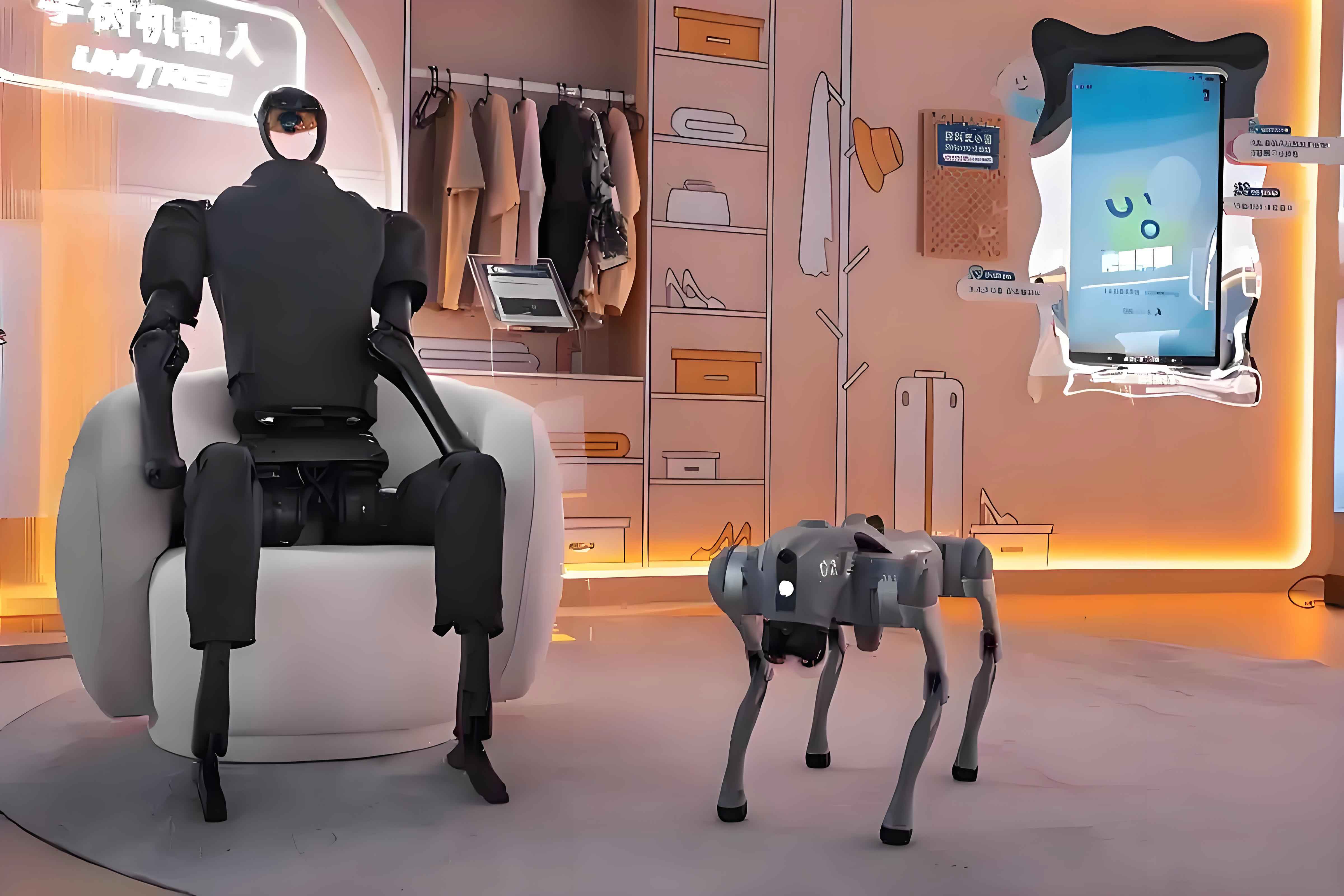
- Participation and Scale: A Humanoid Robot Event That Quadrupled in Size
The scale of the Second World Humanoid Robot Games was one of the clearest messages of the event. The numbers were not incremental. They showed a field moving rapidly from isolated demonstrations toward broad, organized competition. The humanoid robot is no longer a niche laboratory object. It is becoming a shared platform for teams from many countries, with common rules, shared technical challenges, and public benchmarks.
The event included 51 separate events and 1,301 matches. Teams came from 16 countries. A total of 666 teams and 2,056 humanoid robots participated. Compared with the previous edition, the number of teams increased by nearly 1.5 times, while the number of humanoid robots quadrupled. These figures matter because they reflect more than popularity. They reflect a growing ecosystem around the humanoid robot, including hardware developers, artificial intelligence researchers, control engineers, sensor specialists, and operators who must work together to make a humanoid robot perform reliably.
Metric Figure Events 51 Matches 1,301 Countries represented 16 Teams 666 Humanoid robots 2,056 Team growth from previous edition Nearly 1.5 times greater Humanoid robot growth from previous edition Four times larger For the humanoid robot industry, such an event serves as a public stress test. A humanoid robot must not only stand and walk. It must perceive its environment, maintain balance, plan movements, coordinate multiple joints, and sometimes make decisions without direct human intervention. When hundreds of humanoid robots compete under the same conditions, the results reveal which capabilities are maturing and which remain fragile.
- Traditional Culture as a Digital Inheritance Platform for Humanoid Robots
One of the most distinctive features of the Second World Humanoid Robot Games was the inclusion of many events inspired by traditional culture. Tai Chi was among the most prominent. It moved from an exhibition event at the previous edition to a formal competition at this edition. Humanoid robot athletes entered the arena wearing traditional Tai Chi practice uniforms. Their body shapes and structures varied widely. Some were well-known humanoid robots such as those from Unitree. Others were internet-famous models, including the humanoid robot known as Little Milk Bottle.
From the opening posture to the fully autonomous completion of martial arts movements, the humanoid robots aimed for a high degree of human-like motion. There was even a small sense of ceremony in their performances. The humanoid robot was not simply executing a mechanical routine. It was participating in a cultural form, and in doing so, it became part of a digital inheritance process.
At the competition site, the humanoid robots completed classic Tai Chi movements such as the fist-and-palm salute and White Crane Spreads Wings. They also attempted high-difficulty actions such as the tiger jump and the jumping outward swing. Teams were even allowed to create their own difficulty levels, allowing a humanoid robot to demonstrate a unique skill. This combination of standardized movements and self-created difficulty turned the event into both a technical benchmark and a creative challenge.
The judging team explained that the Tai Chi event tested a humanoid robot’s body balance, multi-joint coordination, motion control, and autonomous decision-making. Each flowing martial arts sequence was backed by research teams continuously pushing the boundaries of embodied intelligence and motion capability. The humanoid robot is moving from being able to move toward moving accurately and moving stably. That transition is central to the future of the humanoid robot because real-world tasks rarely allow for error, hesitation, or loss of balance.
Tai Chi also showed how cultural performance can become a demanding technical test. A humanoid robot must control its center of gravity while shifting between poses. It must coordinate arms, legs, torso, and head. It must sequence movements in time. It must recover from small instabilities without falling. For the humanoid robot, a graceful martial arts form is not just an aesthetic outcome. It is a demonstration of integrated control, perception, and planning.
- Pitch-Pot and Precision: Humanoid Robots Test Hand-Eye Coordination and Force Control
At the pitch-pot event, humanoid robot athletes demonstrated a very different set of skills. A humanoid robot grabbed an arrow, stood behind a throwing line 1.5 meters from the pot, aimed, swung its arm, and sent the arrow toward the opening. When the arrow went in, the entire sequence took no more than 3 minutes. Engineers participating alongside the humanoid robots clenched their fists, waved their arms, and cheered. A perfect throw meant that the research team had also passed a demanding examination.
Zhang Hua, deputy director of the organizing committee, said that the pitch-pot event tested a humanoid robot’s target judgment, motion precision, and force control. In other words, the humanoid robot needed hand-eye coordination, visual target recognition, upper-limb trajectory planning, stable grasping with a dexterous hand, and precise control of throwing force and angle. The event concentrated on testing fine manipulation with a dexterous hand. At the same time, the humanoid robot also needed excellent static standing balance.
This combination is important because it mirrors many real-world tasks. A humanoid robot that can identify an object, reach for it, grasp it, move it, and release it with controlled force can potentially work in kitchens, warehouses, laboratories, hospitals, and homes. The pitch-pot event may look like a traditional game, but it exposes the same core capabilities required for practical service work. The humanoid robot must see, decide, move, and act within a narrow margin of error.
The event also showed how traditional sports can be activated and reused through robotics. A cultural game becomes a technical challenge. A humanoid robot becomes an athlete. The audience sees a familiar activity, but engineers see a stack of difficult problems: perception, planning, control, actuation, balance, and real-time execution. For the humanoid robot, each successful throw is a small proof that embodied intelligence is advancing.
- Bronze-Mask Cheerleading and Cross-Time Cultural Dance
If Tai Chi and pitch-pot represented the activation of traditional sports, then the cheerleading arena offered a cross-time dance between traditional culture and frontier technology. Humanoid robots designed with distinctive bronze-statue styling performed in the cheerleading competition. They held yellow pom-poms and danced to the competition music. To the audience, they looked like steel dancers wearing bronze masks inspired by Sanxingdui, happily dancing on the field.
According to their research team, the appearance of these humanoid robots drew on elements from bronze masks unearthed at Sanxingdui, including the protruding-eye motif. The design combined those elements with a modern robotic body. The goal was to use the humanoid robot as a carrier and turn it into a symbol of Sanxingdui cultural output.
This approach reveals another dimension of the humanoid robot. A humanoid robot can be a technical platform, but it can also be a cultural messenger. Its body, movement, costume, and interaction style can carry meaning beyond engineering. In the cheerleading event, the humanoid robot did not simply perform a sequence of motor commands. It participated in a visual and cultural narrative, linking ancient imagery with contemporary robotics.
The performance also demanded coordination and stability. A dancing humanoid robot must maintain balance while moving its arms, stepping, turning, and responding to music. It must synchronize its movements with a group and with a tempo. For the humanoid robot, cheerleading is not trivial. It requires dynamic balance, joint coordination, timing, and robustness. When the humanoid robot dances with pom-poms, it is also demonstrating the same underlying control systems that will one day help it move through crowded spaces, assist people, or perform service tasks.
- Running on the Blue Track: Speed, Stability, and Records for Humanoid Robots
On the blue running track, the starting gun sounded, and figures dashed forward. The mechanical creaking sounds mixed with waves of cheers from the audience. At the Second World Humanoid Robot Games, one human world record after another was broken. The humanoid robot was no longer only walking. It was running, accelerating, turning, and competing at speed.
One female student watching on site smiled and said that the most shocking part was the humanoid robot running. She said it allowed her to see with her own eyes the rapid changes in the country’s science and technology. For many spectators, the running events made the progress of the humanoid robot visible in a direct and emotional way. The humanoid robot was not described in a laboratory paper. It was moving on a track in front of a crowd.
Liu Xingliang, a specially appointed researcher at the Digital China Research Institute of the University of Chinese Academy of Social Sciences, said that robot racing appears to test the coordination of two legs, but in reality it tests the coordination of the brain, the cerebellum, and the body. The brain acts as the decision-making center. The cerebellum acts as the motion control center. The body must execute the decisions and maintain stability. Compared with the previous year, algorithms, robot joint bodies, and control system technologies have all been upgraded.
The 400-meter event required humanoid robots to switch between straight sections and curves. The 100-meter event demanded speed and intensity. To the audience, the race might look like a humanoid robot operating alone. In reality, it requires close collaboration between the humanoid robot and its operator. Although a humanoid robot can already run autonomously, going online and going offline still require operator control. This means that a 4×100-meter relay requires 4 robot starts and 4 robot stops. That is a significant challenge for both the humanoid robot athlete and the team.
The humanoid robot must autonomously perceive when to accelerate, when to maintain a constant speed, and when to decelerate. The operators must predict the humanoid robot’s state and avoid actions that are too early or too late, which could cause collisions or errors. The event therefore tests not only the humanoid robot but also the human-machine team. The humanoid robot is becoming more autonomous, but the path to reliable autonomy still depends on carefully designed human oversight.
- The 4×100-Meter Relay Without a Baton: Collaboration Between Humanoid Robots and Operators
The 4×100-meter relay added another layer of complexity. There was no physical baton. According to Chen Bin, event director for the track and field competitions, the criteria for a successful handoff were based on two conditions. First, the handoff had to occur within the designated handoff area. Second, the two humanoid robots had to physically overlap. Overlap in position was enough. Fingers could overlap, a hand and a foot could overlap, or a hand and the body could overlap.
In an ideal state, the handoff should occur while the humanoid robots are in motion. That requires high-precision timing coordination. The stability and anti-interference ability of the humanoid robots are also tested. They need continuous training to improve their stable performance at high speed.
The relay event revealed how difficult multi-robot coordination remains. A single humanoid robot must manage balance, speed, direction, and stopping. In a relay, two humanoid robots must coordinate their positions and timing. The operators must coordinate with both machines. The event becomes a system-level challenge involving perception, communication, control, and human decision-making. For the humanoid robot, success in such an event suggests future potential in logistics, manufacturing, emergency response, and other tasks where multiple robots must work together.
At the same time, the relay demonstrated the value of failure. If a humanoid robot missed a handoff, fell, or stopped at the wrong time, the data still had meaning. Every failed attempt provides information about stability, timing, sensor accuracy, and control limits. The humanoid robot learns through iteration, and the event creates a structured environment for collecting high-value data.
- Beyond the Arena: Robot Restaurant, Robot Market, and Daily-Life Humanoid Robots
The Second World Humanoid Robot Games was not limited to competition. Outside the arena, the humanoid robot appeared in contexts that pointed toward daily life. A robot restaurant featured a robot chef skillfully cutting a traditional cucumber dish prepared in a continuous decorative pattern. The first Robot Hi-FUN Market offered human-robot interaction experiences. These settings showed that the humanoid robot is being imagined not only as an athlete but also as a service provider, a companion, and a participant in everyday activities.
In the robot restaurant, the act of cutting a cucumber dish requires precision, tool control, and safety. For a humanoid robot, food preparation is a demanding task because it involves soft objects, sharp tools, irregular shapes, and a dynamic environment. The robot chef demonstration therefore connected directly to the manipulation skills tested in events such as pitch-pot. The humanoid robot must see the object, plan the cut, control the blade, and adapt to variation.
At the Robot Hi-FUN Market, visitors experienced human-robot interaction. The humanoid robot could compete, communicate, and in some cases perceive its surroundings. The event presented the humanoid robot as a potential life partner rather than a distant high-technology exhibit. This shift in framing is significant. It moves the conversation from what a humanoid robot can do in a controlled demonstration to how a humanoid robot might fit into human environments.
A parent who watched the event said that bringing a child to observe was intended to help the child understand intelligence and that this is an inevitable trend. The parent noted that the country is developing new quality productive forces, and more contact with these technologies is good for children. Through the humanoid robot games, parents and children felt both the visual impact of advanced technology and the real scenes of future life. The event became an experience ground for technology and a comprehensive test for the humanoid robot.
- From Gold Medals to Market Orders: What the Games Prove About Humanoid Robots
The purpose of the competition is changing. Liu Xingliang said that the event is verifying whether a humanoid robot can truly work. The Humanoid Robot Games are more importantly about breaking the technical threshold that separates the laboratory from the real world. Today, the competition fights for gold medals. In the future market, the competition will fight for orders.
This statement captures the central tension of the humanoid robot industry. A humanoid robot can be impressive in a controlled demo, but the real world is unpredictable. Floors are uneven. Objects vary. People move unpredictably. Tasks require judgment, adaptation, and recovery from error. Competitions such as Tai Chi, pitch-pot, sprinting, and relay racing force humanoid robots to face uncertainty in public. They create standardized but still demanding conditions.
A co-founder of Lingxin Qiaoshou Co., Ltd. said that every road the robot walks is not walked in vain, and every fall is not taken in vain. The data has been recorded. Even failure is valuable. This perspective is important because humanoid robot development depends heavily on data. Every stumble, every missed grasp, every delayed stop, and every unstable turn provides information that can improve algorithms, hardware, and control strategies.
Every action on the field is a real test. For the humanoid robot, practicing skills and solving problems is what matters most. Each small improvement lays a realistic step toward a future of human-machine symbiosis. The event therefore should not be judged only by how many humanoid robots finished a race or completed a routine. It should be judged by how much reliable capability was demonstrated, how much failure data was collected, and how clearly the path from competition to practical work was illuminated.
- Capability Matrix: What Each Event Reveals About the Humanoid Robot
The value of the Second World Humanoid Robot Games lies in how each event maps to a cluster of capabilities. A humanoid robot is not a single invention. It is an integrated system of perception, decision-making, motion control, actuation, balance, power, and human-machine interaction. The events at the games made those layers visible.
Event or Setting What Was Tested Humanoid Robot Capabilities Demonstrated Real-World Relevance Tai Chi Balance, multi-joint coordination, motion control, autonomous decision-making Flowing martial arts sequences, fist-and-palm salute, White Crane Spreads Wings, tiger jump, jumping outward swing, self-created difficulty Cultural performance, embodied intelligence, stable movement in complex sequences Pitch-pot Target judgment, motion precision, force control Hand-eye coordination, visual target recognition, upper-limb trajectory planning, dexterous hand grasping, throwing force and angle control, static standing balance Fine manipulation, service tasks, object handling, precise placement Cheerleading Dance coordination, timing, balance, cultural design Bronze-mask-inspired appearance, pom-pom dancing, synchronized movement Public engagement, cultural communication, dynamic stability 100-meter and 400-meter running Speed, stability, straight-and-curve switching, autonomy with operator support Acceleration, constant speed, deceleration, autonomous perception, upgraded algorithms, improved joint bodies and control systems Mobility, patrol, logistics, emergency movement, high-speed stability 4×100-meter relay Handoff, timing, multi-robot coordination, operator-robot collaboration 4 starts and 4 stops, physical overlap in handoff area, high-precision timing, anti-interference Teamwork, multi-robot systems, coordinated tasks, industrial and service workflows Robot restaurant and Robot Hi-FUN Market Food preparation, human-robot interaction, public experience Robot chef cutting a traditional cucumber dish, interaction, perception, communication Daily life, service industry, companion scenarios, human-machine coexistence The matrix shows that the humanoid robot is being pushed along several fronts at once. Some events test the humanoid robot as an athlete. Others test the humanoid robot as a cultural performer. Others test the humanoid robot as a precise manipulator. Others test the humanoid robot as a member of a coordinated team. Together, they create a broad portrait of the humanoid robot as a general-purpose platform rather than a single-purpose machine.
- The Humanoid Robot as a Real-World Partner
The Second World Humanoid Robot Games demonstrated that the humanoid robot is moving through a critical transition. It is moving from the laboratory to the arena, from the arena to the market, and from the market toward daily life. The humanoid robot is no longer only a high-technology exhibit in a display case. It is learning to compete, perform, communicate, and perceive. It is becoming a machine that can share space with people.
The event also showed that progress is uneven. Running is improving. Manipulation is improving. Cultural performance is improving. But human oversight remains necessary for certain transitions, such as going online and offline. Multi-robot coordination remains difficult. High-speed stability and anti-interference still require extensive training. These limitations are not failures. They are the realistic boundaries of the current generation of the humanoid robot.
What matters is that the boundaries are being tested in public. The humanoid robot that misses a handoff, falls during a turn, or throws an arrow slightly off target still generates valuable data. The humanoid robot that completes a Tai Chi form, sinks a pitch-pot throw, or runs a fast 100 meters demonstrates what is already possible. Both success and failure move the field forward.
For spectators, the event offered a glimpse of a future in which the humanoid robot is not an isolated marvel but a working partner. For engineers, it offered a benchmark. For industry, it offered a preview of the market to come. For culture, it offered a new way to carry tradition into the digital age. The humanoid robot is still being built, tested, and refined, but the direction is clear. The humanoid robot is stepping out of the lab, one event, one fall, one successful movement at a time.