
In a stunning display of technological prowess, the 2025 World Humanoid Robot Olympics captivated global audiences as humanoid robots navigated a 100-meter obstacle course with remarkable agility. These machines hurdled barriers, climbed stairs, and balanced on narrow beams, eliciting cheers from live spectators and sparking widespread online fascination. This event not only highlighted rapid advancements in robotics but also ignited discussions on the commercial potential of humanoid robots, signaling a pivotal moment in their evolution from experimental prototypes to practical applications.
The growing excitement around humanoid robots is backed by robust market projections. According to the International Robotics Federation, the global humanoid robot market is expected to experience a compound annual growth rate of 71% between 2021 and 2030. Similarly, the China Electronics Society forecasts that China’s humanoid robot market will reach approximately 8700 billion yuan by 2030. These figures underscore the immense economic potential of humanoid robots, driven by innovations in artificial intelligence, mechanics, and sensory systems. The following table summarizes key predictions:
| Organization | Forecast Period | Projection |
|---|---|---|
| International Robotics Federation | 2021-2030 | 71% CAGR for the global humanoid robot market |
| China Electronics Society | By 2030 | China’s humanoid robot market size of about 8700 billion yuan |
Despite this optimism, the path to widespread adoption of humanoid robots is fraught with challenges. Experts note that while these machines can perform in controlled environments like the obstacle course, transitioning to real-world tasks requires overcoming significant hurdles. The “brain” or artificial intelligence of humanoid robots lacks mature general intelligence, limiting their ability to generalize tasks across different scenarios. Hardware components, such as chips and high-precision sensors, still rely partly on imports, and mass production techniques need refinement to ensure reliability. Cost remains a barrier, with individual humanoid robot units often priced between tens of thousands to hundreds of thousands of yuan, hindering commercial scalability. Additionally, ethical and social concerns, including data privacy, human-robot boundaries, and accountability in accidents, demand comprehensive regulations. As one specialist remarked, bridging the gap from “capable of movement” to “capable of doing” involves substantial progress in multiple domains.
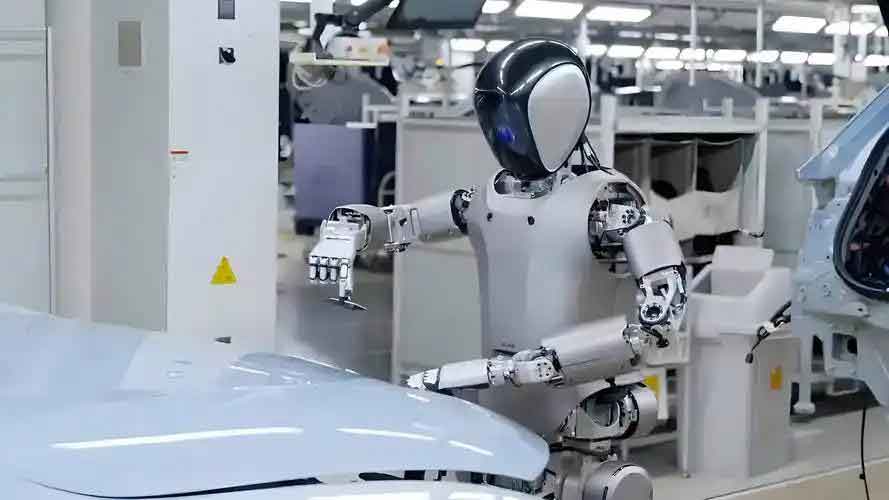
To address these issues, governments and industries are actively opening up application scenarios to foster innovation in humanoid robot technology. Pilot programs in industrial manufacturing, commercial services, and specialized operations are providing practical testing grounds for humanoid robots. In automotive factories, humanoid robots collaborate in transporting materials, while in smart warehouses, they excel at precise sorting of goods. Other emerging applications include power grid inspections, medical assistance, and educational companionship, where humanoid robots are demonstrating their versatility. These real-world deployments not only validate technical feasibility but also generate valuable data for algorithm optimization and product iteration. For instance, in logistics, humanoid robots are being trained to handle unpredictable environments, gradually improving their decision-making capabilities. The integration of humanoid robots into these sectors is accelerating, with each success story contributing to a broader acceptance and refinement of the technology.
Globally, the competitive landscape for humanoid robots is intensifying, with nations positioning themselves as leaders in this future industry. China has incorporated humanoid robot development into its strategic plans, releasing the “Guidelines for the Innovation and Development of Humanoid Robots” in 2023 and emphasizing “embodied intelligence” in the Government Work Report this year. This multi-faceted support system encompasses technological research, scenario development, and talent cultivation, leveraging China’s comprehensive industrial infrastructure and robust supply chains. Other countries are also investing heavily, with the United States, Japan, and European nations launching initiatives to advance humanoid robot capabilities. The race is not just about technological supremacy but also about shaping the future of work and society, as humanoid robots promise to revolutionize industries from healthcare to disaster response.
In China, innovation clusters in cities like Beijing, Shanghai, Shenzhen, and Hangzhou are driving progress, with several key technologies achieving world-class standards. Companies such as “Tiangang,” “Yushu,” and “Songyan Power” have introduced humanoid robots that rival or surpass international counterparts in mobility, while demonstrating strengths in open-source architectures, multi-robot coordination, and cost efficiency. For example, one humanoid robot model from these firms has shown exceptional balance and dexterity in factory settings, reducing the need for human intervention in hazardous tasks. The collaborative efforts between academia, industry, and government in these regions are fostering a vibrant ecosystem for humanoid robot development, with regular exhibitions and competitions serving as platforms for showcasing breakthroughs. This domestic momentum is crucial for reducing dependency on foreign technology and establishing a self-sustaining humanoid robot industry.
The evolution of humanoid robots represents more than just technological innovation; it is an exploration of future human lifestyles. These machines hold the potential to liberate humans from repetitive or dangerous labor, enhance quality of life through personalized services, and address societal challenges like aging populations. However, their proliferation also raises questions about job displacement, economic inequality, and ethical norms. For instance, as humanoid robots become more integrated into daily life, issues such as data security and the definition of human-robot relationships will require careful consideration. Policymakers and stakeholders must work together to establish frameworks that maximize benefits while mitigating risks, ensuring that the development of humanoid robots aligns with human values and societal needs.
Looking ahead, the journey of humanoid robots from sporting events to mainstream markets is marked by both promise and patience. Continued investment in research and development, coupled with iterative testing in diverse environments, will be essential for overcoming current limitations. The global community must foster international collaboration to share insights and standards, avoiding fragmentation in this rapidly evolving field. As humanoid robots gradually move from novelty to necessity, their impact on economies and cultures will deepen, offering a glimpse into a future where humans and machines coexist synergistically. The recent athletic feats of humanoid robots are just the beginning—a precursor to a transformation that could redefine productivity and human experience in the decades to come.
In summary, the progress of humanoid robots is a testament to human ingenuity and ambition. From navigating obstacle courses to assisting in complex industrial tasks, these machines are steadily bridging the gap between laboratory experiments and practical utility. With sustained innovation and thoughtful regulation, the era of humanoid robots may soon transition from speculative fiction to everyday reality, unlocking new possibilities for growth and connectivity worldwide. The ongoing developments in this field warrant close attention, as they hold the keys to reshaping how we live, work, and interact in an increasingly automated world.