
The 2025 World Robot Conference kicked off yesterday, showcasing a remarkable fusion of advanced robotics and daily life applications. Attendees witnessed robots skillfully preparing candied hawthorns, robotic dogs guiding visitors through exhibitions, and humanoid robots teaching intangible cultural heritage techniques. This year’s event has ignited significant excitement in the technology sector, highlighting the rapid evolution of robotics. The conference features participation from over 200 domestic and international robot companies, presenting more than 1,500 exhibits. The number of exhibiting enterprises has grown by 25% compared to the previous year, with over 100 new products making their debut, nearly double the amount launched last year. This expansion underscores the accelerating innovation and adoption of robotic technologies worldwide.
1. Significant Breakthroughs in Humanoid Robot Technology
Humanoid robots have emerged as a focal point of interest, both within the tech industry and among the general public. The exposition hall at this year’s World Robot Conference hosts nearly 50 humanoid robot整机 enterprises, the largest gathering of its kind in similar exhibitions. One standout exhibit is the upgraded humanoid robot from Ubtech, which has previously been deployed in multiple automotive factories. The new model, Walker S2, represents a substantial leap forward from its predecessor, Walker S1. According to company representatives, this humanoid robot incorporates the world’s first intelligent body technology specifically designed for industrial humanoid robot本体, enabling both autonomous single-unit operations and coordinated group tasks. Equipped with binocular stereo vision that mimics human eyes, this humanoid robot enhances environmental adaptability in factory settings. Integrated with a fourth-generation industrial-grade dexterous hand and bionic arms, the humanoid robot achieves sub-millimeter precision in delicate operations and can handle loads of up to 15 kilograms, demonstrating the versatile capabilities of modern humanoid robot systems.
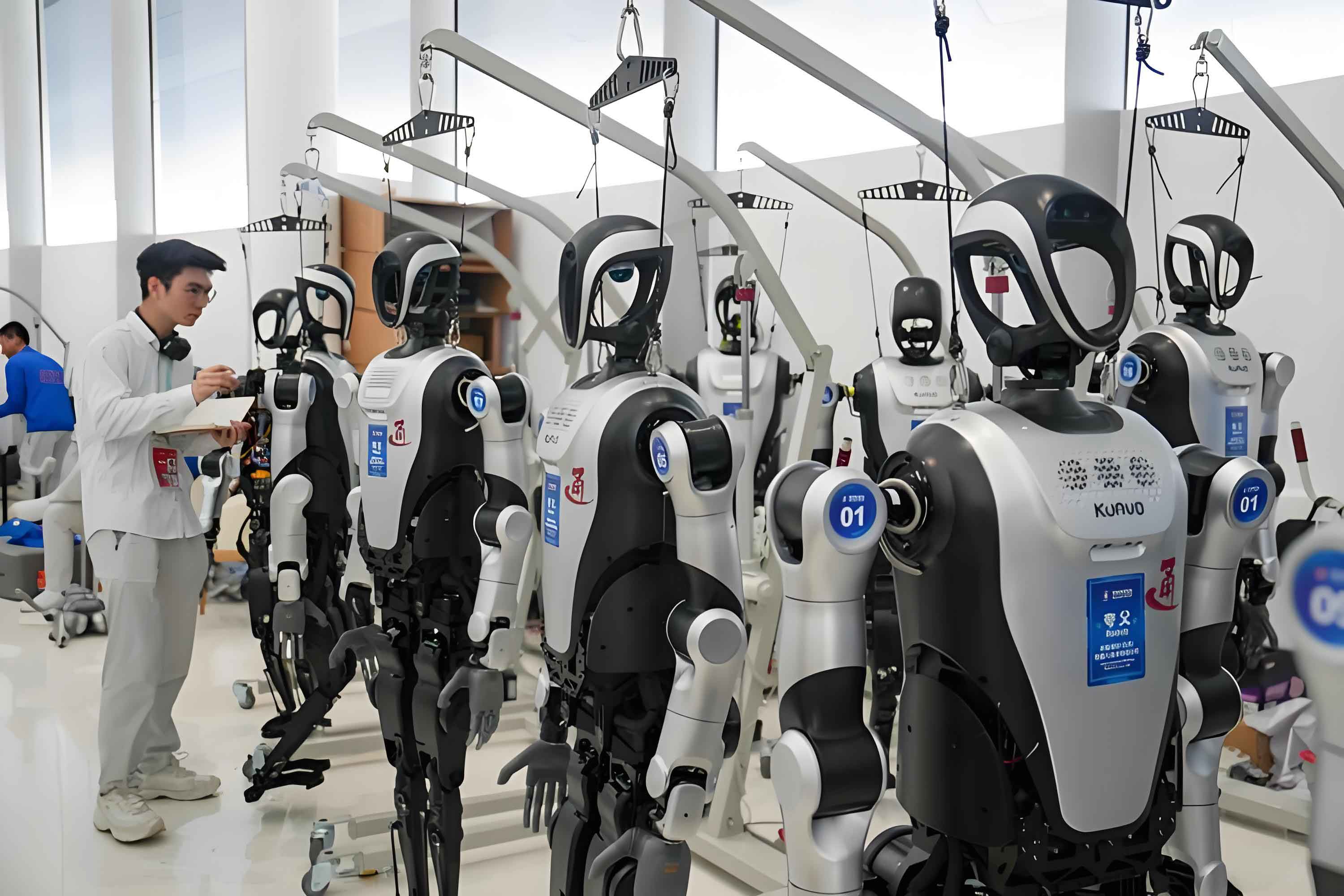
In another groundbreaking development, a full-sized humanoid robot capable of standing up in just one second captured widespread attention. Developed by Luming Robotics, this humanoid robot, with its sleek black design, lay flat on the ground before swiftly rising to its feet upon command, eliciting applause from the audience. This humanoid robot’s ability to stand in one second marks a significant improvement over the typical three to five seconds required by most models, positioning Chinese enterprises at the forefront of global humanoid robot运动控制 technology. The enhanced dynamic response of this humanoid robot opens new possibilities for applications requiring rapid mobility and stability. The progress in humanoid robot technology showcased here reflects broader trends in the industry, where humanoid robot designs are increasingly optimized for real-world tasks. As humanoid robot systems become more advanced, their integration into various sectors is expected to accelerate, driven by innovations like those seen in this humanoid robot demonstration.
2. Intelligent Robotics Enhancing Daily Human Experiences
Beyond industrial applications, robotics technology is making profound impacts on everyday life. At the booth of Independent Variable Robot Technology Co., a humanoid robot dubbed “Xiao Liang” has mastered the art of creating traditional sachets, a form of intangible cultural heritage. After just a few days of training, this humanoid robot autonomously selects fragrant materials and assembles sachets with precision, handing them to visitors. Spectators expressed amazement at the humanoid robot’s ability to perform such intricate tasks, highlighting how humanoid robot systems are bridging technology and tradition. This humanoid robot’s proficiency in cultural preservation activities illustrates the expanding role of humanoid robot assistants in educational and recreational settings.
Another notable innovation comes from Aoshang Company, which introduced a consumer-grade exoskeleton robot designed to augment human physical abilities. Visitors lined up to test the device, with one user remarking on its effectiveness in reducing fatigue during treadmill running. The exoskeleton, which can be worn like a suit, boosts leg strength by 50% and reduces energy consumption by 30% to 40%, effectively transforming wearers into “mechanical superheroes.” This technology represents a growing segment where humanoid robot-inspired designs enhance human capabilities, making strenuous activities more accessible. The exoskeleton’s development aligns with the broader theme of humanoid robot integration into daily life, offering practical benefits for activities such as hiking and sports. As these devices become more affordable and widespread, they could revolutionize how people approach physical tasks, further blurring the lines between human and humanoid robot functionalities.
3. Interactive Robot Bazaar and Consumer Festival Activities
This year’s conference introduced a vibrant robot bazaar, infusing the event with a sense of everyday charm. The bazaar, designed with a local cultural flair, attracted crowds with various robotic vendors. Among them, a humanoid robot from Qianxun Intelligence’s recently launched Moz1 model demonstrated its skill in making candied hawthorns. This humanoid robot, which features high-precision full-body force control, adeptly skewers fruits and coats them in sugar, tasks that demand exceptional accuracy and safety. With 26 degrees of freedom, the humanoid robot exhibits leading coordination in the industry, showcasing the potential for humanoid robot systems in culinary applications. The bazaar also included activities like playing board games and archery, all facilitated by different types of robots, emphasizing the entertainment value of humanoid robot technology.
Adjacent to the bazaar, a robot 4S store offered various models for direct purchase by the public. Priced clearly, with models like Tian Gong 2.0 at 779,000 yuan, Booster T1 at 199,000 yuan, and Tian Yi 2.0 at 350,000 yuan, the store made humanoid robot ownership seem within reach for ordinary consumers. One attendee shared his excitement about the prospect of robots becoming household items in the near future. To encourage adoption, the conference’s robot consumer festival includes distribution of consumption vouchers, allowing individuals to receive up to 1,500 yuan in subsidies for robot purchases, while enterprises can access up to 250,000 yuan. These initiatives aim to democratize access to humanoid robot technology, fostering a future where humanoid robot assistants are commonplace in homes and businesses. The availability of these humanoid robot products at consumer-friendly prices signals a shift toward mainstream acceptance, with the humanoid robot market poised for significant growth.
4. Global Implications and Future Outlook for Humanoid Robot Development
The advancements displayed at the 2025 World Robot Conference highlight the rapid maturation of humanoid robot technology. With nearly 50 humanoid robot manufacturers exhibiting, the event serves as a barometer for the industry’s health and direction. The humanoid robot models on show, such as Walker S2 and the one-second stand-up humanoid robot, illustrate progress in areas like mobility, dexterity, and AI integration. These humanoid robot innovations are not confined to laboratories; they are increasingly deployed in real-world scenarios, from factories to cultural sites. The humanoid robot sector’s growth is fueled by rising investment and research, as evidenced by the 25% increase in participating enterprises and the doubling of new product launches. This humanoid robot expansion suggests a robust ecosystem where humanoid robot development is accelerating, driven by both commercial and societal demands.
Looking ahead, the integration of humanoid robot systems into daily life is expected to deepen. The consumer-focused initiatives, such as the robot bazaar and 4S store, indicate a push toward making humanoid robot technology accessible to a broader audience. As humanoid robot capabilities improve—ranging from the precise movements of the Moz1 humanoid robot to the strength-augmenting exoskeletons—the potential applications will continue to diversify. The humanoid robot industry is likely to see increased collaboration between tech companies and traditional sectors, further embedding humanoid robot solutions into everyday routines. Moreover, the emphasis on affordability and user-friendly designs, supported by subsidy programs, could accelerate the adoption of humanoid robot assistants in households worldwide. The 2025 World Robot Conference thus not only celebrates current achievements but also sets the stage for a future where humanoid robot interactions become an integral part of human society, enhancing productivity, education, and leisure.
| Category | Number |
|---|---|
| Participating Enterprises | Over 200 |
| Exhibits | More than 1,500 |
| New Product Debuts | Over 100 |
| Growth in Enterprises (Compared to Previous Year) | 25% increase |
| Growth in New Products (Compared to Previous Year) | Approximately double |
| Humanoid Robot整机 Enterprises Exhibiting | Nearly 50 |
The 2025 World Robot Conference has set a new benchmark for the robotics industry, with humanoid robot technology taking center stage. From industrial humanoid robot models like Walker S2 to consumer-oriented humanoid robot applications in bazaars and exoskeletons, the event demonstrates the versatility and growing accessibility of humanoid robot systems. The significant increase in exhibitors and new products underscores the dynamic nature of this field, while initiatives like consumption vouchers aim to bring humanoid robot innovations into mainstream use. As humanoid robot capabilities continue to evolve—encompassing faster response times, enhanced precision, and greater integration into daily tasks—the potential for humanoid robot to transform various aspects of life becomes increasingly tangible. This conference not only highlights current achievements but also paves the way for a future where humanoid robot interactions are seamless and ubiquitous, driving progress across multiple domains.