
The 2025 World Robot Conference (WRC) kicked off with immense fanfare on the morning of August 8 in Beijing’s Yizhuang district, setting new benchmarks for global robotics exhibitions. By the afternoon, the conference’s exposition segment had opened its doors to professional visitors, unveiling a spectacle of advanced automation that captivated a diverse audience. The event saw a remarkable influx of attendees, including business professionals with luggage in tow, parents pushing strollers for twins, schoolchildren in uniforms, and elderly spectators with silver hair, all converging to witness the future of robotics unfold. The overwhelming enthusiasm was palpable, with pre-registered attendees reaching a staggering 1.3 million, as per the official conference data, underscoring the growing public fascination with robotic technologies, particularly humanoid robots.
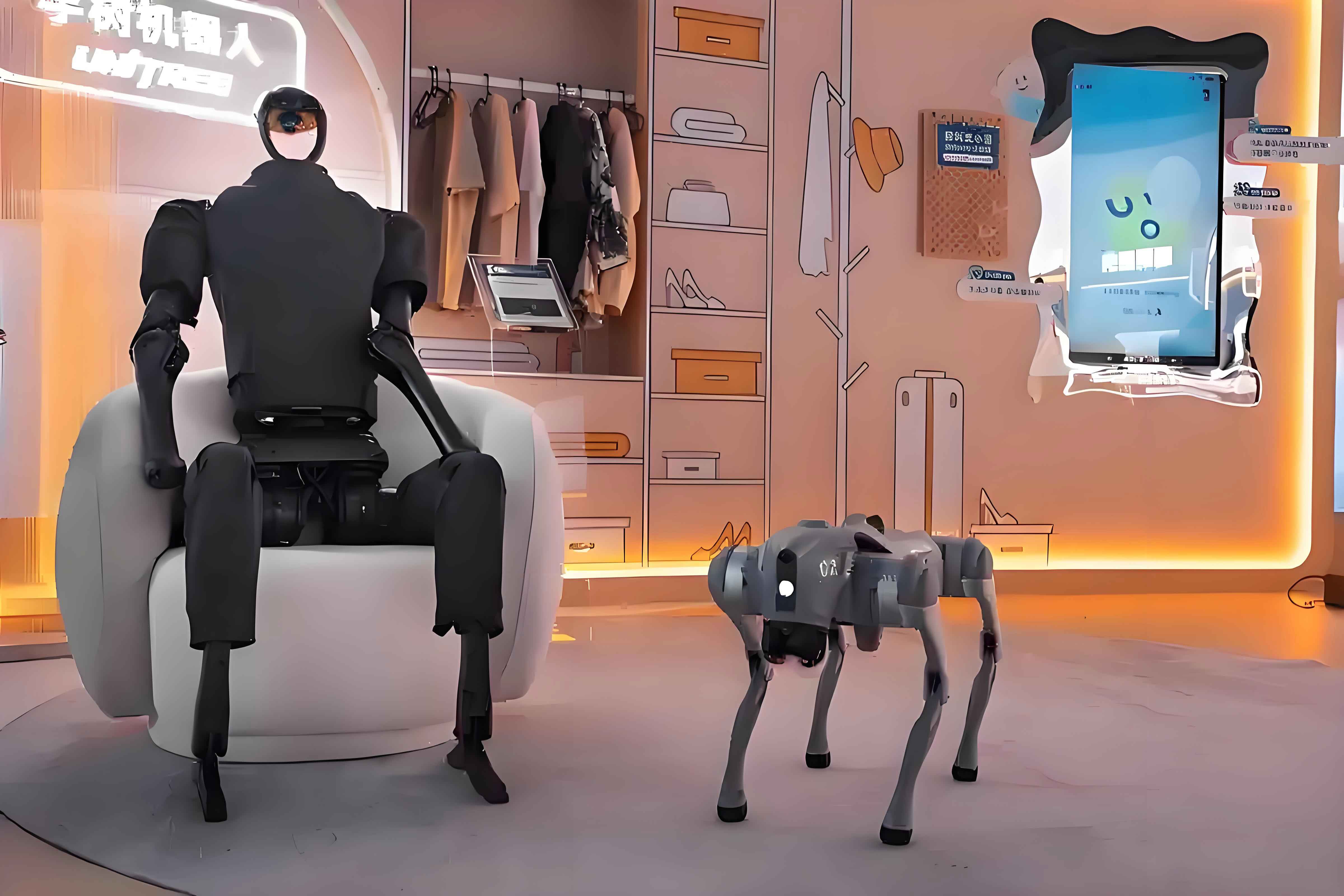
Inside the exhibition halls, the atmosphere was electric, reminiscent of a vibrant dance club, as exhibitors deployed dazzling lights, pulsating music, and dynamic performances to draw crowds. Humanoid robots took center stage, engaging in activities ranging from intricate dance routines and skill demonstrations to competitive events with professional commentary that repeatedly ignited cheers from onlookers. The focus on humanoid robots was unmistakable, with these machines being the highlight of nearly every major display, reflecting their rising prominence in both industrial and consumer sectors. Despite intermittent rain, the excitement remained undampened, with many visitors reluctantly leaving at closing time, only to vow returns the following day, captivated by the cutting-edge exhibits.
In his opening address, Wan Gang, President of the China Association for Science and Technology, emphasized the critical role of humanoid robots in driving economic and social progress. He noted that humanoid robots are increasingly vital in diverse fields such as production manufacturing, warehouse logistics, safety and security, home services, education, and healthcare. “China is intensifying efforts in this frontier technology and future industry, stimulating new consumption, fostering emerging sectors, expanding employment opportunities, boosting economic development, and enhancing public welfare,” Wan stated. His speech highlighted the strategic importance of humanoid robots in national development plans, aligning with global trends in automation and artificial intelligence.
Adding to the official perspectives, Xin Guobin, Vice Minister of the Ministry of Industry and Information Technology, reflected on the decade-long journey of the World Robot Conference since its inception in 2015. He pointed out that the global robotics industry has experienced exponential growth over these ten years, marked by rapid advancements in intelligence, expanded application boundaries, and accelerated convergence of innovative elements. “The Chinese government places high priority on the development of the robotics industry,” Xin said, citing impressive growth figures: in the first half of this year, the robotics industry’s operating revenue surged by 27.8% year-on-year, with production of industrial robots and service robots increasing by 35.6% and 25.5%, respectively. He also reaffirmed China’s position as the world’s largest application market for industrial robots for 12 consecutive years, a testament to the country’s robust adoption and innovation in robotics.
The scale of this year’s conference was unprecedented, showcasing the rapid evolution of the robotics sector. A total of over 200 domestic and international robotics enterprises participated, representing a 25% increase compared to the previous year. These exhibitors presented more than 1,500 robotic products, with a particular emphasis on humanoid robots. Notably, the event featured over 100 new product launches, nearly double the number from last year, and a record-breaking assembly of 50 well-known humanoid robot companies demonstrating their latest innovations and industry solutions. This concentration of humanoid robot manufacturers underscores the accelerating competition and technological maturation in this niche, drawing significant attention from investors, researchers, and end-users alike.
| Category | Number |
|---|---|
| Exhibiting Enterprises | Over 200 |
| Exhibits Displayed | Over 1,500 |
| New Product Launches | Over 100 |
| Humanoid Robot Companies | 50 |
| Registered Attendees | 1.3 million |
Industry insiders expressed both optimism and a sense of responsibility in light of the public’s heightened expectations. Nie Xiangru, Co-founder of Pasini Perception Technology, shared his exhilaration at the bustling event, noting the substantial progress made by manufacturers over recent months and years. “Each of our companies has achieved significant advancements compared to six months, one year, or two years ago. We are witnessing technological development driven by supply chain iterations, cost reductions, and improved quality control,” Nie explained. However, he acknowledged the pressure that comes with such public enthusiasm, emphasizing the need to deliver satisfactory results swiftly to the industry. His comments reflect the broader sentiment among developers of humanoid robots, who are racing to translate prototypes into practical, scalable solutions.
On the exhibition floor, one prevalent demonstration involved humanoid robots performing tasks like sorting and handling in simulated production lines. A product manager from a leading robotics firm elaborated on this trend, stating that such scenarios are designed to showcase the robots’ dynamic capabilities and technical prowess. “This is an actual factory setting where humanoid robots can be integrated directly, though it requires iterative algorithm improvements,” the manager said. This focus on industrial applications highlights the current practicality of humanoid robots in controlled environments, where they can enhance efficiency and reduce labor costs. The manager further emphasized that while industrial deployment is imminent, household applications remain a longer-term goal due to the complexities of unstructured home environments.
During the opening ceremony, a significant announcement was made with the release of the “Top Ten Potential Application Scenarios for Humanoid Robots,” outlining areas where these machines are expected to make substantial impacts. The list, curated by industry experts and policymakers, includes both current and future applications, with a strong leaning toward industrial uses. Below is an ordered list of these scenarios, demonstrating the prioritized domains for humanoid robot integration:
- Industrial General Operations: Loading and unloading, transfer and handling tasks in manufacturing settings.
- Automotive Manufacturing: Sorting and ingredient distribution in vehicle production lines.
- 3C Manufacturing (Computers, Communications, Consumer Electronics): Material quality inspection processes.
- Shipbuilding: Grinding and polishing operations in vessel construction.
- Petrochemical Industry: Production line inspection and monitoring.
- Power Production: Operational tasks in power station environments.
- Safety and Emergency Response: Disaster management and rescue operations.
- Commercial Services: Guidance, reception, and interactive services in retail and hospitality.
- Home Services: Life assistance, companionship, and daily care in residential settings.
- Agricultural Production: Precision field operations for farming efficiency.
The emphasis on industrial scenarios was a recurring theme among exhibitors and analysts at the conference. Many product managers and company representatives concurred that while household applications represent the ultimate frontier for humanoid robots, industrial settings offer more immediate opportunities for deployment. “Family environments are still relatively distant due to their complexity and lack of standardization, whereas industrial scenarios are closer to realization,” one product负责人 noted, echoing a consensus view. This perspective is rooted in the fact that factories provide controlled, repetitive tasks that align well with the current capabilities of humanoid robots, whereas homes demand greater adaptability and safety assurances.
Nie Xiangru from Pasini Perception Technology elaborated on this dichotomy, comparing the challenge of home integration to advanced levels of autonomous driving. “The household scenario might be akin to L4 or L5 autonomy in terms of difficulty,” he remarked, suggesting that vertical-specific applications must be perfected first before tackling the domestic sphere. This stepwise approach—focusing on niche industrial roles before expanding to broader consumer markets—is seen as a pragmatic path to widespread adoption of humanoid robots.
Xie Kaixuan, Market Director of Dobot, reinforced this outlook by outlining a realistic progression for humanoid robots. “The practical path to robot普及 is to first secure roles in workplaces before entering homes. We anticipate that humanoid robots will initially find their footing in low-speed, high-frequency, and essential commercial scenarios, such as pharmacy logistics, retail guidance, and campus inspections. These environments have clear tasks and controlled conditions, making them suitable for early-stage technological deployment,” Xie explained. He added that the transition from factories to households hinges not solely on technical feasibility but on ensuring safety, affordability, and a complete service ecosystem. “The question is not if robots can enter homes, but when they can become as commonplace and user-friendly as household appliances,” he concluded, highlighting the long-term vision for humanoid robots in everyday life.
The conference also served as a platform for discussing the broader implications of humanoid robot adoption. Panels and workshops delved into topics such as ethical considerations, workforce transformation, and international collaboration. Experts highlighted that as humanoid robots become more integrated into industries, they could alleviate labor shortages in aging societies and enhance productivity in hazardous environments. However, they also cautioned about the need for regulatory frameworks to address issues like data privacy, job displacement, and machine ethics. These discussions underscored the multifaceted impact of humanoid robots, extending beyond mere technological marvels to societal pillars.
In addition to the main exhibitions, the conference featured interactive zones where visitors could engage directly with humanoid robots, testing their responsiveness and capabilities. These hands-on experiences fostered a deeper public understanding of robotics, demystifying complex technologies and inspiring future generations of engineers and innovators. Educational institutions and research organizations also presented their latest findings, emphasizing the collaborative efforts between academia and industry in advancing humanoid robot development. Such initiatives are crucial for nurturing talent and accelerating innovation in this fast-evolving field.
Looking ahead, the momentum generated by the 2025 World Robot Conference is expected to catalyze further investments and research in humanoid robots. With China’s sustained focus on this sector, as echoed by government officials, the country is poised to play a pivotal role in shaping the global robotics landscape. The record-breaking attendance and exhibitor participation this year signal a growing recognition of humanoid robots as transformative agents in the fourth industrial revolution. As technologies mature and costs decline, the vision of humanoid robots seamlessly assisting in homes, hospitals, and factories inches closer to reality, promising a future where human-robot collaboration enhances quality of life and economic resilience.
In summary, the 2025 World Robot Conference not only showcased the latest advancements in humanoid robots but also highlighted their potential to redefine industries and daily living. From industrial sorting tasks to futuristic home care, the applications of humanoid robots are expanding rapidly, driven by innovation and market demand. The event’s success, marked by overwhelming public interest and unprecedented scale, sets a positive trajectory for the robotics community, encouraging continued exploration and deployment of these intelligent machines. As the world watches, the journey of humanoid robots from exhibition halls to real-world integration continues to unfold, heralding a new era of automation and human-machine synergy.