
For much of the past several years, humanoid robots were judged mainly by demonstrations, prototypes and promises. In the first half of 2026, the industry began to produce a different kind of evidence: shipment volumes, revenue lines, gross margins, losses, inventory, receivables and valuation tests. The results are mixed. Humanoid robots are being made and sold in larger numbers, but the path from volume to profit is not automatic. Investors, customers and company executives are now asking when the accounting will catch up with the ambition.
The shift is visible across three leading Chinese companies: Unitree Technology, UBTech and Zhiyuan Robotics. Each has reached a “ten-thousand-unit” stage in some form, but each uses a different measure. One reports half-year shipments, another reports half-year sales, and another reports cumulative production or cumulative sales. Those differences matter because the production of a humanoid robot, shipment to a customer, delivery, acceptance and revenue recognition are distinct stages in commercialization. A humanoid robot that has been produced is not the same as a humanoid robot that has been paid for.
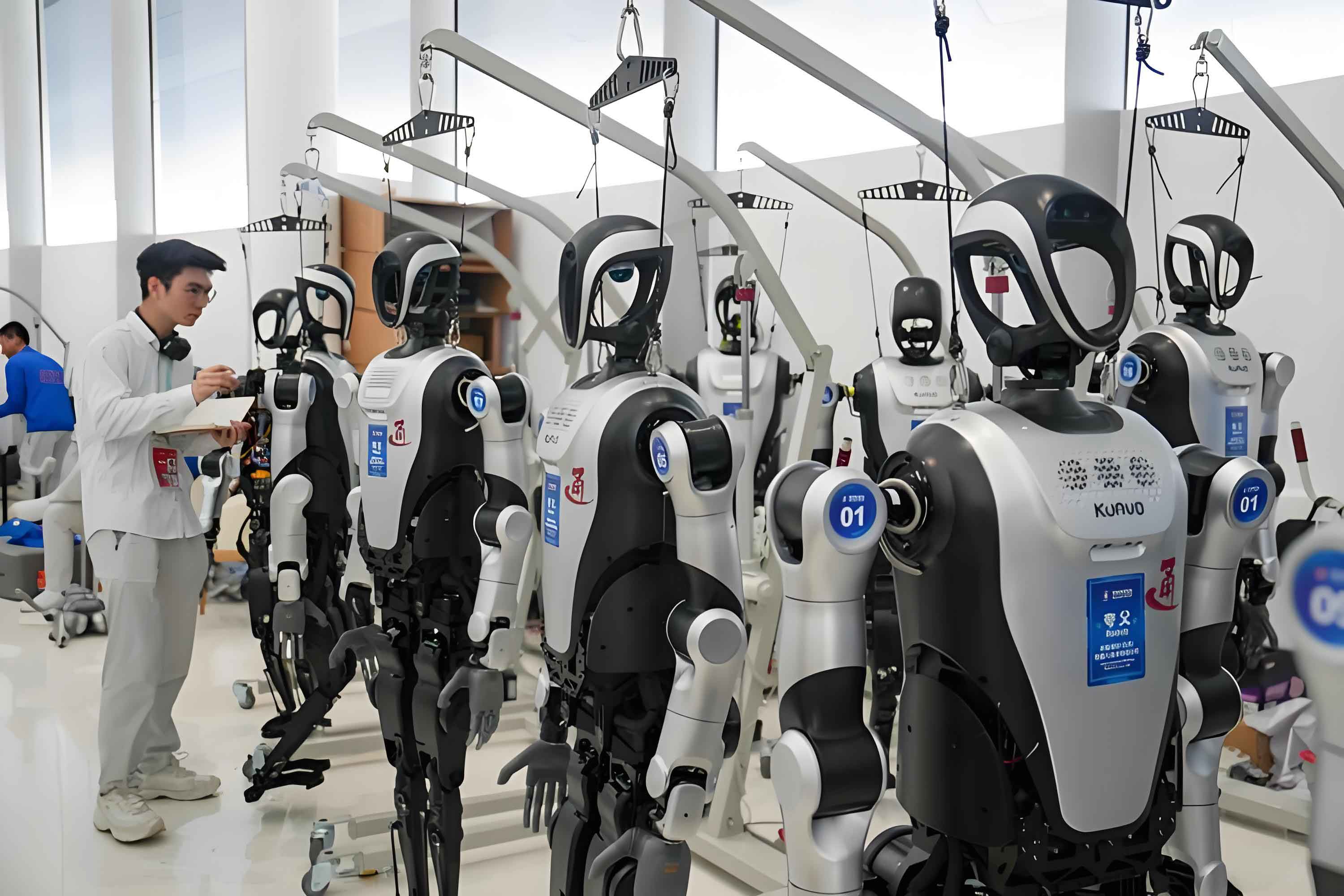
The central question is no longer whether humanoid robots can be built. It is whether they can be delivered, deployed, accepted, repeated and monetized at a cost that leaves room for profit. That question is now being asked by public-market investors, private-market financiers, industrial customers and company executives alike. The first half of 2026 offers a snapshot of an industry moving from showcase to scale, but also one in which definitions, delivery execution and cash conversion are becoming as important as technical capability.
1. Global Shipments Rise, and Chinese Suppliers Dominate
Smart Analytics Global data show that in the first half of 2026, global humanoid robot shipments reached about 19,100 units, up 272 percent year over year. Chinese manufacturers contributed more than 97 percent of that total. The concentration is striking. Zhiyuan Robotics shipped 8,400 humanoid robots in the first half, up 562 percent year over year, accounting for 44 percent of global shipments and overtaking Unitree Technology for the first time. Unitree shipped 5,900 humanoid robots in the same period, up 170 percent, accounting for 31 percent. Together, the two companies accounted for about 75 percent of the global market.
Those figures show that humanoid robots are moving from one-off showcases toward batch production. They also show how quickly rankings can change in a young industry. A single half-year of shipments can alter the competitive order, especially when the base was small a year earlier. But shipment rankings alone do not answer the more important commercial questions: what kind of humanoid robots were shipped, to whom, at what price, with what level of autonomy, and with what follow-up service burden?
| Company or metric | Reported figure | Year-over-year change | Share or scope | Notes |
|---|---|---|---|---|
| Global humanoid robot shipments | About 19,100 units | Up 272 percent | 100 percent | Smart Analytics Global data |
| Chinese manufacturers | More than 97 percent of global shipments | Not applicable | More than 97 percent | Contribution to global humanoid robot shipments |
| Zhiyuan Robotics | 8,400 units | Up 562 percent | 44 percent | First-half shipments; became the shipment leader |
| Unitree Technology | 5,900 units | Up 170 percent | 31 percent | First-half shipments |
| Zhiyuan Robotics and Unitree Technology combined | 14,300 units | Not applicable | About 75 percent | Combined share of global humanoid robot shipments |
| UBTech | 16,123 units | Up 268.3 percent | Not applicable | Total humanoid robot sales under a broader definition |
| UBTech full-size embodied intelligent humanoid robots | 921 units | Not applicable | Not applicable | Meets non-remote, non-toy, brain chip computing power of at least 200T and height of at least 160 centimeters |
| UBTech other humanoid robots | 15,202 units | Not applicable | Not applicable | Includes remote-controlled, pre-programmed and products shorter than 160 centimeters |
| Unitree cumulative production | 18,000 units by July | Not applicable | Not applicable | Cumulative production of multiple bipedal humanoid robot models, not first-half 2026 sales |
| Zhiyuan cumulative sales | More than 16,000 units | Not applicable | Not applicable | Cumulative sales, not first-half 2026 shipments |
The table makes one point clear: the industry is not yet using a single, comparable standard for volume. A half-year shipment figure, a half-year sales figure and a cumulative production figure cannot be placed side by side without adjustment. For humanoid robots, the difference between a remote-controlled small robot and a full-size autonomous humanoid robot is not a minor detail. It affects price, use case, service cost and the likelihood of repeat orders.
The rapid rise in shipments also raises a question about inventory and deployment. If humanoid robots are shipped to distributors, pilot programs or testing sites, the commercial value may not be realized until they are accepted and used productively. If they are shipped directly to end customers, the vendor may still need to provide training, maintenance, software updates and spare parts. In either case, the cash cycle can be longer than the shipment cycle.
2. UBTech Reports Larger Sales, but the Definition Matters
UBTech disclosed an even larger headline number: total humanoid robot sales of 16,123 units in the first half, up 268.3 percent year over year. However, that figure cannot be understood entirely as full-size embodied intelligent humanoid robots capable of autonomously performing complex tasks. Under the statistical scope used by UBTech, only 921 of those 16,123 units were full-size embodied intelligent humanoid robots. These products had to meet several conditions at the same time: they were not remote-controlled, not toys, had brain chip computing power of no less than 200T, and stood at least 160 centimeters tall. The remaining 15,202 units included remote-controlled products, pre-programmed products and products shorter than 160 centimeters.
This distinction is essential when assessing humanoid robots. A small humanoid robot used for performance or education is not the same product as a full-size humanoid robot expected to work in a factory, move materials, sort goods or load and unload machines. The technical requirements, price, delivery cost and service requirements differ substantially. A high-volume sales number can therefore be misleading if it mixes different product categories and levels of autonomy.
Unitree’s “18,000 units” is another type of figure. The company disclosed that as of July this year, cumulative production of multiple bipedal humanoid robot models had reached 18,000 units. That is a cross-year cumulative production figure, not first-half 2026 sales. Zhiyuan previously also disclosed cumulative sales of more than 16,000 units. That cumulative sales figure should not be confused with its first-half shipment of 8,400 units. All three companies have entered a “ten-thousand-unit” phase, but the statistical scopes refer to half-year shipments, half-year sales and cumulative production or cumulative sales, respectively.
The distinction between production, shipment, delivery, acceptance and revenue recognition is not semantic. In industrial markets, a product may be produced but not shipped, shipped but not delivered, delivered but not accepted, or accepted but not yet paid for. Revenue recognition may occur only after acceptance and depending on contract terms. For humanoid robots, which often require customization, deployment, debugging and after-sales support, each step can absorb cash and management attention.
This is why analysts are increasingly cautious about treating shipment rankings as a proxy for commercial success. A company may lead in shipments because it sells smaller or simpler humanoid robots, while another company may ship fewer units but generate more revenue per unit. A company may report strong cumulative production but still face challenges in converting those units into paid deliveries. A company may report a large order but still need to spend heavily on deployment before the customer accepts the system.
3. UBTech’s Revenue Growth and the Road to EBITDA
UBTech’s half-year report illustrates why revenue growth and profitability can move at different speeds. In the first half of 2026, UBTech generated operating revenue of 1.269 billion yuan, up 104.2 percent year over year. Its net loss during the period was 339 million yuan, narrowed by 23 percent year over year. Revenue from full-size embodied intelligent humanoid robots reached 590 million yuan, up 1,445 percent, and became the company’s largest source of revenue for the first time.
In terms of profitability, the full-size embodied intelligent humanoid robot business accounted for 46.5 percent of total revenue and had a gross margin of 66.8 percent. With less than half of revenue, it contributed about 70 percent of the company’s gross profit and helped push overall gross margin from 35 percent to 44.7 percent. Those are strong gross-margin indicators for a hardware-related business, but they do not by themselves produce a net profit.
UBTech also disclosed that the 590 million yuan figure is “product and solution revenue,” not simply sales of robot hardware. Of that amount, 569 million yuan came from customized intelligent robots and solutions for other industries, representing more than 96 percent. Industry customization projects can generate large single orders, but different customers have different production lines, processes and environments. Companies usually need to invest in deployment, debugging and follow-up service. Whether those projects can gradually shift from customized delivery to standardized, replicable products will directly affect delivery speed and profit potential.
| Metric | Figure | Change or comparison | Comment |
|---|---|---|---|
| Operating revenue | 1.269 billion yuan | Up 104.2 percent | First-half 2026 |
| Net loss | 339 million yuan | Narrowed by 23 percent | Still loss-making |
| Full-size embodied intelligent humanoid robot revenue | 590 million yuan | Up 1,445 percent | Became the largest revenue source |
| Share of total revenue from full-size embodied intelligent humanoid robots | 46.5 percent | Not applicable | Less than half of revenue |
| Gross margin of full-size embodied intelligent humanoid robots | 66.8 percent | Not applicable | Contributed about 70 percent of gross profit |
| Overall gross margin | 44.7 percent | Up from 35 percent | Helped by the full-size humanoid robot business |
| Product and solution revenue composition | 569 million yuan from other industry customized intelligent robots and solutions | More than 96 percent of the 590 million yuan figure | Not pure humanoid robot hardware sales |
| Research and development expenses | 303 million yuan | Up 38.9 percent | Continued investment |
| Sales expenses | 238 million yuan | Up 6.5 percent | Market and customer development |
| Net accounts receivable | 1.680 billion yuan | Up 29 percent from the end of 2025 | As of the end of June |
| Inventory | 985 million yuan | Up about 71 percent from the end of 2025 | As of the end of June |
| 2026 revenue target | 3.5 billion to 4.0 billion yuan | Company target | Second half needs 2.231 billion to 2.731 billion yuan |
| First-half to second-half delivery and revenue recognition ratio | About 3:7 | Based on the past two years | Second-half concentration |
| Fourth-quarter 2026 target | Positive single-quarter EBITDA | Company target | EBITDA positive does not equal net profit positive |
Research and market spending continue to rise. In the first half, UBTech’s research and development expenses reached 303 million yuan, up 38.9 percent year over year. Sales expenses were 238 million yuan, up 6.5 percent. As of the end of June, the company’s net accounts receivable stood at 1.680 billion yuan, while inventory reached 985 million yuan, up 29 percent and about 71 percent respectively from the end of 2025. These changes may have been affected by business expansion, preparation for second-half deliveries and the consolidation of an acquired company. But they also mean that after revenue growth, UBTech still needs to complete collection and inventory digestion before scale can truly convert into cash and profit.
UBTech CEO Zhou Jian said the company’s deliveries and revenue recognition over the past two years were clearly concentrated in the second half, with a first-half to second-half ratio of about 3:7. The company remains confident in achieving 3.5 billion to 4.0 billion yuan in revenue for 2026. Based on that target, UBTech would need to generate about 2.231 billion to 2.731 billion yuan in the second half. Whether it can achieve positive single-quarter EBITDA in the fourth quarter will be the first clear test of its delivery and cost-control capabilities. It is important to note that positive EBITDA does not equal positive net profit.
For humanoid robots, the shift from customized projects to standardized products is one of the most difficult transitions. Customized projects can demonstrate capability and generate early revenue, but they often require engineering resources, integration work and long sales cycles. Standardized humanoid robots can scale faster if they meet a repeatable customer need. The industry is still searching for the right balance between customization and standardization, and UBTech’s revenue mix shows how much work remains.
4. Unitree: A Rare Profitable Humanoid Robot Company Faces a Valuation Reset
Unitree has taken a different path from UBTech. While UBTech provides customized solutions to industry customers, Unitree has more standardized products and a relatively lean organization. At the end of 2025, Unitree had 516 employees and generated 1.699 billion yuan in revenue, implying per capita revenue of about 3.29 million yuan. This product and organizational structure has made Unitree one of the few profitable humanoid robot companies. However, as the company increased investment in embodied intelligence models, hardware and new products, its first-half non-recurring net profit fell 19.34 percent year over year. For Unitree, the question is no longer whether it can be profitable, but whether it can maintain profit growth while continuing to invest.
Unitree’s stock performance has become a separate story. Half a month after listing, its share price hovered near the “halving line.” As of the close on September 3, Unitree traded at 550.45 yuan. Compared with the opening price of 1,110 yuan on its first trading day on August 19, that represented a decline of 49.95 percent. Its market value fell from a peak of 444.9 billion yuan to about 222.6 billion yuan, nearly halving. On the previous day, the stock closed at 546.02 yuan, falling below half of its first-day opening price for the first time.
Does the post-listing decline mean the market has completely rejected Unitree’s fundamentals? Notably, even after the market value halved, Unitree’s September 3 close of 550.45 yuan was still about 268 percent above its issue price of 150.80 yuan. Its total market value was about 3.7 times the post-issue market value of 60.9 billion yuan. What has changed is the market’s valuation judgment.
According to public data, Unitree’s issue price-to-earnings ratio reached 219.23 times, while the average static price-to-earnings ratio of the general equipment manufacturing industry in the same period was 38.56 times. Such a valuation reflected not only current revenue and profit but also expectations that the humanoid robot market will expand in the future and that Unitree will maintain rapid growth. But after entering 2026, Unitree’s growth began to slow. Its first-half revenue rose 48.54 percent year over year, compared with full-year growth of 332 percent in 2025. Unitree said that as the revenue base increased, industry heat moderated and competition intensified, revenue growth declined.
The small initial free float also amplified price volatility. Unitree’s first listed float was about 30.09 million shares, only 7.44 percent of total shares after issuance. On the first trading day, concentrated capital inflows pushed the stock from its issue price to 1,100 yuan. As market sentiment cooled, the price fell. The near-halving of Unitree’s share price therefore looks more like a re-adjustment of initially excessive valuation than a complete rejection of its business.
Analysts at iiMedia believe this will also affect the valuations of later entrants. Zhiyuan’s shipments have already surpassed Unitree’s, and Zhiyuan is preparing for a Hong Kong listing. But in the end, capital markets will not focus only on shipment rankings. They will also examine revenue per unit, gross margin, customer structure, research and development investment and cash flow.
| Metric | Figure | Comparison or comment |
|---|---|---|
| Issue price | 150.80 yuan | Initial public offering price |
| First-day opening price | 1,110 yuan | August 19 |
| September 3 closing price | 550.45 yuan | Down 49.95 percent from first-day opening price |
| Peak market value | 444.9 billion yuan | Before the decline |
| September 3 market value | About 222.6 billion yuan | Nearly halved from peak |
| Price-to-earnings ratio at issue | 219.23 times | General equipment manufacturing average static price-to-earnings ratio was 38.56 times |
| First-half 2026 revenue growth | 48.54 percent | Slower than full-year 2025 growth of 332 percent |
| First-half non-recurring net profit change | Down 19.34 percent | As investment increased |
| Employees at the end of 2025 | 516 | Lean organization |
| 2025 revenue | 1.699 billion yuan | Per capita revenue of about 3.29 million yuan |
| First listed float | About 30.09 million shares | 7.44 percent of post-issue total shares |
Unitree’s case shows that profitability alone does not guarantee a stable valuation. The company has demonstrated that humanoid robots can be sold as standardized products at a profit, but its high price-to-earnings ratio required rapid growth to justify it. When growth slowed, the stock corrected. The market is now asking whether Unitree can keep investing in embodied intelligence without sacrificing the profitability that made it stand out.
5. The Difference Between Producing Humanoid Robots and Earning From Them
One of the clearest lessons from the first half of 2026 is that the humanoid robot industry is entering a phase in which definitions and accounting matter as much as technical demonstrations. The same word—“shipment”—can mean different things. A shipment may be a transfer to a distributor, a delivery to an end customer, a pilot deployment or a sale subject to acceptance. A sale may be recognized as revenue immediately or may depend on milestones. A produced unit may sit in inventory. A delivered unit may generate receivables. A deployed unit may require ongoing service and software updates.
For humanoid robots, these distinctions are especially important because the product is not yet standardized across all use cases. A humanoid robot used for performance or education may be relatively simple to deliver. A full-size humanoid robot expected to work in a factory must handle safety, reliability, task planning, perception, manipulation and integration with existing production systems. The latter may require months of deployment and debugging. The cost of sales and service can therefore be much higher than the hardware bill of materials suggests.
This is why revenue growth alone may not quickly translate into profit. UBTech’s high gross margin on full-size embodied intelligent humanoid robots is encouraging, but the company still has significant research, sales, deployment and service costs. Unitree’s profitability shows that a leaner, more standardized product strategy can produce positive earnings, but it also faces rising investment needs as it develops embodied intelligence models and new hardware. Zhiyuan’s rapid shipment growth has made it a volume leader, but its upcoming listing will require disclosure of revenue structure and profitability that goes beyond unit rankings.
The industry is also learning that volume and value are not the same. A large number of low-cost humanoid robots may generate less revenue and profit than a smaller number of high-value robots deployed in industrial settings. Conversely, a small number of highly customized projects may generate high revenue but poor scalability. The most attractive business model may be one that combines standardized hardware with replicable software and services, but that model is still being tested.
Another issue is cash conversion. Even if revenue is recognized, cash may be tied up in receivables. Even if gross profit is positive, operating expenses may consume it. Even if EBITDA turns positive, depreciation, amortization, interest and taxes may still produce a net loss. For humanoid robot companies, the path to sustainable profitability requires not only selling more units but also collecting cash, managing inventory and controlling the cost of delivery and service.
6. Capital Floods Into Embodied Intelligence, but Not All of It Goes to Humanoid Robots
While the secondary market reassesses humanoid robot companies, the primary market continues to pour money into the broader embodied intelligence sector. iiMedia Consulting data show that in the first half of 2026, China recorded 172 investment and financing events in the embodied intelligence theme, with total financing of 109.174 billion yuan. Because this statistic covers embodied intelligence brains, intelligent transport equipment, complete machines, core hardware, data ecosystems and industry applications, the 109.174 billion yuan cannot be understood entirely as financing for humanoid robots.
From the perspective of capital allocation, embodied intelligence brains received 59.544 billion yuan, or about 54.5 percent of total financing. Intelligent transport equipment received 19.943 billion yuan, or about 18.3 percent. Embodied intelligence complete machine manufacturing received 14.709 billion yuan, or about 13.5 percent. Core hardware received 11.392 billion yuan, or about 10.4 percent. In comparison, data ecosystems received 2.3 billion yuan and industry applications received 1.287 billion yuan, together accounting for about 3.3 percent.
| Segment | Financing amount in billion yuan | Share of total | Comment |
|---|---|---|---|
| Embodied intelligence brains | 59.544 | 54.5 percent | Largest destination of capital |
| Intelligent transport equipment | 19.943 | 18.3 percent | Second-largest destination |
| Embodied intelligence complete machine manufacturing | 14.709 | 13.5 percent | Includes humanoid robots and other complete machines |
| Core hardware | 11.392 | 10.4 percent | Components and key hardware |
| Data ecosystem | 2.3 | Combined with industry applications about 3.3 percent | Small share of total financing |
| Industry applications | 1.287 | Combined with data ecosystem about 3.3 percent | Application-layer investment remains limited |
| Total | 109.174 | 100 percent | 172 events in the first half of 2026 |
Zhang Yi, CEO and chief analyst of iiMedia Consulting, believes that capital in the embodied intelligence field is shifting from broad bets to leading enterprises and mid-to-late-stage projects. The investment focus is also moving from pure hardware manufacturing toward decision algorithms, multimodal perception and software systems. In the short term, embodied intelligence brains and intelligent transport equipment may remain key areas of capital investment. The formation of scale in industry applications will still require a longer cycle of scenario validation.
The fact that large amounts of capital are flowing into brains, complete machines and core hardware, while a relatively small share goes directly to industry applications, also indicates that the industry remains in a stage of technological development and basic capability building. Humanoid robots can be mass-produced, but that does not mean they can already create stable value in factories, stores and homes. The gap between production capacity and application value is one of the central challenges facing the industry.
For humanoid robots specifically, capital is needed for model development, perception, manipulation, hardware reliability and safety. But the ultimate test is whether those investments produce humanoid robots that customers will buy, deploy and repurchase. If the application layer remains underfunded relative to hardware and brains, the industry may produce more capable machines before it produces enough repeatable use cases. That could widen the gap between technical progress and commercial returns.
7. Three Leading Companies, Three Different Tests
The first-half shipment volume of 19,100 units proves that humanoid robots are moving from prototype demonstrations toward batch production. More than 100 billion yuan in financing provides funds for model research, core components and capacity building. But after sales growth, the three leading companies face different problems.
UBTech needs to prove that the high revenue and high gross margin generated by humanoid robots can cover continuously increasing research, sales and delivery costs. Its fourth-quarter EBITDA target will be an important milestone, but positive EBITDA is not the same as net profit. The company also needs to convert receivables into cash and manage inventory as it expands. Its second-half revenue target is ambitious and depends on delivery execution and customer acceptance.
Unitree needs to use stable profit growth to absorb its high valuation. It is already profitable, but its first-half non-recurring net profit declined as investment increased. Its stock price has fallen sharply from its first-day peak, yet it remains far above its issue price. The market is not simply punishing the company; it is recalibrating expectations for growth, margins and the durability of its standardized-product model.
Zhiyuan, which is preparing for a Hong Kong listing, will also be tested by capital markets on its revenue structure and profitability. Its shipment volume has made it a leader, but investors will want to know how much revenue each humanoid robot generates, what the gross margin is, who the customers are, how much is spent on research and development, and whether the business generates cash. A shipment ranking alone will not be enough.
In the next stage of competition, several measures will matter more than production line output. The first is whether humanoid robots can complete delivery and acceptance. The second is whether they can enter real jobs, operate continuously and generate repeat purchases. The third is whether companies can convert scale into cash and profit. The key questions are how much revenue one humanoid robot can create, how much cost one order requires, and when the company can actually make money.
These questions are not unique to humanoid robots, but they are sharper in this industry because expectations are high and the technology is still evolving. A humanoid robot that performs well in a controlled demonstration may still struggle in a messy factory, a busy store or a cluttered home. A customer may buy one unit for a pilot but hesitate to order more until reliability, maintenance and return on investment are proven. That pilot-to-scale transition is where many hardware businesses succeed or fail.
8. The Accounting Becomes as Important as the Engineering
The humanoid robot industry has spent years proving that machines can walk, balance, gesture and perform tasks. In 2026, it is being asked to prove something else: that humanoid robots can be produced, sold, delivered, accepted, serviced and financed in a way that sustains a business. That is a harder test because it involves not only engineering but also accounting, cash flow, customer behavior and organizational execution.
The first half of 2026 offers a snapshot of an industry in transition. Global shipments of humanoid robots rose 272 percent to about 19,100 units, with Chinese suppliers accounting for more than 97 percent. Zhiyuan led shipments with 8,400 units, followed by Unitree with 5,900. UBTech reported 16,123 humanoid robot sales under a broader definition, but only 921 were full-size embodied intelligent humanoid robots. Unitree reported cumulative production of 18,000 bipedal humanoid robots by July, not first-half sales. Zhiyuan reported cumulative sales of more than 16,000 units, not first-half shipments. These numbers are not directly comparable.
At the same time, UBTech showed that humanoid robots can generate significant revenue and gross margin. Its full-size embodied intelligent humanoid robot revenue reached 590 million yuan, up 1,445 percent, with a gross margin of 66.8 percent. But the company still lost 339 million yuan in the first half, and its path to positive EBITDA depends on second-half delivery and cost control. Unitree showed that a profitable humanoid robot company can exist, but its valuation is being reset as growth slows and investment rises. Zhiyuan showed that shipment leadership can shift quickly, but an upcoming listing will subject its business model to closer scrutiny.
Meanwhile, more than 100 billion yuan of financing entered China’s embodied intelligence sector in the first half, with most going to brains, transport equipment, complete machines and core hardware. Only a small share went to data ecosystems and industry applications. That allocation reflects an industry still building its technical foundations. It also suggests that the application layer, where humanoid robots would prove recurring value, still needs time and validation.
The next phase of the humanoid robot story will not be decided solely by how many units are produced or shipped. It will be decided by how many humanoid robots are delivered and accepted, how many remain in productive use, how many generate repeat orders, and how much cash and profit each unit ultimately creates. The industry has moved beyond the question of whether humanoid robots can exist. It now faces the question that every manufacturing business must eventually answer: when will the numbers add up?
For investors, the answer will come through quarterly disclosures, delivery data, gross margin trends, cash collection and customer concentration. For companies, the answer will come through product standardization, cost control, service efficiency and the ability to move from pilot projects to repeatable deployments. For customers, the answer will come through reliability, integration and measurable return on investment. Humanoid robots have entered a new phase, and in this phase, the balance sheet is becoming as important as the demonstration video.