
In a recent showcase of technological prowess, the World Humanoid Robot Games featured an exhilarating “100-meter dash” final, where advanced humanoid robots demonstrated their evolving capabilities. The event saw participation from two H1 humanoid robots developed by Unitree and two Tian Gong Ultra humanoid robots from the Beijing Humanoid Robot Innovation Center. As one of the most competitive categories with 23 groups and 90 robot contestants, the “100-meter dash” highlighted the rapid progress in humanoid robot mobility. The Unitree H1 humanoid robot crossed the finish line first, while the Tian Gong Ultra humanoid robot, operating in a fully autonomous mode, secured victory with an adjusted time of 21.5 seconds after applying a 0.8 performance coefficient, underscoring the advancements in independent operation for humanoid robots.
Industry projections indicate that sales of humanoid robots in China are poised to surpass 10,000 units this year, representing a remarkable 125% year-on-year growth. The application of humanoid robots is expanding across various sectors, including industrial manufacturing, retail distribution, and food and beverage services, with pilot programs already underway. This surge signals that the humanoid robot industry is transitioning into a phase of规模化落地, characterized by broader adoption and integration into everyday operations. The phrase “you追我赶、各展所长” aptly captures the dynamic and competitive landscape of the domestic humanoid robot sector, where innovation and collaboration are driving unprecedented developments.
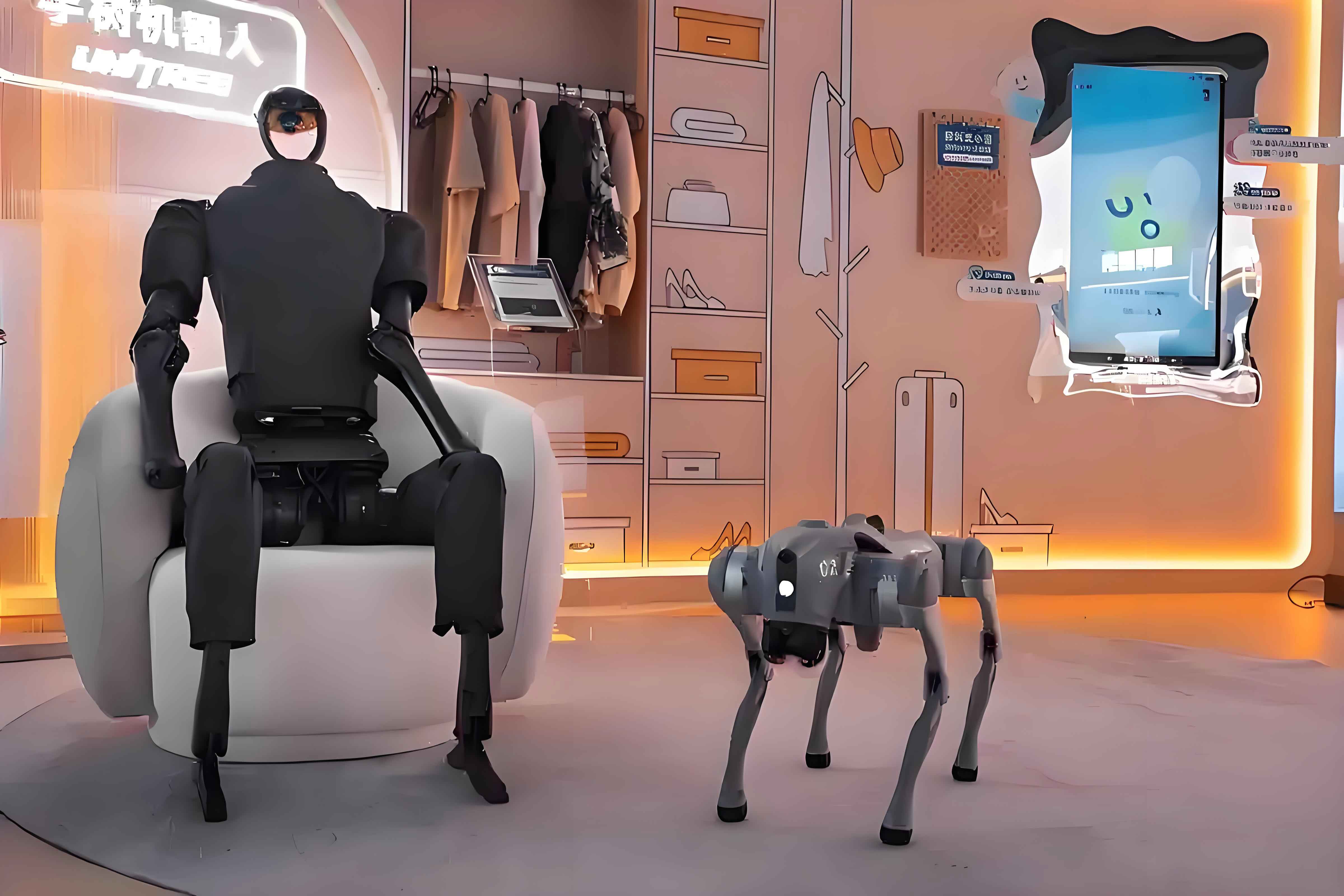
The evolution of humanoid robots is not just about speed and agility; it encompasses a holistic advancement in technology, ethics, and societal impact. As humanoid robots become more prevalent, they are set to redefine human-machine interactions, offering solutions to labor shortages and enhancing efficiency in diverse environments. The following sections delve into the key trends shaping the future of humanoid robots, highlighting how these machines are becoming faster in innovation, higher in technical prowess, and stronger in overall performance.
- Trend 1: Faster Innovation and Application
The pace of innovation in the humanoid robot field is accelerating, driven by supportive policies and technological breakthroughs. This year, “embodied intelligence” was included in the Government Work Report for the first time, reflecting a national focus on advancing artificial intelligence applications. Subsequently, the State Council issued the “Opinions on Deepening the ‘Artificial Intelligence Plus’ Action,” which emphasizes cultivating new models and formats in the AI-driven industry, with humanoid robots standing out as a典型业态 in the embodied intelligence赛道. Across China, local governments are rolling out initiatives to bolster the humanoid robot sector. For instance, Hangzhou has listed humanoid robot整机, software algorithms, and key components as priorities for municipal科研项目支持, while Beijing established a government investment fund totaling 100 billion yuan with a 15-year duration. Shanghai aims to achieve a core industry scale of over 50 billion yuan in embodied intelligence by 2027. Experts in the field note that the tipping point for规模化 production of humanoid robots has arrived, with continuous improvements in hardware, motor skills akin to a “小脑,” and intelligence levels comparable to a “大脑.” Several enterprises have already achieved规模化 production and delivery, marking a significant milestone for the humanoid robot industry.
Han Fengtao, founder and CEO of a leading智能 company, points out that technology in the humanoid robot domain is converging and developing synergistically. On the hardware front, core components such as joint actuators and sensors are gradually standardizing in terms of technical pathways. In software, artificial intelligence algorithms related to perception, decision-making, and control are still being explored through multiple parallel technological routes. “As规模化 production advances, the cost of core components has decreased significantly. For example, the price of new-generation joint modules has dropped from thousands of yuan to the hundred-yuan range,” Han explains. “It is anticipated that the overall cost of humanoid robot整机 will continue to decline, with规模化 application following a path where industrial uses precede logistics, and commercial applications come before household ones.” This trend is making humanoid robots more accessible and viable for a wider range of applications, from factories to service industries.
However, the rapid expansion of humanoid robot applications brings forth ethical and social challenges that require careful consideration. Liu Wei, director of the Human-Computer Interaction and Cognitive Engineering Laboratory at Beijing University of Posts and Telecommunications, highlights several concerns. “For instance, when a humanoid robot causes harm or an accident, who should be held accountable? Is it the producer, the owner, or the humanoid robot itself?” he questions. Additionally, humanoid robots often collect vast amounts of personal information during service provision, raising issues about data security and misuse. The widespread use of humanoid robots could also prompt humans to reevaluate their own value and existence. “How to avoid over-reliance on humanoid robots and maintain human autonomy and creativity needs in-depth discussion,” Liu adds. To ensure that humanoid robot development benefits humanity, Duan Weiwen, a researcher at the Chinese Academy of Social Sciences’ Cultural Development Promotion Center, advocates for interdisciplinary studies spanning robotics, human factors engineering, and human-robot behavioral psychology. “In summary, there should be a certain ethical sensitivity towards humanoid robot technology, integrating value reflection and ethical examination with research on the impact of humanoid robots on human behavior and psychology,” Duan states. He emphasizes the importance of preventive measures and ethical design to dynamically regulate and govern ethical risks throughout the innovation lifecycle of humanoid robots, promoting responsible research and innovation.
- Trend 2: Higher Technical Levels
The technical capabilities of humanoid robots are reaching new heights, thanks to advancements in hardware, algorithms, data accumulation, and supporting technologies. In regions like Beijing’s Yizhuang, over 300 companies specializing in robotics and intelligent manufacturing have formed a comprehensive industrial chain covering core components,整机制造, system integration, and scenario solutions. Similarly, in Shenzhen’s Nanshan district, the ecosystem enables rapid transformation from design to mass production of humanoid robots, with a culture that allows for “design drawings in the morning, processing downstairs at noon, and obtaining samples in the afternoon.” This environment fosters continuous improvement in the原始创新 and工程实现 capabilities of humanoid robots across China. Han Fengtao notes that the evolution of humanoid robots relies on the协同发展 of three key elements: hardware innovation, enhanced model capabilities, and the accumulation of high-quality data. “For example, high-performance integrated force-controlled joints and advanced algorithms allow humanoid robots to perform delicate tasks such as folding clothes and fetching drinks,” he says. Moreover, data is crucial for enhancing the “brain capabilities” of humanoid robots; only through the accumulation of more high-quality, real-world data can the scene application abilities of humanoid robots continuously advance.
Jiao Jichao, vice president and head of the research institute at Ubtech, emphasizes that core components of humanoid robots need improved stability and reduced size. “Developments in harmonic reducers, high-power-density motors, and various sensors can drive the design and manufacturing levels of humanoid robot joint modules and dexterous hands,” he explains. Beyond hardware, algorithms are another driving force for humanoid robots. Recent progress in large models has led to rapid breakthroughs in the motor skills, perceptual abilities, and intelligence of humanoid robots. For instance, visual-language-action models that integrate visual perception, language understanding, and motion control help create end-to-end decision-making systems for humanoid robots. However, Jiao points out that there is still room for improvement in the learning generalization ability, adaptability to environmental changes, and autonomous decision-making of humanoid robots. To address this, the industry is focusing on gathering more authentic data from real-world scenarios to refine algorithms and optimize performance.
The development of humanoid robots is also supported by advancements in related technologies such as satellite navigation positioning and 5G communication. At the 2025 World Artificial Intelligence Conference, a “spatiotemporal computing backpack” designed for humanoid robots attracted attention. This backpack, equipped with Beidou satellite antennas, boards, and other spatiotemporal intelligence hardware combinations, provides 24/7 Beidou spatiotemporal intelligence services, enabling humanoid robots to achieve dynamic centimeter-level precise positioning and multi-model collaborative reasoning. “It empowers humanoid robots to move from indoor to outdoor environments,” says Chen Jinpei, CEO of Qianxun SI. At the World Humanoid Robot Games, comprehensive 5G-A network coverage was implemented inside and outside the venue. Qin Yang, vice president of Beijing Unicom, notes, “We provide multi-dimensional network capabilities including large uplink, high reliability, and broad connectivity for both humans and humanoid robots. Particularly inside the venue, we use ultra-large bandwidth to boost network peaks to 2.4 Gbps, supporting humanoid robots in environmental interaction, real-time decision-making, precise positioning, and multi-machine collaboration.” These technological enablers are crucial for enhancing the overall functionality and reliability of humanoid robots in diverse settings.
- Trend 3: Stronger Comprehensive Performance
The comprehensive performance of humanoid robots is strengthening, with enhancements in autonomy, adaptability, and application versatility. Recently, Ubtech launched the Walker S2 industrial humanoid robot, which stands 1.76 meters tall, features 52 degrees of freedom, and is equipped with industrial-grade dexterous hands. This humanoid robot can stably handle loads of up to 15 kilograms within a full spatial range of 0 to 1.8 meters, performing actions such as flexible touching of the ground, squatting, and long-distance grasping. Additionally, it achieves uninterrupted operation capability through autonomous battery swapping, demonstrating the robust performance of modern humanoid robots. Unlike traditional industrial robotic arms, humanoid robots require a human-like physical “body” for adaptive perception and intelligent actions in various environments, coupled with the motor coordination skills of a “小脑” and the generalization and interaction abilities of a “大脑” for vision, language, and action.
Jiao Jichao explains that the整机 development of a humanoid robot is a complex系统工程, involving the precise coordination of dozens of joints and the deep integration of multiple fields such as mechanical structure, drive systems, sensing technology, control algorithms, and artificial intelligence. “Any短板 in a single环节 can affect the overall performance of the humanoid robot,” he states. Making a humanoid robot understand commands, perceive environments, and autonomously complete complex tasks is highly challenging. Taking the 100-meter dash as an example, transitioning to a “throw away the remote control” approach is not merely a functional change. “Remote operation essentially allows the humanoid robot to temporarily ‘borrow’ the human brain for environmental perception, path planning, and assistance in dynamic balance control. In contrast, fully autonomous mode requires the humanoid robot to complete the ‘perception-decision-execution’ loop on its own and independently cope with potential emergencies,” illustrates a representative from the Beijing Humanoid Robot Innovation Center. This shift towards full autonomy is a key indicator of the growing strength of humanoid robots.
Humanoid robots are not just limited to being “athletes”; over the past two years, several domestic humanoid robots have undergone “实训” in factory settings. Jiao believes that such practical training allows humanoid robots to receive performance verification and optimization opportunities in real environments, while also accumulating large amounts of high-quality scene data for algorithm training and industrial scenario model optimization. “Currently, we have invested over 100 industrial humanoid robots in practical factory environments for training, achieving efficiency levels of 30% to 40% compared to humans,” he reports. Another promising application area is household life scenarios. Compared to the structured environments of industrial settings, where tasks are predefined and fixed, households often present non-structured, complex living scenarios. “For example, elderly care humanoid robots can provide health management and remote care functions in home environments,” says Li Xuewei, general manager of the Medical Robot Business Department at Siasun. Liu Wei adds that humanoid robots will play multiple important roles in future society. In production sectors, they will serve as significant supplements to the labor force; in service industries, they can offer household services and educational assistance, meeting the diverse needs of different populations. “Future humanoid robots will gradually achieve human-machine collaboration and integration. They will not only work independently but also collaborate closely with humans,” he predicts, highlighting the potential for humanoid robots to become integral partners in various aspects of daily life and work.
In conclusion, the humanoid robot industry is experiencing a transformative period marked by rapid innovation, elevated technical standards, and enhanced comprehensive performance. With sales projected to exceed 10,000 units in China this year and a growth rate of 125%, humanoid robots are poised to make significant inroads into industrial, commercial, and domestic spheres. The collaborative efforts in hardware development, algorithm refinement, and data accumulation, supported by policies and ethical considerations, are driving this progress. As humanoid robots continue to evolve, they promise to not only augment human capabilities but also address complex challenges, fostering a future where human-machine synergy becomes commonplace. The journey of humanoid robots is just beginning, and their impact on society will undoubtedly deepen as they become faster, higher, and stronger in every sense.