
The 2026 World Robot Conference offered a striking view of how quickly humanoid robots are moving beyond entertainment and into practical use. On the exhibition floor, humanoid robots folded clothes, brewed coffee, prepared breakfast, sorted parcels, and collected express deliveries. These demonstrations were not simply theatrical performances. They reflected a deeper shift in the robotics industry toward real application scenarios, commercial deployment, and daily usefulness.
More than 3,000 innovative products were showcased at the event, covering complete humanoid robots, core components, supply chain collaboration, and multi-scenario applications. Observers noted that this year’s conference placed far greater emphasis on application scenarios than previous editions. Many company booths no longer functioned only as stages for dancing, climbing, or somersaulting humanoid robots. Instead, they were designed as model rooms, miniature factories, retail stores, kitchens, and logistics centers where humanoid robots could demonstrate specific functions in realistic environments.
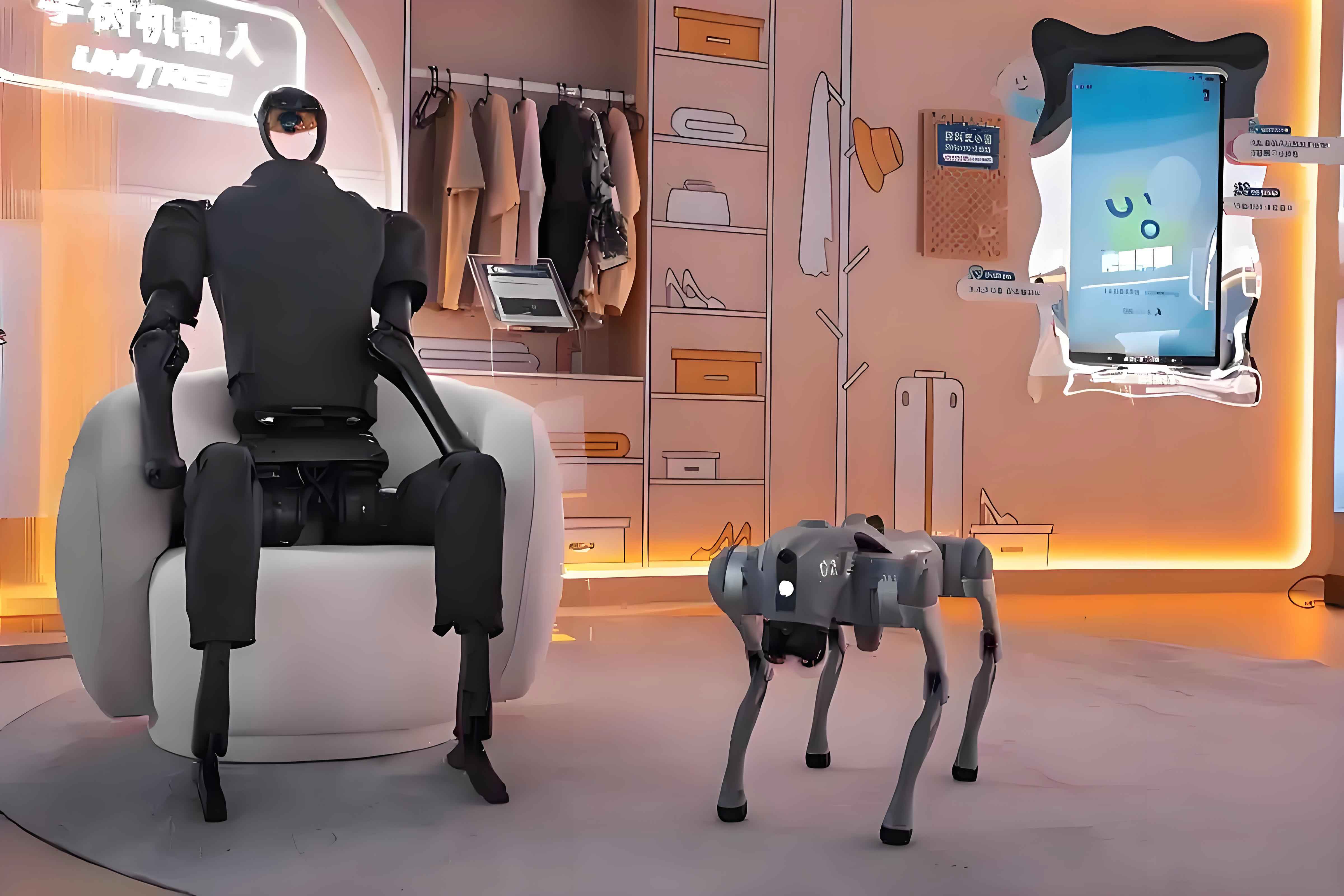
This change reflects the broader transition of the robotics industry toward comprehensive application. It is also a microcosm of the high-quality development of China’s robotics sector. Xu Xiaolan, chairwoman of the Chinese Institute of Electronics, said that embodied intelligence technology is rapidly being applied across industries and is releasing trillion-level industrial potential. She described embodied intelligence as an important engine for building a new form of intelligent economy. As the best carrier for embodied intelligence, humanoid robots are accelerating from moving on stage and running in competition arenas toward being used in homes and working in factories.
1. From Spectacle to Function: A Defining Shift at the 2026 World Robot Conference
The most visible change at the 2026 World Robot Conference was the shift from spectacle to function. In earlier years, humanoid robots often drew crowds by demonstrating balance, agility, and dramatic movement. Those capabilities remain important, but they are no longer the final goal. Companies are now under pressure to show what humanoid robots can do in factories, warehouses, stores, pharmacies, kitchens, and homes.
Across the exhibition halls, humanoid robots were presented as workers, assistants, and service providers. Some moved through simulated bedrooms and folded laundry. Some operated in kitchen environments and prepared simple meals. Some worked beside conveyor belts and sorted packages. Others interacted with elevators, delivery bags, coffee machines, and retail shelves. The message was clear: the industry is moving from proving that humanoid robots can move to proving that humanoid robots can work.
This shift is not limited to a few showcase booths. It reflects a broader maturation of the sector. Hardware continues to improve, but the competitive frontier is increasingly about software, perception, planning, decision-making, dexterity, and the ability to recover from disruption. A humanoid robot that can perform a fixed routine is impressive. A humanoid robot that can adapt when an object moves, a surface changes, or a human interferes is far more valuable.
The conference therefore became a test of practical intelligence. Humanoid robots were judged not only by how smoothly they walked or how elegantly they gestured, but by whether they could complete useful tasks in messy, unpredictable environments. This is the deeper water that the industry has now entered.
2. Laundry, Breakfast, Parcel Sorting, and Coffee: Humanoid Robots Demonstrate Practical Skills
At the Galbot booth, the exhibition space was divided into different functional areas to show how humanoid robots can operate in real scenarios. In the home demonstration area, the Galbot G1 executed tasks such as placing items, washing and drying clothes, and folding clothes on a bed. The process appeared smooth and continuous. Staff members explained that a flexible bedroom scene is especially complex for humanoid robots because the environment itself changes. A mattress can sink, bedding can wrinkle, and clothing can shift state. Through Self-Play, the humanoid robot can generate trajectories for unfolding, aligning, folding, and recovering from failure under many different conditions. These trajectories are then combined with real-machine screening and safety constraints to expand training coverage and improve the robot’s ability to handle complex states.
In a simulated kitchen area, the Galbot G1 demonstrated a long-horizon breakfast task. It toasted bread and poured drinks. The entire process was complex and involved multiple objects. Staff members repeatedly changed the position of cups to create obstacles for the humanoid robot. Despite this random human interference, the Galbot G1 was still able to complete the long breakfast preparation task. According to staff, the breakfast demonstration verified the robot’s ability to move from handling complex objects to responding to disordered environments. It could keep the task closed-loop even under continuous disturbance.
At the Robot Era booth, a humanoid robot performing parcel sorting attracted significant attention. On a fast-moving logistics conveyor belt, packages arrived one after another. Using the XHAND1 dexterous hand, the humanoid robot methodically carried out sorting and transfer operations. Staff members said that the XHAND1 has 12 active degrees of freedom and is similar in size to a human hand. It can use tools of different shapes. Its single-hand maximum grip force reaches 80 N, and it can easily lift objects weighing 25 kg. Its response speed is as fast as clicking a mouse 10 times per second. It can efficiently complete more than 100 complex operations, including picking up express labels, using pipettes, and tightening screws.
At the Seer Robotics booth, the P300AI delivery robot was equipped with a robotic arm and could complete tasks such as going up and down stairs, picking up takeout, and pressing elevator buttons. Its dual-arm robotic arm could also fully automatically prepare coffee. After visitors placed an order on a tablet, the robotic arm used a general-purpose gripper to independently complete more than ten consecutive operations, including taking a cup, connecting the portafilter, pressing, extraction, and placement. No human participation was required throughout the process.
These demonstrations showed that humanoid robots are being designed for tasks that require dexterity, perception, planning, and recovery. They are no longer limited to single actions in controlled settings. Instead, they are being trained to handle long sequences of tasks in environments where objects move, humans interfere, and conditions change. That is a critical step toward commercial usefulness.
3. From Exhibition Halls to Real Operations: Humanoid Robots Enter Deployment
Although many products displayed by exhibitors are still in the early research and development stage, a growing number of humanoid robots have already been applied in industrial practice. The conference showed that real deployment is no longer a distant promise. It is beginning to happen in logistics, retail, pharmacy, and manufacturing.
Robot Era’s embodied intelligence solution for the logistics industry is one example. Through its dexterous hand, the solution enables rapid parcel sorting. It has already been deployed by SF Express and China Post. The system operates normally in more than 10 logistics centers across 5 provinces and cities. This kind of deployment is important because logistics environments are fast, repetitive, and demanding. Humanoid robots must work reliably alongside existing conveyor systems and human workers.
Galbot’s humanoid robot smart pharmacy solution, based on the Galbot Brain, has been deployed in hundreds of instant retail warehouses in dozens of cities. These facilities can operate autonomously 24 hours a day, 7 days a week. The company’s humanoid robot smart retail solution, known as the Galbot Space Cabin, has also been deployed in more than 40 cities at more than 170 locations. It covers more than 10,000 product categories. In material handling, the Galbot S1 can complete depalletizing, transfer, and palletizing tasks for materials at the 30 kg level. It can adjust its actions in real time according to the state of the materials. At present, the S1 has achieved 24/7 normal operation at a CATL production line.
These examples show that the value of humanoid robots is increasingly measured by long-term operation in real scenarios. A robot that works for a few minutes on stage is a demonstration. A robot that works across shifts in a warehouse, pharmacy, retail store, or production line is a productivity tool. The transition from demonstration to deployment is what separates experimental technology from industrial value.
Zhang Feng, Party secretary of the council of the Chinese Institute of Electronics and chairman of the China Humanoid Robot and Embodied Intelligence 100 Association, said in a speech that embodied intelligence represented by humanoid robots will play an important role in production and manufacturing, warehousing and logistics, emergency rescue, home services, and medical rehabilitation. It will profoundly change the way people produce and live.
4. Industry Applications Enter a Phase of Comprehensive Expansion
At the conference, Zhang Feng released the 2026 Humanoid Robot Industry Development Report. The report stated that the humanoid robot industry has entered a new stage in which technological innovation clusters are emerging. Technology is accelerating, and high-end and intelligent products are advancing faster. The environmental perception, planning and decision-making, and motion control capabilities of humanoid robots continue to strengthen. Their adaptability and stability in complex environments are also improving. The industrial chain is becoming more complete, and a full humanoid robot manufacturing capacity has been formed, from key chips and components to complete machines.
From the application perspective, the report concluded that industry applications have entered a phase of comprehensive expansion. Humanoid robots are accelerating from small-batch trials toward normal deployment and large-scale application. In the first half of 2026, China’s humanoid robot shipments exceeded 40,000 units. China’s share of global humanoid robot shipments further increased to 97 percent.
| Indicator | Reported Status |
|---|---|
| Innovative products at the 2026 World Robot Conference | 3,000 |
| China humanoid robot shipments in the first half of 2026 | More than 40,000 units |
| China share of global humanoid robot shipments | 97 percent |
| Robot Era logistics deployment | 5 provinces and cities, more than 10 logistics centers, with SF Express and China Post |
| Galbot smart pharmacy deployment | Hundreds of instant retail warehouses in dozens of cities, operating 24/7 |
| Galbot Space Cabin smart retail deployment | More than 40 cities, more than 170 locations, more than 10,000 product categories |
| Galbot S1 material handling | 30 kg material depalletizing, transfer, and palletizing; 24/7 operation at a CATL production line |
| XHAND1 dexterous hand | 12 active degrees of freedom, 80 N maximum grip, 25 kg lifting, response up to 10 mouse clicks per second, more than 100 complex operations |
These figures and deployments indicate that humanoid robots are moving out of the laboratory and into operational environments. The industry is no longer asking whether humanoid robots can work. It is asking how well they work, how long they can work, and whether they can work profitably at scale.
At the same time, the report and industry leaders made clear that expansion does not mean the challenges are solved. The path from early deployment to widespread adoption remains difficult. Humanoid robots must become more reliable, more adaptable, and safer. They must also become easier to maintain and integrate into existing workflows. The deeper the application, the higher the requirements become.
5. The Last Mile: Generalization and Safety Remain Critical Barriers
Despite significant progress in technology and application scenarios, industry practitioners believe that humanoid robots still face a last mile before they truly enter daily life and become general-purpose machines. The conference provided a platform for candid discussion of these obstacles.
During the conference, Wang Xingxing, founder of Unitree Robotics, said in a speech that the biggest bottleneck for the robotics industry is that the generalization ability of embodied intelligence is still insufficient. In a fixed scenario, with enough data collection and training, the success rate can basically reach 100 percent or close to 100 percent. However, if the operated object or environment changes slightly, the success rate drops severely. Wang believes that a truly general-purpose robot may arrive in 2 to 3 years in the fast scenario, or 5 to 10 years in the slow scenario.
Wang He, founder and chief technology officer of Galbot, expressed a similar view in an interview with media. When asked when products from Galbot might enter homes, Wang said the company is still in a stage of continuous technical preparation for home entry. Wang believes that entering the home requires facing extreme safety issues. He said that the industry still has a period of time to go regarding the physical safety of embodied intelligence.
These comments highlight the gap between demonstration and daily life. A humanoid robot can perform impressively in a structured demonstration. A home, however, is far less structured. Floors are cluttered, pets move unpredictably, children appear suddenly, and objects have countless shapes and weights. Safety is not only about avoiding collisions. It is about ensuring that a powerful machine can operate around fragile objects and vulnerable people without causing harm.
Generalization is equally difficult. Humanoid robots must recognize new objects, adapt to new layouts, and recover from unexpected failures. They must understand not only what to do but also when to stop, when to ask for help, and when to avoid action. This requires advances in perception, reasoning, planning, control, and human-robot interaction. It also requires large amounts of data and robust simulation-to-reality transfer.
The last mile is therefore not a single technical problem. It is a system-level challenge involving artificial intelligence, mechanical design, safety engineering, standards, cost, maintenance, and public trust. The conference showed that humanoid robots are advancing quickly, but it also showed that the industry is aware of how much work remains.
6. What the 2026 World Robot Conference Signals for the Future
The 2026 World Robot Conference signaled that humanoid robots are no longer confined to the stage. They are entering factories, warehouses, retail stores, pharmacies, kitchens, and bedrooms. The shift from moving on stage to being used at home and working in factories is now a central theme of the industry. Humanoid robots are being evaluated by their ability to perform useful work, not only by their ability to attract attention.
For the industry, application defines value. Humanoid robots must prove that they can improve productivity, reduce costs, enhance safety, and create new services. Early deployments in logistics, retail, pharmacy, and battery manufacturing are important because they provide real-world data. That data helps companies improve reliability, reduce failure rates, and understand which tasks are most suitable for humanoid robots.
Xu Xiaolan’s remarks captured the larger economic context. Embodied intelligence is rapidly being applied across industries and is releasing trillion-level industrial potential. Humanoid robots, as the best carrier for embodied intelligence, are at the center of this transformation. They are not simply machines that resemble humans. They are platforms that combine artificial intelligence with physical action, allowing digital intelligence to interact with the real world.
The conference also showed that the supply chain is maturing. Complete humanoid robots, core components, and collaborative innovation were all on display. A full industrial chain from key chips and components to complete machines is forming. This matters because scale requires not only intelligent software but also reliable, affordable, and mass-producible hardware. Without a strong supply chain, humanoid robots cannot move from limited deployments to widespread adoption.
7. Lessons from Early Humanoid Robots Deployments
The deployments discussed at the conference offer several lessons. First, humanoid robots are most likely to succeed first in structured but demanding environments. Logistics centers, retail warehouses, pharmacies, and production lines have clear tasks, measurable outcomes, and repetitive workflows. These environments are still challenging, but they are more predictable than homes. They allow humanoid robots to generate data and improve over time.
Second, dexterity is a major differentiator. The ability to grasp, manipulate, and use tools is essential for many tasks. The XHAND1 dexterous hand, with 12 active degrees of freedom, demonstrates how far robotic hands have come. It can handle objects of different shapes and perform more than 100 complex operations. This kind of capability expands the range of tasks that humanoid robots can attempt.
Third, recovery from disruption is as important as initial success. In the Galbot G1 breakfast demonstration, staff members changed the position of cups to create obstacles. The humanoid robot still completed the task. In home and industrial environments, disruption is normal. A useful humanoid robot must detect errors, adjust plans, and continue working. The ability to recover is a key indicator of practical intelligence.
Fourth, long-duration operation is the real test. A short demonstration can be carefully scripted. A 24/7 operation in a warehouse or production line cannot. Humanoid robots must handle fatigue, maintenance, variations in lighting, changes in inventory, and unexpected events. The fact that some systems are already operating continuously in real facilities shows that the industry is making progress, but it also raises the bar for reliability and safety.
8. The Road Ahead for Humanoid Robots
The road ahead for humanoid robots will be shaped by several factors. Generalization must improve so that humanoid robots can handle new objects and environments without extensive retraining. Safety must be proven so that humanoid robots can work near people and eventually enter homes. Costs must come down so that deployment can scale. Standards must develop so that different systems can interoperate and be evaluated fairly.
Public trust will also matter. People need to feel safe around humanoid robots. They need to understand what the robots can do and what they cannot do. They need to see benefits in their daily lives. The conference demonstrations of laundry, breakfast, coffee, parcel sorting, and delivery are important because they show concrete use cases. They help the public imagine how humanoid robots might fit into ordinary life.
At the same time, the industry must avoid overpromising. Wang Xingxing’s estimate that truly general-purpose robots may take 2 to 3 years in the fast scenario or 5 to 10 years in the slow scenario is a reminder that progress will be uneven. Different tasks will be solved at different times. Some humanoid robots will enter factories and warehouses first. Others may enter retail and service roles. Home use will likely come later because the safety and generalization requirements are the highest.
Wang He’s comment that Galbot is still preparing technically for home entry reinforces this point. The home is not simply another environment. It is an extreme test of safety, adaptability, and trust. A humanoid robot in a home must operate around people who may not follow instructions, objects that may break, and spaces that change constantly. The industry still has a period of time to go before that vision becomes routine.
9. Conclusion: Humanoid Robots Enter Deeper Application Waters
The 2026 World Robot Conference marked a turning point for humanoid robots. The event showed that humanoid robots are moving from spectacle to service, from demonstration to deployment, and from stage to home and factory. They are folding clothes, preparing breakfast, sorting parcels, making coffee, and handling materials in real facilities. They are being deployed by logistics companies, retail operators, pharmacy networks, and manufacturers.
The industry has entered deeper application waters. The easy demonstrations are no longer enough. Humanoid robots must now prove their value through reliable, safe, and scalable operation. They must overcome the last mile of generalization and physical safety. They must continue to improve perception, planning, decision-making, and dexterity. They must also build the supply chains, standards, and trust needed for mass adoption.
The progress is real. More than 3,000 innovative products were shown at the conference. China’s humanoid robot shipments exceeded 40,000 units in the first half of 2026, with a 97 percent share of global shipments. Deployments are expanding in logistics, retail, pharmacy, and manufacturing. Yet the industry’s own leaders caution that truly general-purpose humanoid robots are still years away.
That combination of rapid progress and clear-eyed caution defines the current moment. Humanoid robots have left the stage. They are now entering the workplace, the store, the warehouse, and eventually the home. The next phase will not be won by the most dramatic performance. It will be won by humanoid robots that can work reliably, adapt intelligently, and operate safely in the real world. The deeper waters are here, and the industry is now swimming in them.