
In a captivating display of technological advancement, humanoid robots recently took center stage at various global exhibitions, showcasing their potential through dynamic performances and competitive events. From engaging in martial arts bouts to demonstrating agility in sports, these humanoid robots are capturing public imagination and signaling a pivotal shift in the industry. With 2025 being hailed as the “first year of mass production” for humanoid robots, their frequent appearances at events like the World Artificial Intelligence Conference and the World Robot Conference underscore a surge in innovation and industrial vitality. However, as these humanoid robots transition from experimental prototypes to commercial products, they face significant hurdles in technology, cost, and application scalability. This report delves into the current state of humanoid robot development, the persistent challenges, and the pathways to achieving widespread adoption, drawing insights from industry experts and recent milestones.
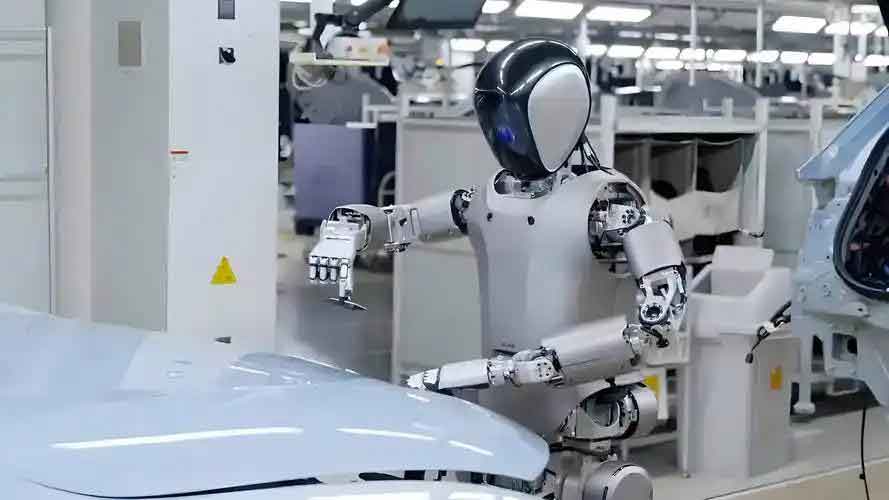
The humanoid robot industry is at a crossroads, buoyed by foundational progress yet constrained by technical intricacies. According to the “Guidelines for the Innovative Development of Humanoid Robots” released by China’s Ministry of Industry and Information Technology, the initial innovation system for humanoid robots is set to be established this year. This framework acknowledges the existing groundwork while highlighting areas requiring refinement. The evolution of humanoid robots hinges on overcoming bottlenecks in three core capabilities often likened to human faculties: intelligent capacity (the “brain”), motor skills (the “cerebellum”), and physical embodiment (the “limbs”). Despite advancements, observers like Xie Jiahao from Zhengzhou note that many humanoid robots still exhibit clumsiness in movement, such as instability while walking or running, pointing to unresolved issues in real-world functionality. This sentiment is echoed by experts who identify specific technical卡点 that impede the seamless operation of humanoid robots.
- Technical Bottlenecks in Humanoid Robot Development
The development of humanoid robots is marred by persistent technical challenges that affect their overall performance and reliability. Song Yufei, CEO of Fei Shang Tian Media, who has conducted extensive research on the humanoid robot sector, explains that motion control and perceptual abilities represent significant hurdles. For instance, the motors in many humanoid robots can deliver high instantaneous power but struggle with sustained operation due to inadequate heat dissipation. This leads to increased joint temperatures and reduced torque precision, resulting in unstable movements and frequent falls. Moreover, current machine vision and sensor technologies are insufficient for humanoid robots to accurately perceive complex environments, limiting their ability to navigate unpredictably. These limitations are evident in events like the RoboCup robot soccer World Cup in Brazil, where humanoid robots often falter in basic athletic tasks, highlighting the gap between laboratory achievements and practical deployment.
Beyond motor skills, the intelligent capabilities of humanoid robots—akin to the human brain—require substantial refinement. Cai Bingzhen, Research Director at Gaogong Robot, elaborates that the process involves perceiving external information, transmitting it to the “brain” for comprehension, analysis, reasoning, and decision-making, and then directing the “cerebellum” to control movements. However, existing large models for humanoid robots suffer from slow inference speeds and insufficient edge computing power, causing delays that prolong entire action sequences. This latency issue not only affects efficiency but also undermines the potential for humanoid robots to operate in real-time scenarios, such as interactive services or emergency response. As the humanoid robot industry strives to enhance these cognitive functions, researchers emphasize the need for optimized algorithms and more robust data processing frameworks to bridge the intelligence gap.
In addition, the physical design of humanoid robots poses its own set of challenges. Zhang Zherui, a member of Shanghai University’s Intelligent Robot Team, points out that while China boasts a complete industrial chain for humanoid robots, achieving seamless integration of components remains elusive. For example, joint modules and actuators often lack standardization, leading to compatibility issues and reduced durability. The cumulative effect of these technical卡点 is a humanoid robot that, while impressive in controlled settings, falls short in adapting to the complexities of everyday environments. Addressing these issues requires collaborative efforts across academia and industry, focusing on iterative testing and innovation to push the boundaries of what humanoid robots can accomplish.
- Cost Reduction and Supply Chain Improvements for Humanoid Robots
As the humanoid robot industry progresses toward mass production, cost considerations have become increasingly critical. The price of humanoid robots has seen a notable decline in recent years, dropping from several million yuan per unit to as low as tens of thousands of yuan. In July 2025, one domestic brand unveiled a humanoid robot model priced starting at 39,900 yuan, reflecting a trend toward affordability. However, for humanoid robots to achieve widespread household adoption, current costs remain prohibitively high for many consumers, who express hopes for more “user-friendly” pricing as domestic supply chains mature. The question of why humanoid robots are “somewhat expensive” revolves around the lack of standardization and economies of scale.
Cai Bingzhen attributes the high costs to the custom nature of components in humanoid robots. Unlike mass-produced electronics, key elements such as the “brain” (AI systems), “cerebellum” (motion controllers), and joint modules are often designed and manufactured specifically for each humanoid robot model, driving up production expenses. This customization extends to software development, where proprietary algorithms and data sets require significant investment. To mitigate these costs, Song Yufei suggests that companies enhance their in-house research and production capabilities. By self-developing core parts like motors and 3D LiDAR, manufacturers can reduce reliance on external suppliers and lower hardware expenses. Additionally, optimizing design and production processes—such as minimizing mold costs and component counts—can improve assembly efficiency and further drive down prices.
The potential for cost reduction is closely tied to the maturation of the humanoid robot supply chain. Zhang Zherui notes that China’s comprehensive industrial chain provides a solid foundation, but technical breakthroughs are necessary to unlock large-scale production. Once critical issues like motor efficiency and sensor accuracy are resolved, standardized production lines could be established, enabling批量 manufacturing that makes humanoid robots more accessible. Industry analysts project that as the humanoid robot market expands, competition and innovation will naturally lead to price declines, similar to trends observed in other tech sectors. Nevertheless, achieving this requires sustained investment in research and development, as well as policies that support供应链 localization and integration.
- Expanding Application Scenarios to Accelerate Commercialization of Humanoid Robots
The journey of humanoid robots from laboratories to diverse real-world applications is pivotal for their commercial success. Currently, humanoid robots are predominantly deployed in four main scenarios: scientific research, education, exhibition and entertainment, and commercial inspection, which together account for over 70% of all applications, according to Cai Bingzhen’s observations. These settings provide controlled environments where humanoid robots can demonstrate their capabilities without facing the unpredictability of open-world tasks. However, to truly cross the “last mile” into households and broader society, humanoid robots must venture into more complex and demanding arenas.
National and local initiatives are actively promoting the expansion of humanoid robot applications. The “Guidelines for the Innovative Development of Humanoid Robots” advocate for their use in specialized environments, such as disaster response, and in key manufacturing sectors like 3C and automotive industries, where humanoid robots can enhance tool operation and task execution. Additionally, the guidelines encourage applications in民生 fields, including healthcare and domestic services. In practice, regions like Beijing are pioneering efforts to create highly intelligent and flexible production lines, such as unmanned automotive factories, while Shanghai has launched “OpenLoong,” the world’s first full-size humanoid robot open-source community. These projects aim to foster innovation and collaboration, accelerating the integration of humanoid robots into various sectors.
Song Yufei recommends prioritizing humanoid robots for rescue and disaster relief scenarios, where they can access hazardous areas inaccessible to humans, performing tasks like detection and search-and-rescue to improve safety and efficiency. Similarly, Zhang Zherui proposes a gradual approach to scenario expansion, starting with simple, enclosed settings like factories before progressing to more open and complex environments. This stepwise strategy allows humanoid robots to build competence and reliability, addressing the core challenge of data scarcity and model optimization. Cai Bingzhen highlights that overcoming these barriers may involve building large-scale data collection factories or segmenting scenarios to enable partial commercialization. By focusing on high-impact areas and iterative improvement, the humanoid robot industry can pave the way for broader adoption, ultimately bringing these advanced machines into千家万户.
In conclusion, the humanoid robot industry stands on the brink of transformative growth, driven by technological advancements and increasing market interest. While significant progress has been made in reducing costs and expanding applications, overcoming technical bottlenecks remains essential for achieving the vision of humanoid robots as everyday companions. Through collaborative efforts in research, supply chain optimization, and scenario development, the path from laboratory to household becomes increasingly attainable. As humanoid robots continue to evolve, their potential to revolutionize industries and improve quality of life underscores the importance of addressing these final-mile challenges with urgency and innovation.