
The 2025 World Humanoid Robot Olympics concluded on the afternoon of August 17, as 26 robot champions waved to the audience from the center stage, synchronized to the theme song “Light Year.” Over the three-day event, highlights continuously captured public attention: a humanoid robot “playing dead” after a free boxing final, another “fleeing the scene” after a collision during a 1500-meter race, and numerous instances of humanoid robots stumbling and falling. Despite these mishaps, multiple world records for humanoid robots were set. Yujian Technology’s robots dominated the track and field events, while Tian Gong, which lost its head in the 100-meter hurdles, later clinched the 100-meter championship. This competition, pushing the limits of humanoid robot capabilities, vividly illustrates how humanoid robots are stumbling their way into the future.
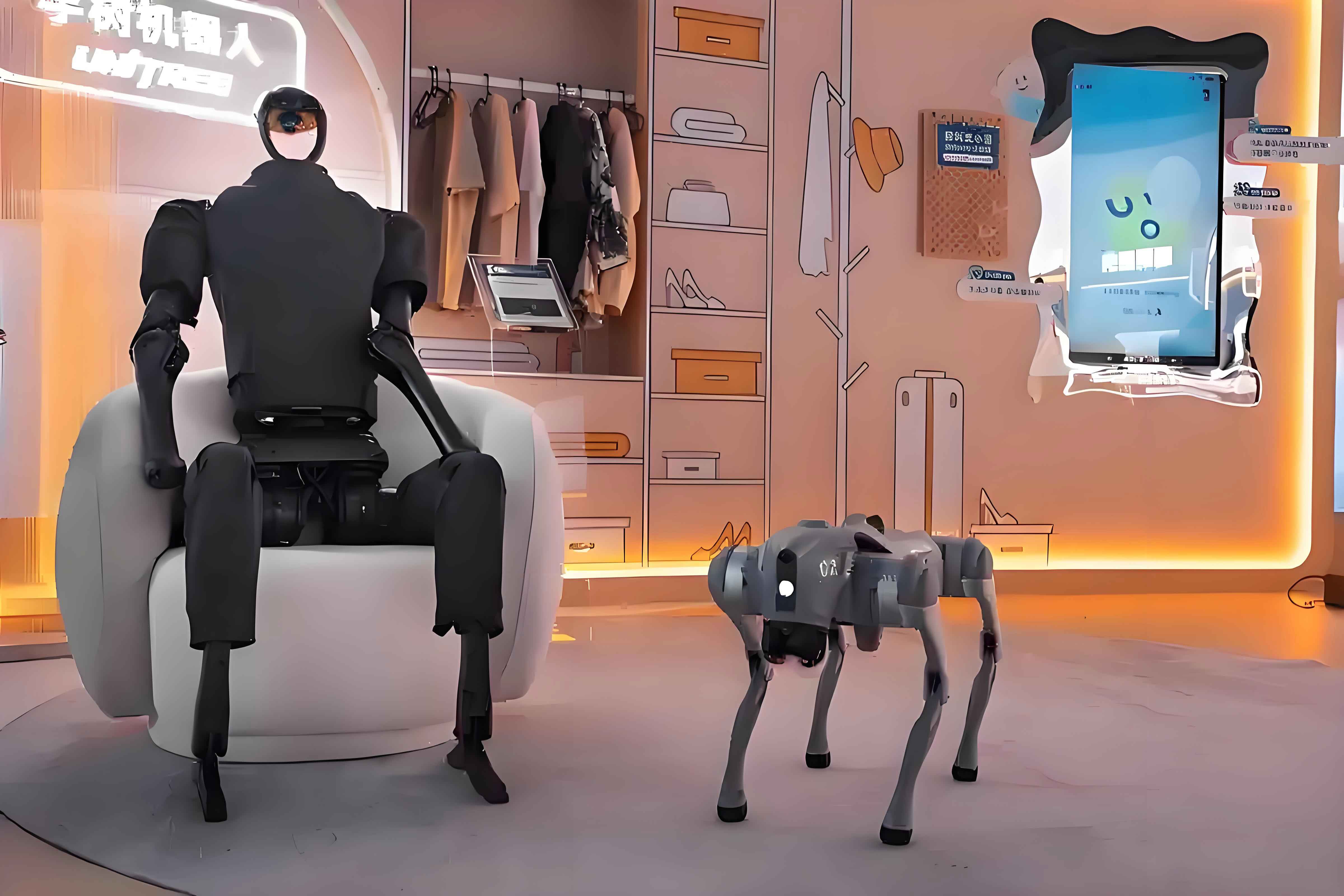
Chen Chunyu, Vice President of R&D at Magic Atom, commented on the frequent falls, noting that even humans stumble, so it is natural for humanoid robots in their early developmental stages. The key, he emphasized, is whether a humanoid robot can get up autonomously or continue running after recovery. These stumbles, he argued, demonstrate year-over-year progress in humanoid robot technology. Lou Kaiqi, Deputy General Manager of Guanggu Dongzhi, expressed empathy, comparing humanoid robots to children who need time to grow, learn, and improve. He highlighted that humanoid robots are precision devices, and despite thorough preparations, unexpected issues can arise during competitions, underscoring the iterative nature of technological advancement.
With the first-ever humanoid robot Olympics now closed, anticipation is building for the next edition. The second World Humanoid Robot Olympics has been officially announced for August 2026 in Beijing. Companies are already eager to participate; when asked if Magic Atom would return, Chen Chunyu confirmed they would, and on a larger scale than this year’s modest involvement.
- Witnessing the Current Limits
- The Significance of Stumbles and Remote Control
- Striving for Fairness in Competition
- Looking Ahead to the Future
On the afternoon of August 17, the starting gun fired for the “100-meter dash,” with humanoid robots from Tian Xiao, Tian Gong, Lingyi Technology, and Gaoyi Technology speeding off the line. The intense competition, held at the National Speed Skating Oval, known as the “Ice Ribbon,” drew roaring cheers from the audience as the event marked the close of the three-day global premiere of humanoid robot sports. After fierce finals, all champions were crowned, with 280 teams from 16 countries across five continents competing in 487 matches across 26 events in categories like竞技赛 (competitive events),表演赛 (performance events),场景赛 (scenario-based events), and外围赛 (peripheral events), resulting in 26 gold medals.
The competition kicked off on August 15, with Yujian Technology’s Lingyi Technology winning the first gold medal in the 1500-meter long-distance run final, setting a world record of 6 minutes and 34 seconds. Following this, Yujian Technology secured another victory in the 4×100 meter relay, while its subsidiary Gaoyi Technology took gold in the 100-meter hurdles and the 400-meter race. Yujian’s humanoid robots ultimately swept these four gold medals, showcasing their dominance. Tian Gong, the gold medalist from the Beijing Yizhuang Half Marathon, also delivered a standout performance. According to the official “2025 World Humanoid Robot Olympics Complete Results,” Tian Gong won the 100-meter dash with a time of 21.50 seconds, earning the title of the first humanoid robot “100-meter flying champion.”
Multiple world records for humanoid robots were established at this event. A humanoid robot from Xingdong Jiyuan set a record in the high jump, leaping to a height of 95.641 cm with a “Super Mario-style” jump to claim the gold. Pushing the boundaries of current humanoid robot capabilities was a primary goal for many teams. Huang Siyuan, Executive Director of the Embodied Robot Center at the Beijing General Artificial Intelligence Research Institute (BIGAI), explained that the Olympics served as a testing ground to demonstrate the abilities of various humanoid robot types and configurations. BIGAI’s collaboration with Unitree, the BIGAI-Unitree team, won the single-robot dance competition, highlighting their advanced technologies. Huang noted that the event’s multi-dimensional approach—featuring competitive, performance, scenario-based, and peripheral events—brought humanoid robots closer to the public, offering a comprehensive display of modern progress and testing the stability and proactivity of these machines, which must perform without errors.
Chen Chunyu of Magic Atom added that humanoid robots are positioned to enter all aspects of life, including industrial applications, and this competition explored various directions through different events and indicators, promoting overall development in the field. By competing, companies could identify strengths and expose weaknesses, driving iterative improvements in humanoid robot technology.
Beyond the serious competition, the Olympics generated buzz with amusing and viral moments: Yujian Technology’s humanoid robot swiftly navigating the 100-meter hurdles, a humanoid robot “playing dead” after a free boxing final, and another “fleeing” after a collision in the 1500-meter race. Mishaps began as early as the August 14 opening ceremony, where audiences spotted humanoid robots freezing or tumbling, and falls became common throughout the three days, with replays on large screens adding to the spectacle. In this context, a humanoid robot falling was not taboo but part of the learning process.
So, do these stumbles matter? Absolutely, for both audiences and participants. However, while spectators often view falls as outcomes, competitors see them as part of the developmental journey. Humanoid robots consist of a “brain” for abstract perception and decision-making, a “cerebellum” for motion control, and a “body” for hardware. Chen Chunyu pointed out that competitions push humanoid robots to their limits, challenging algorithms and hardware, and falls are common, indicating the need for continuous research to enhance stability. A key focus, he said, is ensuring that when a humanoid robot falls, it avoids damage and maintains body integrity.
Lou Kaiqi of Guanggu Dongzhi expressed empathy when seeing other teams’ humanoid robots stumble. In the group dance event, Guanggu Dongzhi partnered with the Beijing Dance Academy to present a large-scale human-robot collaborative performance, “Soul of the Terracotta Warriors,” which won the championship with a score of 92.54. Lou revealed that behind the smooth performance, the team had prepared contingency plans for potential issues, reflecting the unpredictable nature of humanoid robot operations.
The Olympics also brought to light the use of remote control in some humanoid robot participations, sparking debates on social media. Questions like “What’s the difference between a humanoid robot and a remote-controlled bipedal toy?” circulated widely. For instance, Magic Atom’s humanoid robot in the high jump event was remotely controlled and won the bronze medal. Addressing these concerns, Chen Chunyu clarified that the most urgent development need for humanoid robots is enhancing body capabilities to meet higher autonomy demands. This event, he stressed, primarily showcased运动能力 (athletic abilities), such as in the 100-meter, 1500-meter, hurdles, and soccer, emphasizing the rapid advancement of hardware and body functions. Only with a robust body, he argued, can autonomy be fully realized.
Huang Siyuan of BIGAI noted that their team’s participation in the single-robot dance event did not involve remote control, and whether a humanoid robot uses remote control may depend on the application scenario. Different tasks pose varying technical difficulties; for complex scenarios with objects of different heights requiring flexible body rotations and difficult identifications, a mix of remote and autonomous control might be necessary. Huang expressed confidence that humanoid robots would eventually shed remote controls, gaining public recognition when they achieve full autonomy, but emphasized that this requires time and collective effort.
As humanoid robot technology and industry evolve, so does the framework of this inaugural Olympics. On one hand, curious audiences flocked to the event, filling the National Speed Skating Oval with applause and cheers. On the other, questions about rule fairness lingered among spectators. Queries like “Is it fair?” were heard on-site, particularly in track and field events where humanoid robots of varying sizes competed together—some接近成年人 (close to adult human size) like Yujian’s “dark-skinned sports prodigy,” and others as short as knee-height, creating a “cutest height difference” on the field. Additionally, in the 100-meter final, two humanoid robots operated autonomously, while two were remotely controlled.
This diversity posed challenges for rule-making. Chen Bin, Track and Field Event Director of the World Humanoid Robot Olympics, admitted that as the first competition, experience was limited, and they drew from human sports to establish rules tailored to humanoid robot characteristics. The裁判 (referees) aimed to ensure fairness based on current technological levels. Consequently, some results did not match the audience’s visual observations. For example, on August 15, after a track event, spectators noticed discrepancies between the finish order and the announced rankings. Staff quickly explained via broadcast that fully autonomous humanoid robots had their times multiplied by 0.8, unlike those with remote operator accompaniment, to account for the higher difficulty of full autonomy.
This explanation persisted through the August 17 100-meter final, where Yujian’s Lingyi Technology and Gaoyi Technology crossed the line before Tian Gong, but Tian Gong won the gold after time adjustments. Chen Bin clarified that while remotely controlled humanoid robots might be faster in actual runs, the coefficient adjustment could favor autonomous ones, encouraging more full autonomy participation due to its higher algorithmic demands. He acknowledged that both remote and autonomous control present challenges, and as technology progresses, rules may be revised for future editions.
The humanoid robot industry is accelerating, and companies are confident in their products’ growth. Chen Chunyu of Magic Atom announced plans for broader participation next year, competing across most events with an expanded product line. Lou Kaiqi of Guanggu Dongzhi echoed this optimism, noting rapid technological advances. He acknowledged that some audiences feel current humanoid robot capabilities fall short of expectations, but viewed this as motivation. Since late last year, humanoid robots have gained more public visibility, and the increased attention fuels confidence in a future where these machines become integral to daily life.
The 2025 World Humanoid Robot Olympics not only celebrated achievements but also highlighted the journey ahead. With the next event scheduled for Beijing in 2026, the stage is set for further innovation. As humanoid robots continue to stumble and rise, they embody a dynamic field where every fall is a step toward greater resilience and autonomy, ultimately bringing the vision of versatile humanoid robots closer to reality.
In summary, the 2025 World Humanoid Robot Olympics served as a landmark event, blending competition with camaraderie and setting the pace for global advancements in humanoid robot technology. From record-breaking performances to candid discussions on stumbles and control, it underscored the collaborative spirit driving this industry forward. As companies refine their humanoid robots and rules evolve, the future promises more sophisticated and autonomous machines, poised to transform how we live and work.