
As a researcher deeply involved in the field of robotics, I find humanoid robots to be one of the most transformative technologies of our time. These machines represent a convergence of artificial intelligence, mechanical engineering, integrated circuits, and advanced materials, positioning them as the next-generation terminal products following personal computers, smartphones, and electric vehicles. The global competition in humanoid robotics is intensifying, with nations like the United States, Germany, and Japan implementing strategic initiatives to advance robotics and AI. In China, policies such as the “Guidance on the Innovative Development of Humanoid Robots” have set a clear direction for high-quality growth in this sector. Regions including Beijing, Shanghai, and Zhejiang have leveraged their industrial strengths to foster clusters, establishing a comprehensive supply chain from core components to end-use applications. This rapid evolution underscores the need for a robust standardization framework to guide development and ensure safety, interoperability, and innovation.
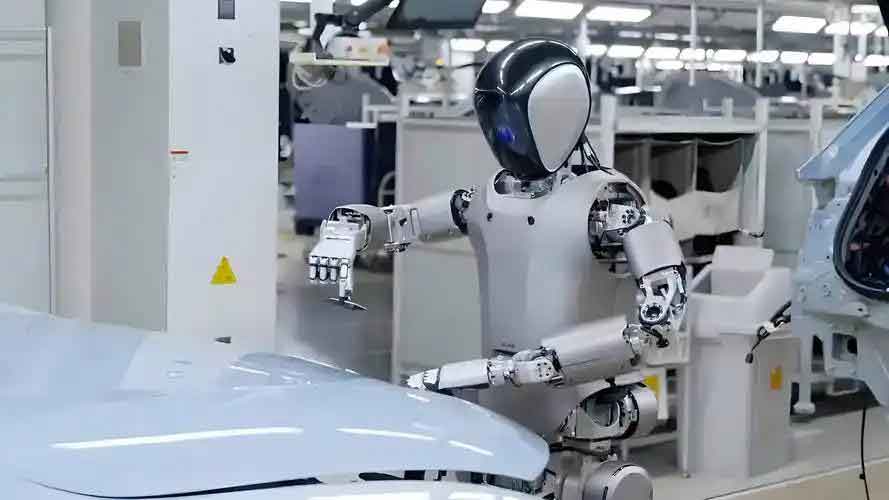
The current state of humanoid robots is marked by significant advancements in intelligence, driven by multimodal large models. For instance, models like RT-2 and RT-X have introduced vision-language-action capabilities, enabling humanoid robots to perform complex tasks in dynamic environments. More recently, end-to-end models have enhanced perceptual interaction and upper-body motion control, as seen in products like Figure 01. These improvements allow humanoid robots to accurately interpret user commands, learn from their surroundings, and make autonomous decisions. The intelligence of humanoid robots can be quantified using metrics such as task success rates and adaptation speed. For example, the performance of a humanoid robot in understanding and executing commands can be modeled as: $$ P_i = \frac{1}{N} \sum_{j=1}^{N} I_{success}(j) $$ where \( P_i \) represents the intelligence performance score, \( N \) is the number of tasks, and \( I_{success}(j) \) is an indicator function for successful completion of task \( j \). This formula highlights how humanoid robots are evolving beyond pre-programmed actions to exhibit genuine cognitive abilities.
In terms of technical pathways, humanoid robots have crystallized around distinct approaches for the “brain,” “cerebellum,” and “limbs.” The brain component encompasses multiple routes, including large language models, vision-language models, vision-language-action models, and multimodal large models, with the combination of large models and visual foundation models being the most mature. The cerebellum is shifting from model-based control to learning-based methods, such as reinforcement learning and imitation learning, which enhance adaptability. For limbs, electric actuation has become the industry standard, replacing hydraulic systems, with prevalent solutions like high-reduction-ratio schemes and quasi-direct drive approaches using high-torque motors. Key components like sensors often include visual and six-axis torque sensors. To illustrate the diversity in technical specifications, consider the following table comparing different humanoid robot models based on their intelligence and actuation systems:
| Humanoid Robot Model | Intelligence Approach | Actuation Type | Key Features |
|---|---|---|---|
| Figure 01 | End-to-end VLA model | Electric | Autonomous decision-making, upper-body control |
| Optimus Gen 2 | Multimodal large model | Electric | Enhanced flexibility, weight reduction |
| Atlas (Electric) | Advanced control algorithms | Electric | Superior mobility and stability |
The proliferation of humanoid robot products is accelerating globally. Companies like Tesla, Boston Dynamics, and Figure in the U.S., along with firms in China such as Ubtech and Fourier Intelligence, are continuously introducing new models. These humanoid robots demonstrate stable walking, running, jumping, and basic task execution, as showcased in events like the “2024 World Artificial Intelligence Conference.” Applications are being tested in manufacturing and service sectors; for example, humanoid robots are being deployed in warehouse operations and automotive assembly lines for tasks like quality inspection and material handling. The motion performance of these humanoid robots can be evaluated using metrics like balance stability, which can be expressed as: $$ S_b = \frac{1}{T} \int_0^T \left| \theta(t) \right| dt $$ where \( S_b \) is the balance stability index, \( T \) is the time period, and \( \theta(t) \) is the tilt angle at time \( t \). Lower values indicate better stability, crucial for humanoid robots operating in human environments.
Establishing a standardization system for humanoid robots is critical at this juncture. The absence of widely accepted standards leads to poor compatibility, varying product quality, and increased costs, hindering industry progress. From my perspective, standardization can foster collaboration among small and medium-sized enterprises, which dominate the humanoid robot landscape. By unifying software interfaces and core components, standards enable efficient resource allocation and innovation synergy. Moreover, safety is paramount; humanoid robots possess significant kinetic energy and mass, posing risks of injury if control systems fail or are compromised. Electrical safety and electromagnetic compatibility must be addressed to prevent hazards. Additionally, humanoid robots often collect sensitive data through cameras and sensors, raising privacy concerns. Standards can mitigate these risks by embedding security protocols into the design and operation of humanoid robots.
In traditional robotics, a well-developed standardization system exists, covering industrial, service, and special-purpose robots. National standards form the core, supplemented by industry, local, and group standards. Industrial robot standards focus on safety, environmental reliability, electromagnetic compatibility, and specific product requirements like welding or assembly robots. Service robot standards include general specifications and criteria for products such as educational or entertainment robots. Special robot standards address terminology, classification, and application-specific needs, like underwater or search-and-rescue robots. The following table summarizes the existing robot standard categories:
| Robot Category | Standard Focus Areas | Example Standards |
|---|---|---|
| Industrial Robots | Safety, EMI, component requirements | Welding, assembly robot specs |
| Service Robots | Functionality, performance, user interaction | Educational, cleaning robot standards |
| Special Robots | Application-specific safety and performance | Search-and-rescue, medical robot standards |
However, humanoid robots differ from traditional robots in three key aspects: greater generality, higher intelligence, and the current phase of technological breakthroughs. Their human-like design allows them to utilize existing infrastructure and tools, enabling泛化性 across diverse scenarios. Consequently, standardization should focus on a single morphology rather than multiple forms. The intelligence of humanoid robots, powered by AI, demands standards for cognitive capabilities, such as understanding and decision-making. Given the ongoing research and development, standards must balance rigor in hardware and software safety with flexibility in performance metrics. For instance, mechanical performance and environmental reliability should have recommended indicators and test methods, while intelligent capabilities might involve grading systems. The functional requirements could serve as guidelines to encourage innovation.
To address these needs, I propose a preliminary standard system for humanoid robots that accommodates current industry dynamics while allowing for future growth. This system should prioritize industry and group standards initially, due to the shorter development cycles compared to national standards. It encompasses three main areas: general standards for overall functionality and performance, intelligence grading standards, and application-specific standards for mature use cases. The general standards cover functional requirements—such as motion ability, balance, task execution, environmental perception, human-robot interaction, and intelligent decision-making—along with performance metrics like action precision, positioning, navigation, and load capacity. Safety and reliability aspects include electrical safety, information security, electromagnetic compatibility, and mechanical and environmental durability, all with defined test methods. Intelligence levels can be classified using a scoring system based on perceptual and cognitive abilities, potentially modeled as: $$ L_i = w_1 P_p + w_2 I_d + w_3 A_c $$ where \( L_i \) is the intelligence level, \( P_p \) is perceptual performance, \( I_d \) is decision-making capability, \( A_c \) is action consistency, and \( w_1, w_2, w_3 \) are weighting factors. Additionally, standards for key components—such as motors, reducers, ball screws, materials, structural parts, and batteries—should be developed to ensure compatibility and quality. Application-specific standards would tailor these general requirements to scenarios like manufacturing or healthcare, emphasizing unique functional needs. The proposed standard system framework is summarized below:
| Standard Category | Key Elements | Implementation Focus |
|---|---|---|
| General Standards | Functionality, performance, safety tests | Unified metrics and evaluation methods |
| Intelligence Grading | Perceptual, cognitive, decision-making levels | Hierarchical classification and assessment |
| Component Standards | Motors, sensors, batteries, materials | Interoperability and reliability requirements |
| Application Standards | Scenario-specific adaptations | Differentiated functional demands |
In conclusion, the future of humanoid robots is incredibly promising, with potential applications spanning industrial manufacturing, healthcare, domestic services, education, and entertainment. These humanoid robots will not only boost productivity but also enhance quality of life. However, to ensure safe, efficient, and cohesive development, standardization is indispensable. A unified technical standard system will provide the foundation for widespread adoption, addressing compatibility, safety, and privacy challenges. As humanoid robots continue to evolve, the standardization efforts must keep pace, fostering a healthy and orderly industry progression. The journey of humanoid robots is just beginning, and with collaborative standardization, we can unlock their full potential for society.