
The humanoid robot industry in China is experiencing unprecedented growth, with the domestic market projected to reach 8.239 billion yuan this year, accounting for approximately 50% of the global market. This surge is fueled by significant commercial breakthroughs, such as Ubtech Technology, often dubbed the “first humanoid robot stock,” securing a massive order worth 250 million yuan—the largest single contract for humanoid robots worldwide. According to the National-Local Humanoid Robot Innovation Center, sales of humanoid robots in China are expected to exceed 10,000 units in 2025, representing a 125% year-on-year increase. The “2025 Humanoid Robot and Embodied Intelligence Industry Report” further corroborates this trend, highlighting the rapid transition of humanoid robots from conceptual aspirations to practical applications, signaling an industry on the brink of explosive expansion. In this context, Jiangsu Province has emerged as a pivotal player, with its enterprises reporting remarkable sales performances and leveraging unique advantages to drive innovation.
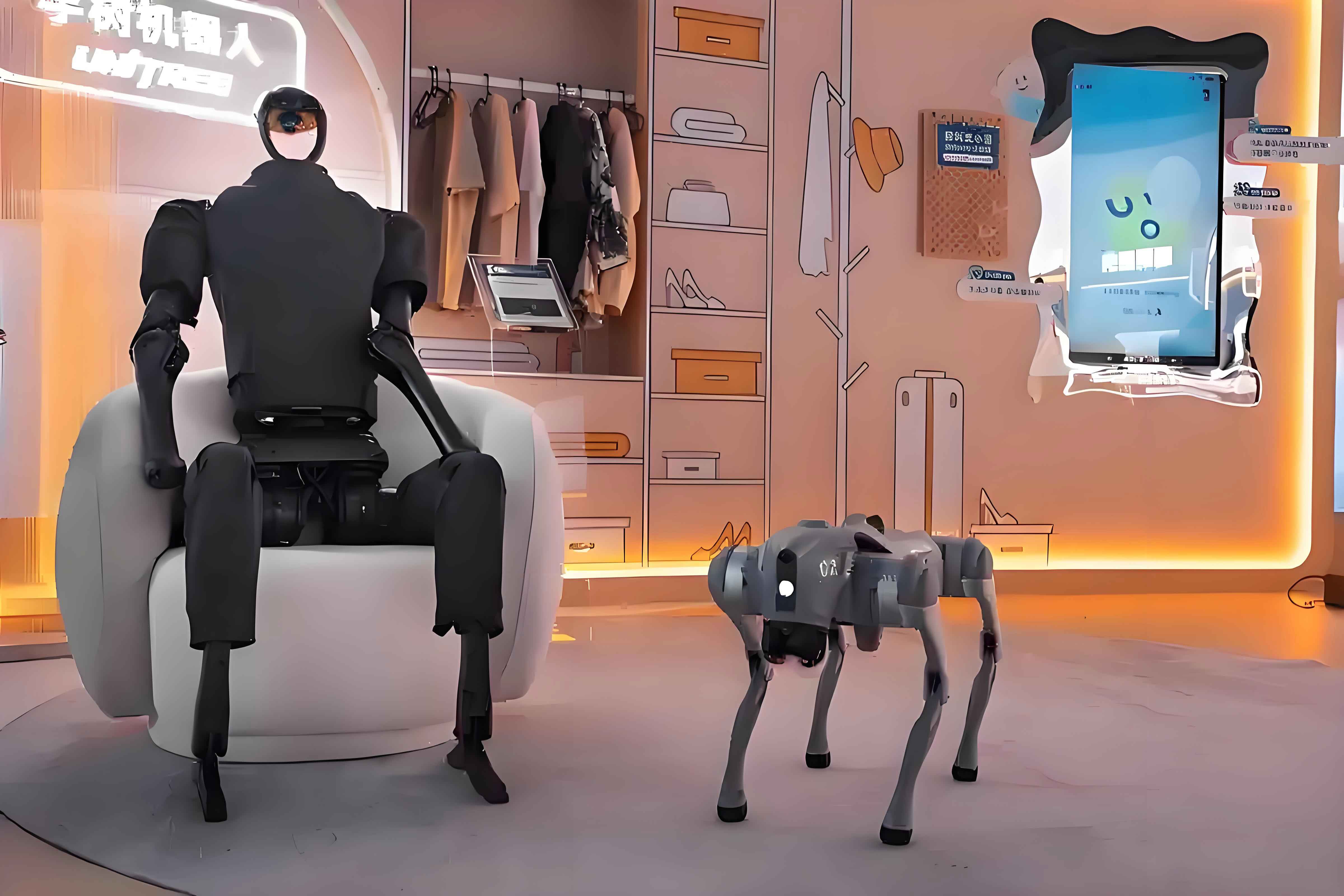
Diverse Products and Sales Surge
In Jiangsu, companies are at the forefront of the humanoid robot revolution, reporting substantial sales increases and product diversification. Jiangsu Yunmu Intelligent Manufacturing Technology Co., Ltd., based in Taicang, Suzhou, has developed a humanoid robot named “Zheng He” for the Taicang Museum. This humanoid robot, adorned in traditional attire, engages visitors in free conversations about historical figures like Zheng He, as well as broader cultural and scientific topics. With 40 degrees of freedom, it executes precise movements and displays a wide range of facial expressions. The company’s project director, Yang Ming, noted that their humanoid robot lineup includes educational, industrial, and cultural tourism models, with the latter being the most popular. From January to August this year, sales have surged to approximately 2.5 times the total revenue of the previous year, driven by robust demand both domestically and internationally.
Yunmu Intelligent has achieved full-stack self-research for its humanoid robots, covering core technologies from the “brain” and “cerebellum” to overall structural design. They offer 10 different models, making them one of the most diversified humanoid robot providers in the market. The cultural tourism humanoid robots are available in two types: chassis-based and bipedal humanoid forms. These units feature optimized voice interaction systems that deliver natural, human-like dialogues and accurately interpret user intent. Equipped with binocular cameras, they can recognize and describe visual scenes, and perform actions such as bowing, shaking hands, greeting, spreading hands, and making heart gestures. Additionally, the humanoid robots support custom appearances, with exposed areas like the head and hands using simulated skin, and boast 26 facial degrees of freedom and 66 full-body degrees of freedom for expressive motions. Priced from over 200,000 yuan for basic models, with custom versions at higher rates, these humanoid robots are widely deployed in museums, science centers, shopping malls, and exhibition halls for guiding and explanatory roles. Despite exploring rental services, the company is currently prioritizing sales due to the explosive growth in orders.
Similarly, Nanjing Avatar Robot Technology Co., Ltd. has seen a dramatic rise in sales, with a focus on a child companion humanoid robot. Chairman Wang Jiping described this humanoid robot as integrating companionship, education, and safety functions. It can sing children’s songs, tell stories, and provide interactive entertainment, while also offering educational resources for early childhood development and academic support. The humanoid robot doubles as an elderly companion, using AI detection algorithms to monitor for falls and automatically trigger alerts to designated contacts. Priced at over 50,000 yuan, it primarily targets institutional clients such as schools and nursing homes. Sales from January to August increased by about 100% year-on-year, reflecting the growing market appetite for practical humanoid robot applications.
This sales boom is not isolated to a few firms; many humanoid robot enterprises in Jiangsu are entering a golden period of growth. The diversity of products—from educational and industrial humanoid robots to those tailored for cultural tourism—underscores the industry’s adaptability and the expanding acceptance of humanoid robots in various sectors. The humanoid robot market’s vitality is evident in the doubling of sales for companies like Avatar Robot, demonstrating that humanoid robots are no longer niche innovations but integral components of modern service and industrial ecosystems.
Competitive Advantages in Jiangsu
Jiangsu’s prominence in the humanoid robot industry is bolstered by several key factors, including a robust supply chain, academic collaborations, and supportive policies. As a major manufacturing hub, the province offers a complete industrial chain that facilitates the scaled development of humanoid robot technologies. Gu Zhijun, Secretary-General of the Humanoid Robot Core Components Industry Alliance and General Manager of Wuxi Weihan Intelligent Technology Co., Ltd., emphasized that this supply chain infrastructure is a critical driver for the humanoid robot sector’s rapid advancement.
One standout example is Weihan Intelligent’s development of a double-curve tooth harmonic reducer, a core component for humanoid robot joints that determines flexibility and precision. Compared to traditional harmonic reducers, this innovation reduces weight by 50% and volume by 40%, significantly enhancing the motion performance and control accuracy of humanoid robots. It has been deployed in major projects, such as the stage lifting units for the CCTV Spring Festival Gala and mechanical arms for the Jakarta Asian Games. The company has established partnerships with renowned clients like BYD and Chery, connected with overseas automotive Tier-1 suppliers, and expanded into European markets. Sales are anticipated to grow four to fivefold next year, highlighting the global demand for advanced humanoid robot components.
Other enterprises in Jiangsu are also contributing to the humanoid robot ecosystem. Xiangming Intelligent in Changzhou Economic Development Zone is advancing joint module technology for humanoid robots, while Tianqi Co., Ltd. in Wuxi operates a data collection training base for humanoid robots, continuously gathering data to train and improve the intelligence of these machines. These efforts illustrate a comprehensive supply chain layout that accelerates the transition of humanoid robots from research and development to industrial application.
Jiangsu’s rich academic landscape further fuels innovation in the humanoid robot field. Universities and research institutions collaborate closely with industry players to nurture talent and technological breakthroughs. For instance, Soochow University and Leju Robot have jointly established the Soochow University-Leju Humanoid Robot Collaborative Innovation Institute, which focuses on six key areas: basic component R&D, control algorithm development, and application innovation. Similarly, the Wuxi Humanoid Robot Core Components Industry Alliance brings together companies like Weifu High-Tech and Weihan Intelligent with academic bodies such as Jiangnan University, Nanjing University of Science and Technology, and Southeast University, fostering technology sharing and industrial cooperation for humanoid robots.
Policy support has been instrumental in shaping Jiangsu’s humanoid robot landscape. The “Jiangsu Province Robot Industry Innovation Development Action Plan,” issued in April, outlines differentiated strategies for cities like Nanjing, Wuxi, Changzhou, Suzhou, and Nantong, and proposes concrete measures for enhancing innovation capabilities and tackling key technological challenges. Local governments have responded proactively; Nanjing’s “Robot Industry High-Quality Development Action Plan (2024-2026)” aims to position the city’s robot industry, including humanoid robots, at the national forefront by 2026, through mechanisms like ecosystem development and talent recruitment. Wuxi’s “Humanoid Robot Innovation Development Three-Year Action Plan (2024-2026)” identifies humanoid robots as a pivotal direction for future industries, with Binhu District in Wuxi emerging as a hub. Hosting over 20 humanoid robot-related enterprises, Binhu is actively building an innovation cluster around the Fosun Humanoid Robot Industrial Park. District officials plan to refine specialized support policies, establish expert think tanks, and attract high-tech, high-growth firms to create a full ecosystem from R&D to market implementation, positioning the area as a humanoid robot industry leader in the Yangtze River Delta.
Future Prospects and Challenges
As humanoid robots evolve from laboratory prototypes to real-world applications, they are poised to achieve multidimensional breakthroughs, albeit with persistent challenges. Wei Zhigang, a director of the Jiangsu Artificial Intelligence Society and founder of Jiangsu Xingyun Technology Co., Ltd., envisions humanoid robots as collaborative partners rather than mere tools. His company concentrates on “service + interaction” and is progressively upgrading its intelligent robots to humanoid forms. In envisioned scenarios, humanoid robots could serve as “welcome guides” on campuses, assisting new students with dormitory queries, registration processes, and class information; in judicial settings, they could independently conduct patrols, verify counts, and monitor key areas and individuals; and in government halls or exhibition centers, they could address public inquiries about procedures, required documents, and deadlines. The company has already developed an integrated intelligent management platform that enables remote, real-time supervision of humanoid robots via multiple devices, allowing managers to issue commands based on situational needs. This framework not only boosts efficiency but also leverages deep data analysis to identify service gaps and guide functional iterations, enabling a shift from reactive responses to proactive predictions in humanoid robot deployments.
Despite the optimism, the humanoid robot industry faces hurdles in technology, cost, and application validation. Li Ming, an engineer at Magic Atom, a leading embodied intelligence technology firm in Suzhou, pointed out that technical difficulties include enhancing the generalization and universality of humanoid robots in complex environments. While humanoid robots can handle tasks like搬运 and sorting, adapting to diverse operational demands remains a challenge. Application scenarios are still relatively limited, and the tangible value creation of humanoid robots needs clearer demonstration. On the sales front, products designed for industrial manufacturing—particularly in repetitive or hazardous roles—and home service settings are costly, hindering widespread adoption. Li Ming acknowledged that普及 will require time, as the industry works to reduce expenses and prove the efficacy of humanoid robots in everyday use.
Magic Atom, recognized as a hallmark of Suzhou’s intelligent manufacturing, produces core hardware such as full-joint modules, dexterous hands, reducers, and actuators for humanoid robots. Their products include the MagicBot Gen1 (Xiaomai), used in industrial production lines and commercial guidance, and the MagicBot Z1, applicable in industrial operations, research education, and commercial services, both of which have achieved mass production and delivery. However, the journey toward seamless integration of humanoid robots is ongoing, with a focus on overcoming these barriers to unlock their full potential.
In terms of societal impact, the consensus among industry leaders is that humanoid robots should be viewed as collaborators, not replacements. Li Ming from Magic Atom emphasized that the future goal of humanoid robots is to augment human capabilities by improving overall production efficiency and quality, freeing people from monotonous and dangerous tasks to concentrate on creative and high-value activities. This human-robot synergy aims to extend human potential and reshape industrial and service paradigms, establishing a new era of cooperative dynamics where humanoid robots serve as intelligent allies in progress.
In summary, the humanoid robot sector in China, particularly in Jiangsu, is at a promising juncture, characterized by robust sales, innovative products, and strategic advantages. While challenges like technical refinement and cost reduction persist, the trajectory points toward humanoid robots becoming indispensable collaborators in various fields, driving economic growth and transforming how humans interact with technology. The continued emphasis on research, policy support, and ecosystem development will be crucial in harnessing the full potential of humanoid robots for future advancements.