
I have been closely watching the global race toward embodied artificial intelligence, and I am convinced that the humanoid robot is now entering its most decisive window of opportunity. The humanoid robot represents a unique convergence of cognitive science, neuroscience, mechanical engineering, electronic engineering, and artificial intelligence. In my view, this is not merely a new consumer gadget; it is a foundational platform that can reshape industrial production, social services, and even the meaning of intelligence itself. The rapid emergence of large language models, high-performance edge computing, ubiquitous 5G/6G connectivity, and advanced motion control is bringing the humanoid robot out of research laboratories and into real-world factories, hospitals, warehouses, and homes. I see the humanoid robot as the most powerful carrier of the next wave of “AI+” transformation, and I believe telecom enterprises must embrace this trend strategically.
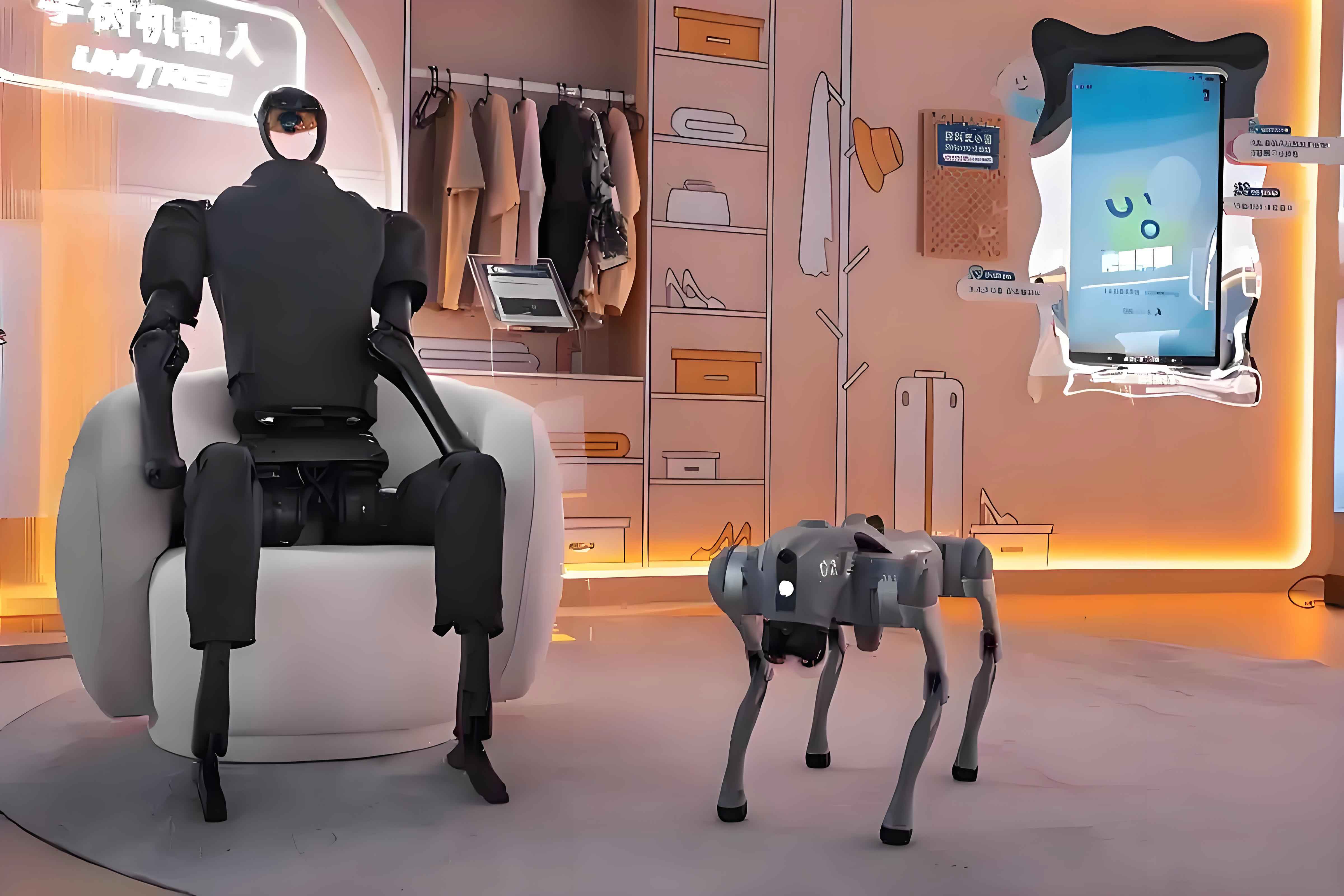
Market Momentum and the Trillion-Dollar Opportunity
I am struck by the scale and speed of the market projections surrounding the humanoid robot. Under the combined drive of technology breakthroughs, capital investment, and supportive public policy, the global humanoid robot industry is expanding much faster than most traditional hardware sectors. I have studied multiple industry estimates, and the results point to a humanoid robot market that could exceed ten trillion RMB in global shipments by 2045. A recent global investment bank has revised its 2035 global humanoid robot market forecast upward from 60 billion USD to a lower bound of 380 billion USD; under a more optimistic technology breakthrough scenario, the same bank projects the market could reach 1540 billion USD by 2035. That implies a compound annual growth rate of roughly 94% over a decade. If China continues to develop its supply chain in parallel, the Chinese humanoid robot market could account for about 30% of the global total, or approximately 3000 billion RMB. In the long run, after full commercial deployment, the humanoid robot market space could become as large as 120 trillion RMB globally.
I believe the market size story is best summarized by a classic growth formula:
$$
M_{2035} = M_{2025} \left(1 + g\right)^{10}
$$
where \(M_{2035}\) is the market size in 2035, \(M_{2025}\) is the current baseline market size, and \(g\) is the average annual growth rate. If \(g \approx 0.94\), the high-end global humanoid robot market scales dramatically. The same logic applies to the Chinese domestic market:
$$
M_{\text{China}, 2035} \approx M_{\text{Global}, 2035} \times 0.30
$$
I think this market potential is not evenly distributed across all scenarios. In industrialized settings such as smart manufacturing, smart logistics, and security inspection, the demand is clear, the deployment conditions are relatively controlled, and the tolerance for error is higher. These environments are therefore the first beachhead for humanoid robot adoption. At the same time, the long-term prize is in the household. As societies age and consumers seek more convenience, humanoid robot applications in healthcare assistance, emotional companionship, and home services will become increasingly common. I expect the home-service segment to become the largest humanoid robot market over time, potentially capturing between 25% and 57% of the total market. The following table summarizes my view of the humanoid robot market outlook.
| Indicator | Time Horizon | Value or Range |
|---|---|---|
| Global humanoid robot market, lower bound | 2035 | 380 billion USD |
| Global humanoid robot market, upper bound | 2035 | 1540 billion USD |
| Implied 10-year compound annual growth rate | 2025–2035 | Up to 94% |
| China’s share of global humanoid robot market | 2035 | About 30%, or roughly 3000 billion RMB |
| Long-term fully commercialized global humanoid robot market | Post-mass adoption | Up to 120 trillion RMB |
| Home-service share of total humanoid robot market | Long-term | 25% to 57% |
Artificial Intelligence Breakthroughs and the Humanoid Robot Algorithmic Leap
I see the recent wave of open-source large language models as a strategic turning point for humanoid robot intelligence. Until recently, many humanoid robot systems relied on either manual rule-based control or task-specific models that lacked generalization. The emergence of highly capable open-source reasoning models has reshaped the cost-performance curve of the humanoid robot software stack. The new model architecture directly improves the “brain” and “cerebellum” of the humanoid robot: the brain is responsible for semantic understanding, task planning, and interaction, while the cerebellum handles real-time motion coordination and dynamic balance.
One of the most important architecture innovations is the mixture of experts, or MoE. In a classical dense neural network, every input activates all parameters. In a sparse MoE model, a gating network selects a small subset of experts for each token or input. I can express this mechanism mathematically as:
$$
y = \sum_{i=1}^{E} G(x)_i \cdot E_i(x)
$$
where \(E\) is the number of experts, \(E_i(x)\) is the output of the \(i\)-th expert, and \(G(x)_i\) is a sparse gating weight that is nonzero only for the top-\(k\) experts. Because only a few experts are active, the humanoid robot inference engine can run faster without scaling up the entire model cost. In the specific model family mentioned in the source, this fine-grained expert plus generalist-expert design reduced inference time by a factor of four. That is a substantial advantage for a humanoid robot operating in real time.
Another key advancement is the multi-head latent attention mechanism. Traditional transformer models need to cache the key and value tensors at every layer and every head, which consumes a huge memory budget on edge hardware. The new latent attention mechanism projects those key and value tensors into a low-dimensional latent space. I can summarize the memory reduction as:
$$
C_{\text{KV, old}} \propto n_l \cdot n_h \cdot d_h
$$
$$
C_{\text{KV, new}} \propto n_l \cdot d_l
$$
Here, \(n_l\) is the number of layers, \(n_h\) is the number of attention heads, \(d_h\) is the head dimension, and \(d_l\) is the latent dimension, with \(d_l \ll n_h d_h\). This reduction is critical for deploying a humanoid robot with onboard intelligence rather than relying exclusively on a remote cloud. The lower memory footprint also improves computation efficiency by a factor of two to four, which I believe is directly beneficial for humanoid robot edge computing.
The same open-source model family also introduced low-precision training and optimized communication scheduling. Using FP8 mixed-precision training reduces the training computation overhead by about 50% when compared to traditional FP16 or FP32 training. I can write the relative saving as:
$$
\Delta C_{\text{compute}} = \frac{C_{\text{FP16}} – C_{\text{FP8}}}{C_{\text{FP16}}} \approx 50\%
$$
I see this as a strategic advantage for the humanoid robot industry because model training and continuous iterative learning are essential for improving humanoid robot skills. If the training cost is drastically reduced, more small and medium-sized robotics companies can participate in the humanoid robot ecosystem. The following table summarizes the algorithmic innovations that I believe matter most for humanoid robot development.
| Algorithmic Innovation | Mechanism | Impact on humanoid robot |
|---|---|---|
| Sparse mixture of experts | Dynamic top-k routing among specialized and shared experts | Inference speed up to 4x faster with less computational waste |
| Multi-head latent attention | Compress key-value cache into low-rank latent vectors | Lower memory footprint and 2–4x higher compute efficiency on edge hardware |
| FP8 mixed-precision training | Use 8-bit floating point for forward and backward passes | Roughly 50% reduction in computing cost for humanoid robot model training |
| Bidirectional pipeline parallelism | Enable 16-way and 64-way parallel scheduling with less communication overhead | Better utilization of hardware under compute constraints |
| Open-source model release | Provide trained weights and architecture details to the community | Accelerates innovation and reduces entry barriers for humanoid robot developers |
Industry Chain Architecture and the Value of Humanoid Robots
I believe that a humanoid robot is the ultimate embodiment of AI because it creates a bridge between digital data and physical behavior. The humanoid robot is not a simple robot arm or a mobile vehicle; it is a full-body intelligent agent that interacts with the environment through vision, hearing, touch, proprioception, and motor output. I see three major capabilities that distinguish the humanoid robot from earlier artificial intelligence systems.
First, the humanoid robot has environment interaction and perception capabilities. Through its embodied body, it can dynamically interact with the physical world. The humanoid robot establishes a more natural connection between perception, reasoning, decision-making, and action, breaking the limitations of traditional AI that operates only in virtual environments. Second, the humanoid robot has dynamic adaptability. The humanoid robot does not simply follow fixed rules; it can learn from new situations and react in real time. I consider this an evolution from static, preset logic to dynamic, real-time perception and behavior. Third, the humanoid robot can self-improve during operation. Traditional AI often requires millions of labeled images or offline training data before deployment. In contrast, a humanoid robot can obtain multimodal information from real-world sensors and update its skills continuously over its lifecycle.
From an industry-chain perspective, I see the humanoid robot as a complex system with three core modules: perception, interaction, and motion control. Perception is the sensory layer, including cameras, LiDAR, microphones, force/torque sensors, and inertial measurement units. Interaction is the intelligence layer, including speech recognition, semantic understanding, computer vision, and large language models. Motion control is the actuation layer, including servo motors, reducers, controllers, and balance algorithms. The humanoid robot requires deep integration of all three modules, and I believe this is why no single company can control the entire value chain alone.
| Core Module | Human Analogy | Key Components | Role in the humanoid robot | Current Maturity |
|---|---|---|---|---|
| Perception | Eyes, ears, skin | Cameras, LiDAR, radar, tactile sensors, IMU, encoders | Environment recognition, localization, object detection, and state estimation | Relatively mature, but multimodal fusion remains difficult |
| Interaction | Brain and language | ASR, natural language understanding, visual language models, planning systems | Task planning, reasoning, dialogue, and human-robot collaboration | Rapid progress, but generalization and common sense are still limited |
| Motion control | Muscles, limbs, cerebellum | Servo motors, harmonic reducers, controllers, joint actuators, gait algorithms | Locomotion, manipulation, posture stability, and physical interaction | Core bottleneck; high cost, high failure rate, and energy inefficiency |
The total cost of a humanoid robot can be decomposed into the costs of these subsystem modules plus integration and software:
$$
C_{\text{humanoid robot}} = C_{\text{perception}} + C_{\text{interaction}} + C_{\text{motion}} + C_{\text{integration}}
$$
In my experience, the motion-control module is often the most expensive and technically challenging element in the entire humanoid robot architecture. In addition, the cost of a humanoid robot declines with cumulative production. I can express this using a learning-curve formula:
$$
C(Q) = C_0 \left( \frac{Q}{Q_0} \right)^{-\alpha}
$$
where \(C_0\) is the initial unit cost, \(Q\) is cumulative production volume, and \(\alpha\) is the learning-rate elasticity. When production volume increases, the unit cost of the humanoid robot falls significantly. This is very similar to the trajectory seen in electric vehicles and consumer electronics, and it gives me confidence that the humanoid robot will eventually become an affordable consumer product.
Confronting the Bottlenecks: Compute, Algorithm, and Data
Despite the enormous potential, I do not underestimate the key bottlenecks that still limit the humanoid robot industry. I group these bottlenecks into three categories: computing power, algorithms, and data. Each of these challenges demands attention from telecom operators, cloud providers, and robotics companies.
First, the humanoid robot requires very large-scale and high-performance computing infrastructure. A humanoid robot must process visual, auditory, and tactile data simultaneously. It must perform real-time object detection, semantic mapping, motion planning, and feedback control. This creates a strong demand for high-throughput, low-latency computing services. But the onboard battery capacity of a humanoid robot is limited. I can express the power constraint as:
$$
P_{\text{compute}} + P_{\text{sensor}} + P_{\text{actuator}} \le P_{\text{battery}}
$$
If the onboard compute consumes too much power, the humanoid robot will have reduced operating time. On the other hand, if the compute is too weak, the humanoid robot cannot perform complex reasoning. This is why I believe the cloud-edge-end architecture is essential. The humanoid robot should use onboard chips for low-latency safety control, nearby edge nodes for real-time inference, and cloud data centers for model training and large-scale optimization.
Second, the algorithm bottleneck remains serious. Although large models have shown impressive capabilities in structured tasks, the humanoid robot still faces a significant gap between simulation and the real world. A model that performs well in a laboratory may fail in an open-world environment. I define this sim-to-real gap as:
$$
\Delta_{\text{sim2real}} = \mathbb{E}_{x \sim \mathcal{D}_{\text{real}}} \left[ \ell\big(f(x), y\big) \right] – \mathbb{E}_{x \sim \mathcal{D}_{\text{sim}}} \left[ \ell\big(f(x), y\big) \right]
$$
Here, \(\mathcal{D}_{\text{real}}\) is the real-world data distribution, \(\mathcal{D}_{\text{sim}}\) is the simulation data distribution, \(f\) is the learned policy, \(y\) is the target behavior, and \(\ell\) is the loss function. The humanoid robot also lacks an explicit understanding of physical laws such as gravity, friction, and material stiffness. I believe the solution is to combine data-driven learning with physics-informed models:
$$
\mathcal{L}_{\text{total}} = \mathcal{L}_{\text{data}} + \lambda \mathcal{L}_{\text{physics}}
$$
where \(\lambda\) controls the strength of the physical constraints. This hybrid approach can improve the reliability of the humanoid robot in complex environments.
Third, data is the clear bottleneck for the humanoid robot. Traditional large language models can scrape vast amounts of text from the internet. But a humanoid robot learns by interacting with the physical world, which is much harder to collect. The data is multimodal, high-dimensional, time-correlated, and often requires expensive human annotation. I can estimate the volume of data produced by a fleet of humanoid robot devices as:
$$
V_{\text{data}} = N_{\text{robots}} \cdot R_{\text{sampling}} \cdot B_{\text{bytes}} \cdot T_{\text{operation}}
$$
where \(N_{\text{robots}}\) is the number of humanoid robot units, \(R_{\text{sampling}}\) is the sampling rate, \(B_{\text{bytes}}\) is the average bytes per sample, and \(T_{\text{operation}}\) is the operating time. The resulting data volume is enormous, and it creates both opportunities and burdens. Many humanoid robot developers collect data only in their own specific environments, so they form isolated data silos. I believe telecom operators can help solve this by providing secure data pipelines, storage platforms, and privacy-preserving data-sharing mechanisms.
| Bottleneck | Key Challenge | Potential Solution | Telecom Role |
|---|---|---|---|
| Computing power | Large-scale AI inference and training demand; battery and thermal limits | Cloud-edge-end computing, model compression, dedicated chips | Build a ubiquitous computing and network infrastructure |
| Algorithm | Poor generalization and insufficient physical world understanding | World models, reinforcement learning, physics-informed AI | Provide realistic digital twins and industrial test scenarios |
| Data | Physical world data is scarce, expensive, and fragmented | Data sharing platforms, federated learning, synthetic data | Build large-scale humanoid robot data management services |
Telecom Operators as a Strategic Enabler for Humanoid Robots
I am convinced that telecom operators have a central role to play in advancing the humanoid robot industry. The humanoid robot is not just a robotics problem; it is also a networking, computing, and data problem. My own strategic perspective is that telecom enterprises should not simply become pipe providers. Instead, they should become enablers of the entire humanoid robot ecosystem. I recommend four strategic directions.
Providing Communication Network Support
The first and most obvious role for telecom operators is to provide the communication foundation for the humanoid robot. A humanoid robot operating in a factory, hospital, or smart city needs continuous, high-bandwidth, low-latency connectivity. I can use 5G, 5G-Advanced, and future 6G networks to give the humanoid robot ultra-reliable uplink transmission and deterministic latency. In a factory, multiple humanoid robot units can share positional information and task progress in real time, enabling collaborative assembly and reducing human intervention. In remote healthcare, a surgeon can control the humanoid robot‘s manipulator through a 5G connection with very low latency, improving precision and safety.
The end-to-end latency for a humanoid robot can be expressed as:
$$
L_{\text{end-to-end}} = L_{\text{sense}} + L_{\text{compute}} + L_{\text{actuate}}
$$
In a cloud-controlled architecture, the total latency includes:
$$
L_{\text{cloud}} = L_{\text{access}} + L_{\text{backhaul}} + L_{\text{data center}}
$$
I believe telecom operators can reduce both \(L_{\text{backhaul}}\) and \(L_{\text{data center}}\) by deploying edge computing nodes closer to the humanoid robot:
$$
L_{\text{edge}} = L_{\text{access}} + L_{\text{edge computing}}
$$
Because \(L_{\text{edge computing}} < L_{\text{backhaul}} + L_{\text{data center}}\), the edge-assisted humanoid robot can achieve much faster response. For safety-critical functions, I also recommend redundancy. The reliability of a humanoid robot communication system with multiple redundant paths is:
$$
R_{\text{system}} = 1 – \prod_{j=1}^{N} \left(1 – r_j\right)
$$
where \(r_j\) is the reliability of the \(j\)-th network path. This formula shows that even with imperfect individual paths, the overall communication system can be extremely reliable.
Providing Data Management Services
The second strategic direction is data management. I see telecom operators as natural custodians of large-scale data. The humanoid robot generates continuous streams of multimodal sensor data, and this data must be collected, transmitted, stored, and analyzed. A telecom operator can develop specialized data-collection modules for the humanoid robot, allowing heterogeneous devices to upload data seamlessly. I can then provide secure data storage in distributed data centers, ensuring that training data is available whenever a humanoid robot development team needs it.
I also believe telecom operators should go beyond storage and offer data analytics as a service. By applying big data analysis to the telemetry and interaction logs of humanoid robot fleets, I can identify performance bottlenecks, optimize work flows, and personalize user experiences. For example, by analyzing the force-torque data from the humanoid robot arm, I can predict when a joint actuator is about to fail and schedule maintenance before the breakdown occurs. This predictive-maintenance capability is valuable for all humanoid robot deployment environments.
To solve the data-island problem, I can create a humanoid robot data-sharing platform with privacy-preserving federated learning. In federated learning, each humanoid robot does not need to send its raw data to a central server; instead, it sends model updates. I express the aggregation as:
$$
w^{t+1} = \sum_{k=1}^{K} \frac{n_k}{n} w_k^{t+1}
$$
where \(w_k^{t+1}\) is the model update from the \(k\)-th robot data holder, \(n_k\) is the number of local data samples, and \(n\) is the total number of samples across all participants. This way, the humanoid robot industry can share knowledge without compromising privacy or commercial secrets.
Providing Underlying Computing Power
The third strategic direction is computing power. I believe the humanoid robot is one of the most compute-intensive applications of the near future. Telecom operators can build a cloud-edge-end integrated computing network. In central cloud data centers, I can deploy large-scale AI training clusters to support foundation-model training and simulation-based reinforcement learning for the humanoid robot. At the edge layer, I can place GPU, NPU, and FPGA accelerators close to humanoid robot deployments, reducing latency and improving reliability. On the robot itself, I can provide lightweight models and over-the-air updates to ensure the humanoid robot keeps improving.
I like to model the total computing architecture as a tiered system:
$$
T_{\text{response}} = \min \left( T_{\text{edge}}, T_{\text{cloud}} + T_{\text{transport}} \right)
$$
For time-critical tasks, the edge path is selected. For training and large-scale analytics, the cloud path is used. I can also offer customized computing services to humanoid robot enterprises with different maturity levels. For a startup building a new humanoid robot, I can provide high-performance cloud GPUs for model training. For a mature humanoid robot service provider, I can provide flexible, on-demand edge resources that scale with actual business load. This is the essence of computing-power-as-a-service.
| Computing Layer | Primary Use for the humanoid robot | Key Advantage |
|---|---|---|
| Cloud AI training center | Foundation model pretraining, fine-tuning, high-fidelity simulation | High scalability, large batch training, centralized knowledge |
| Edge computing node | Real-time inference, local mapping, visual perception, fail-safe control | Low latency, privacy retention, bandwidth savings |
| Onboard computing chip | Emergency stopping, sensor fusion, low-level motor control, small model execution | Deterministic response, works when disconnected |
Building an Industrial Cooperation Ecosystem
The fourth strategic direction is ecosystem development. I believe that no single telecom operator can build a humanoid robot alone. The value chain involves integrated circuit designers, sensor manufacturers, actuator producers, software developers, cloud providers, and end users. I recommend that telecom operators establish strong partnerships with humanoid robot developers, universities, and research institutes. By doing so, I can align network design, computing services, and data governance with the actual needs of the humanoid robot industry.
I also recommend creating an open innovation platform for the humanoid robot. This platform could provide APIs for connectivity management, data acquisition, edge inference, and model deployment. A small humanoid robot company can use the platform to quickly prototype a new service without building its own network infrastructure. I can also host industry challenges, training courses, and standard-setting activities to bring more participants into the humanoid robot ecosystem.
I think the ecosystem value is not a simple sum. I can express it as:
$$
V_{\text{ecosystem}} = V_{\text{telecom}} + \sum_{i} V_i + \sum_{i<j} $$=""
where \(V_i\) is the value contributed by the \(i\)-th partner, and \(V_{ij}\) is the synergy value created by collaboration between partners \(i\) and \(j\). Synergy value is often greater than zero in the humanoid robot context because better connectivity enables better data, better data enables better intelligence, and better intelligence attracts more customers.
Strategic Recommendations and Action Plan
After considering all the opportunities and bottlenecks, I believe telecom operators should move now. The humanoid robot industry is still in its early stages, and the competition for standards, customer relationships, and deployment ecosystems has not yet been settled. If telecom operators enter early, they can shape the architecture of the humanoid robot industry rather than react to it. I recommend a phased action plan with the following priorities.
| Priority Area | Concrete Actions | Expected Outcome for the humanoid robot |
|---|---|---|
| Network evolution | Deploy 5G-Advanced services with uplink enhancement, network slicing, and deterministic latency; design 6G network prototypes that support holographic telepresence and tactile internet | A reliable communication infrastructure for humanoid robot fleet operations |
| Data platform | Build a humanoid robot data lake with standardized data formats, access control, and data encryption | Reduced data-collection cost for humanoid robot developers and lower data silo barriers |
| Computing architecture | Create a national network of edge computing nodes connected to central cloud AI clusters | Low-latency inference and high-throughput training for humanoid robot applications |
| Device connectivity | Develop a lightweight eSIM and IoT connectivity module tailored for humanoid robot devices | Always-on, globally manageable humanoid robot communication |
| Standardization | Work with industrial alliances to define protocols for humanoid robot communication, safety, and data interoperability | A unified technology baseline that accelerates humanoid robot commercialization |
| Innovation platform | Open a developer portal with APIs for network, data, and computing services related to the humanoid robot | A vibrant community of humanoid robot developers and solution providers |
| Investment and incubation | Create a venture fund for early-stage humanoid robot companies that need connectivity solutions | Faster market readiness and closer alignment with telecom network capabilities |
I want to emphasize that the humanoid robot is not a single-terminal product in the traditional sense. It is a connected system of systems. The humanoid robot needs to communicate with other robots, with edge servers, with cloud platforms, with humans, and with smart environments. Telecom operators are uniquely positioned to provide the end-to-end connectivity that this system requires. I also believe the humanoid robot will be one of the most important applications for 6G. Future humanoid robot networks will require Tbps-level sensing, centimeter-level localization, microsecond-level synchronization, and ubiquitous coverage even in indoor and underground spaces. These requirements align perfectly with the future capabilities of 6G networks.
In addition to network infrastructure, I see a strong opportunity for telecom operators to become system integrators. A humanoid robot deployment in a smart factory involves multiple vendors: robot arms, cameras, edge servers, enterprise resource planning systems, and quality control dashboards. I can integrate these elements into a single solution for the customer. The humanoid robot becomes an intelligent endpoint on a telecom-managed platform, and the customer subscribes to the outcome rather than buying separate components. This as-a-service model is very attractive because it reduces the upfront cost of the humanoid robot and makes the technology accessible to small and medium-sized enterprises.
Humanoid Robots and the “AI+” Era
I believe the mass adoption of the humanoid robot will accelerate society’s transition into the “AI+” era. When I look at the history of technology, I see that every major platform shift creates a new business ecosystem. The smartphone created a mobile Internet ecosystem. The electric vehicle created a new energy ecosystem. Now the humanoid robot will create an embodied AI ecosystem. In this ecosystem, telecom operators are not simply infrastructure builders; they are ecosystem orchestrators. The humanoid robot will rely on telecom networks to sense, think, and act across space. It will rely on telecom data centers to learn and improve. It will rely on telecom security systems to prevent cyber attacks and protect human safety.
I am also aware that the humanoid robot will bring profound changes to the workforce. Some tasks now performed by humans will be automated. But I believe the humanoid robot will also create new tasks, new industries, and new opportunities for human creativity. For example, the humanoid robot will require new roles in remote supervision, fleet management, data annotation, robot teleoperation, and maintenance engineering. Telecom operators can offer training programs to help workers acquire these new skills. The humanoid robot is therefore not a threat to human welfare if we manage the transition well; instead, it is a tool for augmenting human capability and addressing demographic challenges such as aging populations and labor shortages.
From a public policy perspective, I strongly support the continued deployment of “AI+” initiatives. The humanoid robot should be treated as one of the new intelligent terminals alongside intelligent connected vehicles, AI phones, and AI computers. I believe the humanoid robot will be a key part of the next-generation intelligent manufacturing ecosystem. The telecom industry should therefore align its investment priorities with national and global innovation priorities. I can see clear links between 5G/6G network deployment and humanoid robot broadband demand. I can also see links between cloud computing and humanoid robot training demand. And I can see links between data governance and humanoid robot safety certification. By building these links, telecom operators can create a virtuous cycle that strengthens both the humanoid robot industry and the telecommunications industry.
I would like to emphasize one more mathematical observation. The growth of the humanoid robot ecosystem may follow an S-curve rather than a straight line. The adoption probability over time \(t\) can be modeled as:
$$
P_{\text{adoption}}(t) = \frac{1}{1 + e^{-k (t – t_0)}}
$$
where \(k\) is the adoption speed and \(t_0\) is the inflection point. I believe the inflection point for the humanoid robot is very close. The technology is already mature enough for controlled industrial deployments, and the cost is falling rapidly. Once the humanoid robot crosses a certain threshold of reliability, price, and user trust, the market will enter a period of explosive growth. Telecom enterprises must prepare their networks, platforms, and partnerships before that inflection point arrives.
Conclusion and Call to Action
In my judgment, the humanoid robot industry has entered a stage of historic opportunity. The humanoid robot will drive the global economy toward an “AI+” future, reshape new quality productive forces, and bring unprecedented services to households, hospitals, factories, and cities. I have observed that large language model breakthroughs are giving the humanoid robot a much stronger “brain”, while edge and cloud computing are giving the humanoid robot something like a nervous system connected to the digital universe. Telecom operators have the network, data, computing, and ecosystem resources to accelerate this process. I believe we need a strategic mindset, not a reactive one. We must invest in 5G-Advanced and 6G capabilities, build edge computing clusters, create data-sharing platforms for humanoid robot fleets, and form deep partnerships with hardware and software innovators.
The humanoid robot is not an isolated invention. It is the combination of many technologies that have matured in the past two decades: deep learning, sensors, actuators, energy storage, 5G/6G, cloud computing, simulation, and generative AI. I am confident that the humanoid robot will become as universal as the smartphone in the coming decades. The companies that recognize this now will define the future. The telecom industry has a clear opportunity to be one of the defining forces. By embracing the humanoid robot as a strategic pillar, we can unlock a trillion-dollar market and, more importantly, help build a smarter and more humane world.
I will close with a simple formula that captures my entire strategic argument. The success of the humanoid robot depends on the interaction of intelligence, energy, and connectivity:
$$
S_{\text{humanoid robot}} = \mathcal{I} \times \mathcal{E} \times \mathcal{C}
$$
Here, \(\mathcal{I}\) represents machine intelligence, \(\mathcal{E}\) represents the energy and physical capability of the humanoid robot, and \(\mathcal{C}\) represents connectivity and ecosystem support. If any factor is zero, the humanoid robot cannot succeed. But when all three factors grow together, the product explodes. I believe the telecommunications industry holds the key to \(\mathcal{C}\). By building a powerful communication, data, and computing backbone, we can multiply the value of every other humanoid robot investment in the world.