
In this article, I explore the profound implications of humanoid robots on personal privacy, drawing from recent advancements in artificial intelligence and robotics. The integration of humanoid robots with AI technologies has ushered in an era of “embodied intelligence,” where these machines exhibit human-like appearance, environmental perception, decision-making capabilities, and social interaction skills. As a researcher in this field, I argue that the unique characteristics of humanoid robots make privacy invasions more covert and pervasive, necessitating a reevaluation of legal frameworks. Through this analysis, I aim to provide insights into how privacy risks vary across scenarios and propose tailored legal responses to mitigate these challenges.
The evolution of humanoid robots is deeply intertwined with the development of artificial intelligence. Initially, robots were limited to pre-programmed tasks, but with the advent of generative AI, such as large language models, humanoid robots now possess general cognitive abilities. These humanoid robots can understand natural language, perform complex tasks, and adapt to dynamic environments, marking a shift from functional to intelligent systems. The key features of humanoid robots include a realistic humanoid design, advanced sensors for perception, and the capacity for emotional engagement, which enhance their social integration but also raise significant privacy concerns. For instance, humanoid robots equipped with cameras, microphones, and thermal sensors can capture intimate details of private spaces, often without users’ awareness. This capability aligns with the concept of a “super panopticon,” where continuous surveillance becomes ubiquitous.
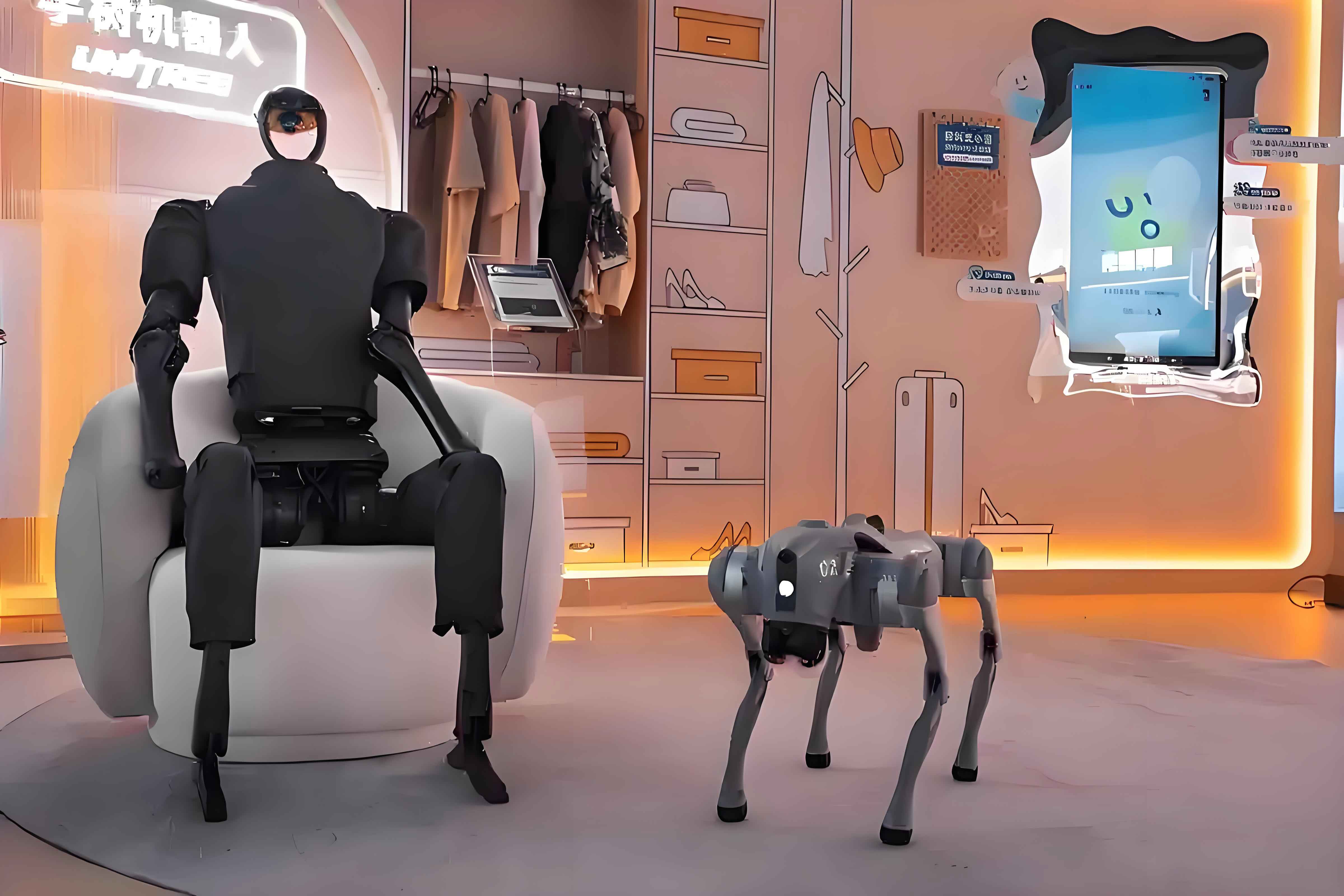
The application scenarios of humanoid robots span diverse fields, from healthcare and education to entertainment and military operations. In high-risk settings like medical care or financial services, humanoid robots handle sensitive data, such as health records or biometric information, increasing the potential for privacy harm. Conversely, in retail or entertainment contexts, the privacy risks may be lower. To systematically address these variations, I categorize privacy into two broad types based on typology theory: negative freedom privacy and positive freedom privacy. Negative freedom privacy encompasses bodily, spatial, communicative, and proprietary privacy, which relate to the right to be left alone. Positive freedom privacy includes knowledge, decision-making, associative, and behavioral privacy, which support personal autonomy and dignity. Humanoid robots impact both categories through data collection and interaction, but the effects are more pronounced in positive freedom privacy due to their ability to influence thoughts and decisions via AI-driven manipulation.
| Privacy Type | Description | Impact of Humanoid Robots |
|---|---|---|
| Bodily Privacy | Protection of physical body and biometric data from intrusion. | Humanoid robots can capture physiological features through sensors, invading personal space. |
| Spatial Privacy | Freedom from surveillance in private spaces like homes. | Humanoid robots move stealthily, recording activities in intimate settings. |
| Communicative Privacy | Security of personal communications from interception. | Humanoid robots transmit conversations to clouds, compromising confidentiality. |
| Proprietary Privacy | Use of property to shield information from view. | Humanoid robots penetrate barriers, rendering physical concealment ineffective. |
| Knowledge Privacy | Freedom to develop ideas without monitoring. | Humanoid robots, via AI, access thoughts through brain-computer interfaces. |
| Decision Privacy | Autonomy in making personal choices without coercion. | Humanoid robots manipulate decisions by exploiting cognitive vulnerabilities. |
| Associative Privacy | Right to form relationships without interference. | Humanoid robots influence social interactions based on data profiling. |
| Behavioral Privacy | Ability to act anonymously in public spheres. | Humanoid robots track and analyze behaviors, reducing anonymity. |
To quantify the privacy risks associated with humanoid robots, I propose a risk assessment formula that considers the probability of invasion and the potential impact. Let \( R \) represent the risk level, \( P \) the probability of a privacy breach, and \( I \) the impact severity. The relationship can be expressed as:
$$ R = P \times I $$
where \( P \) depends on factors like the humanoid robot’s sensor capabilities and data processing frequency, and \( I \) is influenced by the sensitivity of the data and the context of use. For example, in healthcare, \( I \) is high due to the critical nature of medical information, whereas in entertainment, \( I \) may be lower. This formula helps in prioritizing legal responses based on scenario-specific risks.
The European Union’s Artificial Intelligence Act provides a valuable framework for regulating AI risks, including those posed by humanoid robots. It classifies AI practices into unacceptable, high-risk, limited-risk, and minimal-risk categories. Unacceptable practices, such as manipulative AI, are prohibited because they use subliminal techniques or exploit vulnerabilities to distort behavior, directly threatening positive freedom privacy. High-risk AI systems, used in areas like biometric identification or critical infrastructure, require stringent oversight due to their potential harm to health, safety, and fundamental rights. Humanoid robots often fall into these high-risk categories when deployed in sensitive scenarios, amplifying privacy concerns. For instance, a humanoid robot used for emotional recognition in education could access students’ private feelings, while one employed in law enforcement might assess crime tendencies based on biased data.
In legal terms, addressing the privacy impacts of humanoid robots demands a multi-faceted approach. First, I advocate for clear informed consent standards to mitigate negative freedom privacy violations. Users must be fully aware of the humanoid robot’s capabilities, data usage policies, and risks before engagement. This can be modeled as a transparency index \( T \), where:
$$ T = \frac{C + A + R}{3} $$
Here, \( C \) represents clarity of information, \( A \) accessibility of alternatives, and \( R \) risk disclosure completeness. A higher \( T \) value indicates better consent practices, reducing the likelihood of covert invasions by humanoid robots.
Second, privacy rights should be extended to cover positive freedom aspects, such as knowledge and decision privacy. This aligns with broader personality rights under civil law, ensuring that humanoid robots do not undermine personal autonomy. I suggest a legislative expansion where privacy types are explicitly defined to include these dimensions, fostering a balance between innovation and protection.
Third, moderate regulation is essential for manipulative AI practices involving humanoid robots. Instead of outright bans, I recommend targeted oversight focused on hidden intentions that conflict with user goals. A regulatory threshold \( \theta \) can be set based on the deviation between AI-influenced behavior and user objectives, calculated as:
$$ \theta = |B_u – B_a| $$
where \( B_u \) is the user’s self-defined goal and \( B_a \) is the behavior induced by the humanoid robot. If \( \theta \) exceeds a certain limit, it indicates manipulative practice, triggering legal intervention.
Fourth, high-risk privacy scenarios necessitate governance rules, including dynamic risk assessments, strict liability under product responsibility, and algorithmic transparency. For humanoid robots in these settings, I propose a sandbox regulatory model where testing occurs in controlled environments before deployment. The effectiveness of such governance can be evaluated using an audit score \( S \), given by:
$$ S = \sum_{i=1}^{n} w_i \cdot f_i $$
where \( f_i \) represents factors like algorithm explainability and fairness, and \( w_i \) are their respective weights. Regular audits ensure that humanoid robots adhere to privacy standards, minimizing high-risk exposures.
Throughout this discussion, the term “humanoid robot” appears repeatedly to emphasize its central role in privacy debates. These machines are not merely tools but active agents that reshape human-environment interactions. By integrating AI, humanoid robots become capable of unprecedented data collection and influence, making privacy safeguards more critical than ever. In conclusion, as humanoid robots continue to evolve, legal systems must adapt through informed consent, extended privacy rights, moderate regulation, and scenario-specific governance. This proactive approach will help harness the benefits of humanoid robots while protecting individual freedoms in an increasingly automated world.