
A new industrial humanoid robot super factory has started production in Liuzhou, Guangxi, adding a large-scale manufacturing site to the fast-developing humanoid robot sector. The facility is designed for the Walker S series and Cruzr series of embodied intelligent industrial humanoid robots. It covers 14,000 square meters, stands 13.8 meters high, and is built around a production takt of one industrial humanoid robot every 10 minutes. Its annual planned capacity is more than 10,000 humanoid robots. The project describes the plant as the world’s first humanoid robot intelligent manufacturing benchmark factory adapted to 10,000-unit capacity, and it places the humanoid robot business at the center of a broader shift from prototype development and small-batch output toward scaled, standardized and digital production.
The start of production is significant because it concerns not only a single humanoid robot model but also the manufacturing system that supports repeated output. A humanoid robot is a complex assembly of mechanical structures, actuators, sensors, electronics, wiring, fasteners, software and testing requirements. Producing one humanoid robot at a laboratory pace is different from producing a humanoid robot repeatedly under a fixed takt, with traceability, mixed-model flexibility and logistics coordination. The Liuzhou plant is organized around that second challenge. It uses digital planning, factory-wide scheduling and a connected production chain to support the manufacture of industrial humanoid robots at a scale that the project describes as a new stage for the domestic humanoid robot industry.
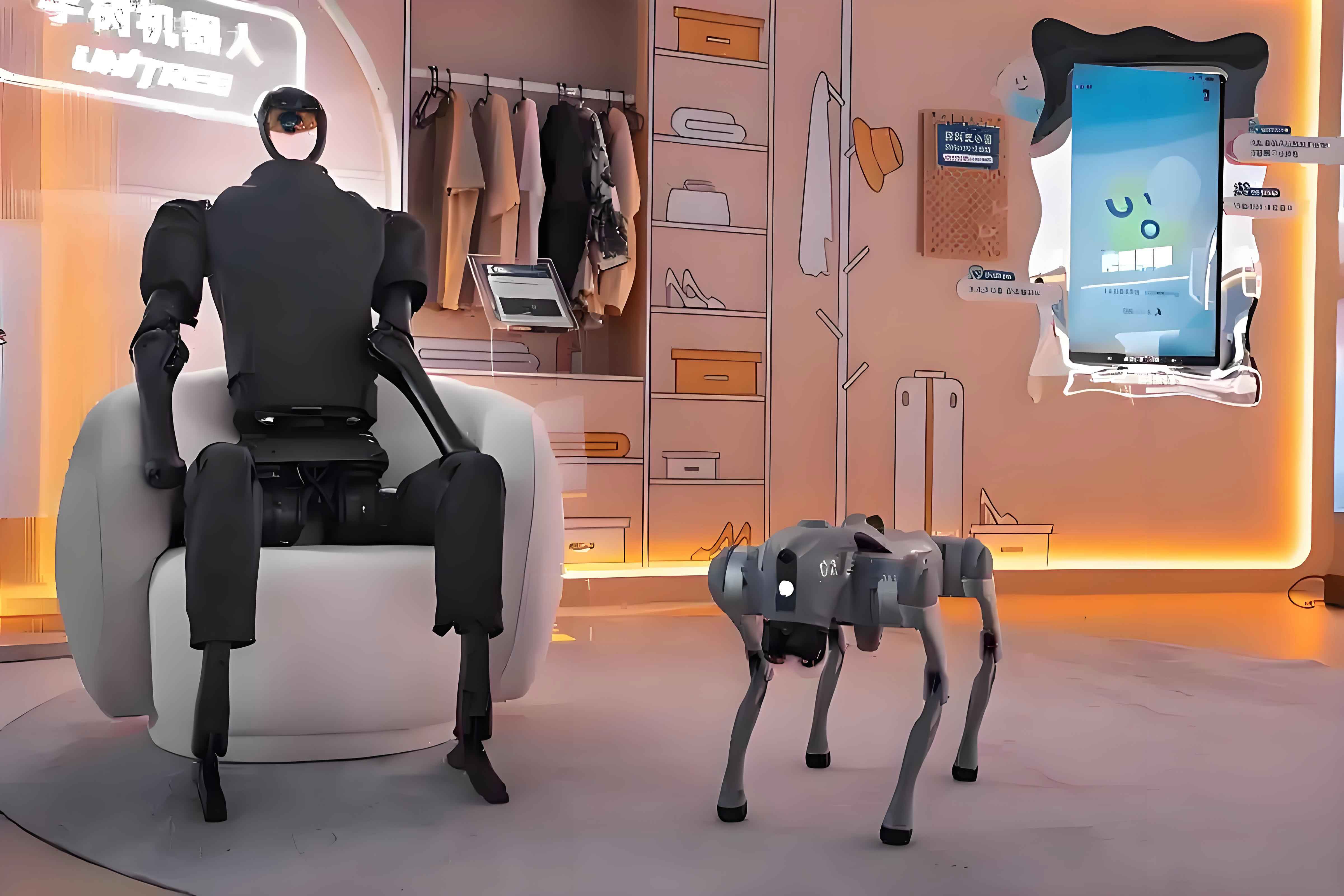
The factory’s core products are industrial humanoid robots intended for embodied intelligent industrial applications. The Walker S series and Cruzr series are the main production families. The plant is also designed for multi-model flexible mixed-line production, meaning that different humanoid robot models and configurations can be handled within a coordinated manufacturing flow. That flexibility matters for the humanoid robot industry because demand is expected to span multiple use cases, payload requirements, working environments and customer specifications. A factory that can adjust to different humanoid robot variants without abandoning the discipline of takt-based production is better positioned to serve a market that is still taking shape.
- A humanoid robot factory built for volume rather than demonstration alone
The Liuzhou facility is presented as a manufacturing landmark for the humanoid robot industry because it is organized around volume. Its design takt is 10 minutes per industrial humanoid robot, and its annual planned capacity exceeds 10,000 humanoid robots. These figures matter because they translate the humanoid robot story from individual prototypes into a production rhythm. A 10-minute takt implies that a humanoid robot must move through defined stages with coordinated material supply, assembly work, testing and logistics. The factory must maintain that rhythm while handling the variability that comes with complex humanoid robot assemblies.
For the humanoid robot sector, scale is not simply a matter of adding floor space. It requires a manufacturing system that can synchronize work orders, material delivery, quality control and traceability. The plant’s digital architecture is intended to do exactly that. The humanoid robot production line is not treated as an isolated set of stations. It is treated as a connected flow in which the status of each humanoid robot, each component and each production task can be coordinated. That approach supports the broader claim that the humanoid robot industry is moving from technical prototypes and small-batch production into a more standardized and digital phase.
The factory also reflects a change in how humanoid robot manufacturing is imagined. Instead of building a humanoid robot as a one-off engineering project, the plant is designed to repeat a manufacturing process. Repetition brings attention to fixture design, torque control, fastener supply, testing time, material handling and data records. Each of those elements becomes part of the humanoid robot production system. The result is a factory in which the humanoid robot is both the product and, in some production steps, part of the workforce that supports the product.
- Ten-minute takt and annual planned capacity above 10,000 humanoid robots
The production design takt of one industrial humanoid robot every 10 minutes is one of the clearest indicators of the plant’s intended operating model. A takt is not merely a speed target. It is a rhythm that connects every station, every material delivery and every quality check. For a humanoid robot factory, maintaining that rhythm requires that components arrive at the right time, that assembly tasks are balanced across stations, that testing does not become a bottleneck and that finished humanoid robots can be moved into storage and logistics without disrupting the line.
The annual planned capacity of more than 10,000 humanoid robots gives the factory a scale orientation. The figure is a planning target, not a statement of current output, but it frames the factory’s purpose. The humanoid robot line is intended to support a volume level that goes beyond pilot production. That intention shapes the choice of equipment, the layout of the floor, the design of the automated warehouse and the use of digital scheduling. The plant is built to handle a humanoid robot production program in which repeatability, throughput and traceability are central.
The combination of takt and capacity also affects how the humanoid robot factory uses space. The building is 13.8 meters high, which allows vertical use of the production area, and the footprint is 14,000 square meters. Within that space, the factory must fit assembly stations, testing areas, logistics routes, storage and digital control points. The production rhythm and the capacity target explain why the plant relies on coordinated logistics and why it includes an automated warehouse designed specifically for humanoid robot storage.
- Walker S and Cruzr series support multi-model humanoid robot production
The factory mainly produces the Walker S series and Cruzr series of embodied intelligent industrial humanoid robots. These product families represent the industrial humanoid robot focus of the plant. The use of a mixed-line model means the factory is designed to handle more than one humanoid robot type within a shared manufacturing system. Mixed-model production is important because industrial humanoid robot requirements can differ by task, configuration and application. A factory that can switch among humanoid robot variants while maintaining a common digital and logistical backbone gains flexibility.
Multi-model flexible mixed-line production is not only a product-mix strategy. It is also a test of the factory’s operating system. Work orders must be assigned correctly, materials must match the humanoid robot being built, tooling must adapt and quality records must remain tied to the correct unit. The factory’s digital scheduling and traceability systems are therefore closely linked to its ability to produce different humanoid robot models on the same line. The humanoid robot is not treated as a generic item; each unit carries its own configuration and production history.
The presence of Cruzr Y1 and Cruzr S2 humanoid robots in production tasks adds another layer. These embodied intelligent industrial humanoid robots participate in depalletizing, palletizing, loading and handling. In other words, humanoid robots are used within the humanoid robot factory. That does not mean the plant is fully autonomous, nor does it mean every task is performed by a humanoid robot. It means the factory has incorporated humanoid robot labor into specific material-flow and handling steps, demonstrating a robots-build-robots production concept in a practical industrial setting.
- A digital brain for humanoid robot manufacturing
The plant is supported by a digital manufacturing architecture built around the Yanshee MOM manufacturing operation management system, jointly developed by UBTECH and Siemens Digital Industrial Software. The system acts as a factory-wide digital brain, coordinating work order scheduling, material distribution and quality monitoring. For humanoid robot production, this kind of coordination is essential because a single humanoid robot contains many components and passes through multiple production and testing stages. The digital system provides a common layer of control across the factory.
According to the project description, the factory uses an industrial simulation system for intelligent planning and a digital smart brain for factory-wide scheduling. These systems support the digital closed-loop management of work orders, material delivery and quality control. In a humanoid robot factory, closed-loop management means that production instructions, material movements and quality results are connected rather than handled as separate paper or spreadsheet processes. That connection helps the factory maintain the 10-minute takt and the planned capacity for industrial humanoid robots.
The digital backbone also supports the humanoid robot factory’s traceability goal. Each humanoid robot receives a unique SN serial number, and the factory uses a one-item-one-code approach for full-process traceability. This means the production history of a humanoid robot can be linked to its serial number from early production stages through final testing and storage. For a complex humanoid robot, traceability is valuable because it allows production records, quality results and component information to remain associated with the finished unit. The humanoid robot is therefore not only assembled on a digital line; it is also recorded and tracked as an individual product.
- Humanoid robot labor on the production line
On the production floor, Cruzr Y1, Cruzr S2 and other embodied intelligent industrial humanoid robots take part in depalletizing, palletizing, loading and handling. These tasks are part of the material flow that supports humanoid robot assembly. The use of humanoid robots in these roles is consistent with the factory’s broader robots-build-robots concept. The humanoid robot is not only the output of the plant; it also appears as a participant in the movement of materials and components within the plant.
The production line also uses collaborative robots, assist manipulators, unmanned logistics vehicles and a 360-degree rotating tooling table. The rotating tooling table allows multi-angle precision assembly to be completed in place, which supports efficient work on a humanoid robot without unnecessary repositioning. Collaborative robots and assist manipulators help manage the physical demands of assembly, while unmanned logistics vehicles connect different parts of the production flow. The factory’s humanoid robot production model therefore combines specialized automation, human-machine collaboration and mobile logistics.
The involvement of humanoid robots in loading, unloading and handling should be understood in the context of the factory’s overall design. The humanoid robot is one element within a larger material-handling system that also includes automated guided vehicles, unmanned forklifts and unmanned logistics vehicles. The plant is designed to match the movement of materials to the rhythm of humanoid robot assembly. That coordination is important because a 10-minute takt leaves little room for material shortages or poorly timed deliveries. The humanoid robot factory must keep components flowing as steadily as the humanoid robots move through assembly.
- Precision assembly for more than 2,000 screws per humanoid robot
Each humanoid robot produced at the plant has more than 2,000 screws across more than 50 specifications. This detail illustrates why humanoid robot manufacturing requires specialized process control. Screw assembly is not a minor task when the product contains thousands of fasteners across many types. The factory has deployed an industry-first intelligent tightening system to manage screw supply, torque matching and data retention across the full process. The system is designed to bring intelligence and control to a task that would otherwise be difficult to standardize at humanoid robot production scale.
The intelligent tightening system supports the humanoid robot line by controlling which screw is used, how it is tightened and what data is retained. Torque matching is especially important because inconsistent tightening can affect the quality and reliability of a humanoid robot assembly. Data retention adds another layer by linking fastening results to the humanoid robot being built. In a factory designed for more than 10,000 humanoid robots per year in planned capacity, the ability to manage thousands of fasteners per unit through a controlled digital process is essential.
The scale of screw assembly also shows why humanoid robot production cannot be treated as a simple extension of conventional assembly. A humanoid robot has many joints, structural connections, covers, sensors and electronic components. The fastener requirements vary across the product. The factory’s intelligent tightening system is therefore part of the broader effort to standardize humanoid robot manufacturing without losing the precision required for each unit. The humanoid robot is a high-complexity product, and the assembly process must reflect that complexity while still maintaining a 10-minute takt.
- Quality control built around the reliability of each humanoid robot
Quality control at the plant includes more than 4 hours of complete-machine testing for each humanoid robot. The testing period is a significant part of the production flow because it must be integrated with the factory’s takt and capacity planning. A humanoid robot cannot be released simply because assembly is complete. It must pass through a structured testing process that checks the finished unit before it moves into storage or delivery. The 4-hour testing duration highlights the importance of validation in humanoid robot manufacturing.
The factory also uses an automotive-grade lighting inspection tunnel to complete 360-degree, no-blind-spot appearance screening. This inspection step is designed to check the external appearance of the humanoid robot across its full surface. For industrial humanoid robots, appearance inspection can reveal issues that may not be captured by functional testing alone. The use of an automotive-grade inspection environment indicates that the factory is applying disciplined visual quality control to humanoid robot production.
Quality monitoring is connected to the factory’s digital management system. The Yanshee MOM system supports quality monitoring as part of a closed-loop management approach. When testing and inspection data are tied to the humanoid robot’s unique SN serial number, the factory can maintain a record of the unit’s quality journey. That record is valuable for humanoid robot production because it supports traceability and continuous improvement. The humanoid robot factory is therefore designed not only to build units at a planned rate but also to document how each humanoid robot was built and tested.
- Automated storage and logistics for high-volume humanoid robot output
The plant includes a self-developed automated stereoscopic warehouse for humanoid robots. The warehouse covers only 65 square meters and can store 112 humanoid robots. Its space utilization is described as more than 50 percent higher than conventional approaches. The warehouse is an important part of the factory because humanoid robot production at a 10-minute takt and a planned annual capacity above 10,000 units requires efficient finished-product storage and movement. A compact, automated warehouse helps connect the end of the line to the rest of the logistics system.
The logistics system includes AGVs, Wali unmanned forklifts and Chitu unmanned logistics vehicles. Together they form a factory-wide intelligent logistics matrix that connects sub-assembly, final assembly, testing and storage. This matrix is designed to match the turnover requirements of 10,000-unit capacity. For humanoid robot manufacturing, logistics is not a secondary function. Components, sub-assemblies and finished humanoid robots must move in a coordinated way. If material flow lags, the takt cannot be maintained. If finished units cannot be stored efficiently, the end of the line can become constrained.
The automated warehouse and logistics matrix also support the factory’s flexible mixed-line model. Different humanoid robot models may require different storage and movement paths. A connected logistics system can help manage that complexity while maintaining a unified production rhythm. The humanoid robot factory is therefore built as an integrated system in which assembly, testing, storage and logistics operate together. The humanoid robot is moved through the factory with the same discipline that governs its assembly.
- Joint development with Siemens Digital Industrial Software
The factory was jointly built by UBTECH and Siemens Digital Industrial Software. The collaboration is centered on the Yanshee MOM manufacturing operation management system, which serves as the factory’s digital brain. The involvement of Siemens Digital Industrial Software highlights the importance of industrial software in humanoid robot manufacturing. A humanoid robot factory at this scale requires more than hardware; it requires simulation, scheduling, data management and process control.
The joint development approach also reflects the convergence of humanoid robot engineering and digital industrial software. The factory uses industrial simulation for intelligent planning and a digital scheduling system for factory-wide coordination. These tools are intended to support work order scheduling, material distribution and quality monitoring across the humanoid robot production chain. The humanoid robot is a complex product, and the factory’s software layer helps translate that complexity into a manageable production process.
The digital system is designed to support full-link digital closed-loop management. In practical terms, this means the factory can connect production instructions, material movements and quality outcomes. For humanoid robot manufacturing, that connection is important because each unit has its own configuration, serial number and production history. The factory’s digital layer helps ensure that the humanoid robot being built is matched with the right materials, processes and records. The humanoid robot factory is therefore a software-enabled manufacturing environment as much as it is an assembly site.
- Traceability from component flow to finished humanoid robot
Traceability is a central feature of the factory. Each humanoid robot receives a unique SN serial number, and the factory uses one-item-one-code traceability across the full process. This approach allows production records to remain associated with the individual humanoid robot. In a factory producing thousands of humanoid robots, traceability helps distinguish one unit from another and supports quality management. The humanoid robot is not treated as an anonymous output; it is tracked as a specific product with a specific production history.
Traceability also connects to the factory’s digital management system. Work orders, material delivery and quality monitoring are managed through the Yanshee MOM system, and the unique serial number provides a reference point for that data. For humanoid robot production, this is important because a single unit may pass through many stations, tests and handling steps. If quality data and material records are linked to the humanoid robot’s serial number, the factory can maintain a coherent record of the unit’s journey.
The one-item-one-code approach is part of the broader effort to standardize humanoid robot manufacturing. Standardization does not mean that every humanoid robot is identical. It means that the production process has defined steps, records and controls. The factory’s traceability system supports that discipline. The humanoid robot factory can therefore handle multiple models and configurations while keeping each unit identifiable and documented.
- Flexible manufacturing and the path to standardized humanoid robot production
The factory’s multi-model flexible mixed-line production model is one of its most important features. It allows different humanoid robot models to be produced within a shared manufacturing system. The factory uses a 360-degree rotating tooling table, collaborative robots, assist manipulators and unmanned logistics vehicles to support assembly and material flow. These elements are combined to maintain precision while accommodating product variation. For the humanoid robot industry, this flexibility is a practical requirement because industrial humanoid robot applications are diverse.
The path from prototype to standardized humanoid robot production involves more than product design. It involves process design, fixture design, data architecture, quality control and logistics. The Liuzhou plant addresses these areas through its digital planning, intelligent tightening system, testing tunnel, automated warehouse and connected logistics matrix. Each element supports the factory’s ability to produce humanoid robots at a planned scale. The humanoid robot is therefore manufactured within a system that is designed for repeatability.
The factory’s mixed-line capability also supports the idea that humanoid robot production will not be limited to a single configuration. Different industrial tasks may require different humanoid robot models, sensors, end effectors or structural arrangements. A factory that can handle mixed-model production is better prepared for that evolution. The humanoid robot production line can adapt to product changes while retaining a common digital and logistical foundation. That foundation is central to the factory’s role as a scalable humanoid robot manufacturing site.
- Humanoid robot factory specifications at a glance
The following table summarizes the principal specifications and production capabilities described for the humanoid robot super factory. It presents the factory’s scale, product focus, production rhythm, digital systems, assembly features, quality controls and logistics arrangements in a structured format.
Specification Area Details Factory location Liuzhou, Guangxi Factory footprint 14,000 square meters Building height 13.8 meters Primary products Walker S series and Cruzr series embodied intelligent industrial humanoid robots Production takt One industrial humanoid robot every 10 minutes Annual planned capacity More than 10,000 humanoid robots Manufacturing operation management system Yanshee MOM, jointly developed by UBTECH and Siemens Digital Industrial Software Digital capabilities Industrial simulation system for intelligent planning; digital smart brain for factory-wide scheduling; work order scheduling, material distribution and quality monitoring in a digital closed loop Traceability Unique SN serial number for each humanoid robot; one-item-one-code full-process traceability Assembly equipment Collaborative robots, assist manipulators, unmanned logistics vehicles and a 360-degree rotating tooling table Humanoid robot involvement Cruzr Y1, Cruzr S2 and other embodied intelligent industrial humanoid robots participate in depalletizing, palletizing, loading and handling Screw assembly More than 2,000 screws per humanoid robot across more than 50 specifications; intelligent tightening system for screw supply, torque matching and data retention Quality testing More than 4 hours of complete-machine testing per humanoid robot; automotive-grade lighting inspection tunnel for 360-degree appearance screening Automated warehouse 65 square meters; capacity for 112 humanoid robots; space utilization improved by more than 50 percent Logistics matrix AGVs, Wali unmanned forklifts and Chitu unmanned logistics vehicles connecting sub-assembly, final assembly, testing and storage The table shows that the humanoid robot factory is designed as an integrated manufacturing system. The humanoid robot production rhythm is linked to digital scheduling, precision assembly, quality testing and automated logistics. No single element can carry the factory’s planned capacity alone. The humanoid robot output depends on the coordination of all these elements across the production flow.
- What the humanoid robot plant signals for the industry
The start of production at the Liuzhou plant signals that the humanoid robot industry is paying closer attention to manufacturing systems. A humanoid robot can be demonstrated in a laboratory, but industrialized humanoid robot output requires a different set of capabilities. The factory’s design emphasizes takt, capacity, traceability, mixed-model flexibility and digital management. These are manufacturing concerns rather than purely robotic concerns. The humanoid robot becomes a product that must be assembled, tested, stored and moved within a disciplined factory environment.
The plant also illustrates how humanoid robot manufacturing can connect with broader industrial automation. Collaborative robots, AGVs, unmanned forklifts, unmanned logistics vehicles, automated storage and digital scheduling are all part of the factory’s production system. The humanoid robot is not isolated from these systems. It is produced within an environment that uses multiple forms of automation to support the line. That integration is important because humanoid robot production at scale requires more than robots alone; it requires a coordinated industrial ecosystem.
The humanoid robot sector has been moving through a period of rapid technical development. The Liuzhou plant adds a manufacturing dimension to that progress. Its 10-minute takt and annual planned capacity above 10,000 humanoid robots are planning targets, but they point to a factory designed for repeatable output. The humanoid robot industry’s next phase will depend not only on advances in robot capabilities but also on the ability to build humanoid robots consistently, document their production and move them through a scalable supply chain.
- Humanoid robot production as an ecosystem challenge
The humanoid robot factory demonstrates that production scale is an ecosystem challenge. A humanoid robot contains thousands of parts, and its assembly involves many process steps. The factory’s intelligent tightening system addresses the fastener level, while its digital management system addresses the factory level. The automated warehouse addresses finished-product storage, and the logistics matrix addresses material movement. These systems must work together to support the humanoid robot production rhythm. If one part of the chain falls out of step, the takt and capacity plan are affected.
The use of humanoid robots in depalletizing, palletizing, loading and handling adds a visible example of humanoid robot application within the factory. Cruzr Y1 and Cruzr S2 humanoid robots are part of the material flow. This arrangement does not remove the need for coordinated factory design; it reinforces it. The humanoid robot workforce must be integrated with the rest of the production system. The humanoid robot factory is therefore both a user and a producer of humanoid robot technology.
The factory’s digital architecture supports this ecosystem by providing a shared information layer. Work orders, materials and quality data are managed through the Yanshee MOM system, and each humanoid robot carries a unique SN serial number. That combination allows the factory to connect the physical humanoid robot with its production record. In a scaled humanoid robot manufacturing environment, that connection is essential for quality, traceability and process improvement.
- A measured milestone for the humanoid robot era
The Liuzhou plant is a measured milestone because it focuses on the manufacturing conditions needed for humanoid robot scale. It does not rely on a single headline specification. Instead, it combines factory footprint, building height, production takt, planned capacity, product families, digital management, precision assembly, testing, storage and logistics into one production system. The humanoid robot is the central product, but the factory’s success depends on how well those supporting systems operate together.
The project describes the plant as a step from technical prototypes and small-batch production into a scaled, standardized and digital mass production stage for the humanoid robot industry. That description captures the significance of the facility. The humanoid robot is moving from a demonstration object toward an industrial product that must be manufactured with repeatability and documented quality. The factory’s 10-minute takt and annual planned capacity above 10,000 humanoid robots provide a clear statement of intent.
As the humanoid robot industry continues to develop, manufacturing sites like this one will be judged by their ability to sustain output, maintain quality and adapt to different humanoid robot models. The Liuzhou factory has been designed around those requirements. It brings humanoid robot production into a digital, traceable and logistics-connected environment. The humanoid robot is no longer only an engineering prototype; it is also a product moving through a factory built for scale, precision and repeatability.