
As a researcher deeply immersed in the field of robotics, I have observed the rapid evolution of humanoid robots, which are emerging as a critical frontier in global technological competition and a new赛道 for future industries. In recent years, policy support has been emphasized as vital for advancing artificial intelligence technologies, providing strategic direction for the industrialization of cutting-edge areas like humanoid robots. Globally, the number of enterprises focused on humanoid robot本体 has surpassed 220, with half of them based in one major country, highlighting its significant role. Since the release of national guidelines for innovation in humanoid robots, various local governments have introduced supportive policies and strategic plans. In a prominent metropolitan area, humanoid robots are identified as a key future industry, with enhanced policy backing to drive innovation and commercialization. Leveraging abundant innovative resources, this region has quickly given rise to numerous humanoid robot startups and cross-sector companies, establishing itself as a hub for humanoid robot innovation. However, the development of humanoid robots in this area still faces multiple challenges and issues. As the implementation of a new action plan for embodied intelligence begins, it is crucial to accelerate innovation in the humanoid robot industry. In this article, I analyze the challenges and problems from perspectives such as software and hardware bottlenecks, data supply and demand, supply chains, and the business environment, and propose targeted recommendations to inform policy-making for the humanoid robot sector.
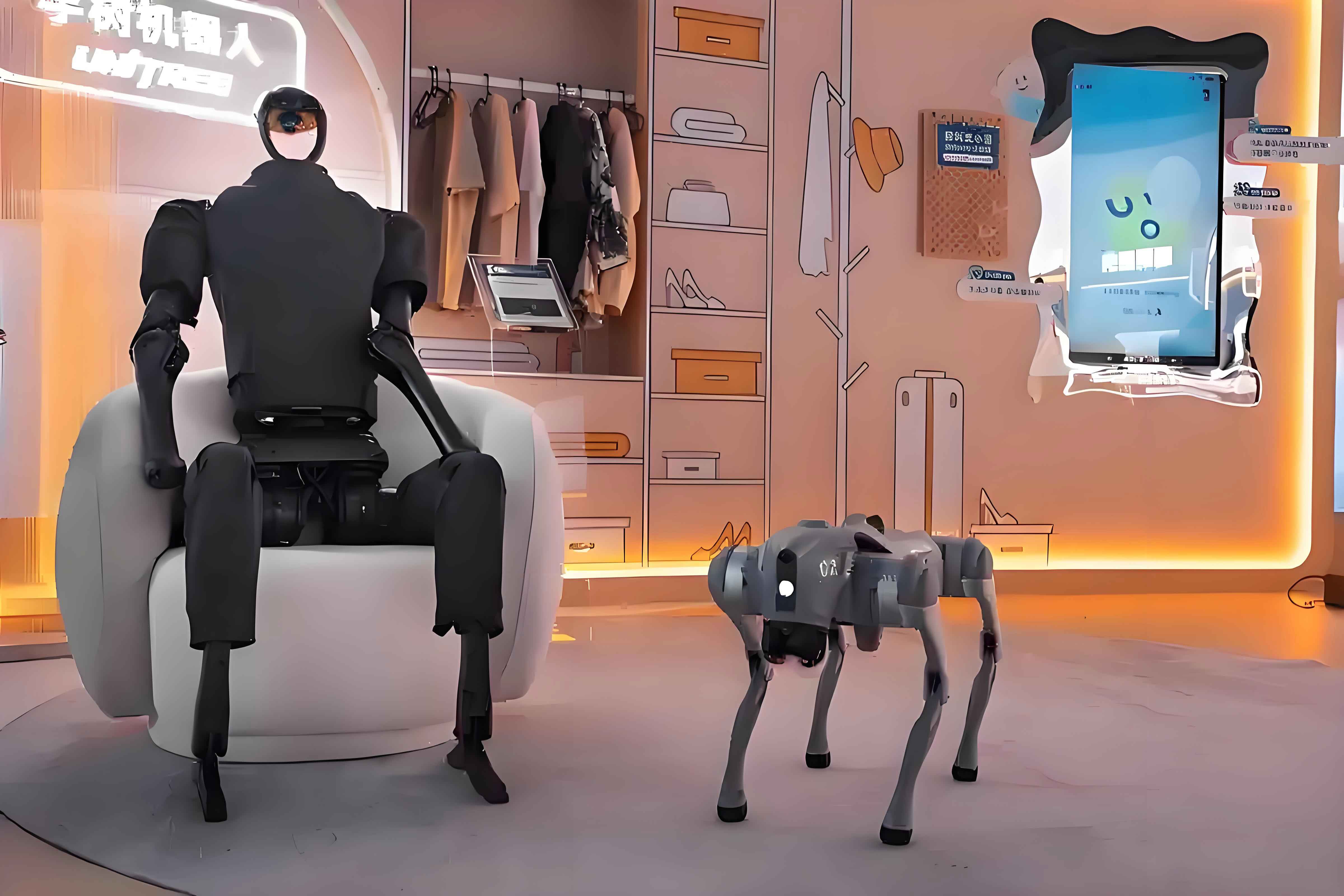
The development of humanoid robots in this urban center is supported by a robust policy framework aimed at high-end leadership and driven by scenario applications. For instance, action plans for robot industry innovation and AI initiatives have been implemented, along with regional strategies focused on embodied intelligence. A recent embodied intelligence action plan sets clear goals, such as breaking through over 100 key technologies in areas like embodied brain models, chips, and full-body motion control by 2027, and achieving basic domestic localization of the upstream and downstream产业链 for humanoid robots. To support core technology research, government investment funds have been established, providing financial assistance, policy guidance, platform support, and site benefits. These funds not only offer direct investment to help companies tackle technical challenges and innovate products but also leverage industrial resources to empower invested firms across the entire产业链, facilitating connections with application scenarios in smart manufacturing and healthcare, and promoting international cooperation.
This region boasts a concentration of top-tier innovation sources, including prestigious universities and research institutions dedicated to robotics. For example, one university has been a pioneer in robot research, with several humanoid robot本体 enterprises founded by its alumni. Key laboratories focused on bionic robots, multi-modal AI systems, and service robotics serve as innovative forces for the humanoid robot industry. In terms of patent technology, the area leads nationally in humanoid robot patents, accounting for a significant portion of valid invention patents. According to reports, multiple institutions here rank among the top 10 globally and domestically in humanoid robot patent technology, underscoring their technological prowess.
A relatively complete产业链 layout has初步 formed, covering core component R&D, whole machine manufacturing, system integration, and multi-scenario applications. The upstream segment聚集 software development enterprises for embodied intelligence large models, along with producers of basic components and core parts like high-precision sensors and electric drive joints. The midstream includes a batch of humanoid robot startups and cross-sector companies. Additionally, industry leaders have jointly established innovation centers for embodied intelligent robots, bringing together top scientists and engineers to focus on key common technologies and ecosystem building. Currently, this urban center has the highest number of humanoid robot本体 enterprises domestically, with specific districts hosting hundreds of embodied intelligence firms and dozens of whole-machine manufacturers, covering a complete production chain from software and basic components to whole machine manufacturing. Application scenarios for humanoid robots are accelerating in areas such as guide services, logistics, industry, healthcare, elderly care, and emergency rescue. For instance, a data training center for humanoid robots has been set up, deploying typical application scenarios like home health monitoring. The industrial layout plans to form clusters around science cities and robot industrial parks.
To summarize the current state, I present a table illustrating the types of humanoid robot enterprises in various regions, though specific names and addresses are omitted to maintain generality.
| Serial Number | Company Type | Foundation Year | Headquarters Region |
|---|---|---|---|
| 1 | Pioneer Enterprise | 2015 | Northern China |
| 2 | Startup | 2023 | Northern China |
| 3 | Startup | 2023 | Northern China |
| 4 | Startup | 2023 | Northern China |
| 5 | Startup | 2023 | Northern China |
| 6 | Startup | 2023 | Northern China |
| 7 | Cross-sector Enterprise | 2023 | Northern China |
| 8 | Pioneer Enterprise | 2010 | Eastern China |
| 9 | Pioneer Enterprise | 2015 | Eastern China |
| 10 | Pioneer Enterprise | 2015 | Eastern China |
| 11 | Startup | 2023 | Eastern China |
| 12 | Startup | 2023 | Eastern China |
| 13 | Pioneer Enterprise | 2012 | Southern China |
| 14 | Pioneer Enterprise | 2016 | Southern China |
| 15 | Cross-sector Enterprise | 2022 | Southern China |
| 16 | Startup | 2022 | Southern China |
| 17 | Pioneer Enterprise | 2016 | Eastern China |
Despite these advancements, the innovation and development of humanoid robots face several challenges. Firstly, the technical path for humanoid robots remains unclear, with embodied intelligence large models becoming a key bottleneck. Although embodied large models combined with robots are evolving rapidly and diversifying globally—such as large language models (LLMs), multimodal visual language models (VLMs), and end-to-end embodied large models—the effectiveness of AI large models in humanoid robots falls short of the ideal for embodied intelligence. The main issue is that these models, based on perceptual data like text, video, and audio, lack deep understanding of the world, particularly in terms of time, space, and physical laws. There is no consensus on the path to achieving artificial general intelligence (AGI), making embodied intelligence models the most critical technical bottleneck to overcome. For example, the motion control of humanoid robots often relies on complex algorithms that can be represented by equations like the dynamics equation: $$ \tau = M(q)\ddot{q} + C(q, \dot{q})\dot{q} + g(q) $$ where $\tau$ is the torque vector, $M(q)$ is the mass matrix, $C(q, \dot{q})$ is the Coriolis matrix, and $g(q)$ is the gravitational vector. This highlights the need for improved model generalization in humanoid robots.
Secondly, there is still a reliance on imports for high-end core components such as chips. While hardware technology for humanoid robots is gradually converging, and domestic production has基本上 achieved substitution for core parts like servos, reducers, and controllers, high-end components often depend on foreign sources. Most humanoid robot本体 enterprises use chips from international giants, as domestic chips tend to be larger, more energy-intensive, and generate more heat, unable to meet the computational demands for algorithm training and model iteration. Experts note that the algorithmic gap with leading countries is narrow, but disparities in training and inference compute power persist, largely due to chip limitations. Although alternative technologies offer hope, performance gaps remain in components like servo motors and harmonic reducers compared to those from advanced nations. This can be quantified using a performance index formula for core components: $$ P = \frac{T}{\omega \cdot \eta} $$ where $P$ is the performance score, $T$ is torque density, $\omega$ is weight, and $\eta$ is efficiency. For humanoid robots, achieving high $P$ values is essential for competitiveness.
Thirdly, the lack of high-quality datasets is a major pain point for enterprises. Humanoid robots exhibit some intelligence in mobility, manipulation, and interaction but lack generality, requiring embodied intelligence empowered by massive data training for complex decision-making, action generalization, and human-robot interaction. The severe shortage of standardized, scalable, and high-quality基础训练数据 impedes the deployment of humanoid robots. Some companies have initiated efforts to build open-source datasets and collect scenario data, while others use synthetic data as a workaround. Recently, a data training center for humanoid robots was established, deploying hundreds of humanoid robots and data collection devices across typical application scenarios to generate millions of multi-modal high-value real data annually. However, issues persist: real-world data collection is costly, involving diverse test scenarios, deployment of multiple humanoid robots, and significant investment in facilities, maintenance, manpower, and time. It is challenging to replicate actual commercial service environments 1:1 in training grounds, failing to meet the demand for high-quality data. Data annotation standardization is also problematic due to the multi-modal and multi-source nature of embodied intelligence datasets, requiring unified standards and substantial professional human input, which increases costs and affects quality and efficiency. Additionally, data adaptation for embodied intelligence is more difficult than for autonomous driving due to environmental complexity, task diversity, interaction depth, and dataset differences. There is also a shortage of professional operators and data collectors, necessitating knowledge training.
From my analysis, the main problems in the innovation and development of humanoid robots include the prevalence of startup enterprises facing high risks. Most humanoid robot本体 companies in this urban center are startups, whereas other regions have pioneer enterprises with years of accumulation. Humanoid robots involve multiple交叉 domains and are highly systematic, requiring solutions to numerous key technical bottlenecks and common challenges. Startups must overcome technical hurdles while facing market and financial risks. Identifying clear target markets and securing early adopters is crucial but difficult when specific application scenarios for humanoid robots are uncertain. For instance, companies report that finding scenarios independently is costly and hope for government support in connecting with application enterprises. Moreover, heavy investment in R&D, manufacturing, and marketing relies on financing, exposing startups to high financial risks. This risk can be modeled using a simple financial risk equation: $$ R = \frac{D}{E} \cdot \sigma $$ where $R$ is the risk score, $D$ is debt, $E$ is equity, and $\sigma$ is the volatility of returns. For humanoid robot startups, high $R$ values indicate vulnerability.
Another issue is the weak hardware supply chain, which affects R&D iteration efficiency. A stable local supply chain is essential for the升级迭代 of humanoid robot本体. Other regions benefit from mature electronics manufacturing, precision machinery, and supply chain systems, becoming main bases for humanoid robot production, with key component suppliers concentrated there. In contrast, the local area has not formed industrial aggregation for basic robot components, and the hardware ecosystem is weak, providing insufficient support for humanoid robot本体 enterprises. The strength of the local产业链 lies in AI large models and software solutions, while hardware depends on enterprises from other regions. For example, joint motors for humanoid robots are often procured from distant areas, leading to time costs in logistics and debugging during prototype modifications. In a fast-iterating environment for humanoid robots globally, this could hamper R&D efficiency. The impact on iteration time $t$ can be expressed as: $$ t = t_0 + \Delta t \cdot \log(S) $$ where $t_0$ is the base iteration time, $\Delta t$ is the delay factor, and $S$ is the supply chain complexity. Reducing $S$ is critical for humanoid robot development.
Furthermore, the integration of innovation and产业链 is weak, potentially affecting future benefits. The region possesses top research resources in humanoid robots, but due to hardware supply chain shortcomings and weak industrialization capabilities, technology spillovers are evident. The fusion of innovation and产业链 is poor, resulting in a spatial pattern where “R&D occurs locally, but industrialization happens elsewhere.” Many core technological achievements are commercialized through产业链 in other regions, leveraging their value. For instance, a general humanoid robot platform developed by a local innovation center is led by an enterprise based elsewhere, with technology and production capacity布局 in other cities. Similarly, some local companies rely on automotive产业链 support from other regions, establishing production bases there to ensure stable mass delivery. Humanoid robots are a key future industry for this urban center, with action plans aiming to expand industry scale, achieve mass production of thousands of units, and cultivate a cluster worth billions. Cost control is crucial for scaling up; currently, mass production scale is small, so supply chain weaknesses have limited impact on cost control, but as scale increases rapidly, whole machine manufacturing cost issues may emerge. Long-term, without a complete产业链, even with technological leadership, the region may capture limited value from industrial增值环节. Moreover, this “R&D locally, industrialization elsewhere” pattern could lead to outflows of high-end manufacturing talent as industrialization bases solidify in other regions. As humanoid robot technology converges, other areas may enhance R&D capabilities through industry-academia collaboration, building complete industrial closed loops and squeezing the development space for humanoid robots in this region.
Lastly, government service awareness needs strengthening, and the business environment requires further optimization. To build a nationally leading robot technology innovation and industrial聚集地, the local government has introduced a series of policies, supported the creation of embodied intelligence industrial zones, established future industry funds, built innovation centers, and hosted international competitions like world robot marathons. However, the industrial strategy for humanoid robots tends to emphasize R&D innovation over industrialization落地. Additionally, many details in cultivating key enterprises and enhancing service awareness need improvement. Humanoid robot enterprises face lengthy processes and high upfront costs when applying for government financial subsidies, involving complex material preparation, multi-level reviews, and supervision, requiring significant human and material resources for application drafting, which increases time and financial burdens. In comparison, other regions simplify processes through one-click applications, reducing enterprise burdens and making policy implementation more efficient. This disparity highlights shortcomings in policy execution convenience and fund utilization efficiency, potentially slowing R&D pace and weakening the incentive effect of subsidies on technological innovation for humanoid robots.
To address these challenges and problems, I propose several paths to promote the innovation and development of humanoid robots. First, strengthen basic research and key core technology攻关 in embodied intelligence software and hardware. As a leader in embodied intelligence large models domestically, this region bears the responsibility of advancing embodied intelligence combined with humanoid robots and urgently needs to clarify the technical path for humanoid robots. Increase support for basic research and key common technologies in humanoid robots, focusing on breakthroughs in software aspects like advanced multi-modal perception fusion, embodied intelligence large models, and motion control algorithms to enhance the generalization ability of humanoid robots. Vigorously support technology攻关 in core components and hardware such as high-end chips, reducers, sensors, and servo systems, and promote innovative research integrating frontier sciences like brain-like intelligence, materials science, and AI with robotics. Actively carry out “unveiling the list and appointing leaders” projects in the humanoid robot field, posting global challenges to attract top research teams and enterprises to participate in technology攻关, driving the resolution of technical difficulties. For example, the optimization of motion control can be described by a cost function: $$ J = \int (x^T Q x + u^T R u) dt $$ where $J$ is the cost, $x$ is the state vector, $u$ is the control input, and $Q$ and $R$ are weighting matrices, which is crucial for humanoid robot stability.
Second, reinforce the cultivation of key enterprises and reduce R&D risks for startups. Enhance policy support for key cultivated enterprises in humanoid robots, utilize industrial development investment funds effectively, and employ equity investment and venture capital to meet funding needs at different stages, lowering R&D risks. Provide financial support like R&D subsidies and rewards for small and medium-sized innovative enterprises in humanoid robots to conduct core technology R&D, helping them break through development bottlenecks and reduce R&D risks. Support enterprises in talent introduction and cultivation, attract high-end talent, and offer配套 services. Assist enterprises in participating in international standard setting to enhance the global discourse power of the local humanoid robot industry. A risk mitigation model can be applied: $$ \text{Risk Reduction} = \frac{\text{Support Funds}}{\text{Total R&D Cost}} \times \text{Efficiency Factor} $$ where higher values benefit humanoid robot startups.
Third, take multiple measures to help enterprises solve dataset and scenario challenges. Accelerate the formulation of standardized guidance documents for humanoid robots and promote the落地 of dataset standards. Build an open-source ecosystem for humanoid robot data, strengthen the construction of data training bases, and explore models combining open-source开放 of基础数据集 with high-level data transactions. Actively cultivate startup enterprises focused on基础场景数据 and solutions for humanoid robots. Increase support on both the supply and demand sides for humanoid robot scenarios. Strongly support meeting the scenario needs of humanoid robot enterprises. Establish humanoid robot training centers to address structured and common scenario requirements. By supporting connections between humanoid robot enterprises and scenario-related companies in fields like healthcare and logistics, utilizing idle capacity, and providing funding subsidies, meet differentiated and personalized scenario needs. Intensify the demonstration and promotion of humanoid robot application scenarios, promote scenario opening, and support innovation in application scenario models. Encourage exploration of “humanoid robot +” innovative application scenarios and business models, such as piloting drone and ground delivery robot coordination to solve last-mile logistics issues. Actively implement policies for the “first trial and first use” and leasing of humanoid robots, encourage the organization of innovation competitions and创业孵化 activities, and promote the application of humanoid robots in emergency rescue, smart logistics, and cultural entertainment, facilitating differentiated development in scenario落地 for humanoid robot enterprises.
Fourth, focus on building local hardware industrial聚集区 and strengthen产业链 coordination within the broader regional framework. Increase efforts to create industrial parks and聚集区 for core components of embodied intelligence, gather ecological enterprises in embodied intelligence and smart manufacturing—such as those producing tactile sensors and reducers—to set up R&D and manufacturing bases locally, and promote the aggregation of the产业链 and supply chain for humanoid robots by addressing hardware shortcomings. Enhance regional coordination for embodied intelligence industries, advance coordinated planning, policy synergy, and project落地 across the region. Build an embodied intelligence industrial cluster, plan and construct several humanoid robot industrial parks, encourage local hardware component enterprises related to embodied intelligence to establish production bases in neighboring areas, and explore pilot programs for tax revenue sharing agreements to fully utilize resource advantages across the region, forming a pattern of regional industrial synergy and strengthening cluster effects for humanoid robots. Support enterprises, universities, and research institutions in forming alliances for the humanoid robot industry, conduct activities like standard setting and scenario collection demonstrations, and promote coordinated industrialization of humanoid robots in the region.
Fifth, strengthen policy coordination and take multiple measures to solve the integration problem of innovation and产业链. Enhance policy coordination, accelerate the construction of a closed-loop ecosystem of “local R&D + regional transformation,” and open up the entire chain from R&D to industrialization for humanoid robots. Increase incentives for the transformation and落地 of achievements in humanoid robots, prioritize the local落地 of科技成果 from universities and research institutions, and require enterprises receiving major municipal project support to locate a certain proportion of production capacity locally. Improve the innovation ecosystem for humanoid robots, vigorously promote platform construction for technology collaborative innovation, data open-source开放, concept verification, and pilot testing, refine and substantiate platform functions, enhance service efficiency, and build a complete产业链 from software to hardware and from manufacturing to services for humanoid robots. Set up platforms for government-industry-academia-finance对接 to facilitate integration and exchange among research institutions, enterprises, financial institutions, and the government in the humanoid robot sector, promoting collaborative攻关 and linking innovation and产业链 for humanoid robots.
Sixth, improve the ability to serve and empower enterprises and further optimize the business environment. Increase government attention to the industrialization落地 of humanoid robot enterprises and enhance the ability to serve and empower enterprises. Further optimize the business environment, aiming to “reduce burdens” and “empower” enterprises through bidirectional efforts, providing full-lifecycle value-added services. Actively implement intelligent government service methods, conduct enterprise research proactively, accurately identify enterprise needs, and focus on solving practical problems, such as shortages of public rental housing indicators for employees, difficulties in children’s education, R&D funding issues, and data scenario adaptation challenges for humanoid robots. A service efficiency metric can be defined as: $$ E_s = \frac{\text{Number of Issues Resolved}}{\text{Total Issues Reported}} \times 100\% $$ where higher $E_s$ values indicate better support for humanoid robot enterprises.
In conclusion, the development of humanoid robots in this urban center holds great promise but requires concerted efforts to overcome technical, supply chain, data, and policy hurdles. By addressing these areas, we can foster a thriving ecosystem for humanoid robots, ensuring sustainable growth and global competitiveness. The repeated emphasis on humanoid robots throughout this analysis underscores their importance as a transformative technology, and I am confident that with the right strategies, this region can lead the way in advancing humanoid robot innovation.