
As a researcher and practitioner in the field of construction automation, I have observed the transformative potential of intelligent robot technology in addressing longstanding challenges in the building industry. Traditional construction methods, which heavily rely on manual labor, often struggle with inefficiencies, safety hazards, and quality inconsistencies. The integration of intelligent robots—equipped with automation, artificial intelligence, and advanced sensor systems—offers a promising solution to these issues. In this article, I will explore how intelligent robots are revolutionizing construction processes, focusing on their technological foundations, advantages, and innovative applications. Through detailed analysis, including mathematical models and comparative tables, I aim to demonstrate how these systems enhance productivity, precision, and safety. The adoption of intelligent robot technology not only mitigates risks associated with human labor but also paves the way for a more sustainable and intelligent construction ecosystem.
Intelligent robots represent a convergence of multiple disciplines, including robotics, computer vision, and data analytics. These systems are designed to perceive their environment, make decisions, and execute tasks autonomously. A typical intelligent robot in construction comprises several integrated modules: a main controller that orchestrates operations, environmental monitoring sensors for real-time data collection, localization systems for accurate navigation, vision modules for image recognition, voice interfaces for human-robot interaction, data storage for historical analysis, and power modules for sustained operation. For instance, the environmental monitoring module uses sensors like LiDAR and cameras to capture spatial data, enabling the robot to adapt to dynamic site conditions. The localization module often employs techniques such as simultaneous localization and mapping (SLAM), which can be modeled using probabilistic equations. For example, the robot’s position estimation can be represented as:
$$p(x_t | z_{1:t}, u_{1:t})$$
where \(x_t\) is the robot’s state at time \(t\), \(z_{1:t}\) are observations, and \(u_{1:t}\) are control inputs. This allows the intelligent robot to navigate complex terrains with minimal human intervention. Moreover, the vision module utilizes convolutional neural networks (CNNs) for object detection, with an accuracy that can exceed 95% in ideal conditions. The power module, often based on lithium-ion batteries, ensures operational longevity, supporting continuous work cycles of up to 8-10 hours. By leveraging these components, intelligent robots can perform tasks ranging from material handling to precision assembly, reducing reliance on manual labor and minimizing errors.
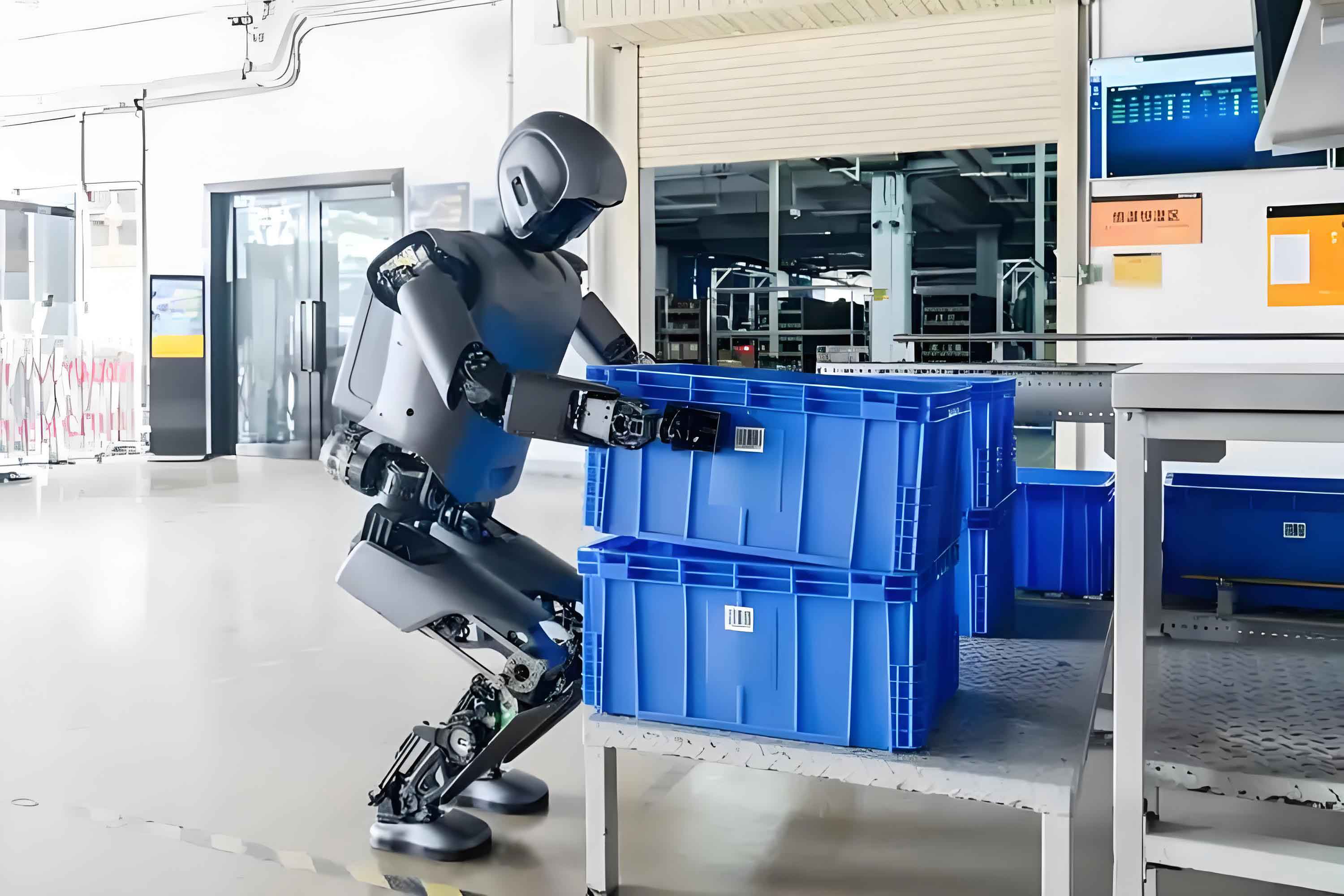
The advantages of deploying intelligent robots in construction are multifaceted, encompassing efficiency, quality, and risk reduction. In terms of efficiency, intelligent robots can operate continuously without fatigue, leading to significant time savings. For example, in bricklaying tasks, an intelligent robot can place up to 1,000 bricks per hour, compared to 300-400 bricks by a human worker. This efficiency gain can be quantified using a simple productivity model:
$$\text{Productivity Gain} = \frac{\text{Robot Output} – \text{Human Output}}{\text{Human Output}} \times 100\%$$
Applying this, the productivity increase often exceeds 150%. Additionally, intelligent robots optimize resource utilization through real-time data analysis, reducing material waste by up to 20%. The following table compares key performance metrics between traditional methods and intelligent robot-assisted construction:
| Metric | Traditional Method | Intelligent Robot System |
|---|---|---|
| Task Completion Time (hours) | 100 | 40 |
| Error Rate (%) | 5-10 | 1-2 |
| Safety Incident Frequency | High | Low |
| Material Waste (%) | 15 | 5 |
In terms of quality, intelligent robots ensure high precision through closed-loop control systems. For instance, in concrete pouring, sensors monitor slump and consistency, adjusting parameters in real time to meet specifications. The quality control can be expressed as a function of tolerance levels:
$$\text{Quality Score} = 1 – \frac{\text{Measured Deviation}}{\text{Allowable Tolerance}}$$
With intelligent robots, deviations are often kept within ±1 mm, resulting in quality scores above 0.98. Furthermore, the risk reduction aspect is critical; intelligent robots can operate in hazardous environments, such as high-altitude areas or confined spaces, reducing worker exposure to accidents. Statistical models show that the probability of incidents decreases exponentially with robot integration:
$$P(\text{incident}) = e^{-\lambda t}$$
where \(\lambda\) is the risk reduction factor, and \(t\) is time. In practice, projects using intelligent robots have reported up to a 40% decline in safety-related delays.
One of the most impactful innovations is automated building assembly using intelligent robots. These systems employ multi-axis robotic arms, automated guided vehicles (AGVs), and 3D scanning technologies to assemble prefabricated components with millimeter-level accuracy. For example, in a high-rise construction scenario, an intelligent robot can position steel beams weighing over 500 kg at a rate of 5 units per hour, compared to 2 units manually. The assembly process involves kinematic models for the robotic arm, such as:
$$\theta = f^{-1}(x)$$
where \(\theta\) represents joint angles and \(x\) is the desired end-effector position. This inverse kinematics approach ensures precise placement. Moreover, the integration with Building Information Modeling (BIM) allows for real-time adjustments based on digital twins. The efficiency of automated assembly can be summarized in the following table, highlighting time and cost savings:
| Assembly Task | Manual Duration (days) | Intelligent Robot Duration (days) | Cost Reduction (%) |
|---|---|---|---|
| Steel Frame Erection | 30 | 12 | 35 |
| Concrete Panel Installation | 25 | 10 | 40 |
| Electrical System Integration | 15 | 6 | 30 |
Another key application is intelligent measurement robots, which utilize LiDAR, photogrammetry, and inertial measurement units (IMUs) to perform high-precision surveys. These robots can capture 3D point clouds of construction sites, processing data at rates of up to 2 million points per second. The measurement accuracy is governed by error propagation models, such as:
$$\sigma_{\text{total}} = \sqrt{\sigma_{\text{sensor}}^2 + \sigma_{\text{environment}}^2}$$
where \(\sigma_{\text{sensor}}\) is sensor error and \(\sigma_{\text{environment}}\) accounts for external factors. In practice, intelligent measurement robots achieve accuracies of ±1 mm, enabling precise as-built verification. For instance, in a bridge construction project, these robots reduced survey time by 70% compared to traditional methods. The data collected are often integrated with GIS and BIM platforms, facilitating automated progress tracking and quality assurance.
Intelligent spraying robots represent a significant advancement in finishing tasks, such as painting and coating. These robots are equipped with adjustable nozzles, flow control systems, and machine learning algorithms to optimize spray patterns based on surface geometry. The coating thickness uniformity can be modeled using a Gaussian distribution:
$$T(x) = \frac{Q}{2\pi\sigma^2} e^{-\frac{x^2}{2\sigma^2}}$$
where \(T(x)\) is thickness at position \(x\), \(Q\) is material flow rate, and \(\sigma\) is the spray dispersion parameter. Intelligent spraying robots maintain thickness variations within ±5%, compared to ±20% manually. In large-scale projects, such as commercial building facades, these robots can cover over 1,500 m² per hour, reducing labor costs by 50% and minimizing VOC emissions. The following table outlines performance metrics for intelligent spraying robots:
| Parameter | Manual Spraying | Intelligent Robot Spraying |
|---|---|---|
| Coverage Rate (m²/h) | 500 | 1,500 |
| Material Usage Efficiency (%) | 60 | 85 |
| Uniformity Score (0-1) | 0.7 | 0.95 |
Intelligent transport and material handling robots are revolutionizing logistics on construction sites. These robots, often based on AGVs or autonomous mobile robots (AMRs), use path planning algorithms like A* or Dijkstra’s to navigate dynamically. The path optimization can be formulated as:
$$\min \sum_{i=1}^{n} c(i, i+1)$$
where \(c(i, i+1)\) is the cost between nodes \(i\) and \(i+1\). In real-world applications, intelligent transport robots can move materials like rebar and concrete blocks at speeds of up to 1.5 m/s, reducing waiting times by 60%. They also incorporate load sensors to prevent overloading, with capacity limits modeled as:
$$L_{\text{max}} = k \times \text{Base Capacity}$$
where \(k\) is a safety factor. By integrating with IoT networks, these robots enable just-in-time delivery, cutting inventory costs by 25%. The deployment of intelligent robots in transport not only enhances efficiency but also minimizes physical strain on workers, contributing to a safer work environment.
In conclusion, the integration of intelligent robot technology in construction automation marks a paradigm shift toward smarter, safer, and more efficient building practices. From automated assembly and precision measurement to optimized spraying and material handling, intelligent robots address core industry challenges. Mathematical models and empirical data confirm substantial improvements in productivity, quality, and risk management. As someone deeply involved in this field, I believe that continued innovation in intelligent robot systems—such as enhanced AI algorithms and better sensor fusion—will further accelerate the adoption of automation. The future of construction lies in embracing these technologies to create resilient and sustainable infrastructures, ultimately transforming how we build our world.