
My research and clinical practice are driven by the urgent need to develop more effective, engaging, and scalable interventions for children diagnosed with Autism Spectrum Disorder (ASD). ASD is characterized by persistent challenges in social communication and interaction, alongside restricted, repetitive patterns of behavior, interests, or activities. The heterogeneity of the condition makes a one-size-fits-all approach ineffective, and many conventional therapies, while beneficial, can be resource-intensive and sometimes fail to maintain a child’s sustained motivation. The core deficits in social-emotional reciprocity and joint attention are particularly challenging to address. My work explores the integration of advanced technologies into therapeutic frameworks, with a specific focus on the role of the humanoid robot as a catalyst for change when combined with interactive motion-sensing gaming environments.
The rationale is rooted in the unique affordances of these technologies. Motion-sensing games, which translate a user’s physical movements into in-game actions without traditional controllers, offer a powerful medium for promoting motor coordination, body awareness, and goal-directed action in a structured yet playful context. However, while these games can improve specific skills, they often lack the explicit social agent necessary to generalize learned behaviors to human-to-human interactions. This is where the humanoid robot becomes pivotal. With its predictable, simplified, and less socially threatening presence, a humanoid robot can serve as an ideal transitional social partner. It can model behaviors, initiate and respond to interactions, and provide consistent, patient reinforcement—acting as a bridge between the non-social digital world and the complex social human world.
The primary objective of my intervention model is to leverage this synergy. I hypothesize that a structured program combining the motivational and physical engagement of motion-sensing games with the social scaffolding provided by a humanoid robot will lead to significantly greater improvements in core ASD symptoms—specifically emotional dysregulation and social impairment—compared to motion-sensing gaming alone. This article details the methodology, theoretical underpinnings, quantitative results, and qualitative observations from my implementation of this combined intervention.
Methodological Framework and Intervention Design
To systematically evaluate the efficacy of the combined approach, I employed a comparative study design. Participants were children with a confirmed ASD diagnosis, aged between 3 and 10 years, who exhibited no significant visual, auditory, or motor impairments that would preclude interaction with the technology. All children continued their standard care, including any prescribed medications and conventional speech, occupational, and behavioral therapies. The sample was then randomly allocated into two intervention groups.
Group A (Comparative Group): Motion-Sensing Game Intervention. This group participated in a curated program of motion-sensing games, organized into distinct therapeutic modules. Each module targeted a specific developmental domain, as outlined in the table below.
| Therapeutic Module | Example Games/Activities | Primary Therapeutic Target |
|---|---|---|
| Emotion & Self-Awareness | Ball Hitting, “Finding Mother Tadpole”, Catching Butterflies | Enhancing emotional recognition, self-awareness, and sensory-motor integration. |
| Cognition & Intelligence | Spot the Difference, “Little Chef”, Shape Memory | Improving attention, memory, visual processing, and problem-solving skills. |
| Motor Rehabilitation | Window Wiping, Virtual Soccer | Developing fine and gross motor control, hand-eye coordination, and postural balance. |
| Social Interaction | Caring for a Virtual Pet, “Helping the Elderly Cross the River” (co-op) | Fostering turn-taking, cooperative play, and simple verbal communication within a shared goal. |
Group B (Experimental Group): Combined Humanoid Robot and Motion-Sensing Game Intervention. This group participated in the same motion-sensing game program as Group A but with the crucial addition of structured sessions with a humanoid robot. The humanoid robot interaction protocol was designed to progress from low-demand to higher-demand social engagement, following a scaffolded approach:
- Acclimatization & Introduction: The humanoid robot would introduce itself using simple speech and gestures. My role was to observe the child’s initial reactivity, proximity, and willingness to engage with the robotic agent.
- Structured Touch-Screen Interaction: The child interacted with the humanoid robot via a touch-screen interface. The robot posed simple choice-based questions (e.g., “Which animal says moo?”). Correct choices triggered immediate, consistent positive reinforcement from the robot (e.g., cheerful lights, praise).
- Verbal Dialogue Exchange: The humanoid robot initiated short, scripted conversations on familiar topics (e.g., favorite colors, simple daily activities), encouraging the child to produce verbal responses.
- Imitative Movement & Dance: This was a key joint activity. The humanoid robot would demonstrate a series of simple dance moves with verbal cues. It would then verbally prompt and physically model the movements for the child to imitate, creating a shared, synchronized physical activity.
Throughout all humanoid robot sessions, I was present as a passive safety supervisor and a potential bridge, but the primary social agent was intentionally the robot.
Quantitative Assessment and Analytical Model
The intervention lasted for three months, with sessions conducted multiple times per week. To measure outcomes, I utilized two standardized instruments administered pre- and post-intervention. The statistical analysis involved comparing within-group and between-group changes.
Assessment Instruments:
- Autism Behavior Checklist (ABC): A 57-item scale assessing symptoms across multiple domains (sensory, relating, body and object use, language, social and self-help). Higher total scores indicate greater severity of autistic behaviors. The pre-post change in score ($\Delta ABC$) is a key metric.
- Childhood Autism Rating Scale (CARS): A 15-item diagnostic and assessment tool that rates the child on a continuum from non-autistic to severely autistic based on direct observation. A score above 33 is indicative of ASD. The reduction in CARS score ($\Delta CARS$) directly reflects an amelioration of core social-communicative symptoms.
Statistical Analysis Model: The core analysis involved paired sample t-tests for within-group changes and independent sample t-tests for between-group comparisons of post-intervention scores and change scores. The effect of the combined intervention can be conceptualized by a simple additive model, where the total therapeutic gain ($G_{total}$) is hypothesized to be greater than the sum of its parts due to synergistic effects:
$$
G_{total} = \alpha(G_{games}) + \beta(G_{robot}) + \gamma(G_{games} \times G_{robot})
$$
Where $G_{games}$ is the gain from motion-sensing games, $G_{robot}$ is the gain from the humanoid robot interaction, and the interaction term $\gamma$ represents the synergistic boost from their combined, sequenced application. A significant positive $\gamma$ would confirm the superiority of the combined approach.
Results: Empirical Evidence of Enhanced Efficacy
The quantitative results provided strong support for the primary hypothesis. Both groups showed statistically significant improvement from pre- to post-intervention, affirming the value of technology-assisted therapy. However, the magnitude of improvement was markedly different.
Table 1: Comparison of ABC and CARS Scores (Mean ± SD)
| Measure | Group | Pre-Intervention | Post-Intervention | Change (Δ) | p-value (Within-Group) |
|---|---|---|---|---|---|
| ABC Total Score | Motion-Sensing Only | 56.82 ± 9.46 | 40.13 ± 8.59 | -16.69 | < 0.001 |
| Humanoid Robot + Games | 57.13 ± 9.21 | 30.68 ± 8.25 | -26.45 | < 0.001 | |
| Between-Group Comparison of Post-Intervention Scores: t = 4.488, p < 0.001 | |||||
| CARS Total Score | Motion-Sensing Only | 40.12 ± 7.59 | 34.28 ± 5.37 | -5.84 | < 0.001 |
| Humanoid Robot + Games | 39.84 ± 7.91 | 28.74 ± 5.23 | -11.10 | < 0.001 | |
| Between-Group Comparison of Post-Intervention Scores: t = 4.181, p < 0.001 | |||||
The data clearly demonstrates that the group receiving the combined intervention with the humanoid robot achieved significantly lower (i.e., better) post-intervention scores on both critical measures. The $\Delta ABC$ and $\Delta CARS$ for the combined group were substantially larger. Notably, the mean post-intervention CARS score for the humanoid robot group fell below the clinical cutoff of 33, suggesting a meaningful reduction in overall symptom severity that was not achieved by gaming alone. This provides empirical weight to the coefficient $\gamma$ in our model, indicating a significant synergistic interaction effect.
Discussion: Unpacking the Mechanism and Future Trajectory
The superior outcomes observed in the combined intervention group can be attributed to the specific roles played by each technological component and their sequenced interaction. The motion-sensing games served as an excellent primer. They increased the child’s comfort with technology, improved basic attentional and motor readiness, and provided a context for learning rules and achieving goals—all within a low-social-pressure environment. However, these gains risk remaining compartmentalized within the game context.
The introduction of the humanoid robot acts as the critical social vector for generalization. The humanoid robot‘s form factor is essential; its anthropomorphic shape makes it a more relevant proxy for a human social partner than a tablet screen or a non-humanoid machine. Its predictable behavior reduces the anxiety associated with the unpredictable nuances of human social cues. In my observations, children consistently showed heightened and sustained attention toward the humanoid robot during tasks like the imitation dance. They were not just completing a motor task; they were engaging in a form of non-verbal social synchrony with an agent. The humanoid robot provided a safe, intermediate step for practicing joint attention, turn-taking, and imitation—core prerequisites for human social interaction.
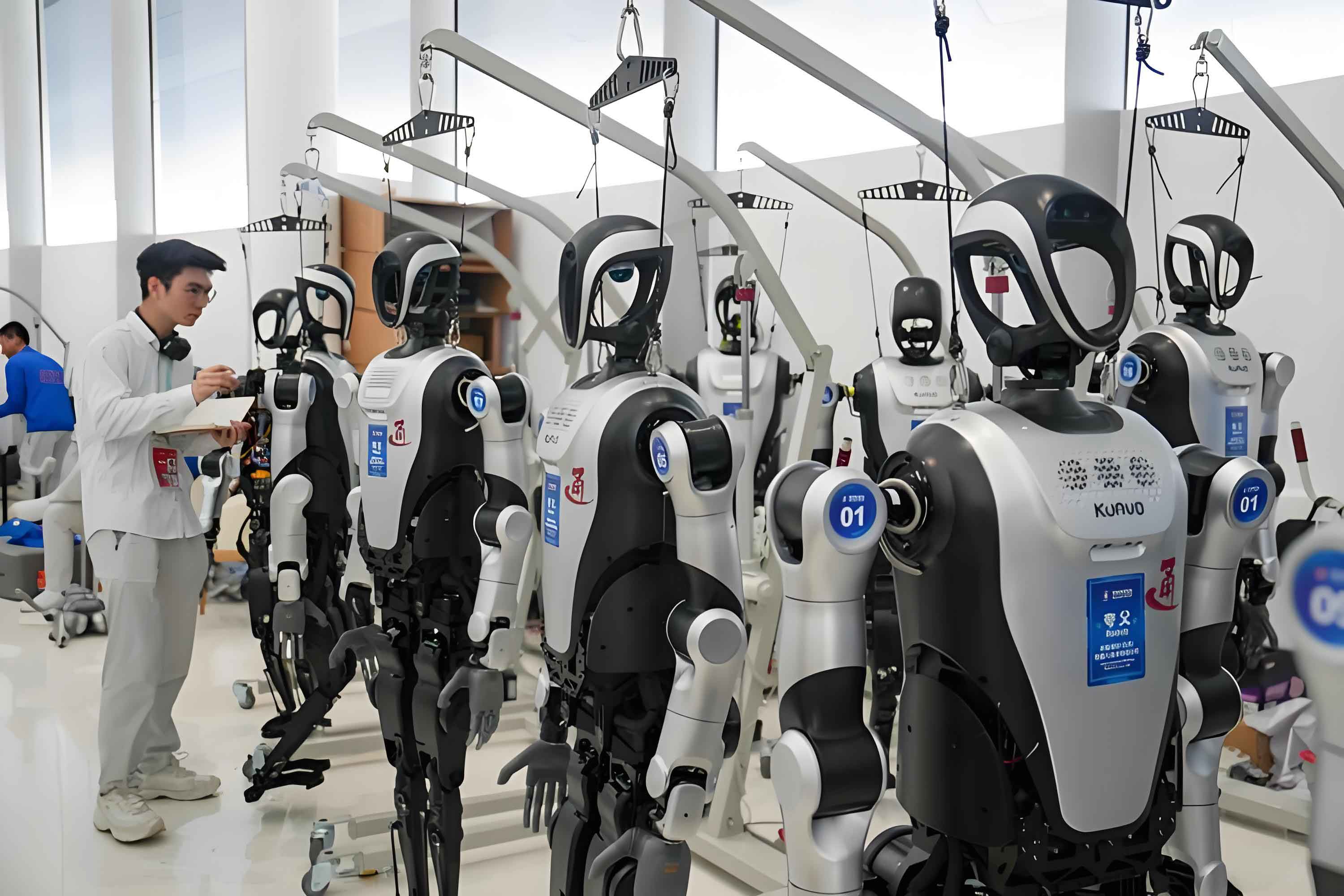
The future of this paradigm is incredibly promising. The next generation of humanoid robot platforms will feature more advanced artificial intelligence, enabling them to adapt their interactions in real-time based on the child’s affective state (detected via facial expression or vocal tone analysis) and performance history. This moves the intervention from scripted to truly responsive. Furthermore, the humanoid robot could be programmed to explicitly “bridge” interactions, gradually incorporating the therapist or a parent into the game or dance, thereby directly facilitating the transfer of skills from human-robot to human-human interaction. The potential for data collection is also vast; every interaction with the humanoid robot and the games can be logged, providing objective, granular progress metrics far beyond periodic rating scales.
Conclusion and Clinical Implications
From my first-person perspective as a clinician and researcher, the integration of a humanoid robot with motion-sensing gaming represents a significant advancement in the toolbox for ASD intervention. The empirical evidence strongly suggests that this combination is not merely additive but synergistic, leading to greater improvements in emotional regulation and core social behaviors than either component alone. The humanoid robot is not envisioned as a replacement for human therapists but as a powerful, consistent, and engaging tool that can augment therapeutic efforts, increase intervention dosage, and provide a unique pathway for children with ASD to learn and practice social skills. This approach aligns with the goals of personalized medicine, offering a structured yet adaptable technological framework to meet the diverse needs of individuals on the autism spectrum. Future work should focus on long-term follow-up, cost-benefit analysis, and the development of standardized, open-source interaction protocols for the humanoid robot to ensure wider accessibility and continued innovation in the field.