
On August 26, the second World Humanoid Robot Games concluded, drawing attention to a rapidly maturing field in which humanoid robots are no longer confined to controlled demonstrations. In sprint, high jump, long jump and other events, humanoid robots repeatedly surpassed human world records, offering a vivid display of advances in mobility, balance, perception and control. Yet the more consequential story is unfolding away from the track and field: humanoid robots are beginning to take on real work in factories, warehouses, hospitals, rehabilitation centers and elderly care settings. They are moving from “being able to move” to “quietly taking up posts.”
That transition brings a new set of questions. Can humanoid robots operate safely around people? Can they be trusted with repetitive but delicate tasks? Can their deployment be scaled commercially without exposing manufacturers, operators and users to unmanageable losses? A parallel test is now underway, focused on safety, reliability, large-scale adoption and commercial closed-loop viability. Insurers are stepping into this space as essential protectors, building risk-transfer mechanisms that help embodied intelligence leave the laboratory and enter everyday economic life.
Insurance companies are offering robot insurance and embodied intelligence insurance that cover not only application-side risks, such as physical damage, electrical faults and cybersecurity vulnerabilities through body loss insurance and third-party liability insurance, but also extend further upstream into research, development and production. This full-chain approach reflects a recognition that humanoid robots are not simply machines. They are integrated systems of hardware, software, algorithms, data and human interaction, and their risks travel across the entire lifecycle.
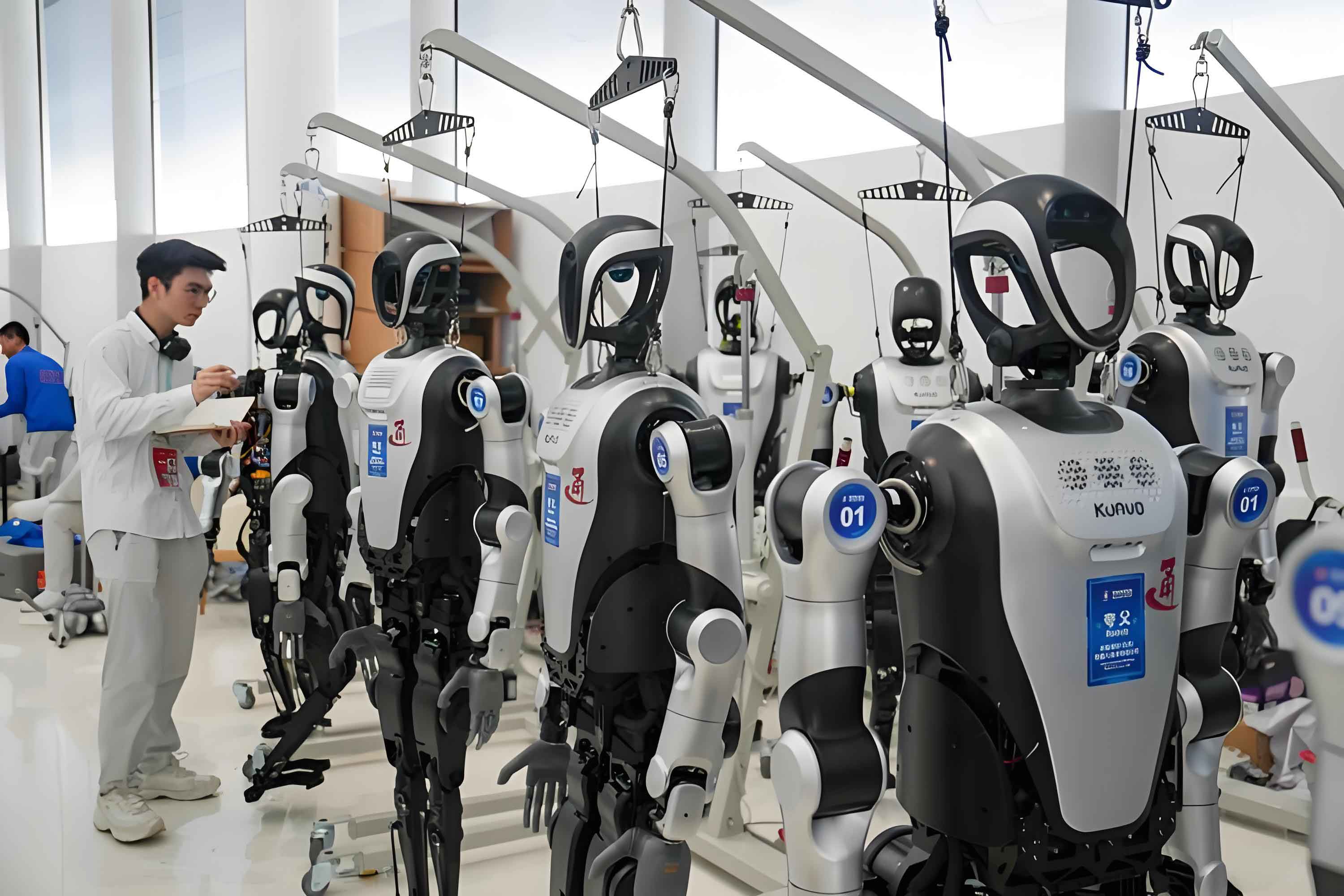
- 1. The Arena as a Live Stress Test for Humanoid Robots and Their Insurers
As a strategic partner of the second World Humanoid Robot Games, PICC P&C drew on its experience from the first event and considered the unique risk characteristics of humanoid robot competitions. It customized a comprehensive risk protection plan for the event and introduced innovative products including embodied intelligent robot body loss insurance, embodied intelligent robot third-party liability insurance and artificial intelligence service liability insurance. Together, these products formed a multi-dimensional protection system covering property and physical loss, third-party liability, personal accident injury and cybersecurity risks.
The insurer built its event protection system across three dimensions. On the underwriting side, it designed a combined “event plus daily” insurance plan. On the claims side, it established a green channel with rapid response mechanisms. On the service side, it provided full-cycle, high-efficiency professional technical support to ensure seamless event operations. This structure was intended to match the fast-moving, high-exposure nature of a robotics competition, where humanoid robots may fall, collide, overheat, lose control or interact unpredictably with people and property.
A PICC P&C official said that the on-site service team remained on duty throughout the event, following the progress of each competition, monitoring venue dynamics and carrying out frontline work such as risk alerts, consultation coordination and on-site surveys. If a person suffered an accidental injury or a robot device was damaged, the team responded immediately, simplified coordination procedures and quickly completed on-site surveys and verification. The goal was to protect event personnel and equipment, remove concerns for participating teams and allow them to focus on technical competition.
That arena experience is more than a public relations exercise. It is a live stress test for how insurance can support humanoid robots in unpredictable environments. Competitive events concentrate risk. Humanoid robots run at high speeds, jump, land, turn and interact with obstacles. Their motors, joints, sensors, batteries, communication systems and control algorithms are pushed to limits. A single failure can damage the robot, harm nearby people or disrupt the event. Insurance products that respond quickly in such conditions offer a preview of how coverage may work in factories, warehouses, hospitals and homes.
- 2. From Competition Venue to Commercial Workplace: The Larger Market for Humanoid Robots
The World Humanoid Robot Games are only a testing ground for commercial use. The greater deployment space lies beyond the arena. According to a humanoid robot industry development research report released by CAICT, the whole-machine market scale for humanoid robots is expected to reach 50 billion yuan by 2035. By 2045, the whole-machine market scale could reach 10 trillion yuan, with the number of robots exceeding 100 million units. These projections point to a future in which humanoid robots become a significant category of industrial and service equipment.
Such enormous market potential cannot be released without insurance that covers the full chain and the full lifecycle. Humanoid robots involve complex supply chains, long development cycles, high repair costs, software updates, cybersecurity exposure and evolving liability questions. If manufacturers, leasing platforms, operators and end users cannot transfer or manage these risks, adoption may slow. Insurers therefore have a direct role in enabling commercialization. They can make risk priceable, transferable and manageable, reducing the hesitation that accompanies new technology.
Industry research shows that several leading insurers are accelerating their layout in this field. They are developing dedicated insurance products for emerging technologies such as embodied intelligent robots and providing professional underwriting services to robot companies. Their focus is not limited to a single point of risk. Instead, they are building products around the entire robot industry chain, from research and development to production, sales, leasing, operation and final use.
This shift is important because humanoid robots are not standard industrial machines. They may operate in human-centered environments, learn from data, make decisions through algorithms and interact with workers, patients, customers and bystanders. Their risk profile therefore combines traditional property and casualty exposures with new technology-related exposures. Insurers that understand both dimensions can help create the confidence needed for scale.
- 3. PICC P&C Builds a Six-Dimensional Protection System for Humanoid Robots
PICC P&C has created a six-dimensional protection system for humanoid robots. The insurance plan covers six major areas: robot products, technology research and development, supply chain, production operations, liability and research and development personnel. It aims to address precise pain points in the industry and provide enterprises with six types of systemic protection: robot product protection, technology research and development protection, supply chain protection, production and operation protection, liability protection and research and development personnel protection.
In research and development and pilot testing, PICC P&C has introduced concept validation and small-scale trial comprehensive expense loss insurance, as well as pilot test verification comprehensive expense loss insurance. These products provide dedicated risk protection for key research and development projects undertaken by technology enterprises and research institutions. They are designed to support the journey of technological achievements from a laboratory solution to a production line product. This is a critical stage for humanoid robots, because many designs fail not only due to technical shortcomings but also due to unexpected costs, delays, component failures or testing accidents.
In commercial scenarios, PICC P&C’s embodied intelligence comprehensive protection plan covers body loss caused by traditional disaster causes, human operational negligence, electrical causes and network causes. It also covers third-party liability caused by accidents. This combination is significant because a humanoid robot can damage itself, damage property or injure a person. A comprehensive policy must respond to all three possibilities without forcing the insured to piece together separate products.
The insurer provided an example from the Yangtze River Delta region. It insured the first several hundred humanoid robots on a robot leasing platform. If a robot is damaged due to a collision or a transmission device fracture, each unit can receive up to nearly 400,000 yuan in repair cost compensation. This addresses the problem of high maintenance costs, which can be a major barrier for leasing platforms and small operators. When a humanoid robot is expensive to repair, insurance can determine whether it can remain in service after an accident and whether the economics of leasing or deployment remain viable.
This example also shows how insurance can support the rental model. Many humanoid robot applications may begin with leasing rather than outright purchase. Leasing lowers the upfront cost for factories, warehouses, hospitals and care facilities, but it concentrates risk on the leasing platform. If a robot is damaged, the platform may lose both the asset and the revenue it would have generated. Insurance can stabilize that equation. It can also encourage manufacturers to allow their robots to operate in more diverse environments because the financial consequences of accidents are shared.
- 4. CPIC P&C and Ping An P&C Develop Flexible, Full-Chain Products
CPIC P&C has designed a dedicated insurance product called “Ji Zhi Bao” for the commercial application of humanoid robots. The product connects risk protection across the full chain of production, sales, rental and use. It applies a risk anthropomorphic concept to achieve integrated protection for body loss, third-party personal injury and property loss. Its term is flexible, breaking through the traditional annual policy limitation by supporting daily, weekly and monthly insurance. This makes it suitable for a wide range of commercial scenarios, from short-term demonstrations and exhibitions to seasonal warehouse operations and long-term care assistance.
Flexible terms matter for humanoid robots because their deployment patterns are still evolving. A robot may be used for a trade show for three days, then leased to a factory for a month, then returned for software upgrades. Traditional annual policies may not fit such usage. By allowing shorter coverage periods, insurers can match premiums more closely to actual exposure. They can also support experimentation, because operators do not need to commit to a full year of coverage for a short pilot project.
Ping An P&C has approached the challenge differently, building a “dynamic adaptation, agile iteration” model. The company established an emerging technology risk laboratory composed of technical experts, insurance actuaries and industry researchers. The laboratory continuously tracks the evolution of robot technology and application trends. In product design, Ping An P&C relies on modular and parametric design, breaking coverage responsibilities into basic modules and optional modules. This allows the insurer to quickly adjust coverage scope and pricing parameters as technology iterates and application scenarios change.
Ping An P&C has also set up a technology iteration risk-sharing clause. In the contract, it reserves a mechanism for regular review and pricing optimization based on actual loss data. This ensures that the product can cover current risks while adapting to future developments. For humanoid robots, this is especially important because the technology is changing quickly. A robot model that enters the market this year may have different sensors, actuators, software and autonomy levels next year. A static policy may become outdated before it expires. A dynamic product can evolve with the insured risk.
| Insurer | Product or Approach | Coverage Focus | Flexibility Feature |
|---|---|---|---|
| PICC P&C | Event plus daily combined plan; six-dimensional protection system; concept validation and pilot test expense loss insurance; embodied intelligence comprehensive protection | Body loss, third-party liability, AI service liability, research and development expenses, supply chain, production operations, liability, research and development personnel | Customized event coverage; full-chain protection; rapid claims response; on-site technical support |
| CPIC P&C | “Ji Zhi Bao” dedicated product for humanoid robot commercialization | Body loss, third-party personal injury and property loss across production, sales, rental and use | Daily, weekly and monthly policies; integrated risk protection; flexible terms for varied commercial scenarios |
| Ping An P&C | Dynamic adaptation and agile iteration model; emerging technology risk laboratory; modular and parametric product design | Basic modules and optional modules; technology iteration risks; loss data review and pricing optimization | Rapid adjustment of coverage and pricing; technology iteration risk-sharing clause; regular review mechanism |
- 5. Why Humanoid Robots Create New Insurance Challenges
Humanoid robots are a new class of risk. Their historical claims data is almost blank, which makes traditional actuarial pricing difficult. Insurers cannot simply rely on past loss experience for automobiles, industrial machinery or consumer electronics. They must develop new methods for evaluating exposure, modeling accidents and setting reserves. This is one reason why insurance for humanoid robots requires collaboration between insurers, manufacturers, software developers, research institutions and regulators.
A PICC P&C official described several new risk characteristics. First, risk sources are composite. A loss may not come only from natural disasters, fire, explosion or hardware failure. It may also come from algorithm bias or system vulnerabilities. A humanoid robot may misinterpret a command, fail to recognize an obstacle, misjudge a human’s intention or make an unsafe decision in a complex environment. These are not traditional property risks, but they can cause bodily injury, property damage and business interruption.
Second, liability attribution is complex. If an accident occurs, should responsibility be assigned to the hardware manufacturer, the software developer or the user? In traditional machinery, liability may be easier to trace. In humanoid robots, hardware, software, algorithms, data, maintenance and operation are intertwined. A sensor may be faulty, but the algorithm may also have failed to compensate. A user may have given an unsafe instruction, but the robot may have had a design defect. Determining causation requires technical investigation and clear contractual frameworks.
Third, emerging risks such as cybersecurity, algorithm safety and information leakage are not covered by traditional property insurance. A humanoid robot may collect sensitive data through cameras, microphones and sensors. It may connect to cloud platforms, receive remote updates and interact with other machines. A cyberattack could disable the robot, manipulate its behavior or steal data. An algorithm failure could cause physical harm. These exposures require specialized coverage and risk management services.
To address these challenges, PICC P&C has adopted a “dynamic assessment plus cross-sector cooperation” model. In the early stage of humanoid robot business, it references underwriting data accumulated from mature categories such as industrial robots, service robots and special robots. It combines that data with the humanoid robot’s safety level, operating scenario and maintenance cost to dynamically improve pricing accuracy. It also goes into laboratories and production workshops to cooperate deeply with robot manufacturers. Together with upstream and downstream enterprises and research institutions, it conducts “health checks” for robots, deconstructing risk into the robot’s “brain,” “cerebellum” and “body.” This helps build a continuously evolving risk assessment system.
This approach recognizes that humanoid robots are not static products. They learn, update and change. A robot’s risk profile may shift after a software update, a hardware replacement or a change in operating environment. Insurers therefore need continuous data, not just a one-time inspection. They need to understand how the robot perceives, plans, moves and interacts. They need to evaluate the reliability of joints, motors, batteries, sensors and communication systems. They also need to assess the safety of the algorithms that translate perception into action.
- 6. The Role of Data, Standards and Collaboration in Scaling Humanoid Robot Insurance
The development of insurance for humanoid robots depends on data. Without loss data, insurers must make assumptions. As deployments increase, insurers can collect information on accident frequency, severity, repair costs, downtime, liability claims and near misses. This data can improve pricing, underwriting and risk prevention. It can also help manufacturers identify design weaknesses and improve safety. In this sense, insurance can become a feedback loop for the entire humanoid robot industry.
Standards and protocols are also important. If different manufacturers use different definitions for incidents, safety levels or maintenance records, insurers will struggle to compare risks. Common standards for incident reporting, cybersecurity, functional safety and maintenance could help. They could also clarify liability when multiple parties are involved. Insurers, robot makers, software companies and research institutions can work together to develop these standards. The article’s examples show that cooperation is already taking place through laboratories, pilot programs, on-site inspections and risk-sharing contracts.
Insurance products for humanoid robots are likely to become more modular over time. A basic policy may cover body loss and third-party liability. Optional modules may cover cyber incidents, algorithm failure, business interruption, data breach, product recall or research and development expenses. Pricing may become more parametric, using real-time data from the robot’s sensors and operating logs. Policies may be activated by usage hours, task type, environment or autonomy level. This would allow premiums to reflect actual risk more accurately.
However, modularity also creates challenges. If coverage is too fragmented, users may not understand what is protected. If exclusions are too broad, trust may suffer. If pricing is too volatile, budgeting becomes difficult. Insurers must balance flexibility with clarity. They must also ensure that claims processes are fast and fair. In a humanoid robot accident, the insured may need immediate support: medical care, property repair, data recovery, legal assistance and replacement equipment. A slow claims process can magnify the damage.
- 7. How Insurance Supports Commercial Adoption of Humanoid Robots
Insurance is often described as a backstop, but in emerging technology it can also be an enabler. For humanoid robots, insurance can reduce the financial risk that prevents factories, warehouses, hospitals and care providers from adopting new systems. A factory may be willing to test a humanoid robot for assembly work if it knows that accidental damage or injury is covered. A hospital may be more willing to pilot a rehabilitation assistant if liability is clearly addressed. A leasing platform may expand its fleet if repair costs are insured.
Insurance can also support financing and investment. Lenders and investors may be more comfortable with robot companies that have risk management systems and insurance coverage in place. It can signal that the company understands safety, liability and operational continuity. In addition, insurance claims data can help companies demonstrate the reliability of their products over time. A low loss ratio, when based on sound data, can become a market signal of quality.
For humanoid robots, the path to scale will not be determined by mobility alone. It will be determined by trust. A robot that can run, jump and manipulate objects is impressive, but a robot that can work safely alongside people is commercially valuable. Trust requires more than engineering. It requires clear responsibility, reliable maintenance, cybersecurity and financial protection when things go wrong. Insurance is part of that trust infrastructure.
The World Humanoid Robot Games showed how far humanoid robots have come in physical performance. The insurance activity around the event and beyond shows how the supporting ecosystem is developing. From customized event coverage to full-chain commercial products, from body loss and third-party liability to research and development expense protection, insurers are building a safety net that allows humanoid robots to leave the laboratory and enter real operations.
- 8. The Road Ahead for Humanoid Robots and Their Insurers
The road ahead will require continuous innovation. Humanoid robots will become more autonomous, more connected and more capable. They will operate in more complex environments, from factory floors and logistics warehouses to hospitals, hotels, schools and homes. Each new environment brings new risks. A warehouse may involve heavy machinery and fast-moving vehicles. A hospital may involve vulnerable patients and strict privacy rules. A home may involve children, pets, stairs and unpredictable daily routines. Insurers will need to understand these contexts in detail.
Manufacturers will also need to invest in safety by design. Insurance cannot replace good engineering. It can, however, reward it. If a manufacturer can demonstrate robust safety systems, clear incident reporting, strong cybersecurity and reliable maintenance, it may obtain better terms. If a manufacturer neglects these areas, it may face higher premiums or limited coverage. Over time, this can create incentives for safer humanoid robots across the industry.
Regulators and policymakers may also play a role. Clear rules on liability, data protection, cybersecurity and safety testing can reduce uncertainty. They can help insurers design products with confidence and help users understand their responsibilities. The article does not provide a specific regulatory roadmap, but the need for coordination is clear. Humanoid robots cross the boundaries between machinery, software, data services and human interaction. Traditional regulatory categories may not fit perfectly.
For insurers, the opportunity is substantial. The projected market for humanoid robots is large, and the number of units could exceed 100 million by 2045. Each unit may require property coverage, liability coverage, cyber coverage, business interruption coverage and specialized protection for research, production, leasing and use. The insurance market for humanoid robots could therefore grow alongside the robot market itself. But this growth will depend on data, expertise and trust.
The early examples are encouraging. PICC P&C protected event participants and leased humanoid robots. CPIC P&C designed flexible coverage for production, sales, rental and use. Ping An P&C built a laboratory and modular products to adapt to rapid technology change. These efforts show that insurers are not waiting for the market to mature before entering. They are helping to shape the market by providing the risk infrastructure that commercialization requires.
- 9. Conclusion: Humanoid Robots Need More Than Intelligence to Succeed
The second World Humanoid Robot Games demonstrated that humanoid robots can achieve remarkable physical feats. They can run, jump, land and compete. But the next phase of development will be less about spectacle and more about reliability. Humanoid robots must work safely, predictably and economically in environments where people live and work. They must be repaired, updated, insured and managed. They must fit into legal and financial systems that define how accidents are handled.
Insurance is one of those systems. It provides a mechanism for sharing and transferring risk. It encourages manufacturers, operators and users to adopt safer practices. It gives leasing platforms and service providers the confidence to expand. It gives end users the confidence to try new technology. It also generates data that can improve future products and policies. In this way, insurance helps humanoid robots move from laboratory prototypes to commercial tools.
The challenge is significant. Historical claims data for humanoid robots is limited. Risk sources are composite. Liability is complex. Cybersecurity and algorithm safety are emerging concerns. Traditional insurance products may not be sufficient. The response from insurers is to combine dynamic assessment, cross-sector cooperation, modular product design, flexible terms and continuous data review. This approach recognizes that humanoid robots will keep changing, and insurance must change with them.
As humanoid robots continue to leave the laboratory, the protection network around them will expand. It will cover the arena, the factory, the warehouse, the hospital and the home. It will cover hardware, software, algorithms, data and people. It will involve manufacturers, insurers, leasing platforms, operators, research institutions and regulators. The result will not eliminate all risk, but it can make risk manageable. That is the foundation on which large-scale adoption of humanoid robots can be built.
The story of humanoid robots is often told through breakthroughs in movement, perception and intelligence. The less visible story is about the institutions that make those breakthroughs usable. Insurance is one of those institutions. By protecting property, liability, research and commercial operations, insurers are helping humanoid robots move from impressive demonstrations to everyday work. The race for humanoid robots is not only a race for better machines. It is also a race for better risk management, and insurance is now part of that race.