
The integration of humanoid robots into manufacturing scenarios represents a significant leap forward in industrial automation, promising unprecedented flexibility and compatibility with human-centric workspaces. Unlike their single-purpose, fixed-base industrial counterparts, humanoid robots, built on a generalist philosophy, offer biomimetic advantages that allow them to adapt to existing manual processes, utilize standard tools, and operate in environments with poor ergonomics or inherent dangers. This potential has captured the attention of global manufacturing leaders, leading to various development and testing initiatives. However, the manufacturing sector imposes exceptionally stringent safety requirements. While established safety standards exist for conventional and collaborative robots, these cannot be directly transposed to the unique morphology and operational paradigms of humanoid robots. The absence of dedicated, comprehensive industry regulations creates a critical gap. Therefore, a robust and holistic methodology is imperative to verify and ensure the safety of humanoid robot applications before widespread adoption. This article presents and advocates for an integrated safety analysis approach, combining principles from industrial safety management, human-robot collaboration (HRC), and structured hazard analysis techniques. Through a detailed case study and the development of extended safety frameworks, we demonstrate how this method can effectively identify risks, guide mitigation strategies, and contribute to the maturation of safety standards for humanoid robots in industrial settings.
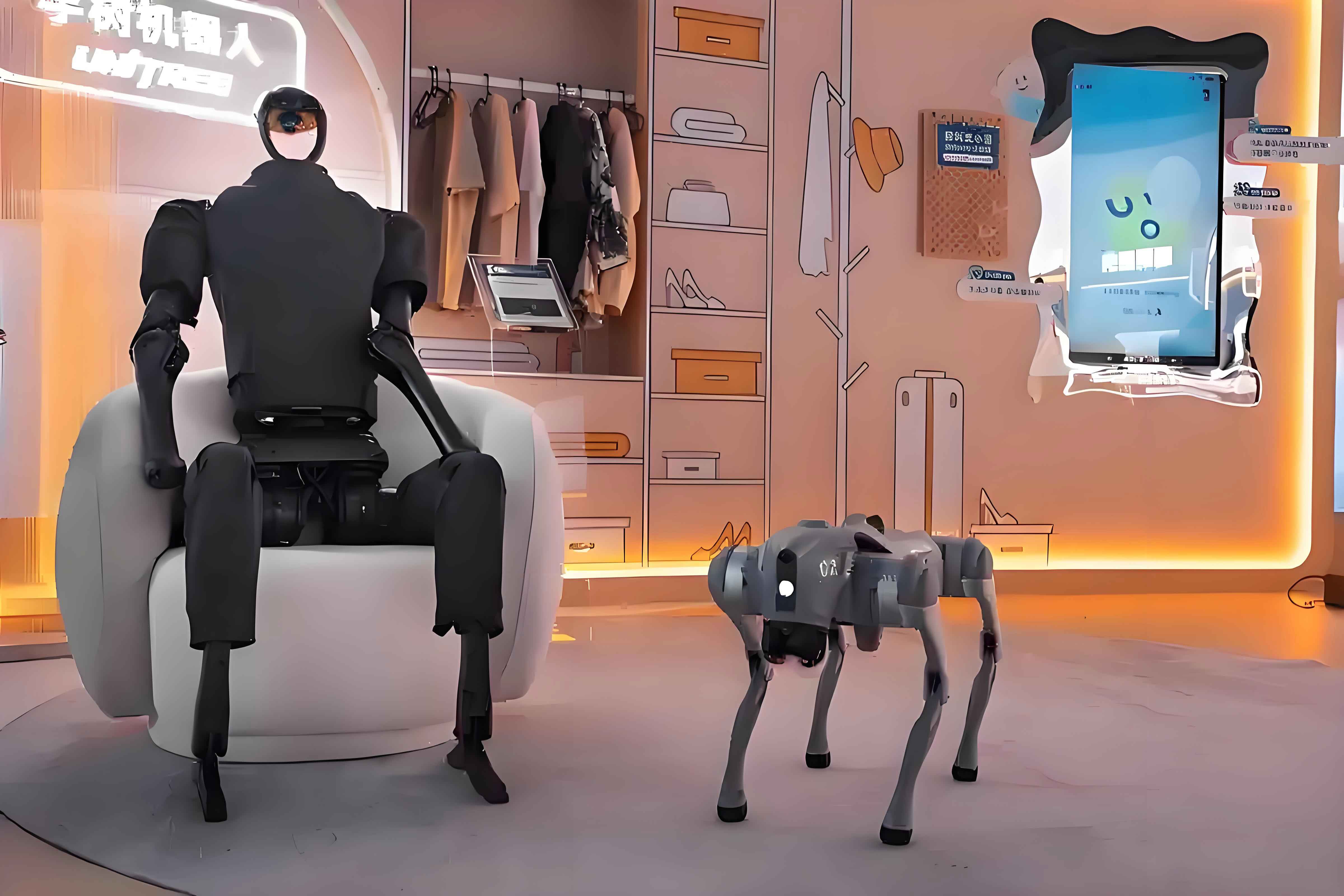
The core challenge in deploying a humanoid robot safely stems from its inherent complexity. A typical humanoid robot for manufacturing comprises a sophisticated integration of subsystems: multiple degrees-of-freedom actuators (often servo motors with harmonic drives for high torque density), a vast array of sensors (vision, force/torque, inertial measurement units), dexterous end-effectors (from industrial grippers to anthropomorphic hands), and a mobile power source (typically lithium-based batteries). Each component introduces specific failure modes and safety considerations that interact with the dynamic, mobile nature of the platform. My analysis begins by establishing a foundational methodology that respects industrial best practices while addressing the novelty of the humanoid robot form factor.
An Integrated Safety Analysis Methodology
The proposed integrated safety analysis method is designed to be systematic, thorough, and aligned with manufacturing quality and safety culture. It synthesizes three key pillars:
1. Industrial Safety Management (5M1E Framework): This classic model ensures all influencing factors are considered: Man (operator training, human factors), Machine (the humanoid robot and peripheral equipment), Material (workpieces handled), Method (processes and procedures), Environment (workspace layout, lighting, floor conditions), and Measurement (calibration, monitoring). Applying this to a humanoid robot context forces explicit consideration of aspects like psychological operator acceptance (“uncanny valley” effects), battery state-of-health monitoring, and environmental impacts on sensor performance.
2. Human-Robot Collaboration (HRC) Principles: While a humanoid robot is not strictly a “collaborative robot” as defined by current standards (e.g., ISO/TS 15066), its intended operation in shared spaces necessitates HRC logic. The overarching principle—either prevent harmful contact or ensure that any contact does not lead to injury—remains valid. However, the safety measures must be adapted. The comparison below highlights critical differences between a standard collaborative robot arm and a humanoid robot, informing necessary adjustments in safety strategy.
| Component in Humanoid Robot | Analog in Collaborative Robot | Key Differences | Required Safety Strategy Adjustments |
|---|---|---|---|
| Incremental Encoders | Absolute Encoders | System requires homing; position drift can accumulate. | Implement additional periodic position verification (e.g., quick re-homing, calibration fixtures). |
| Battery Power System | Mains AC Power | Finite capacity, performance degradation over time. | Robust state-of-charge/health monitoring and sustainable duty cycle planning. |
| Dexterous Hand (Multi-fingered) | Simple End-Effector | More pinch and shear points, complex servo control. | Add physical limits, guarding, or sensitive skin to hazardous areas on the hand. |
| Bipedal Locomotion | Fixed Base or AGV Mount | Introduces dynamic stability risk, larger unpredictable workspace. | Separate risk assessment for mobility, including fall prevention and emergency stop during motion. |
| Whole-Body Dynamic Control | Arm-Centric Control | Stopping one joint affects whole-body balance. Emergency stop can cause falling. | Design cascaded or whole-body stabilized stop functions. Consider tethering during initial deployment. |
3. Hazard and Operability (HAZOP) Study: This structured technique is ideal for analyzing novel systems where standard checklists are insufficient. It examines process nodes and system elements by applying guidewords (e.g., No, More, Less, Part of, Other Than) to identify potential deviations from design intent, their causes, consequences, and required safeguards. For a humanoid robot application, the “process” is its work cycle, and the “elements” are its key components and interactions.
The integrated workflow synthesizes these pillars into a six-step process:
Step 1 – Define Scope and Objectives: Clearly outline the application, including layout, tasks, and HRC interaction levels.
Step 2 – 5M1E Factor Identification: List all relevant factors from each category, paying special attention to cross-cutting issues (e.g., environmental lighting affecting both robot vision and operator safety).
Step 3 – Conduct HAZOP Analysis: Apply guidewords to key process nodes (e.g., “Pick Part,” “Move to Assembly,” “Perform Fastening”) and system elements (e.g., “Joint Actuator,” “Vision System,” “Battery”). Document deviations, causes, and consequences.
Step 4 – Propose Preliminary Safeguards: Compare findings against existing robot safety standards (like GB/T 39402 for collaborative robots, used as a reference), corporate safety rules, and prior experience to suggest improvements.
Step 5 – Implement and Refine Measures: Categorize measures into short-term (procedural changes, add-on guarding) and long-term (robot design modifications, part redesign). Implement feasible solutions.
Step 6 – Ongoing Monitoring and Update: Establish schedules for recalibration and periodic safety review, updating the analysis as technology and standards evolve.
Detailed Case Study: High-Voltage Connector Assembly
To ground this methodology, I examine a realistic and safety-critical application in automotive manufacturing: the assembly of high-voltage electrical connectors onto battery modules. This task is suitable for a humanoid robot as it removes personnel from direct handling of live components, mitigating electrocution risk. The simulated setup involves a TALOS-type humanoid robot, an automated guided vehicle (AGV) delivering battery modules, a kitting table, and assembly fixtures.
The humanoid robot’s work cycle is decomposed into four primary phases:
1. Bimanual Picking: Using vision and coordinated dual-arm control to grasp connectors and bolts from a kitting table.
2. Mobile Transport: Using bipedal locomotion to move short distances between the kitting table and assembly station, followed by precise placement.
3. Flexible Assembly: Using whole-body posture control and compliant arm motions to operate a tool (e.g., a nutrunner) for fastener tightening.
4. Inspection and Return: Using vision and minor repositioning to inspect the assembly before returning to a home position.
HRC is anticipated during teaching, maintenance, and potentially during part hand-over. Safety controls during normal operation should primarily rely on Speed and Separation Monitoring (SSM), using safety-rated area scanners or LiDAR. Power and Force Limiting (PFL) could be activated for specific, slow assembly motions. Crucially, the simple Safety-Rated Monitored Stop—where the robot stops abruptly upon human entry—is ill-suited for a mobile humanoid robot, as a sudden freeze in mid-step could lead to a loss of balance and a fall, creating a new hazard.
HAZOP Analysis and Risk Mitigation
Applying the HAZOP study within the integrated framework to the “Mobile Transport” and “Assembly” nodes yields critical insights. The following table encapsulates a subset of the significant findings.
| Guideword | Element | Deviation | Potential Cause | Consequence | Proposed Safety Enhancement |
|---|---|---|---|---|---|
| PART OF | External E-Stop Signal | E-stop triggered but actuators not halted immediately. | Wireless E-stop latency; software unable to execute safe stop during dynamic walk. | Robot continues motion for a short period after e-stop, risking impact. | Use certified wired E-stop circuit. Define and validate a safe, balanced stopping sequence for walking states. |
| PART OF | Onboard E-Stop Button | Activation during locomotion leads to unstable halt. | Dynamic balance algorithms cannot reconcile instantaneous stop command with physics. | Humanoid robot falls, causing secondary impact hazards. | Implement a whole-body “Stabilizing Stop” routine. Use fall protection tether during initial phases. |
| LESS | Battery Charge | Insufficient power for stable actuation. | Inadequate charging; cell degradation. | Sudden loss of power leading to collapse. | State-of-charge monitoring with progressive warnings and soft shutdown. Backup tether. |
| MORE | Joint Position Error | Accumulated deviation from intended trajectory. | Incremental encoder drift; mechanical backlash. | Arm crashes into fixture or part; hand misses grasp. | Implement periodic “optical home” using fixed cameras or docked calibration fixture. |
| OTHER THAN | Vision System Output | Fails to detect nearby human operator. | Sudden glare; sensor occlusion; software fault. | SSM system is blind, leading to potential high-speed collision. | Multi-modal sensing fusion (e.g., combine vision with mmWave radar). Real-time sensor health checks. |
| NO | Gripper Holding Force | Loss of grip on carried object. | E-stop triggering motor release; slippage. | Heavy or sharp object drops, creating tripping/slicing hazard or damaging product. | Implement passive, mechanically-locked grip mode for transported items. Use grip force servo monitoring. |
The analysis confirms that safe application is feasible but hinges on implementing both procedural controls (training, limited interaction) and technical improvements. The most profound challenges identified are generic to mobile humanoid robot applications: the response to external emergency stops and the execution of a safe stop while in motion.
Framework for Safe Emergency Stop of a Mobile Humanoid Robot
Current functional safety standards (e.g., GB/T 16754, ISO 13850) mandate that an emergency stop function must arrest hazardous motion without creating additional risk. For a bipedal humanoid robot, an instantaneous, uncontrolled stop is itself a risk. Therefore, the emergency stop sequence must be redefined as a “Stabilized Emergency Stop.” This process can be modeled as a phased sequence, where the objective is to minimize a cost function related to stopping time and residual hazard, subject to dynamic stability constraints.
Let us define the stop sequence timeline, where $t_0$ is the time the stop signal is registered by the safety-critical control layer.
Phase 1 (Signal Latency), $[t_0, t_0+t_1]$: $t_1$ is the delay from command issuance to processing. For a wireless E-stop, this can be $t_1^{wireless} \approx 200-400ms$. For a wired, certified safety circuit, $t_1^{wired} \approx 10-50ms$. This phase argues strongly for wired safety connections for reliable humanoid robot systems.
$$ t_1 = f(\text{communication protocol, hardware latency}) $$
Phase 2 (Step Completion), $[t_0+t_1, t_0+t_1+t_2]$: The robot must complete the current stepping cycle to bring its swing foot to the ground and achieve a stable double-support posture. The duration $t_2$ depends on the remaining step time, which is a function of the step length $l_s$ and the gait cycle timing.
$$ t_2 = g(l_s, \phi_{\text{step}}) $$
Where $\phi_{\text{step}}$ is the phase within the step cycle at $t_0+t_1$. A smaller default step length $l_s$ can reduce the maximum possible $t_2$, enhancing responsiveness but potentially reducing efficiency.
Phase 3 (Balance Recovery), $[t_0+t_1+t_2, t_0+t_1+t_2+t_3]$: The control system adjusts the Zero Moment Point (ZMP) and Center of Mass (CoM) to a stationary, balanced standing pose. This is a critical control challenge.
$$ \text{Minimize } |\text{ZMP} – \text{Support Polygon Center}| $$
$$ \text{Subject to: } \ddot{x}_{CoM} = \frac{1}{m} \sum F, \quad \dot{\theta}_{torso} \rightarrow 0 $$
Phase 4 (Controlled Deceleration), $[t_0+\sum_{i=1}^{3}t_i, t_0+\sum_{i=1}^{4}t_i]$: All joint motors execute a coordinated deceleration profile to zero velocity. The upper limbs may also need to bring held objects to a safe halt.
$$ \tau_m = J^T F_{ext} + B(\dot{q}_d – \dot{q}) $$
Where $\tau_m$ is the motor torque, $J$ is the Jacobian, $F_{ext}$ is the measured external force, $B$ is a damping matrix, and $\dot{q}_d$ is the desired joint velocity profile trending to zero.
Phase 5 (Verification), $[t_0+\sum_{i=1}^{4}t_i, t_0+\sum_{i=1}^{5}t_i]$: The system verifies full stop via inertial measurement unit (IMU) and joint encoders. $t_5$ includes brake engagement time $t_b$ if applicable.
$$ \text{Condition: } |\dot{q}| < \epsilon_{q} \ \text{and} \ |\omega_{imu}| < \epsilon_{\omega} \ \text{for} \ \delta t $$
Phase 6 (Power Down): Upon verification, motive power to the actuators is cut. Note: Cutting power immediately after $t_0$ would guarantee a fall. Therefore, the safe sequence requires maintained power through Phases 2-5.
The overall goal of the Stabilized Emergency Stop is to find an optimal balance between stopping time and stability. This can be formalized as minimizing a cost function $J$ over the controllable parameters (like planned step length $l_s$ and deceleration profiles):
$$ \min_{l_s, \alpha_{dec}} J = w_1 \cdot (t_1+t_2+t_3+t_4) + w_2 \cdot \int_{t_0}^{t_0+\sum t_i} \text{Margin\_To\_Fall}(t) \, dt $$
$$ \text{subject to: } \text{Dynamic\_Stability\_Constraint}(t) > 0 \ \forall t, \quad \text{and} \quad l_{s}^{min} \leq l_s \leq l_{s}^{max} $$
Where $w_1$ and $w_2$ are weights, $\alpha_{dec}$ parameterizes the deceleration profile, and $\text{Margin\_To\_Fall}(t)$ is a metric like the ZMP margin. This framework provides a quantitative basis for validating the emergency stop performance of a humanoid robot in a specific application context.
Extended Safety Considerations and Framework Proposal
Beyond emergency stop, the integrated analysis leads to broader safety framework considerations for manufacturing deployment of humanoid robots.
1. Dynamic Risk Field Mapping: Instead of static safe zones, the robot’s control system should maintain a dynamic model of risk. The risk $R$ at a point in space $p$ relative to the humanoid robot could be modeled as a function of the robot’s state and predicted motion:
$$ R(p, t) = f( \text{kinetic\_energy}(p,t), \text{sharpness}(p,t), \text{human\_proximity}(p,t) ) $$
Where $\text{kinetic\_energy}(p,t)$ is related to the mass and velocity of the closest robot link, $\text{sharpness}(p,t)$ accounts for sharp edges on tools or grippers, and $\text{human\_proximity}(p,t)$ modulates the risk based on the presence of an operator. The robot’s path planner would then minimize the integral of $R$ along its trajectory and within its swept volume.
2. Hierarchical Safety Controller: A dedicated safety-rated controller should run in parallel to the main operational controller. This safety controller has simplified but guaranteed models of the robot’s dynamics. Its roles include:
- Monitoring the primary controller’s commands for plausibility.
- Executing the certified Stabilized Emergency Stop sequence.
- Enforcing velocity and power limits based on real-time sensor data (e.g., reducing allowed speed if a slippery floor is detected by foot sensors).
This can be expressed as a state machine where the safety controller can override operational commands:
$$ \text{Command}_{executed} = \begin{cases}
\text{Command}_{operational} & \text{if } \text{Safety\_State} = \text{NORMAL} \\
\text{Command}_{safety\_layer} & \text{if } \text{Safety\_State} = \text{LIMITED} \text{ or } \text{ESTOP}
\end{cases} $$
3. Standardized Safety Performance Metrics: The industry should develop metrics specific to humanoid robots. These could include:
- Maximum Arrest Distance (MAD): The maximum distance traveled from E-stop initiation to full, stable halt under worst-case conditions (max speed, mid-step).
- Static Crush Force/Pressure: Measured force for each body segment when pinned against a standard test rig.
- Fall Prevention Reliability: Probability of achieving a stable stop without falling under a defined set of disturbance conditions.
4. Human Factors and Procedural Integration: No technical system is complete without addressing the human element. Key procedural measures include:
- Augmented Reality (AR) Overlays: Operators wearing AR glasses could see the humanoid robot’s intended path, dynamic risk fields, and safe interaction zones.
- Clear Robot State Signaling: Using lights, sounds, and even subtle pre-movement cues (like a human shifting weight before stepping) to signal intent.
- Lockout-Tagout (LOTO) for Complex Energy Sources: Procedures must account for locking out battery power, potential energy in suspended limbs, and compressed air in tools.
| Framework Layer | Key Components | Implementation Examples | Relation to Integrated Analysis |
|---|---|---|---|
| Hardware & Design | Passive Safety, Fall Protection, Sensor Suites | Rounded edges, mechanical grip locks, safety tether points, multi-modal sensing (LiDAR, radar, vision). | Addresses HAZOP findings related to component failure, grip loss, and fall hazards. |
| Control & Software | Hierarchical Safety Controller, Stabilized E-stop, Dynamic Risk Fields | PLd/SIL2 certified safety PLC, whole-body balanced stop algorithm, real-time risk assessment module. | Directly solves the core challenge of safe emergency stop and motion limitation identified in the case study. |
| Procedural & Human | Training, AR Interfaces, LOTO Procedures, State Signaling | VR training simulations, AR path visualization, specialized LOTO kits for humanoid robot maintenance. | Manages the “Man” and “Method” factors from the 5M1E analysis, ensuring human readiness and clear protocols. |
| Validation & Metrics | Standardized Performance Tests, Continuous Monitoring | MAD test, crush force test, continuous log of balance margin and near-miss events for predictive maintenance. | Provides the “Measurement” component, ensuring long-term compliance and generating data to refine standards. |
Conclusion
The journey to integrate humanoid robots into high-stakes manufacturing environments is predicated on demonstrable and verifiable safety. This article has presented a comprehensive, integrated safety analysis methodology that successfully bridges the gap between established industrial safety practices and the novel challenges posed by humanoid robotics. By fusing the 5M1E management model, human-robot collaboration principles, and the structured HAZOP technique, the method provides a systematic lens to identify risks spanning hardware, software, human factors, and procedures. The detailed case study of a high-voltage assembly task not only validated the method by uncovering critical risks—most notably the inadequacy of standard emergency stop protocols—but also served as a foundation for developing deeper technical frameworks. The proposed Stabilized Emergency Stop sequence, modeled with explicit phases and optimization objectives, and the broader multi-layered safety framework offer concrete pathways for developers and integrators. Ultimately, such rigorous, application-focused safety analysis is not a barrier to innovation but its essential enabler. It builds the necessary trust, provides a template for validation, and actively contributes the empirical insights needed to shape the future international safety standards that will govern the era of humanoid robots in the factory.