
The explosive advancement of technology has ushered in an era where interdisciplinary convergence is not just beneficial but essential for engineering education. Among the most compelling frontiers is humanoid robot technology, a synthesis of mechanical engineering, electronic information technology, and computer science, characterized by high intelligence and lifelike anthropomorphism. As an instructor deeply involved in curriculum development, I view the foundational course of “Digital Electronics Technology” as the critical bedrock upon which such advanced technologies are built. Its principles form the underlying logical architecture for countless high-tech applications. Therefore, integrating humanoid robot technology into the teaching of digital electronics presents a significant opportunity for pedagogical innovation. This integration serves a dual purpose: it breathes life into abstract theoretical concepts by grounding them in tangible, cutting-edge applications that students can see and interact with, thereby dramatically enhancing engagement and curiosity. Simultaneously, it fosters the development of versatile talent—engineers who are not only proficient in digital electronics theory but also adept at applying this knowledge to the design, development, and maintenance of complex systems like humanoid robots. This aligns perfectly with the evolving demands of modern industry and the practical, application-oriented goals of contemporary engineering education.
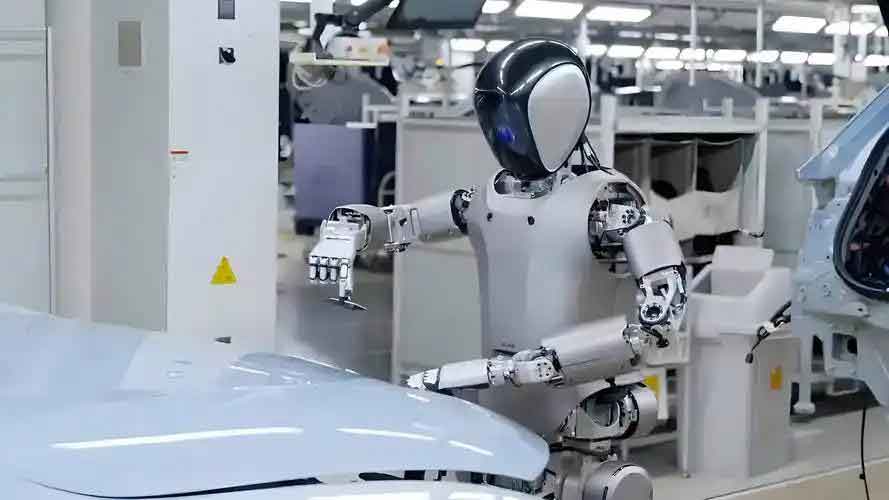
Globally, educational institutions have pioneered the fusion of cross-disciplinary projects into engineering curricula. Several universities have experimented with embedding humanoid robot projects into electronics courses, adopting a practice-oriented model that guides students through the full development lifecycle. While promising, these initiatives often lack deep, systematic integration of core course knowledge within the project framework. Domestically, there is growing emphasis on merging frontier technologies with foundational courses. Many reforms, however, remain peripheral—often focused on competition preparation—rather than being deeply woven into the fabric of standard course delivery. Gaps persist in innovative pedagogy and aligned assessment systems, indicating a need for more holistic and ingrained reform strategies.
The Inextricable Link: Humanoid Robot Technology and Digital Electronics
The humanoid robot is a quintessential cyber-physical system. Its hardware “body” comprises a mechanical skeleton, a suite of sensors (vision, auditory, tactile, etc.), and actuators like motors and servos. The precise control and coordinated operation of these components are fundamentally enabled by digital electronics. From the software perspective, the operating system, motion control algorithms, and decision-making programs rely on low-level digital operations: signal processing, logic computation, and data storage/retrieval.
Consider a visual sensor. The captured analog image data must be converted into a digital format for algorithmic processing. This involves sampling, quantization, and encoding—processes defined by digital electronics principles. The transformation can be conceptually summarized by the analog-to-digital conversion (ADC) equation for a pixel’s intensity:
$$ I_d = \left\lfloor \frac{I_a – V_{ref-}}{V_{ref+} – V_{ref-}} \cdot (2^N – 1) \right\rfloor $$
where \(I_a\) is the analog intensity, \(V_{ref-}\) and \(V_{ref+}\) are reference voltages, \(N\) is the ADC’s bit resolution, and \(I_d\) is the resulting digital value. This digital stream is then processed by logic circuits and microcontrollers within the humanoid robot.
The following table summarizes key digital electronics components and their specific roles in a humanoid robot:
| Digital Electronics Module | Function in Humanoid Robot | Example/Application |
|---|---|---|
| Combinational Logic Circuits | Instantaneous decision-making and signal routing. | Decoding sensor data to trigger specific reflex actions (e.g., stop if obstacle is detected within 10cm). Implementing the logic for gesture recognition output. |
| Sequential Logic Circuits (Counters, Registers) | Generating timed sequences, storing state information. | Controlling the rhythmic, periodic signals for bipedal gait cycles. Storing the current step sequence or joint angle setpoints. |
| Microcontroller Unit (MCU) / FPGA | The central “brain” executing control algorithms. | Running PID control loops for joint motors. Processing sensor fusion data. Executing high-level decision trees. |
| Memory (RAM, ROM) | Storing program code, sensor data, and movement primitives. | Holding the gait pattern library. Buffering camera frame data for processing. |
| Digital Signal Processors | High-speed mathematical processing of sensor signals. | Filtering noise from IMU (Inertial Measurement Unit) data. Performing Fast Fourier Transform (FFT) on audio input for command recognition. |
In the motion control subsystem, the MCU uses algorithms to calculate trajectory points. The desired joint angle \(\theta_d(t)\) is computed and compared to the sensed angle \(\theta_s(t)\). The error \(e(t) = \theta_d(t) – \theta_s(t)\) is fed into a control law, like a Proportional-Integral-Derivative (PID) controller, implemented in digital logic:
$$ u(t) = K_p e(t) + K_i \sum_{\tau=0}^{t} e(\tau) \Delta t + K_d \frac{e(t) – e(t-1)}{\Delta t} $$
where \(u(t)\) is the control signal (e.g., PWM duty cycle) sent to the actuator driver. This entire feedback loop is enabled by digital timers, ADCs for sensor reading, and digital-to-analog converters (DACs) or PWM generators for output.
Challenges in Traditional “Digital Electronics” Instruction
My experience with the traditional course model has revealed several persistent issues that hinder effective learning and skill development:
- Disconnect Between Content and Application: The curriculum is often theory-heavy, with laboratory sessions limited to verifying truth tables or building basic adders on breadboards. Students struggle to connect Boolean algebra or flip-flop state diagrams to solving real-world problems, such as stabilizing a humanoid robot‘s balance.
- Monotonous Teaching Methods: Instruction predominantly follows a lecture-based format. Even with multimedia aids, students remain passive recipients of information. This approach fails to spark the active exploration needed to grasp how digital circuits empower a humanoid robot to interact with its environment.
- Inadequate Assessment Framework: Evaluation relies heavily on final exams testing theoretical recall. Questions rarely extend to analyzing design trade-offs in a humanoid robot sensor interface or debugging a timing issue in a motor controller. This promotes rote memorization over innovative thinking and practical problem-solving.
Reform Objectives and Guiding Principles
The primary objective of this reform is to reconstruct the “Digital Electronics” course around the compelling context of humanoid robot technology. The goal is to ensure students not only master fundamental knowledge but also develop the practical skills to apply it. This involves cultivating the ability to design and optimize digital subsystems for perception, decision-making, and actuation in a humanoid robot. We also aim to ignite innovative thinking and strengthen collaborative skills, preparing students for the iterative challenges of advanced robotics.
The reform is guided by two core principles:
- Principle of Tight Coupling Between Theory and Practice: Every major theoretical concept must be immediately followed by, or introduced alongside, a relevant practical task involving the humanoid robot platform. Learning is a cycle: theory informs practice, and practice deepens theoretical understanding.
- Principle of Student-Centered, Project-Driven Learning: The course shifts from instructor-led dissemination to student-led discovery. Meaningful, scaffolded projects form the backbone of the learning experience, driving the acquisition and application of knowledge.
Comprehensive Reform Strategies
1. Content Optimization
The syllabus is restructured using the humanoid robot as a continuous case study. For instance:
- Introduction: Begin with captivating videos of humanoid robots dancing or performing tasks, immediately posing the question: “What digital systems make this possible?”
- Combinational Logic: Instead of just designing a 7-segment decoder, students design a circuit that maps specific sensor input combinations (e.g., “object in left hand” AND “voice command ‘give'”) to an output that activates a gripper release mechanism. The logic function might be: $$ Release = (L_{sensor} \cdot V_{command}) \cdot \overline{E_{stop}} $$ where \(E_{stop}\) is an emergency stop signal.
- Sequential Logic & State Machines: The focus shifts to designing finite state machines (FSMs) for robot behavior. For example, designing an FSM for a simple “Stand-Up” sequence: State S0 (lying down) -> S1 (lift torso) -> S2 (extend legs) -> S3 (balanced stand). The state transition conditions are based on timer outputs and sensor feedback.
Knowledge is integrated along the robot’s functional pipeline:
| Robot Functional Pipeline | Integrated Digital Electronics Topics |
|---|---|
| Sensing | Sensor interfacing (ADC principles, I2C/SPI protocols), digital filtering (moving average, FIR basics). |
| Processing & Decision | Microcontroller architecture, ALU operations, hardware vs. software trade-offs, implementing decision logic with PLDs/FPGAs. |
| Actuation | Motor driver H-bridges (built from MOSFETs and logic gates), PWM generation, encoder feedback counters. |
| System Integration | Clock distribution, power management circuits, bus arbitration, and system-level timing analysis. |
2. Pedagogical Innovation
A. Project-Driven Learning: The course is organized around a series of progressive projects.
| Project Phase | Sample Project | Key Digital Electronics Learning Outcomes |
|---|---|---|
| 1. Foundational | “Reactive LED Eyes”: Design a circuit where LED patterns change based on switch (touch sensor) inputs. | Combinational logic design, logic gate implementation, breadboarding skills. |
| 2. Intermediate | “Sequential Clap-controlled Gesture”: Create a system where a specific sequence of claps (detected by sound sensor) triggers a pre-programmed servo arm wave. | Sequential logic, counter design, clock generation, simple state machine, interfacing with actuators. |
| 3. Advanced | “Autonomous Obstacle Avoidance Platform”: Build a small mobile robot that uses ultrasonic sensors and IR sensors to navigate a simple maze without collision. | Sensor data fusion, priority encoders for decision-making, PWM-based motor speed control, system integration and debugging. |
B. Virtual Simulation: Before physical implementation, students extensively use simulation tools. For example, in Multisim or Proteus, they can:
- Model the entire sensor-to-motor loop for a humanoid robot limb.
- Test the timing of their state machine with virtual logic analyzers.
- Observe how changing filter coefficients in a digital filter block affects simulated sensor noise rejection.
This allows for risk-free experimentation and deep understanding. A student can model the digital filter for an accelerometer signal:
$$ y[n] = \alpha \cdot x[n] + (1-\alpha) \cdot y[n-1] $$
They can virtually adjust the smoothing factor \(\alpha\) and immediately see its effect on the simulated robot’s balance calculation stability.
C. Collaborative Teamwork: Students work in diverse teams of 4-5. Roles (Hardware Lead, Software Lead, Systems Integrator, Documentation Manager) rotate across projects. This structure mirrors real-world R&D teams and ensures everyone engages with all aspects. Peer review and regular “design review” meetings are mandatory, fostering communication and collective problem-solving.
3. Assessment System Overhaul
A multi-faceted evaluation system replaces the single final exam.
| Assessment Component | Weight | Description & Link to Humanoid Robot |
|---|---|---|
| Theoretical Knowledge | 30% | Exams and quizzes featuring application-oriented problems (e.g., “Design the truth table for a circuit that prevents a humanoid robot’s arm from colliding with its own head based on joint angle inputs.”). |
| Practical & Project Execution | 40% | Evaluation of lab skills, project milestones, final project functionality, robustness, and innovation. Includes a hands-on debugging session with a malfunctioning robot circuit. |
| Process & Collaboration | 20% | Based on peer evaluations, contribution to team meetings, quality of design documentation, and reflective lab reports that detail the “why” behind design choices and failures. |
| Final Presentation & Viva | 10% | Teams demonstrate their final humanoid robot project module and defend their design decisions, linking them directly to digital electronics principles. |
Practical Implementation and Analysis
This reformed approach was implemented in a semester-long course. A comparable control group followed the traditional curriculum. The experimental group engaged in the project-driven, humanoid robot-centric model described above.
Quantitative and Qualitative Outcomes:
- Academic Performance: The experimental group’s average final score was approximately 12% higher than the control group’s. More notably, the score distribution in the experimental group showed fewer low scores, indicating broader comprehension.
- Project Innovation: Projects from the experimental group exhibited higher complexity and creativity. Examples included a humanoid robot hand that used multiplexers to sequence finger movements and a balancing algorithm that used digitally processed IMU data more effectively.
- Student Engagement: End-of-semester surveys revealed over 85% of students in the experimental group reported high levels of interest and motivation, compared to 35% in the control group. Anonymous feedback highlighted the value of “seeing the direct purpose” of their studies.
Challenges Encountered and Mitigations:
- Resource Constraints: Limited hardware (physical humanoid robot kits, oscilloscopes) created bottlenecks. Mitigation: We adopted a hybrid model. Core algorithm and logic development was done in simulation (e.g., using MATLAB/Simulink with a robot model). Physical implementation was then carried out on a smaller subset of hardware or on scaled-down single-joint modules. Partnerships with local tech companies were explored for equipment loans.
- Varying Student Preparedness: Some students initially struggled with the leap from abstract theory to applied system design. Mitigation: We implemented a “scaffolding” approach. Pre-lecture online modules reviewed essential prerequisites. In-class, complex projects were broken down into very clearly defined sub-tasks with example code and circuit fragments. Dedicated tutorial sessions focused on bridging theory to the specific project context.
Conclusion and Future Trajectory
The integration of humanoid robot technology into the Digital Electronics curriculum has proven to be a powerful catalyst for comprehensive educational reform. By optimizing content to be application-led, innovating pedagogy to be project-driven and collaborative, and overhauling assessment to be holistic, we create a learning environment that is both rigorous and deeply engaging. Students emerge not just as passive knowers of digital logic, but as active creators capable of applying these principles to sophisticated systems. They build a robust mental framework where Karnaugh maps relate to efficient control logic, and counter designs translate to rhythmic motor movements in a humanoid robot.
Looking ahead, as humanoid robot technology advances towards greater autonomy, adaptability, and human-robot interaction, the course must evolve in parallel. Future iterations will explore deeper cross-disciplinary links, incorporating elements of control theory (digital implementation of advanced controllers), embedded systems programming, and even sensor fusion algorithms. The development of more open-ended, challenge-based capstone projects—such as programming a humanoid robot to perform a collaborative task—will further push the boundaries of student innovation. Ultimately, this continuous reform cycle, centered on compelling real-world contexts like the humanoid robot, is essential for preparing the next generation of engineers to lead at the forefront of technological innovation.