
The increasing global emphasis on public health and sanitation, particularly highlighted in the post-pandemic era, has underscored the critical need for efficient and adaptable hygiene solutions. In high-traffic environments such as shopping malls, hospitals, hotels, and office buildings, the dual demands of accessible handwashing and frequent floor disinfection present a significant logistical challenge. Traditional, fixed handwashing stations are often limited by their static nature, leading to congestion, inefficient water usage, and an inability to address broader environmental cleaning needs. This paper presents the design and analysis of a novel, mobile intelligent robot that integrates a handwashing station with an autonomous floor cleaning system, fundamentally rethinking how these essential services are delivered in public spaces. The core innovation lies in a closed-loop water management system where wastewater from handwashing is treated and repurposed for mopping, thereby achieving significant water conservation. This intelligent robot is designed for dynamic operation, capable of both stationary service in designated zones and on-demand summoning to specific locations, ensuring hygiene access while performing its cleaning duties.
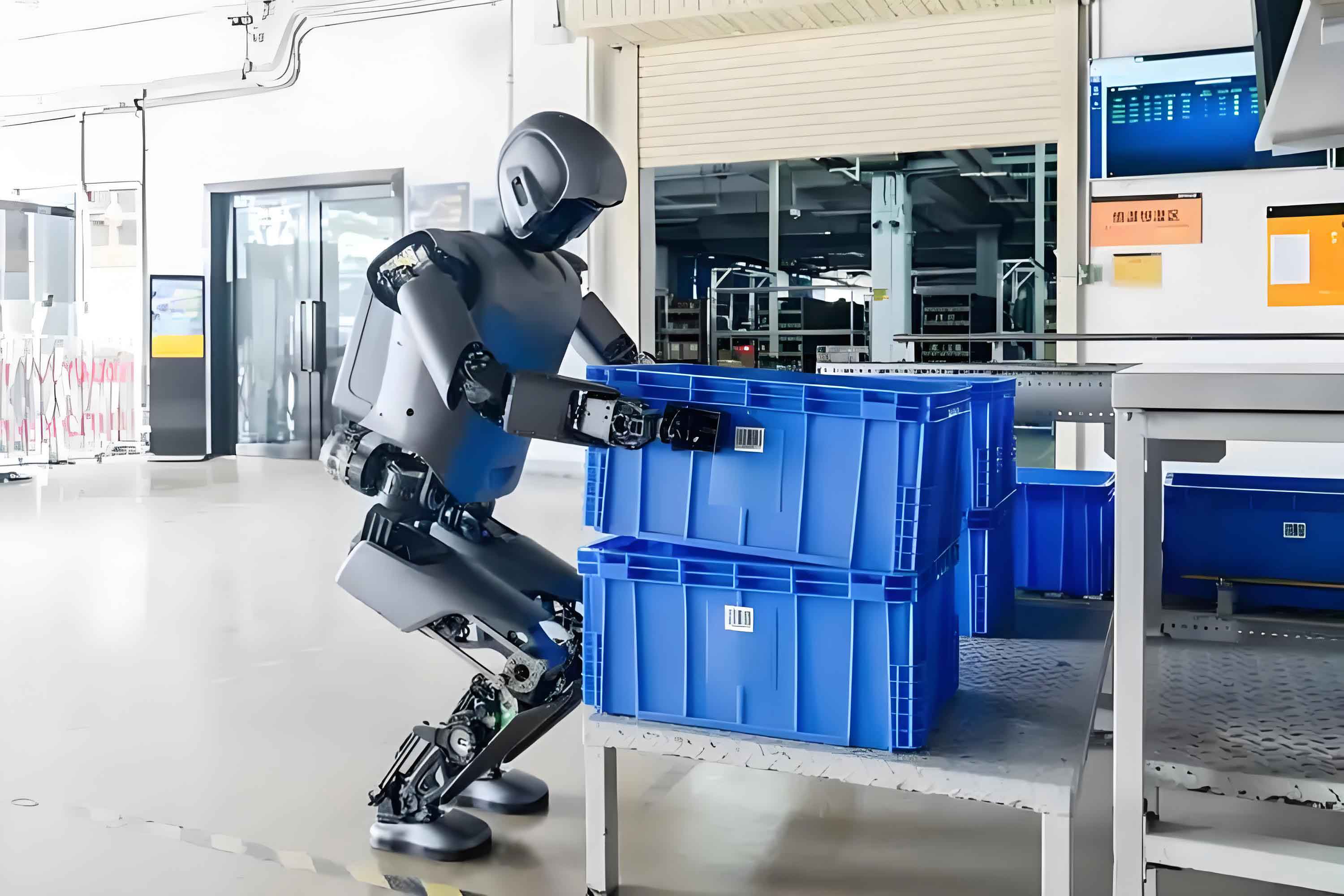
The operational paradigm of this intelligent robot is built upon three synergistic core modules: a holonomic mobility system, an advanced wastewater treatment unit, and an adaptive floor cleaning mechanism. Powered by a high-capacity battery system enabling 8-10 hours of continuous operation and equipped with a 30L multi-chamber water tank, the robot is designed for extended autonomous service. Its workflow is context-aware: when stationed in a busy area, it uses proximity sensors to detect users and pause its movement to provide handwashing service. For office environments, it can be summoned via button or voice command to a specific doorway. Following handwashing, the greywater is sequentially filtered and purified. Once a sufficient volume is accumulated, the intelligent robot autonomously initiates a pre-programmed floor cleaning route, utilizing the treated water. An integrated, shrouded UV-C disinfection system activates during cleaning cycles to ensure comprehensive pathogen elimination without human exposure. The robot monitors its own resource states, autonomously navigating to docking stations for water replenishment and battery recharging when levels are low.
Detailed System Architecture and Design Analysis
1. Holonomic Mobility and Chassis System
The foundation of the robot’s adaptability is its omnidirectional drive system based on Mecanum wheels. This allows for movement in any direction without prior reorientation, essential for navigating crowded, narrow spaces typical of public buildings. The chassis employs four independently driven wheel assemblies.
Wheel Assembly Configuration: Each wheel module integrates a high-torque DC brushless servo motor (model analogous to RM3508) directly coupled to the Mecanum wheel hub via a custom clamping shaft coupler. A thrust bearing is installed between the motor shaft and the coupler to absorb axial loads and prevent undue stress on the motor. The hub is secured to the motor’s axle via a bolt-through clamping plate, ensuring a rigid and reliable connection. The kinematic model for a four-wheel Mecanum platform is defined below. Let the robot’s velocity in the global coordinate frame be $\mathbf{v} = [v_x, v_y, \omega]^T$, representing longitudinal, lateral, and angular velocities, respectively. The rotational speed of each wheel is given by $\mathbf{\omega_w} = [\omega_1, \omega_2, \omega_3, \omega_4]^T$. The inverse kinematics relating wheel speeds to robot velocity is governed by the Jacobian matrix $\mathbf{J}$:
$$
\mathbf{\omega_w} = \frac{1}{r} \mathbf{J} \mathbf{v}
$$
where $r$ is the effective wheel radius. For the adopted X-configuration (alternating left-handed and right-handed wheels on opposite corners), the Jacobian $\mathbf{J}$ is full rank (rank=3), enabling full controllability over all three degrees of freedom. The motor control utilizes closed-loop sinusoidal drive for smooth, precise, and efficient torque delivery, superior to traditional trapezoidal control methods.
| Component | Specification | Function/Rationale |
|---|---|---|
| Drive Motor | DC Brushless Servo (350W peak) | Provides high power density, precise speed/torque control for each Mecanum wheel. |
| Wheel Type | Mecanum Wheels (100mm diameter) | Enables omnidirectional movement (translation in any plane plus rotation). |
| Configuration | X-Layout (Alternating L/R) | Ensures full holonomic mobility (Rank(Jacobian)=3). |
| Control Scheme | Field-Oriented Control (FOC) | Enables efficient, low-noise sinusoidal driving for stable motion. |
| Battery System | Li-ion, 48V, 20Ah | Supplies power for 8-10 hours of mixed operation (mobility, pumps, UV). |
2. Multi-Stage Wastewater Treatment and Recycling Module
The water conservation efficacy of this intelligent robot hinges on its integrated, multi-stage filtration system. The goal is to transform handwashing greywater into a suitable quality for effective floor cleaning, removing particulates, organic matter, and odors.
The treatment process is sequential. First, wastewater is collected in a dedicated sump. It then passes through a coarse stainless-steel mesh filter (Primary Stage), which removes large debris such as lint, hair, and food particles. The subsequent stage involves flow through a packed bed of activated carbon (Secondary Stage). This medium adsorbs dissolved organic contaminants, chlorine, and unpleasant odors, significantly improving water clarity and smell. Finally, the water is held in a clean water reservoir, from where a high-efficiency particulate air (HEPA)-grade filter membrane (Tertiary Stage) performs a final polishing filtration before the water is pumped to the cleaning module. The filtration efficiency can be modeled as a series of removal rates. The concentration of a contaminant $C$ after passing through $n$ stages is given by:
$$
C_n = C_0 \times \prod_{i=1}^{n} (1 – \eta_i)
$$
where $C_0$ is the initial concentration and $\eta_i$ is the removal efficiency of the $i$-th filter stage. For our three-stage system targeting turbidity and organics, the combined efficiency $\eta_{total}$ approaches levels suitable for non-potable reuse.
| Stage | Filter Medium | Primary Target Contaminants | Estimated Removal Efficiency ($\eta$) |
|---|---|---|---|
| Primary | Stainless Steel Mesh (500 µm) | Large Particulates, Hair, Lint | >95% for particles >500µm |
| Secondary | Granular Activated Carbon (GAC) | Dissolved Organics, Chlorine, Odors | >80% TOC, >90% Chlorine |
| Tertiary | HEPA-Grade Pleated Membrane (5 µm) | Fine Suspended Solids, Microbes | >99% for particles >5µm |
3. Adaptive Floor Cleaning and Disinfection System
This module translates the reclaimed water into effective cleaning action. It is a multi-functional assembly designed for precision, efficiency, and safety.
Lifting Mechanism: A servo-actuated scissor lift or linear actuator raises and lowers the entire cleaning assembly. When the intelligent robot is in handwashing mode, the assembly is retracted to prevent interference. During cleaning cycles, it is lowered to apply a controlled, consistent pressure ( $F_{down}$ ) on the mopping pad, ensuring optimal contact with the floor. The required force can be adjusted based on floor type.
Cleaning Unit: The core is a motor-driven, rotating mopping托盘 (tray). A centrally located spray nozzle, connected to the treated water reservoir via a pump and solenoid valve, wets the microfiber pad. The rotation (angular velocity $\omega_{pad}$) combined with the robot’s forward motion ($v_x$) creates a scrubbing effect. The frictional cleaning force $F_{scrub}$ is proportional to the applied downforce and the coefficient of friction $\mu$ between the pad and the floor: $F_{scrub} = \mu \cdot F_{down}$.
Pad Cleaning & Water Delivery: Two methods are employed for pad maintenance. For light cleaning, a high-speed spin cycle (centrifugal acceleration $a_c = \omega_{pad}^2 r$) is used to dislodge debris and partially dry the pad. For heavy soiling, a quick-release mechanism allows for manual pad replacement. Water delivery is controlled via a PWM-controlled pump and valve, with flow rate $Q$ calibrated to maintain optimal pad moisture without leaving excess water.
UV-C Disinfection: A critical safety-enhanced feature is the integrated ultraviolet germicidal irradiation (UVGI) system. An array of UV-C lamps (wavelength ~254 nm) is mounted on the underside of the robot, shielded by automatically deploying physical barriers when activated. This ensures intense surface disinfection ($Dose = Intensity \times Time$) is achieved on the floor path behind the mopping托盘, while completely eliminating exposure risk to nearby humans.
4. Height-Adjustable Handwashing Station Module
To accommodate users of varying statures, the handwashing basin and sensor array are mounted on a vertically adjustable platform. The mechanism utilizes a dual lead-screw system driven by a stepper motor, providing synchronized, stable, and precise lifting. Linear guide rails ensure smooth travel without lateral play. The kinematic relationship between motor rotation and platform height $h$ is given by:
$$
h = \frac{p \cdot N}{2 \pi}
$$
where $p$ is the lead screw pitch and $N$ is the number of motor revolutions. This allows the intelligent robot to automatically position the basin at an ergonomic height (e.g., between 800mm and 1100mm) based on input from a time-of-flight or ultrasonic sensor that estimates user height as they approach.
System Integration and Control Logic
The true “intelligence” of this intelligent robot emerges from the seamless integration of its modules through a centralized microcontroller unit (MCU) or single-board computer. The control logic follows a state-machine architecture, prioritizing tasks based on sensor input and internal resource levels.
| State | Trigger Condition | Actions |
|---|---|---|
| Idle / Patrol | Default state, battery >20%, water >15% | Slow navigation along pre-mapped route or stationary wait in high-traffic zone. |
| Handwashing Service | User detected via proximity sensor OR summon command received. | 1. Stop movement. 2. Adjust basin height. 3. Activate IR sensor for touchless water flow. 4. Collect wastewater. |
| Water Treatment | Wastewater tank level > 70% OR scheduled cycle. | 1. Activate filtration pumps. 2. Transfer treated water to clean tank. 3. Monitor filter pressure differential $\Delta P$. |
| Autonomous Cleaning | Treated water tank > 50% AND during low-traffic hours (configurable). | 1. Lower cleaning assembly. 2. Follow cleaning route. 3. Activate water pump and pad motor. 4. Deploy UV-C shields and activate lamps. |
| Recharge/Refill | Battery < 20% OR clean water < 15%. | 1. Navigate to docking station. 2. Align connectors. 3. Initiate automatic charging and water line connection. |
The navigation stack, likely utilizing SLAM (Simultaneous Localization and Mapping) with LiDAR or depth cameras, allows the intelligent robot to build a map of its environment, localize itself within it, and plan optimal paths for both user summoning and efficient cleaning coverage, avoiding static and dynamic obstacles.
Performance Analysis and Expected Outcomes
The value proposition of this integrated intelligent robot can be quantified across several key metrics: water conservation, operational efficiency, and hygiene improvement.
Water Conservation: A conventional handwash uses approximately 1-2 liters of water, which is immediately sent to drain. In this system, if we assume a 75% recovery rate after treatment losses, each liter used for handwashing yields ~0.75 liters for cleaning. Given that damp mopping typically uses 0.5-1 L per 10 m², the system creates a virtuous cycle. The net water saving $S$ over a period for $N$ handwashes is substantial:
$$
S = (V_{hw} \times N) – (V_{loss} \times N)
$$
where $V_{hw}$ is volume per handwash and $V_{loss}$ is the volume lost to filter backwash and evaporation.
Hygiene Enhancement: The constant availability of a mobile washing station increases hand hygiene compliance in public spaces. Furthermore, the routine, automated application of UV-C disinfection following a mopping cycle with cleaned wastewater provides a consistent and measurable reduction in surface microbial load, a critical factor in reducing fomite transmission of pathogens.
Operational Efficiency: By combining two labor-intensive tasks into one autonomous platform, the intelligent robot reduces the manpower required for custodial services. It can operate during off-hours (e.g., late night) for comprehensive cleaning without disrupting daily activities, and respond to on-demand requests during the day.
| Metric | Traditional Fixed Sink + Manual Cleaning | Water-Conserving Intelligent Robot |
|---|---|---|
| Water Usage | High (Potable water for both tasks, no reuse). | Low (Closed-loop recycling reduces freshwater demand by >60%). |
| Service Accessibility | Fixed location, can lead to queues. | Mobile, can be summoned or stationed flexibly. |
| Cleaning Consistency | Variable, dependent on human schedule/effort. | High, programmable routes and consistent pressure/speed. |
| Disinfection Level | Often chemical-based, dependent on correct application. | Consistent physical (UV-C) disinfection integrated into every cycle. |
| Labor Cost | High (Continuous requirement for cleaning staff). | Reduced (Staff role shifts to supervision, maintenance, and pad replacement). |
Conclusion and Future Development
The proposed节水式洗手拖地一体化智能机器人 represents a significant leap forward in sustainable public health technology. This intelligent robot successfully integrates the discrete functions of hand hygiene and environmental cleaning into a single, autonomous, water-conserving platform. Its holonomic mobility ensures accessibility and adaptability, while its advanced multi-stage water recycling system directly addresses global concerns about resource preservation. The inclusion of automated, safety-shielded UV disinfection adds a powerful layer of pathogen control, making it particularly suitable for healthcare settings and other sensitive environments.
Future iterations of this intelligent robot could explore several enhancements. The integration of water quality sensors (e.g., turbidity, TDS) would allow for real-time monitoring of the treatment efficacy and predictive filter maintenance. Machine learning algorithms could optimize cleaning routes based on historical foot traffic data and soiling patterns. Furthermore, expanding the robotic platform’s capabilities to include other tasks, such as air quality monitoring or trash bin emptying, could position it as a central pillar of smart building management systems. In conclusion, this integrative intelligent robot offers a compelling, practical, and sustainable solution for improving public health infrastructure, aligning perfectly with the principles of green technology and automated service delivery.