
The landscape of library management is undergoing a profound transformation. Traditionally, tasks such as shelving, inventory, and patron guidance have been labor-intensive, relying heavily on human staff. This model often leads to inefficiencies, high operational costs, and potential delays in service. The integration of robotics presents a compelling solution to these challenges. An intelligent robot, equipped with advanced navigation and perception systems, can autonomously traverse library spaces, assist patrons in locating materials, and manage routine logistical tasks. This not only optimizes resource allocation by reducing repetitive human labor but also enhances the accuracy and speed of library operations, offering a more seamless and modern experience for users.
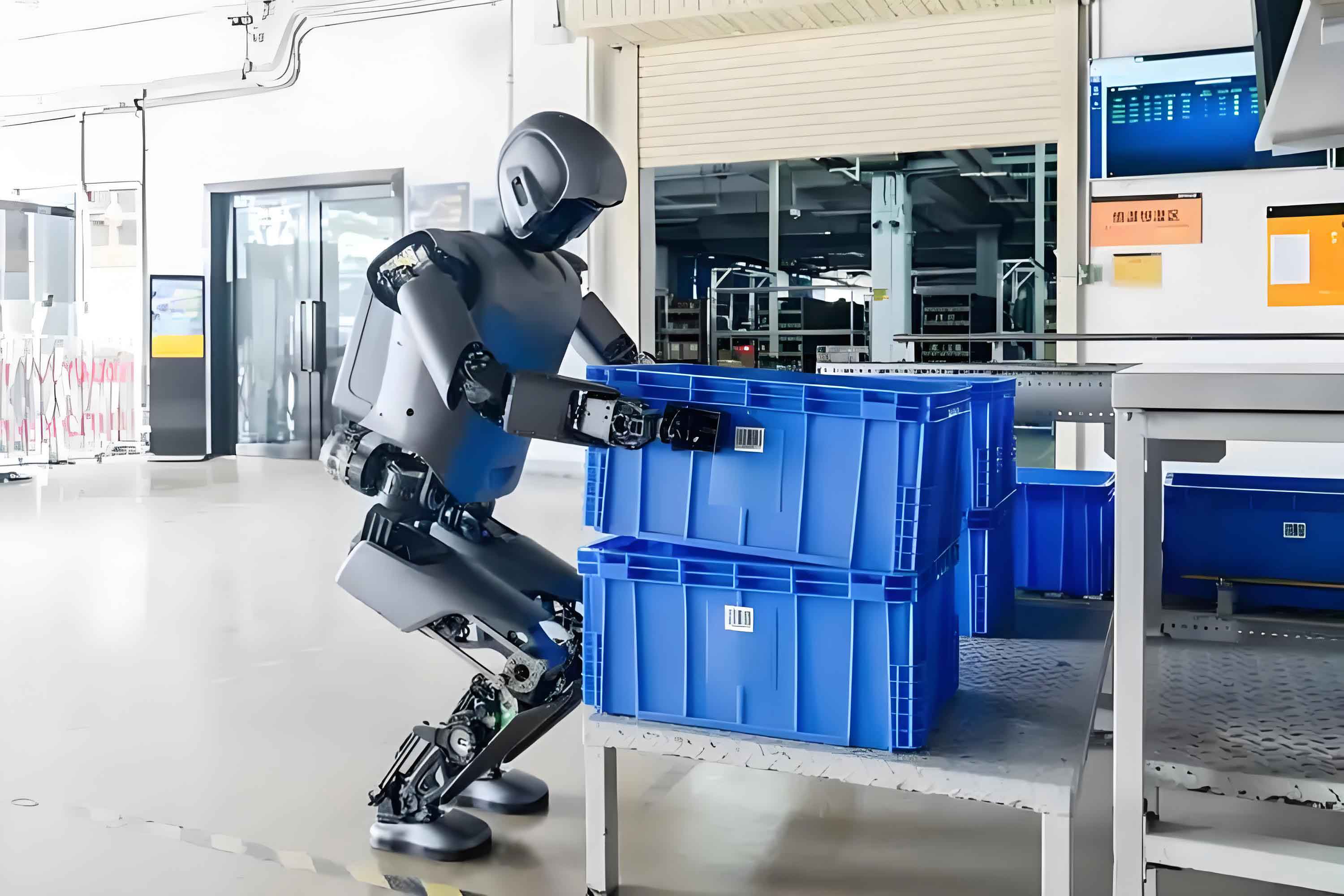
The core of any mobile intelligent robot’s functionality lies in its ability to understand its environment and move purposefully within it. This capability is defined by two intertwined concepts: localization and navigation. Localization is the process through which the intelligent robot determines its own position and orientation within a pre-defined or learned map of the library. Navigation encompasses the higher-level task of planning and executing a movement from a starting point (e.g., a charging station) to a target destination (e.g., a specific bookshelf), while dynamically avoiding both static and moving obstacles like bookshelves, furniture, and people. Effective navigation is impossible without a reliable localization estimate, and efficient movement reinforces accurate localization.
At the heart of autonomous navigation is path planning. This is the computational process of finding an optimal or feasible trajectory for the intelligent robot to follow from its current location to a specified goal. The “optimality” can be defined by various metrics, most commonly the shortest geometric distance, but also factors like time, energy consumption, or smoothness. An effective path planning algorithm for an intelligent library robot must satisfy three primary constraints: it must successfully avoid all obstacles in the environment, it must guarantee convergence to the goal location, and it should find the path that minimizes the chosen cost function.
Fundamentals of Path Planning and Algorithmic Foundations
Before delving into the chosen algorithm for the library intelligent robot, it is instructive to review foundational graph search strategies. The library floor plan can be discretized into a grid or graph representation, where each cell or node is a possible robot position, and edges represent traversable paths between them.
Breadth-First Search (BFS) is an uninformed search algorithm. It begins at the start node and systematically explores the graph level by level, visiting all neighbors of the current node before moving to nodes at the next depth level. It uses a First-In-First-Out (FIFO) queue. While BFS is guaranteed to find a path if one exists, and will find the shortest path in terms of the number of graph edges traversed, it is computationally expensive as it explores all possible directions uniformly without any guidance towards the goal. The cost function in BFS can be thought of purely as the number of steps, \( g(n) \), from the start.
Dijkstra’s Algorithm is a generalization of BFS for graphs with non-uniform edge costs. This is highly relevant for an intelligent robot, as moving across different surfaces (carpet vs. tile) or slight inclines may incur different “costs.” Dijkstra’s algorithm maintains a priority queue where the priority of a node is its cumulative cost \( g(n) \) from the start node. It expands the node with the smallest \( g(n) \) first. By doing so, it guarantees finding the least-cost path from the start to all nodes in the graph. However, like BFS, it explores in all directions without bias toward the goal, making it inefficient for large-scale environments like a library.
Greedy Best-First Search takes the opposite approach. It uses a heuristic function \( h(n) \), which estimates the cost from node \( n \) to the goal (e.g., the straight-line Euclidean distance). The algorithm always expands the node that appears closest to the goal according to this heuristic, using a priority queue ordered by \( h(n) \). This makes it very fast and goal-directed. However, because it ignores the actual cost incurred so far \( g(n) \), it can be misled by the heuristic into pursuing paths that seem geometrically short but are actually high-cost due to obstacles or terrain, and it does not guarantee an optimal path.
The limitations of these algorithms motivate the need for a method that balances optimality with efficiency. This is precisely what the A* algorithm achieves. A* intelligently combines the principles of Dijkstra’s algorithm (actual incurred cost \( g(n) \)) and Greedy Best-First Search (estimated cost-to-go \( h(n) \)) to create a directed yet optimal search strategy, making it exceptionally well-suited for the navigation needs of an intelligent library robot.
| Algorithm | Core Mechanism | Cost Function | Guarantees Optimal Path? | Computational Efficiency |
|---|---|---|---|---|
| Breadth-First Search (BFS) | FIFO Queue, level-order expansion | \( g(n) \) (step count) | Yes (in steps) | Low |
| Dijkstra’s Algorithm | Priority Queue on \( g(n) \) | \( g(n) \) (cumulative cost) | Yes | Moderate to Low |
| Greedy Best-First Search | Priority Queue on \( h(n) \) | \( h(n) \) (heuristic) | No | High |
| A* Algorithm | Priority Queue on \( f(n)=g(n)+h(n) \) | \( f(n) \) (total estimated cost) | Yes* | High |
| *Optimality is guaranteed if the heuristic \( h(n) \) is admissible (never overestimates the true cost to the goal). | ||||
The A* Algorithm: Principles and Application for the Intelligent Robot
The A* algorithm is the cornerstone of the navigation system for the proposed intelligent library robot. It operates on a graph representation of the environment and is designed to find a minimum-cost path from a start node \( S \) to a goal node \( G \). Its power derives from the evaluation function it uses to order node exploration:
$$ f(n) = g(n) + h(n) $$
Where:
- \( n \) is the current node being evaluated.
- \( g(n) \) is the exact, accumulated cost of the path from the start node \( S \) to node \( n \). For the library intelligent robot, this could be the actual distance traveled, time elapsed, or energy consumed.
- \( h(n) \) is the heuristic function, an estimate of the cost from node \( n \) to the goal \( G \). This is where domain knowledge is injected to guide the search. A common and effective heuristic for a robot operating on a 2D plane is the Euclidean distance:
$$ h(n) = \sqrt{(x_n – x_G)^2 + (y_n – y_G)^2} $$
or the Manhattan distance for grid-based movement without diagonals. - \( f(n) \) is the estimated total cost of the cheapest path from \( S \) to \( G \) that goes through node \( n \). The algorithm always expands the node with the lowest \( f(n) \) value first.
The critical property required for the A* algorithm to guarantee finding an optimal path is that the heuristic function \( h(n) \) must be admissible. An admissible heuristic never overestimates the true cost to reach the goal. The Euclidean and Manhattan distances are admissible heuristics for a robot because the straight-line distance is always the shortest possible path; any real path with obstacles will be equal to or longer than this estimate. This admissibility ensures the algorithm never overlooks a potentially better path.
| Symbol | Term | Description & Role in Navigation |
|---|---|---|
| \( S \) | Start Node | The initial pose (x, y, θ) of the intelligent robot on the library map. |
| \( G \) | Goal Node | The target pose, e.g., the coordinates of a specific bookshelf or return desk. |
| \( g(n) \) | Cost-So-Far | Accumulated real cost from \( S \) to \( n \). Ensures path optimality based on actual travel. |
| \( h(n) \) | Heuristic Estimate | Estimated cost from \( n \) to \( G \). Guides the search efficiently toward the goal. |
| \( f(n) \) | Total Estimated Cost | \( f(n)=g(n)+h(n) \). The priority key for selecting the next node to explore. |
| OPEN List | Frontier Set | A priority queue (ordered by \( f(n) \)) of nodes discovered but not yet explored. |
| CLOSED List | Explored Set | The set of nodes already explored and expanded. Prevents redundant cycles. |
The algorithm’s procedure can be formalized in the following steps, which the navigation software of the intelligent robot executes in real-time:
- Initialization: Place the start node \( S \) on the OPEN list. Calculate its \( f(S) = g(S) + h(S) \). Since \( g(S) = 0 \), \( f(S) = h(S) \).
- Main Loop: While the OPEN list is not empty:
- Find and remove the node \( n \) with the lowest \( f(n) \) value from the OPEN list.
- Add node \( n \) to the CLOSED list to mark it as explored.
- Goal Check: If \( n \) is the goal node \( G \), the search is successful. Reconstruct the optimal path by tracing parent pointers from \( G \) back to \( S \).
- Expansion: If \( n \) is not the goal, generate all valid successor nodes \( m \) adjacent to \( n \) that are not blocked by obstacles.
- For each successor \( m \):
- If \( m \) is in the CLOSED list, skip it.
- Calculate its tentative \( g \)-score: \( g_{tent}(m) = g(n) + cost(n, m) \), where \( cost(n, m) \) is the cost to move from \( n \) to \( m \).
- If \( m \) is not in the OPEN list, or if this \( g_{tent}(m) \) is lower than its previously recorded \( g(m) \):
- Set \( g(m) = g_{tent}(m) \).
- Calculate \( f(m) = g(m) + h(m) \).
- Set the parent of \( m \) to \( n \).
- If \( m \) was not in the OPEN list, add it.
- Failure: If the OPEN list becomes empty, no path exists from \( S \) to \( G \). The intelligent robot must report this failure to its control system.
Handling Real-World Complexities: Dead Ends and Dynamic Lists
In a real library environment, an intelligent robot will frequently encounter situations where a naive search might get stuck. Consider a scenario where the direct path toward the goal is blocked by a tightly arranged study desk cluster. A purely greedy heuristic might lead the robot down a corridor that ends in a dead end.
The A* algorithm’s use of the OPEN and CLOSED lists, combined with the \( g(n) \) component of its evaluation, elegantly handles this. When the robot’s simulated search (during planning) goes down a dead-end path, the \( g(n) \) value for nodes deep in that cul-de-sac becomes very high due to the long distance traveled from the start. Consequently, their \( f(n) \) values will eventually exceed those of alternative nodes that were discovered earlier but seemed geometrically further from the goal according to \( h(n) \). The algorithm will then “backtrack” in its exploration by switching to expand those alternative nodes from the OPEN list. The CLOSED list prevents it from wastefully re-exploring the dead-end nodes. This property ensures that the intelligent robot’s path planner is robust and will always find a way around complex obstacle fields, a non-negotiable requirement for reliable library operation.
Simulation and Implementation of the A* Navigation System
To validate the performance of the A* algorithm for the library intelligent robot prior to real-world deployment, a comprehensive simulation was developed using MATLAB. This simulation environment allows for the flexible definition of maps, start/goal points, and obstacle configurations representative of a library floor plan.
| Parameter | Description | Configuration in Simulation |
|---|---|---|
| Map Representation | Discretization of the environment. | 2D binary grid (occupancy grid). ‘0’ for free space, ‘1’ for obstacle. |
| Movement Model | Allowed movements from a grid cell. | 8-connectivity (allows diagonal moves). Cost for diagonal: \( \sqrt{2} \), for cardinal: \( 1 \). |
| Heuristic Function \( h(n) \)) | Estimate from node \( n \) to goal \( G \). | Euclidean Distance: \( h(n) = \sqrt{(dx)^2 + (dy)^2} \). |
| Cost Function \( g(n) \)) | Accumulated travel cost. | Sum of step costs from \( S \) to \( n \), respecting the movement model. |
| Obstacle Definition | Static objects to avoid. | User-interactive placement to mimic bookshelves, pillars, and service desks. |
The simulation follows the A* procedural logic outlined earlier. The user interactively selects the start point (the robot’s initial position) and the goal point (the target book location) on the grid map. Subsequently, obstacles representing library furniture are plotted. Upon execution, the algorithm visualizes its search process in real-time: the OPEN list frontier can be shown as a expanding wavefront, the CLOSED list as visited regions, and finally, the computed optimal path is highlighted from start to goal. This visual feedback is invaluable for debugging and for understanding how the intelligent robot will reason about its route.
The simulation results consistently demonstrate the key strengths of the A* algorithm for this application. In every valid scenario, the algorithm successfully finds a path from start to goal, perfectly skirting all user-defined obstacles. The resulting path is the globally shortest path given the discrete grid and movement model. The efficiency of the search is markedly superior to a brute-force approach like BFS, as the search frontier is visibly pulled toward the goal by the heuristic, minimizing the number of cells explored. This translates directly to reduced computational time for the intelligent robot’s onboard processor when calculating new paths.
Conclusion and Future Directions for the Intelligent Library Robot
The implementation of an A* algorithm-based navigation system provides a robust, efficient, and optimal solution for the core path planning challenge faced by an intelligent library robot. By intelligently balancing the actual cost of travel with an informed estimate of the remaining distance, the A* algorithm enables the robot to plan the shortest feasible paths through the complex, obstacle-filled environment of a modern library. This capability is fundamental to performing tasks such as guiding patrons to a specific shelf, transporting books for restocking, or autonomously patrolling aisles.
The successful simulation of this system validates its theoretical soundness and readiness for integration into a physical robotic platform. The next critical phase involves coupling this path planner with a robust localization system (e.g., using LiDAR, visual landmarks, or fused sensor data) and a reactive obstacle avoidance layer to handle dynamic objects like moving people. Furthermore, the basic A* algorithm can be enhanced for the library context. Considerations for multi-floor navigation, incorporating no-go zones (e.g., quiet study areas), or dynamic replanning in response to temporary obstructions (like a moved chair) are natural extensions of this work.
The deployment of such intelligent robots signifies a major leap forward in library automation. It shifts human staff from repetitive logistical tasks to higher-value roles involving user assistance, complex inquiries, and resource management. For patrons, it promises immediate, accurate, and convenient access to library resources. The integration of the A* path planning algorithm is a pivotal step in realizing the vision of a truly intelligent, responsive, and efficient smart library ecosystem, where technology works seamlessly to facilitate the discovery and dissemination of knowledge.