
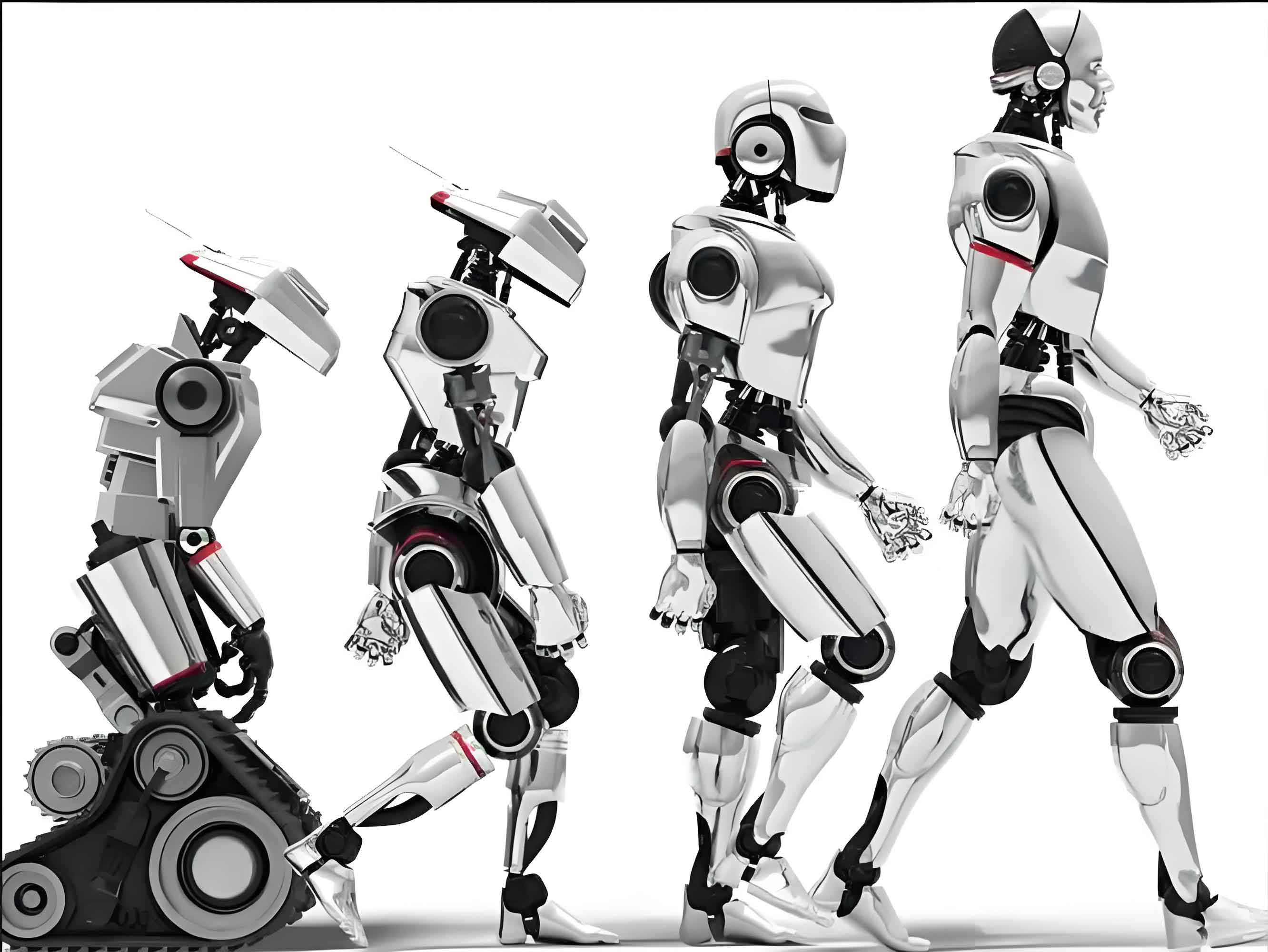
The ability to perceive and navigate complex environments autonomously is a fundamental requirement for modern intelligent robots. Among the core perceptual tasks, obstacle detection stands as a critical prerequisite for safe path planning, localization, and autonomous movement. This capability enables an intelligent robot to understand its surroundings, create maps, and interact dynamically with the world. Traditional approaches to this challenge can be broadly categorized into non-visual range-sensing methods and vision-based image processing techniques.
Non-visual methods, such as millimeter-wave radar, ultrasonic sensors, and LiDAR (Light Detection and Ranging), directly measure distance by emitting signals and analyzing their time-of-flight or reflection patterns. While these sensors provide accurate range data and are relatively robust to lighting conditions, they often offer lower spatial resolution compared to cameras and may struggle with identifying the precise geometry or semantic nature of obstacles. For instance, distinguishing between a glass door and an open passageway can be difficult for certain types of radar or LiDAR.
Vision-based methods, conversely, leverage the rich information contained in images. Techniques range from monocular approaches using texture analysis, edge detection, or machine learning models to infer depth, to more geometrically grounded stereo vision systems. Stereopsis, inspired by human binocular vision, uses two cameras to capture images from slightly different viewpoints. By finding corresponding points (pixels) in these two images, the system can compute disparity—the difference in their horizontal positions—and subsequently triangulate the 3D coordinates of the scene point. The fundamental relationship is given by the standard stereo vision equation:
$$ Z = \frac{f \cdot B}{d} $$
where \(Z\) is the depth (distance to the point), \(f\) is the focal length of the cameras, \(B\) is the baseline (distance between the two camera centers), and \(d = x_l – x_r\) is the disparity. Despite their potential for rich environmental understanding, pure passive stereo vision systems face significant challenges on embedded platforms for intelligent robots. The core issue is the correspondence problem: finding the correct matching point in the right image for every point in the left image. This process is computationally intensive, especially in textureless regions (e.g., blank walls, uniform floors) or repetitive patterns where unique matches are hard to establish, leading to insufficient or erroneous depth information.
To bridge this gap and achieve reliable performance on resource-constrained embedded hardware, this work proposes and details a novel hybrid methodology: an Active Dual-Line Assisted Binocular Stereo Vision system. The central innovation is the use of two dynamically controlled laser line projectors to inject known, high-contrast features into the scene. These laser lines serve as readily identifiable cues, simplifying and robustifying the feature matching process essential for 3D reconstruction, thereby enabling efficient and accurate obstacle detection for an intelligent robot.
1. Related Work and System Overview
Extensive research has been conducted on obstacle detection for mobile platforms. Non-visual sensors like ultrasonic arrays are common for short-range detection but suffer from wide beam angles and specular reflections. Single-line 2D LiDAR scanners (e.g., based on time-of-flight or phase-shift principles) provide excellent radial accuracy but typically capture only a single plane of data, potentially missing obstacles outside that slice. Full 3D LiDAR solutions are powerful but remain costly and computationally demanding for small-scale intelligent robots.
In the vision domain, monocular methods often rely on machine learning (e.g., convolutional neural networks) for depth estimation or obstacle segmentation. These methods require large datasets and significant computational resources for inference, which can be prohibitive for low-power embedded processors. Passive stereo vision, as mentioned, provides a direct geometric solution but struggles with the correspondence problem in real-world, challenging environments.
Structured light systems offer a compelling middle ground. By projecting a known light pattern (e.g., dots, lines, grids) onto a scene, they create artificial texture, simplifying correspondence. Many industrial 3D scanners use this principle. However, fixed-pattern projectors may not adapt well to varying scene distances and complexities. Our proposed system advances this concept by making the structured light component active and adaptive. We employ two laser line generators mounted on digitally controlled pan-tilt servos. This allows the intelligent robot to dynamically adjust the scanning angle and frequency of the laser lines based on real-time scene analysis, effectively controlling the density and location of feature points. This adaptability is key: in open spaces, a sparse scan suffices; when a potential obstacle is detected, the system can focus the lasers to perform a denser scan of the region of interest, gathering detailed 3D geometry without overwhelming the processor with unnecessary data from the entire image.
The overall hardware architecture of the embedded intelligent robot platform is designed to support this active vision paradigm. The core processing unit is a high-performance Digital Signal Processor (DSP), specifically an ADSP-BF548, chosen for its optimized video processing capabilities and computational efficiency. Two synchronized CCD cameras capture stereo image pairs. The analog video signals are digitized by dedicated video decoders (e.g., ADV7180) before being streamed into the DSP. The dual laser line projectors are interfaced via UART-controlled servo drivers. Additional context is provided by an inertial measurement unit (a 3-axis accelerometer like ADXL330) for sensing the robot’s own tilt and movement, and an electronic compass for heading. Communication for remote monitoring and control is enabled through either a wired Ethernet controller or a Wi-Fi module connected via an SDIO interface.
2. Methodology: Active Stereo Vision for 3D Reconstruction
The core of the obstacle detection pipeline for the intelligent robot is a multi-stage process involving camera calibration, image preprocessing, active feature projection, feature extraction and matching, and finally, 3D coordinate calculation and obstacle analysis.
2.1 Camera Calibration and Epipolar Geometry
Accurate 3D measurement hinges on precise camera calibration. This process determines the intrinsic parameters (focal length \(f\), principal point \((c_x, c_y)\), lens distortion coefficients \(k_1, k_2, p_1, p_2\)) and extrinsic parameters (the rotation matrix \(\mathbf{R}\) and translation vector \(\mathbf{T}\) describing the position of one camera relative to the other). We employ a standard planar calibration pattern (e.g., a checkerboard) and algorithms based on the pinhole camera model and radial alignment constraint.
The transformation from a 3D world point \(\mathbf{P_w} = [X_w, Y_w, Z_w]^T\) to its pixel coordinates \(\mathbf{p} = [u, v]^T\) in an image involves several steps, summarized by the following equations:
1. World to Camera Coordinate Transformation:
$$ \begin{bmatrix} X_c \\ Y_c \\ Z_c \\ 1 \end{bmatrix} = \begin{bmatrix} \mathbf{R} & \mathbf{T} \\ \mathbf{0} & 1 \end{bmatrix} \begin{bmatrix} X_w \\ Y_w \\ Z_w \\ 1 \end{bmatrix} = \mathbf{M}_{ext} \begin{bmatrix} X_w \\ Y_w \\ Z_w \\ 1 \end{bmatrix} $$
2. Perspective Projection (including lens distortion):
First, project to the normalized image plane (without distortion):
$$ x_n = X_c / Z_c, \quad y_n = Y_c / Z_c $$
Then, apply radial and tangential distortion models:
$$ r^2 = x_n^2 + y_n^2 $$
$$ x_d = x_n (1 + k_1 r^2 + k_2 r^4) + 2p_1 x_n y_n + p_2 (r^2 + 2x_n^2) $$
$$ y_d = y_n (1 + k_1 r^2 + k_2 r^4) + p_1 (r^2 + 2y_n^2) + 2p_2 x_n y_n $$
3. Pixel Coordinate Calculation:
$$ u = f_x \cdot x_d + c_x, \quad v = f_y \cdot y_d + c_y $$
where \(f_x\) and \(f_y\) are the focal lengths in pixel units.
Calibration yields precise parameters for both the left and right cameras. A critical outcome for stereo vision is the rectification process. Using the calibration parameters, images are warped so that corresponding points lie on the same horizontal scanline. This simplifies the search for matches from a 2D area to a 1D line, drastically reducing computational cost. The epipolar constraint enforces this geometry.
| Parameter Type | Left Camera | Right Camera |
|---|---|---|
| Intrinsic Matrix \(K\) | $$ \begin{bmatrix} 953.5 & 0 & 208.6 \\ 0 & 1068.7 & 166.8 \\ 0 & 0 & 1 \end{bmatrix} $$ | $$ \begin{bmatrix} 946.8 & 0 & 128.2 \\ 0 & 1036.4 & 183.5 \\ 0 & 0 & 1 \end{bmatrix} $$ |
| Distortion Coefficients | \([k_1, k_2, p_1, p_2] \approx [0.46, 0, 0.007, 0.025]\) | \([k_1, k_2, p_1, p_2] \approx [0.30, 2.26, -0.009, 0.0003]\) |
| Rotation Matrix \(R\) | $$ \begin{bmatrix} 0.841 & 0.024 & 0.541 \\ 0.002 & 0.999 & 0.040 \\ 0.541 & 0.033 & 0.840 \end{bmatrix} $$ | |
| Translation Vector \(T\) (mm) | \([256.10, 16.89, 59.75]^T\) | |
2.2 Image Preprocessing and Active Feature Projection
Raw images from the cameras contain noise and varying illumination. For reliable laser line detection, preprocessing is essential. A median filter is applied to suppress salt-and-pepper noise while preserving edge sharpness. Subsequently, background subtraction or contrast-limited adaptive histogram equalization (CLAHE) can be used to enhance the contrast of the bright laser lines against the scene. Finally, a thresholding operation converts the image to binary, isolating the laser stripes.
The defining feature of this system for the intelligent robot is the active laser projection. The two line lasers, initially aligned to intersect at the center of the robot’s field of view, are controlled by servo motors. The control logic is as follows:
- Initialization & Patrol Scan: The robot moves along a predefined path. The lasers perform a low-frequency, wide-angle scan, creating moving lines in the scene.
- Obstacle Hypothesis: The DSP processes the stereo images. If the reconstructed 3D points from the laser lines show a significant discontinuity or cluster indicating a potential obstacle (e.g., a sudden change in depth), the robot halts.
- Focused Inspection: The servo motors are commanded to reposition the laser intersection point to the area of interest (e.g., the top-left corner of a detected object). The lasers then perform a higher-frequency, denser raster scan over this specific region. This adaptive scanning provides high-density 3D data exactly where it is needed, optimizing DSP processing load.
2.3 Feature Extraction and Stereo Matching
In each preprocessed binary image, the laser line appears as a bright stripe, several pixels wide. We need to reduce this stripe to a sub-pixel accurate centerline, which will serve as our feature for matching. The brightness centroid method is employed for its simplicity and accuracy. For a vertical slice of the image at column \(x\), the center \(v_{center}\) of the laser line in that slice is calculated as:
$$ v_{center}(x) = \frac{\sum_{y=y_{min}}^{y_{max}} I(x, y) \cdot y}{\sum_{y=y_{min}}^{y_{max}} I(x, y)} $$
where \(I(x, y)\) is the intensity (or binary value) of the pixel at \((x, y)\), and the summation is over the vertical span of the laser line in that column. This yields a set of feature points \(\mathbf{p}_l^i = (x_l^i, v_{center}^i)\) for the left image and \(\mathbf{p}_r^j = (x_r^j, v_{center}^j)\) for the right image.
Thanks to image rectification, matching is constrained to the same horizontal line (\(v_{center}^i \approx v_{center}^j\)). The system then searches along this epipolar line in the right image for the corresponding point of a given point from the left image. Since the laser lines are the primary bright features, the matching often simplifies to finding the nearest prominent bright centroid on the same row. For the intersecting point of the two lasers, it is uniquely identifiable in both images, providing a strong correspondence anchor. The output is a set of matched pixel pairs \(\{( \mathbf{p}_l^i, \mathbf{p}_r^i )\}_{i=1}^N\).
2.4 3D Triangulation and Obstacle Parameterization
For each matched pair \((u_l, v)\) and \((u_r, v)\), the disparity is \(d = u_l – u_r\). Using the rectified stereo camera model, the 3D coordinates \((X, Y, Z)\) in the camera coordinate system can be recovered as:
$$ Z = \frac{f \cdot B}{d}, \quad X = \frac{Z \cdot (u_l – c_x)}{f_x}, \quad Y = \frac{Z \cdot (v – c_y)}{f_y} $$
where \(f_x, f_y, c_x, c_y\) are from the rectified camera’s intrinsic matrix, and \(B\) is the baseline magnitude derived from the translation vector \(\mathbf{T}\).
By processing all matched points from a laser scan, a 3D point cloud of the laser line’s intersection with the environment is obtained. Obstacle detection and measurement become geometric analysis tasks on this cloud:
- Obstacle Presence: A cluster of points with significantly different \(Z\) values (depth) from the expected ground plane indicates an obstacle.
- Dimension Measurement: For an object like a door frame, scanning the vertical edges with the laser allows calculation of the door jamb thickness. By identifying the points on the left and right edges of the jamb and finding their respective depths, the thickness \(T\) is simply \(|Z_{left} – Z_{right}|\) at a similar height \(Y\). Similarly, scanning a horizontal line across a doorstep reveals a depth discontinuity, from which the step height \(H = |Y_{floor} – Y_{step}|\) at a given \(Z\) can be computed.
| Process | Key Input | Key Equations/Output | Purpose for Intelligent Robot |
|---|---|---|---|
| Camera Projection | 3D World Point \(\mathbf{P_w}\) | $$ \mathbf{p} = K \cdot \text{distort}( \mathbf{R} \mathbf{P_w} + \mathbf{T} ) $$ | Models how the scene is imaged. |
| Stereo Rectification | Calibration params \((K_l, K_r, R, T)\) | Computes rectification maps \(H_l, H_r\). | Aligns images for 1D search. |
| Feature Extraction | Binary image with laser stripe | $$ v_{centroid}(x) = \frac{\sum I \cdot y}{\sum I} $$ | Finds sub-pixel laser line center. |
| 3D Triangulation | Matched pixels \((u_l, v)\), \((u_r, v)\) | $$ Z = \frac{fB}{u_l – u_r}, \quad X = \frac{Z(u_l – c_x)}{f_x} $$ | Recovers real-world 3D coordinates. |
| Obstacle Measurement | 3D point cloud of a scan | Thickness: \(T = |Z_1 – Z_2|\) Height: \(H = |Y_1 – Y_2|\) |
Quantifies obstacle dimensions for navigation decisions. |
3. Experimental Procedure and Results
The proposed system was integrated into a small mobile intelligent robot platform and tested in an indoor corridor environment. The primary objectives were to validate the accuracy of the 3D reconstruction and to demonstrate the system’s capability to detect and measure common obstacles like open doors and doorsteps.
3.1 Calibration Accuracy Validation
After calibrating the stereo camera pair using a 7×7 checkerboard pattern, the accuracy of the calibration was verified by reconstructing the 3D positions of the inner corner points of the pattern. The known physical distance between adjacent corners was 22.93 mm. Using the calibrated parameters and the stereo matching of these corners, the 3D points were reconstructed. The average measured distance between adjacent reconstructed points was calculated to be 21.89 mm.
The accuracy error is computed as:
$$ \text{Error} = \frac{|D_{measured} – D_{ground\_truth}|}{D_{ground\_truth}} \times 100\% = \frac{|21.89 – 22.93|}{22.93} \times 100\% \approx 4.54\% $$
This sub-5% error in a controlled setup confirms that the camera calibration and basic stereo triangulation pipeline are functioning correctly, providing a reliable foundation for obstacle detection.
3.2 Obstacle Detection and Measurement in Corridor
The intelligent robot was tasked to navigate a corridor and identify open doorways. The operational flowchart executed by the embedded DSP is as follows:
- The robot moves forward, performing a wide patrol scan with the lasers.
- Upon detecting an anomalous depth profile (e.g., a recess indicating a door alcove), it stops and turns the camera/laser assembly towards the area.
- It initiates a focused, dense raster scan of the door area. From the 3D point cloud, it identifies two vertical clusters of points corresponding to the left and right door jambs.
- It calculates the thickness of each jamb by analyzing the depth (\(Z\)) values of the points on the front and back edges of the jamb.
- If the space between the jambs is clear (no points with close depth), it identifies the door as “open”. The robot then approaches the doorway.
- To cross the threshold, it needs to detect a doorstep. It disables the horizontal laser line and uses only the vertical line for a simpler scan across the floor plane. A discontinuity in the \(Y\) coordinate (height) of the laser points indicates the step.
- Based on the measured step height, the robot decides its action mode (e.g., switch from wheeled to legged gait if the step is high).
Experimental data from a door jamb measurement is presented below. The system captured the 3D coordinates of the laser points on the front and back surfaces of the jamb.
| Measurement Point (Side) | 3D Coordinates (X, Y, Z) in mm | Calculated Thickness (mm) | Ground Truth (mm) | Error (mm / %) |
|---|---|---|---|---|
| Left Jamb – Front Edge | (48.71, 1.19, 457.41) | 20.35 | 20.00 | 0.35 / 1.75% |
| Left Jamb – Back Edge | (46.65, 0.73, 437.06) | |||
| Right Jamb – Front Edge | (12.76, 21.95, 530.09) | 19.27 | 20.00 | -0.73 / 3.65% |
| Right Jamb – Back Edge | (13.77, 20.05, 510.82) |
The results show that the intelligent robot system successfully measured the door jamb thickness with an error of less than 4% (specifically, 1.75% and 3.65% for left and right sides, respectively). The slight variations are attributable to factors like slight laser line width, sub-pixel estimation errors, and minor calibration residuals. Similarly, in tests for detecting and measuring doorstep height, the system reliably identified the step and computed its dimensions, enabling appropriate gait transition decisions.
4. Discussion and Conclusion
The integration of actively controlled laser line projectors with a classical binocular stereo vision system presents a highly effective solution for obstacle detection on embedded intelligent robot platforms. This hybrid approach directly addresses the principal weaknesses of both pure passive stereo and fixed structured-light systems.
Advantages Demonstrated:
1. Robust Feature Matching: The injected laser lines provide high-contrast, easily segmentable features even in textureless environments, solving the “blank wall” problem of passive stereo.
2. Computational Efficiency: By focusing processing only on the laser stripes and leveraging the epipolar constraint, the dense, pixel-wise correspondence search is avoided. The adaptive scanning further ensures the DSP (ADSP-BF548) is not burdened with processing high-density data from irrelevant parts of the scene.
3. Adaptability: The ability to dynamically adjust scan pattern density and location based on a coarse initial depth assessment is a key innovation. It allows the intelligent robot to balance between fast, low-resolution environmental awareness and detailed, high-resolution inspection of potential obstacles.
4. Accuracy: As validated by the experiments, the system achieves distance measurement errors consistently below 5%, which is sufficient for reliable navigation and interaction in indoor environments like corridors and doorways.
5. Cost-Effectiveness: Compared to a high-resolution 3D LiDAR, the system components (CCD cameras, low-power line lasers, servos, and an embedded DSP) are relatively low-cost, making it suitable for small-scale or research-oriented intelligent robots.
Limitations and Future Work:
The current system has certain limitations. Its performance can degrade under very strong ambient light (e.g., direct sunlight) which can wash out the laser lines, though optical filters can mitigate this. The scanning mechanism, while adaptive, introduces a temporal component—acquiring a detailed scan takes time. Future iterations could explore faster servo mechanisms or the use of diffractive optical elements to project static but more complex multi-line patterns that are still amenable to matching. Furthermore, integrating the sparse but accurate 3D data from this system with a real-time visual SLAM (Simultaneous Localization and Mapping) framework would be a logical next step to provide the intelligent robot with full localization and dense mapping capabilities.
In conclusion, this work has detailed the design and implementation of an active dual-line assisted stereo vision system for obstacle detection. By synergistically combining the principles of structured light and stereo vision within an adaptive control loop, the method provides a robust, efficient, and accurate perceptual capability for autonomous embedded intelligent robots, effectively enabling them to perceive and measure obstacles in their path with high reliability.