
As a researcher in orthopedics, I have witnessed the transformative impact of intelligent robot-assisted systems in joint arthroplasty. Arthroplasty remains the primary treatment for end-stage joint diseases, significantly enhancing patients’ quality of life by replacing damaged joints with artificial prostheses. However, traditional manual techniques face persistent challenges such as postoperative dislocation, aseptic loosening, infection, soft-tissue imbalance, and unexplained pain, leading to high revision rates and substantial economic burdens. The advent of intelligent robot-assisted systems, exemplified by the MAKO SmartRobotics system, has revolutionized this field through CT-based three-dimensional (3D) intelligent modeling, enabling patient-specific preoperative planning and precise execution. In this review, I will delve into the clinical applications, benefits, and health economic evaluations of intelligent robot-assisted systems in total hip arthroplasty (THA), total knee arthroplasty (TKA), and partial knee arthroplasty (PKA), with a focus on how these intelligent robots optimize outcomes and resource utilization.
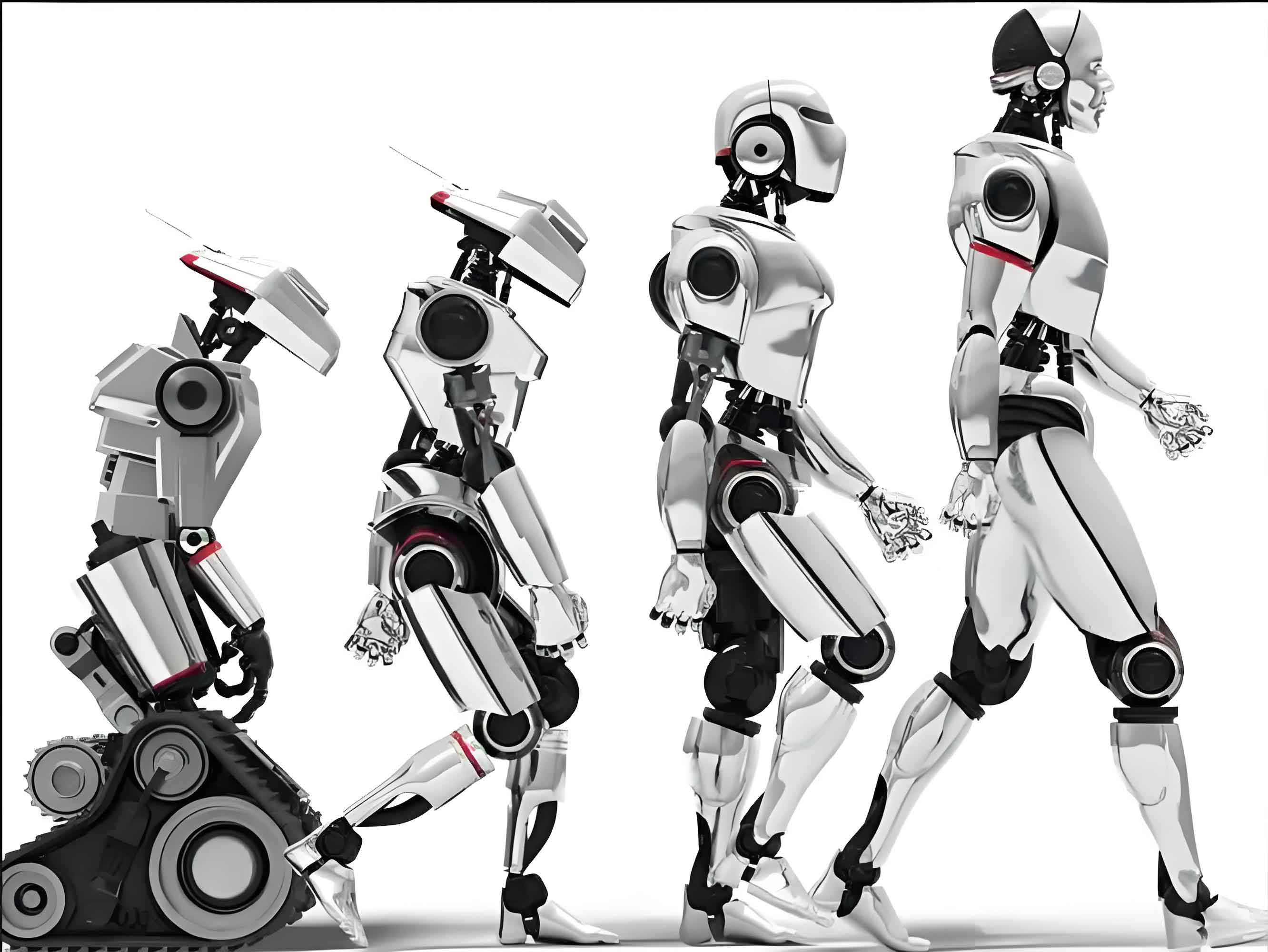
The integration of intelligent robot technology in arthroplasty hinges on its ability to enhance surgical precision. By leveraging preoperative CT scans, the intelligent robot constructs a detailed 3D model of the patient’s anatomy, allowing for tailored surgical plans that account for individual biomechanics. This intelligent robot system employs haptic feedback to guide bone resection and implant placement, restricting deviations from predefined safe zones. Such capabilities are crucial in mitigating human error and achieving reproducible results. In this context, the intelligent robot functions not merely as a tool but as a collaborative partner in surgical decision-making, adapting in real-time to intraoperative findings. The core advantage lies in the intelligent robot’s data-driven approach, which minimizes variability and maximizes alignment with physiological norms.
To systematically assess the clinical impact of intelligent robot-assisted systems, I will first explore their applications across different arthroplasty types. In THA, the intelligent robot aids in acetabular cup positioning, femoral preparation, and restoration of hip biomechanics. For TKA, the intelligent robot facilitates accurate limb alignment, soft-tissue balancing, and component orientation. In PKA, the intelligent robot enables precise unicompartmental resurfacing with minimal bone loss. Each application underscores the versatility of intelligent robot technology in addressing unique surgical demands. Below, a table summarizes key technical features of intelligent robot-assisted arthroplasty systems.
| Application | Intelligent Robot Function | Key Benefits |
|---|---|---|
| Total Hip Arthroplasty (THA) | CT-based 3D planning; haptic-guided acetabular reaming and cup implantation | Improved cup positioning; reduced dislocation risk; bone preservation |
| Total Knee Arthroplasty (TKA) | Real-time gap balancing; robotic-arm assisted bone cuts; predictive soft-tissue assessment | Enhanced alignment; lower soft-tissue trauma; faster recovery |
| Partial Knee Arthroplasty (PKA) | Precision milling of femoral and tibial compartments; ligament tensioning algorithms | Minimized bone removal; higher implant survivorship; natural kinematics preservation |
The mathematical foundation of intelligent robot-assisted systems often involves optimization algorithms. For instance, implant positioning can be modeled as minimizing a cost function that incorporates factors like edge-loading risk and range of motion. A simplified representation is:
$$ \text{Minimize } f(\theta, \phi) = w_1 \cdot (\theta – \theta_{\text{target}})^2 + w_2 \cdot (\phi – \phi_{\text{target}})^2 + w_3 \cdot R(\text{impingement}) $$
where $\theta$ and $\phi$ represent acetabular inclination and anteversion angles, $w_i$ are weights assigned to clinical priorities, and $R$ denotes a penalty for impingement risk. The intelligent robot computes this in real-time, adjusting plans based on intraoperative data. This algorithmic precision is what sets intelligent robot systems apart from conventional methods.
In THA, the intelligent robot addresses the limitations of manual techniques. Traditional THA relies on surgeon experience for acetabular cup placement, often leading to outliers from the Lewinnek safe zone (inclination: $40^\circ \pm 10^\circ$, anteversion: $15^\circ \pm 10^\circ$). However, studies show that over 50% of dislocations occur within this zone, highlighting the need for personalized targets. The intelligent robot accounts for dynamic pelvic tilt, creating patient-specific safe zones. For example, functional combined anteversion can be optimized using:
$$ \text{FCA} = \text{Acetabular Anteversion} + \text{Femoral Anteversion} $$
The intelligent robot adjusts plans to maintain FCA within an optimal range, reducing dislocation risk. Additionally, the intelligent robot enhances bone preservation by controlling reaming depth, allowing for smaller cup sizes relative to femoral head dimensions. This is quantified by the bone removal ratio $B_r$:
$$ B_r = \frac{V_{\text{actual}}}{V_{\text{planned}}} $$
where $V$ represents bone volume removed. Intelligent robot-assisted THA typically yields $B_r < 1$, indicating superior conservation compared to manual methods.
For TKA, the intelligent robot tackles alignment and soft-tissue balance. Manual TKA often results in coronal plane outliers beyond $\pm 3^\circ$ from neutral, accelerating polyethylene wear. The intelligent robot uses preoperative CT to plan resections that restore mechanical axis alignment. The alignment error $E$ can be expressed as:
$$ E = \sqrt{(\alpha_m – \alpha_r)^2 + (\beta_m – \beta_r)^2} $$
where $\alpha$ and $\beta$ are femoral and tibial angles, with subscripts $m$ for manual and $r$ for intelligent robot-assisted. Studies consistently report lower $E$ values for intelligent robot systems. Soft-tissue balance is achieved through gap balancing algorithms; the intelligent robot measures medial and lateral gaps in extension and flexion, adjusting cuts to ensure symmetry within $\pm 1$ mm. This reduces the need for ligament releases, minimizing iatrogenic injury.
In PKA, the intelligent robot enables meticulous unicompartmental arthroplasty. Precision is paramount here, as overstuffing or malalignment can lead to rapid failure. The intelligent robot plans resections based on disease confinement, preserving cruciate ligaments. Implant positioning accuracy is often evaluated using 3D deviation metrics:
$$ D = \frac{1}{n} \sum_{i=1}^n || \mathbf{p}_{\text{actual},i} – \mathbf{p}_{\text{planned},i} || $$
where $\mathbf{p}$ denotes implant coordinate vectors. Intelligent robot-assisted PKA demonstrates significantly lower $D$ values versus manual techniques. Moreover, the intelligent robot facilitates bone-saving strategies, with resection volumes often 20-30% lower than manual PKA.
The clinical benefits of intelligent robot-assisted arthroplasty are multifaceted. Long-term implant survivorship is enhanced due to precise positioning. For THA, intelligent robot assistance reduces dislocation-related revisions by approximately 70% compared to manual THA, as per retrospective analyses. In TKA, intelligent robot systems lower 3-year revision rates by 0.5-1% absolute risk reduction. For PKA, 10-year survivorship with intelligent robot assistance exceeds 90%, outperforming manual methods. These outcomes translate to fewer revision surgeries, which are costly and burdensome. The table below summarizes key clinical studies on intelligent robot-assisted arthroplasty survivorship.
| Study Type | Arthroplasty Type | Intelligent Robot Survivorship | Manual Survivorship | Follow-up Period |
|---|---|---|---|---|
| Retrospective Cohort | THA | 98.5% | 96.0% | 5 years |
| Prospective Multicenter | TKA | 97.2% | 95.8% | 3 years |
| Longitudinal Analysis | PKA | 91.7% | 85.0% | 10 years |
Surgical outcomes are also improved with intelligent robot assistance. Patient-reported outcome measures (PROMs) such as the Harris Hip Score (HHS) and Knee Injury and Osteoarthritis Outcome Score (KOOS) show greater improvements in intelligent robot-assisted cohorts. For example, in THA, intelligent robot assistance yields HHS improvements of 40-50 points versus 30-40 points for manual techniques. Pain reduction is another key benefit; visual analog scale (VAS) scores are typically 1-2 points lower postoperatively with intelligent robot systems. Early functional recovery is accelerated, evidenced by shorter times to unassisted walking and discharge. These enhancements are attributed to the intelligent robot’s ability to minimize soft-tissue trauma and optimize biomechanics.
Complex cases, such as hip dysplasia or severe knee deformities, particularly benefit from intelligent robot assistance. The intelligent robot’s 3D planning accommodates anatomical anomalies, guiding precise bone cuts and implant placement. For instance, in THA with developmental dysplasia, the intelligent robot calculates acetabular coverage and center of rotation restoration, reducing the risk of dislocation. In TKA with varus/valgus deformities exceeding $20^\circ$, the intelligent robot plans sequential releases and bone resections to achieve balance without overcorrection. This capability is quantified through deformity correction index $C_i$:
$$ C_i = \frac{\Delta_{\text{preop}} – \Delta_{\text{postop}}}{\Delta_{\text{preop}}} \times 100\% $$
where $\Delta$ represents angular deformity. Intelligent robot-assisted cases often achieve $C_i > 90\%$, indicating near-complete correction. Thus, the intelligent robot extends the feasibility of arthroplasty to challenging populations.
Health economic evaluations of intelligent robot-assisted arthroplasty reveal compelling cost-effectiveness. Although the upfront costs of intelligent robot systems are substantial, encompassing equipment purchase and preoperative CT, long-term savings arise from reduced complications, shorter hospital stays, and lower revision rates. I will analyze this through Markov models and cost-utility analyses. For THA, a Markov model over a 10-year horizon compares intelligent robot-assisted THA (RATHA) with manual THA (mTHA). The model incorporates states like “no complication,” “dislocation,” “infection,” and “revision,” with transition probabilities derived from clinical data. The incremental cost-effectiveness ratio (ICER) is calculated as:
$$ \text{ICER} = \frac{C_r – C_m}{Q_r – Q_m} $$
where $C$ denotes cumulative costs and $Q$ represents quality-adjusted life years (QALYs). Studies show that RATHA dominates mTHA, with lower costs and higher QALYs, yielding negative ICERs. For example, in a U.S. Medicare setting, RATHA saves approximately $1,500 per case over 5 years while adding 0.1 QALYs. The table below summarizes cost outcomes across arthroplasty types.
| Arthroplasty Type | 90-Day Care Episode Cost Saving (Intelligent Robot vs. Manual) | Hospital Stay Reduction | QALY Gain |
|---|---|---|---|
| THA | $1,573 | 0.5 days | 0.05-0.10 |
| TKA | $2,391 | 0.7 days | 0.08-0.12 |
| PKA | $7,179 (AUD) | 3.0 days | 0.10-0.15 |
For TKA, intelligent robot assistance (RATKA) reduces 90-day care costs by $2,000-$4,000 per case. This stems from lower rates of skilled nursing facility use, home health care, and readmissions. A probabilistic sensitivity analysis using Monte Carlo simulations confirms that RATKA is cost-effective in over 80% of iterations at a willingness-to-pay threshold of $50,000 per QALY. The cost savings can be modeled as:
$$ S = (R_m – R_r) \cdot C_{\text{revision}} + (L_m – L_r) \cdot C_{\text{stay}} $$
where $R$ is revision rate, $L$ is hospital length of stay, and $C$ denotes unit costs. With intelligent robot assistance, $R_r$ and $L_r$ are lower, driving $S > 0$. Additionally, opioid consumption postoperatively decreases by 50-60% with intelligent robot-assisted TKA, further cutting pharmacy costs.
In PKA, intelligent robot assistance (RAPKA) demonstrates even greater cost savings due to higher revision risk in manual cases. Over a 10-year period, RAPKA reduces revision rates by 4-5%, avoiding costs of $20,000-$30,000 per revision. A Markov decision analysis in the UK found that RAPKA yields an ICER below £10,000 per QALY, well within cost-effectiveness thresholds. The net monetary benefit (NMB) can be expressed as:
$$ \text{NMB} = \lambda \cdot \Delta Q – \Delta C $$
where $\lambda$ is the willingness-to-pay per QALY, $\Delta Q$ is QALY difference, and $\Delta C$ is cost difference. For RAPKA, NMB is positive across a range of $\lambda$ values, indicating robust cost-effectiveness. These economic advantages are amplified in high-volume centers where intelligent robot system utilization is optimized.
The integration of intelligent robot technology also influences healthcare resource utilization. Postoperative care pathways are streamlined with intelligent robot assistance, as patients experience fewer complications and quicker recovery. This reduces the burden on rehabilitation facilities and outpatient services. For instance, the proportion of patients discharged directly home after intelligent robot-assisted TKA is 10-15% higher than after manual TKA. Moreover, intelligent robot systems enable data aggregation for continuous improvement; surgical metrics from thousands of procedures can be analyzed to refine planning algorithms. This learning capability is a hallmark of intelligent robot systems, fostering iterative enhancement in surgical protocols.
Looking ahead, the role of intelligent robot-assisted arthroplasty is poised to expand. Technological advancements such as artificial intelligence (AI) integration will enable predictive analytics for implant longevity and patient-specific outcome optimization. The intelligent robot could incorporate real-time intraoperative imaging, like fluoroscopy, to update plans dynamically. Furthermore, cost reductions in robotic hardware may improve accessibility, especially in resource-limited settings. Research should focus on long-term (>15-year) survivorship data and comparative effectiveness studies against other technologies like computer navigation. The intelligent robot’s potential in outpatient arthroplasty is particularly promising, as precision may facilitate same-day discharges.
In conclusion, intelligent robot-assisted systems represent a paradigm shift in joint arthroplasty. By combining CT-based 3D planning with haptic-guided execution, the intelligent robot enhances surgical accuracy, improves clinical outcomes, and offers favorable health economics. From THA to PKA, the intelligent robot addresses the limitations of manual techniques, reducing complications and costs while boosting patient satisfaction. As evidence accumulates, the intelligent robot is set to become standard of care, ultimately benefiting patients, surgeons, and healthcare systems alike. The ongoing evolution of intelligent robot technology will continue to drive innovations, making arthroplasty safer, more effective, and more sustainable.
To encapsulate the economic impact, consider a simplified model for total cost of ownership (TCO) of an intelligent robot system over $n$ years:
$$ \text{TCO} = I + \sum_{t=1}^n \left( \frac{M_t + O_t}{(1 + r)^t} \right) – \sum_{t=1}^n \left( \frac{S_t}{(1 + r)^t} \right) $$
where $I$ is initial investment, $M_t$ is maintenance cost in year $t$, $O_t$ is operational cost, $S_t$ is savings from reduced complications, and $r$ is discount rate. With high procedure volumes, $S_t$ outweighs costs, yielding negative TCO (i.e., net savings). This underscores the value proposition of intelligent robot adoption. As healthcare moves toward value-based care, the intelligent robot stands out as a key enabler of high-quality, cost-effective arthroplasty.