
In this article, we present the design and development of an intelligent robot aimed at revolutionizing chestnut processing by automating the peeling and shelling process. As researchers in robotics and IoT, we embarked on this project to address the inefficiencies and safety concerns associated with traditional chestnut processing methods. Our goal is to leverage modern technologies to enhance productivity, reliability, and quality in the food industry. The core of our work revolves around an intelligent robot integrated with IoT capabilities, enabling real-time monitoring, data acquisition, and remote control. Throughout this discussion, we will delve into the system architecture, mechanical design, software implementation, and experimental validation, emphasizing the role of the intelligent robot in achieving high automation levels.
Chestnuts are a significant dry fruit globally, prized for their nutritional value and unique flavor. However, their hard shells pose challenges in processing, often requiring manual labor or rudimentary mechanical methods that are prone to low efficiency, safety hazards, and inconsistent results. To overcome these issues, we propose an intelligent robot that combines precise mechanical mechanisms with IoT-based smart control. This intelligent robot is designed to perform tasks such as feeding, cutting, and separating chestnut peels autonomously, while IoT modules facilitate data exchange and operational adjustments. The integration of sensors, wireless communication, and programmable logic controllers (PLCs) allows this intelligent robot to adapt to varying conditions and optimize performance. In the following sections, we detail each component of our system, supported by tables and formulas to summarize key aspects.
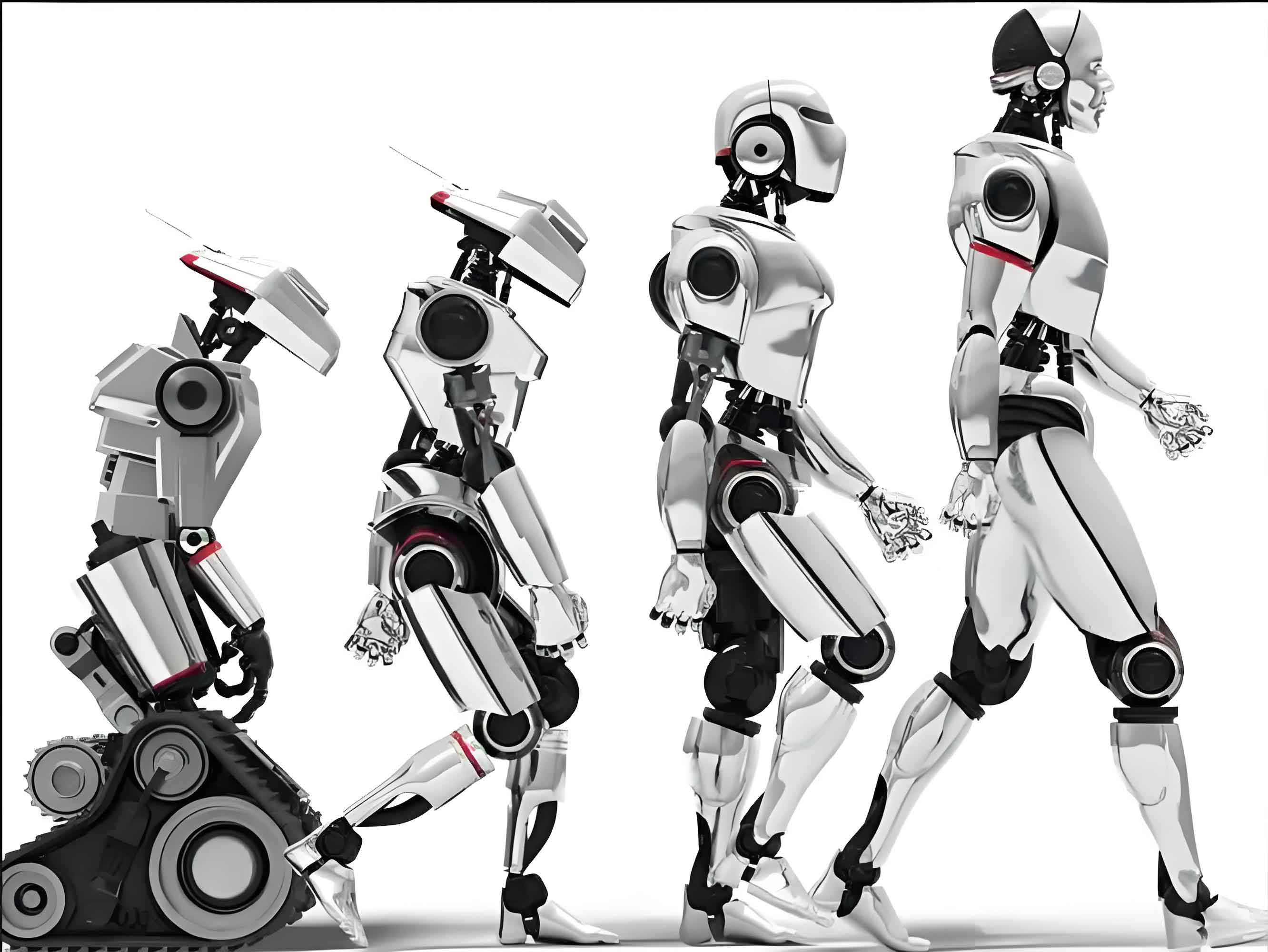
The overall system design of our intelligent robot comprises two main parts: the IoT module and the mechanical robot unit. The IoT module handles data collection, monitoring, and communication, whereas the mechanical unit executes physical operations on chestnuts. We adopted a modular approach to ensure scalability and ease of maintenance. The IoT module includes sensors for pressure, vision, and weight, connected via a 485 bus with Modbus protocol for efficient data transmission. This enables the intelligent robot to transmit operational status to cloud platforms like Alibaba Cloud, where analytics can be performed. Meanwhile, the mechanical robot consists of structures such as a feeding mechanism, vibration sieve, pushing mechanism, cutting mechanism, conveyor, and roller assembly. These components work in tandem under PLC control to achieve seamless chestnut processing. By integrating IoT, we empower the intelligent robot with remote accessibility and predictive capabilities, setting a new standard for food processing automation.
To elaborate on the IoT module, we designed it to capture real-time data from the intelligent robot. The acquisition unit employs pressure sensors, servo feedback devices, and cameras to monitor parameters like force during cutting and visual outcomes of peel separation. Data is converted via analog-to-digital converters and sent to the cloud using Modbus-RTU protocol for high-speed communication. The monitoring unit analyzes camera images to determine the success rate of peel separation, calculated as:
$$ \text{Success Rate} = \frac{\text{Number of Successfully Peeled Chestnuts}}{\text{Total Number of Processed Chestnuts}} \times 100\% $$
If the success rate falls below a threshold, the system automatically adjusts the robot’s speed to improve performance. The communication system utilizes both Modbus-RTU and Modbus-TCP protocols, with the former for sensor data and the latter for human-machine interaction (HMI) via touchscreens. This dual-protocol approach ensures low latency for control signals and flexibility for remote access. The IoT module transforms the intelligent robot into a smart device capable of self-optimization based on data insights.
Turning to the mechanical design of the intelligent robot, we focus on robustness and precision. The main structure includes a frame, conical hopper, multi-row chain with claw grippers, pressing rollers, cutting devices, and discharge conveyors. The claw grippers hold chestnuts securely during processing, and the cutting mechanism uses spring-loaded floating blades to make incisions in the shells. We modeled the cutting force required for different chestnut sizes using the following formula:
$$ F_c = k \cdot d \cdot v $$
where \( F_c \) is the cutting force, \( k \) is a material constant, \( d \) is the chestnut diameter, and \( v \) is the blade velocity. This helps in calibrating the robot for optimal operation. The pushing and screening mechanisms ensure proper alignment and separation of peeled chestnuts. All mechanical parts are driven by servo motors controlled by a Siemens S7-200SMART PLC, which coordinates movements based on input from sensors. The HMI system, featuring a Kunlun Tongtai TPC7022Ni touchscreen, allows operators to interact with the intelligent robot, set parameters, and view real-time data. This design emphasizes the autonomous nature of the intelligent robot, minimizing human intervention.
The control software is a critical aspect of our intelligent robot. We developed PLC programs using ladder logic to manage sequences such as feeding, cutting, and weighing. The program flowchart guides the robot through initialization, detection, and action phases. For instance, proximity sensors detect chestnuts in the hopper, triggering vibration to level them. Then, size detection units filter chestnuts within 20–30 mm diameter range, as this size yields the highest success rate. The cutting module activates stepper motors to perform incisions, and weight sensors measure the mass of processed chestnuts. The PLC implements a control algorithm to maintain stability, expressed as:
$$ u(t) = K_p e(t) + K_i \int_0^t e(\tau) d\tau + K_d \frac{de(t)}{dt} $$
where \( u(t) \) is the control output for motor speed, \( e(t) \) is the error between desired and actual positions, and \( K_p \), \( K_i \), \( K_d \) are PID gains. This ensures precise movement of the intelligent robot’s actuators. The touchscreen software provides a user-friendly interface for monitoring and control, enabling adjustments to speed, weight thresholds, and other settings. By integrating software with hardware, the intelligent robot achieves a high degree of automation and responsiveness.
We conducted extensive experiments to validate the performance of our intelligent robot. The hardware setup included PLCs, motors, drivers, and custom 3D-printed parts for specialized components. Wiring was done according to I/O allocation tables, ensuring reliable connections. For testing, we focused on the cutting success rate under varying conditions of speed and chestnut size. Table 1 summarizes the results from multiple trials, highlighting the impact of these parameters.
| Trial | Robot Speed (rpm) | Chestnut Diameter (mm) | Total Processed | Successful Peels | Success Rate (%) |
|---|---|---|---|---|---|
| 1 | 1500 | 25 | 100 | 97 | 97 |
| 2 | 1500 | 29 | 100 | 89 | 89 |
| 3 | 1700 | 25 | 100 | 93 | 93 |
| 4 | 1700 | 29 | 100 | 91 | 91 |
| 5 | 2000 | 25 | 100 | 89 | 89 |
| 6 | 2200 | 25 | 100 | 86 | 86 |
| 7 | 2500 | 25 | 100 | 85 | 85 |
From the data, we observe that the intelligent robot achieves peak performance at lower speeds and medium chestnut sizes. For instance, at 1500 rpm and 25 mm diameter, the success rate reaches 97%. This can be attributed to reduced dynamic forces and better alignment in the cutting mechanism. We derived a statistical model to predict success rate based on speed \( s \) and diameter \( d \):
$$ R(s, d) = \alpha – \beta s – \gamma d^2 $$
where \( R \) is the success rate, and \( \alpha \), \( \beta \), \( \gamma \) are coefficients determined via regression. This model helps in optimizing the intelligent robot’s operating parameters for different batches. The IoT module recorded these results in real-time, enabling remote analysis and adjustment. Additionally, we tested the communication latency of the IoT system, finding that data transmission via Modbus-RTU completes within 10 ms, which is sufficient for real-time control of the intelligent robot.
Beyond experimental validation, we analyzed the economic and technical advantages of our intelligent robot. Compared to manual methods, which have a success rate around 80%, our intelligent robot boosts efficiency by handling up to 1000 kg per hour with higher consistency. The IoT integration allows for predictive maintenance, reducing downtime by monitoring component wear through vibration sensors. We formulated a cost-benefit analysis using:
$$ \text{Savings} = (E_h \cdot H) – (C_i + C_m) $$
where \( E_h \) is hourly efficiency gain, \( H \) is operational hours, \( C_i \) is initial investment, and \( C_m \) is maintenance cost. Over a year, the intelligent robot can save significant labor costs while improving product quality. Furthermore, the modular design of the intelligent robot facilitates upgrades, such as adding AI-based vision for defect detection. These features underscore the transformative potential of intelligent robots in agriculture and food processing.
In terms of software robustness, we simulated the PLC programs using tools like SIMATIC S7-PLCSIM to verify logic before deployment. The touchscreen interface was tested for responsiveness, with all controls functioning as intended. We also implemented error-handling routines to manage exceptions, such as jams or sensor failures, ensuring the intelligent robot can halt safely and alert operators via IoT notifications. This enhances the reliability of the intelligent robot in industrial environments.
Looking forward, we envision expanding the capabilities of this intelligent robot. Potential enhancements include integrating machine learning algorithms for adaptive control, using the IoT data to train models that predict optimal cutting parameters for varying chestnut varieties. Additionally, the robot could be scaled for other nuts or fruits, demonstrating the versatility of intelligent robots in food automation. We are also exploring collaborative robotics, where multiple intelligent robots work together in a networked system, coordinated through cloud-based orchestration.
In conclusion, our work demonstrates the successful development of an intelligent robot for chestnut peel separation, powered by IoT technology. This intelligent robot combines advanced mechanical design with smart control systems to achieve high automation, efficiency, and quality. Through experiments, we validated its performance, showing success rates up to 97% under optimized conditions. The IoT module enables real-time monitoring and remote management, paving the way for intelligent robots to revolutionize food processing. As we continue to refine this intelligent robot, we believe it will serve as a model for future automation solutions, highlighting the synergy between robotics and IoT. The intelligent robot represents a step toward smarter, more sustainable manufacturing, and we are excited to contribute to this evolving field.