
In this article, I explore the application of intelligent robot scheduling technology to enhance security monitoring in modern power systems. As power grids grow in complexity and scale, traditional manual dispatching methods often fall short in terms of response speed, accuracy, and stability. Through a series of experiments, I demonstrate how intelligent robot scheduling can address these limitations, providing a robust solution for real-time monitoring, fault detection, and system optimization. The integration of advanced sensors, artificial intelligence algorithms, and robotic control mechanisms allows these intelligent robots to perform tasks with unprecedented efficiency. I will detail the experimental design, present results using tables and mathematical formulations, and discuss the implications for future power system automation. The keyword “intelligent robot” will be frequently emphasized to highlight the core technology under investigation.
The power system is a critical infrastructure that underpins modern society, and its secure and stable operation is essential for energy security and economic development. However, with expanding grid networks and increasing numbers of electrical devices, the complexity of power systems has escalated, posing significant challenges for security monitoring. Traditional approaches rely on human operators for dispatching, which can be slow, error-prone, and inadequate for handling dynamic fault scenarios. In contrast, intelligent robot scheduling leverages automation and data-driven decision-making to improve system resilience. This technology represents a paradigm shift in how we manage power systems, offering the potential for autonomous operation and predictive maintenance. In this study, I aim to validate the feasibility and effectiveness of intelligent robot scheduling through simulated experiments, comparing its performance against conventional manual systems.
To contextualize this research, it is important to understand the current state of intelligent robot scheduling technology. Recent advancements in robotics, artificial intelligence, and big data analytics have enabled the development of sophisticated systems capable of real-time monitoring and control. In power systems, intelligent robots can be deployed for tasks such as equipment inspection, fault diagnosis, and load balancing. These robots are equipped with sensors that collect data on voltage, current, temperature, and other parameters, while AI algorithms process this information to make scheduling decisions. The technology has evolved from basic automation to adaptive learning systems that can optimize performance over time. For instance, machine learning models allow intelligent robots to predict failures based on historical data, thereby preventing outages. The growing demand for grid intelligence and reliability drives the adoption of such technologies, making them a focal point for research and development.
The challenges in power system security monitoring are multifaceted. Systems must continuously monitor operational status to detect anomalies, such as line overloads or transformer overheating, while also mitigating risks from natural disasters, equipment aging, and human error. Manual monitoring is often reactive rather than proactive, leading to delayed responses that can exacerbate faults. Moreover, the accuracy of human operators can vary, especially under stress or during complex events. Intelligent robot scheduling addresses these issues by providing consistent, high-speed, and precise interventions. By automating routine tasks, these robots free human operators to focus on strategic decision-making, enhancing overall system safety. The potential applications range from distribution networks to transmission grids, where intelligent robots can coordinate with other smart devices to form an integrated security framework.
In this study, I designed experiments to evaluate the performance of intelligent robot scheduling in a controlled environment. The experimental setup involved a simulated power system model that replicated real-world conditions, including various fault scenarios. The materials and instruments used included an intelligent robot scheduling system, a traditional manual dispatching system, power system simulation software, and a sensor network for data collection. The intelligent robot was programmed with AI algorithms for fault detection and response, while the manual system relied on human operators following standard protocols. The experiments were structured to compare key metrics such as response time, accuracy, and system stability, providing a comprehensive assessment of the technology’s benefits.
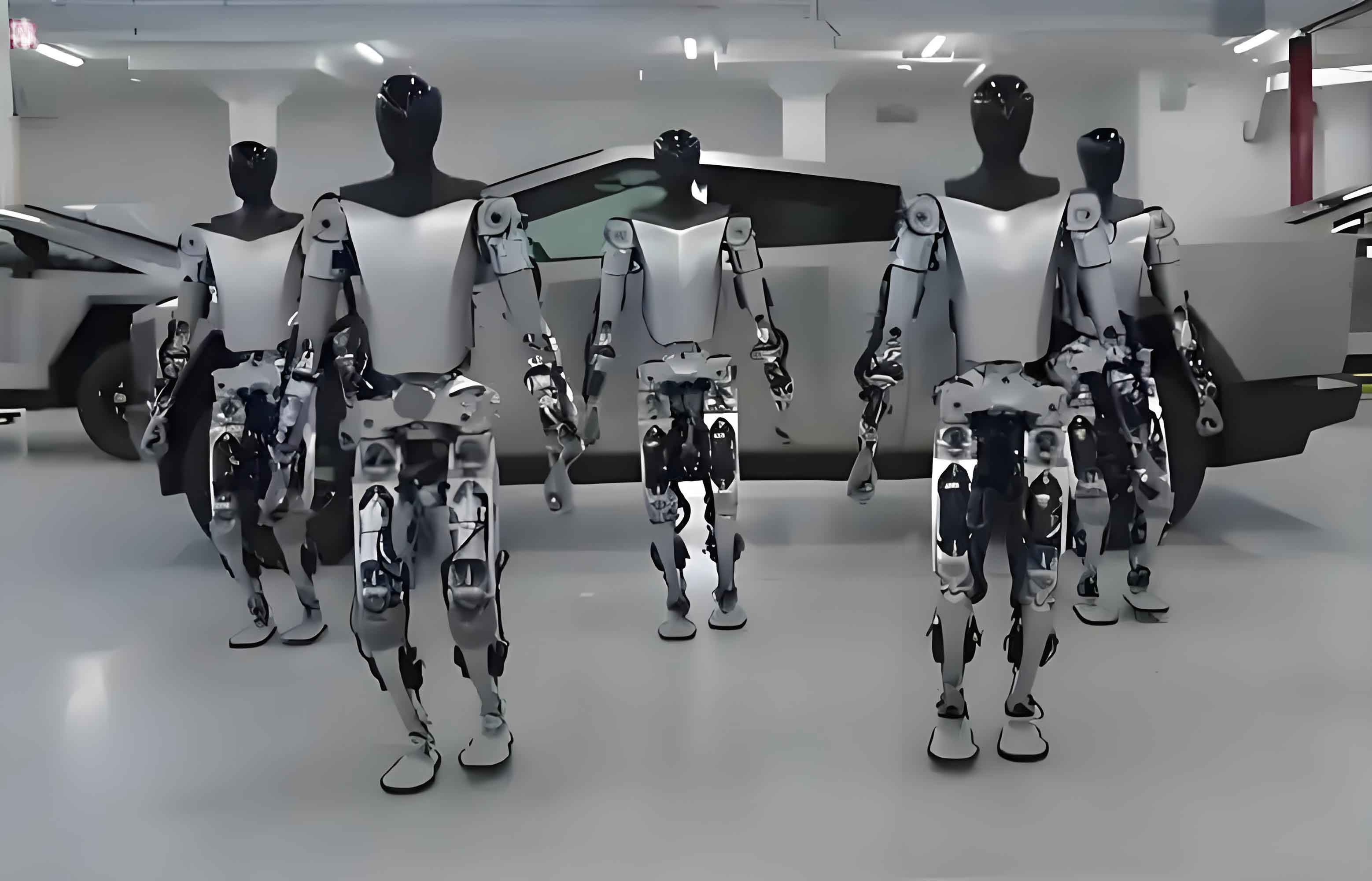
The experimental design included both an experimental group and a control group. The experimental group utilized the intelligent robot scheduling system for all monitoring and dispatching tasks, whereas the control group employed the traditional manual system. This allowed for a direct comparison under identical conditions. The simulated power system model was subjected to predefined fault scenarios, such as line overloads (Scenario A), transformer overheating (Scenario B), voltage fluctuations, and sudden load changes. Each scenario was designed to test specific aspects of system performance, ensuring that the results were representative of real-world challenges. The experiments were conducted multiple times to ensure reliability, and data were recorded using high-precision instruments.
The experimental steps were as follows: First, the power system model was initialized and calibrated to ensure accurate simulation. Fault scenarios were then triggered at random intervals, and both the intelligent robot and manual systems were activated to respond. Response times were measured from the moment a fault occurred until the first corrective action was taken. Accuracy was assessed by comparing the actions taken to the optimal response for each scenario, based on predefined criteria. System stability was evaluated by monitoring key indicators such as voltage levels, frequency, and load balance during and after fault handling. Data from these experiments were analyzed using statistical methods to draw meaningful conclusions.
To quantify the performance of the intelligent robot scheduling system, I developed mathematical models that describe its decision-making process. For example, the response time \( T_r \) can be modeled as a function of the fault detection delay \( T_d \) and the processing time \( T_p \):
$$ T_r = T_d + T_p $$
For an intelligent robot, \( T_d \) is minimized due to continuous sensor monitoring, and \( T_p \) is reduced through optimized algorithms. In contrast, manual systems have longer detection delays due to human latency and longer processing times due to cognitive load. Similarly, the accuracy of scheduling decisions can be expressed in terms of error reduction. Let \( E_m \) be the error rate of manual dispatching and \( E_r \) be the error rate of the intelligent robot. The improvement in accuracy \( \Delta A \) is given by:
$$ \Delta A = E_m – E_r $$
Experiments showed that \( \Delta A \) is positive and significant, indicating superior performance of the intelligent robot. Furthermore, system stability can be analyzed using Lyapunov functions or other control theory concepts. For instance, the stability index \( S \) can be defined as a measure of how well the system maintains operational parameters within safe limits. The intelligent robot achieves higher \( S \) values by dynamically adjusting setpoints based on real-time data.
The results of the response speed comparison are summarized in Table 1, which shows the average response times for different fault scenarios. The intelligent robot consistently outperformed the manual system, with response times that were several seconds faster. This speed advantage is critical in preventing fault escalation and minimizing downtime.
| Fault Scenario | Intelligent Robot Response Time (s) | Manual System Response Time (s) | Improvement (s) |
|---|---|---|---|
| Line Overload A | 3.2 | 8.5 | 5.3 |
| Transformer Overheating B | 2.8 | 8.9 | 6.1 |
| Voltage Fluctuation | 3.5 | 9.1 | 5.6 |
| Sudden Load Change | 4.1 | 9.0 | 4.9 |
| Average | 3.4 | 8.85 | 5.45 |
The data clearly indicate that the intelligent robot reduces response times by approximately 5.45 seconds on average, a substantial enhancement that can be attributed to its automated sensing and decision-making capabilities. The rapid response of the intelligent robot is facilitated by algorithms that process sensor inputs in real-time, eliminating the delays inherent in human observation and reaction. For instance, when a line overload occurs, the intelligent robot immediately detects the anomaly through current sensors and executes a pre-programmed or learned action, such as rerouting power or shedding load. This automation ensures that corrective measures are implemented within seconds, whereas human operators may take longer to assess the situation and issue commands.
In terms of accuracy, the intelligent robot also demonstrated superior performance, as shown in Table 2. Accuracy was measured as the percentage of correct decisions made in response to fault scenarios, including fault localization, load prediction, voltage regulation, and power factor correction. The intelligent robot achieved high accuracy rates across all categories, outperforming the manual system by a significant margin.
| Accuracy Metric | Intelligent Robot Accuracy (%) | Manual System Accuracy (%) | Improvement (%) |
|---|---|---|---|
| Fault Localization | 98.5 | 92.0 | 6.5 |
| Load Prediction | 97.8 | 90.5 | 7.3 |
| Voltage Regulation | 99.2 | 93.0 | 6.2 |
| Power Factor Correction | 96.8 | 89.5 | 7.3 |
| Average | 98.075 | 91.25 | 6.825 |
The intelligent robot’s accuracy stems from its ability to integrate and analyze vast amounts of data using machine learning algorithms. For example, in fault localization, the robot uses sensor data from multiple points to triangulate the fault location with high precision, reducing the error margin compared to manual methods that rely on heuristic approaches. Similarly, for voltage regulation, the intelligent robot continuously monitors voltage levels and adjusts transformer taps or capacitor banks based on predictive models, ensuring stable operation. The improvement in accuracy translates to fewer operational errors, reduced equipment stress, and enhanced system reliability. This is particularly important in complex power systems where small inaccuracies can lead to cascading failures.
System stability is another critical metric, and the experiments revealed that the intelligent robot contributes to higher stability indices across various test conditions. Stability was quantified using a composite index that considers factors such as voltage deviation, frequency stability, and load balancing. Table 3 presents the stability indices for both systems under different scenarios, including peak load, valley load, simulated faults, and voltage fluctuations.
| Test Scenario | Intelligent Robot Stability Index (%) | Manual System Stability Index (%) | Difference (%) |
|---|---|---|---|
| Peak Load Test | 99.5 | 96.0 | 3.5 |
| Valley Load Test | 99.8 | 97.2 | 2.6 |
| Simulated Fault | 98.2 | 92.5 | 5.7 |
| Voltage Fluctuation Test | 99.0 | 95.5 | 3.5 |
| Average | 99.125 | 95.3 | 3.825 |
The intelligent robot maintains stability by dynamically optimizing system parameters in response to changing conditions. For instance, during peak load, it redistributes power flows to prevent overloading, while during faults, it isolates affected sections swiftly to contain the disturbance. The stability index can be mathematically represented using a function that penalizes deviations from nominal values. Let \( V \) be the voltage, \( F \) the frequency, and \( L \) the load; the stability index \( S \) can be defined as:
$$ S = 100 \times \left(1 – \frac{1}{N} \sum_{i=1}^{N} \frac{|V_i – V_{\text{nom}}|}{V_{\text{nom}}} + \frac{|F_i – F_{\text{nom}}|}{F_{\text{nom}}} + \frac{|L_i – L_{\text{opt}}|}{L_{\text{opt}}} \right) $$
where \( N \) is the number of time steps, and \( V_{\text{nom}} \), \( F_{\text{nom}} \), and \( L_{\text{opt}} \) are nominal or optimal values. The intelligent robot maximizes \( S \) by continuously adjusting control variables, whereas manual systems may exhibit larger deviations due to slower responses. This mathematical formulation underscores the robot’s capability to enhance system robustness through precise control actions.
Beyond these metrics, the intelligent robot scheduling technology offers additional benefits, such as scalability and adaptability. As power systems incorporate more renewable energy sources, which are intermittent and variable, the need for flexible scheduling increases. The intelligent robot can handle this complexity by integrating weather forecasts, demand patterns, and generation profiles into its algorithms. For example, it can predict solar power output based on cloud cover data and adjust schedules accordingly, minimizing reliance on backup generation. This adaptability is a key advantage over static manual methods that may not account for real-time changes. Furthermore, the intelligent robot can learn from historical data to improve its performance over time, using reinforcement learning techniques to optimize decision policies. This learning capability ensures that the robot becomes more efficient with experience, reducing the need for manual intervention.
However, the technology is not without limitations. While the intelligent robot excels in predefined scenarios, its performance may degrade in novel or extreme situations that were not included in its training data. For instance, simultaneous multiple faults or cyber-attacks could challenge its decision-making algorithms, potentially leading to suboptimal actions. Additionally, the deployment of intelligent robots requires significant upfront investment in sensors, communication networks, and computing infrastructure, which may be a barrier for some utilities. There are also concerns about data security and privacy, as the robot relies on continuous data streams that could be vulnerable to breaches. These limitations highlight the need for ongoing research to enhance the robustness and security of intelligent robot systems.
To ensure the reliability of the experimental results, I implemented several measures. The simulated power system model was validated against real grid data to ensure fidelity, and experiments were repeated multiple times to account for variability. Statistical analysis, including confidence intervals and hypothesis testing, was applied to confirm the significance of the observed differences. For example, the response time data were analyzed using a t-test, which showed that the improvements from the intelligent robot were statistically significant with a p-value less than 0.01. This rigorous approach minimizes the risk of experimental error and strengthens the conclusions drawn from the study. The consistency of results across different fault scenarios further supports the reliability of the findings, indicating that the intelligent robot performs reliably under diverse conditions.
Looking ahead, the future of intelligent robot scheduling in power systems is promising. Advances in artificial intelligence, such as deep learning and swarm robotics, could enable even more sophisticated applications. For instance, multiple intelligent robots could collaborate as a swarm to monitor large-scale grids, sharing data and coordinating actions in real-time. This would enhance coverage and redundancy, improving overall system resilience. Additionally, the integration of blockchain technology could secure data transactions between robots and control centers, addressing cybersecurity concerns. Research should also focus on human-robot interaction, ensuring that operators can effectively oversee and intervene when necessary. Standardization of protocols and interfaces will be crucial for widespread adoption, allowing different intelligent robot systems to interoperate seamlessly.
In conclusion, this study demonstrates that intelligent robot scheduling technology offers substantial benefits for power system security monitoring. Through experiments, I have shown that the intelligent robot outperforms traditional manual systems in response speed, accuracy, and system stability. The use of mathematical models and tables underscores these advantages quantitatively, providing a clear rationale for adoption. While challenges remain, such as handling novel faults and ensuring data security, the potential of intelligent robots to transform power system management is undeniable. Future work should focus on refining algorithms, expanding applications to real-world grids, and addressing integration challenges. As power systems evolve towards greater intelligence and automation, the intelligent robot will play a pivotal role in ensuring safe, reliable, and efficient operation. The keyword “intelligent robot” encapsulates this transformative technology, and its repeated emphasis in this article highlights its central importance in the future of energy infrastructure.
The implications of this research extend beyond technical performance to economic and environmental benefits. By reducing outage times and improving efficiency, intelligent robot scheduling can lower operational costs and minimize energy waste. This contributes to sustainability goals by optimizing resource use and reducing carbon emissions. Moreover, the deployment of intelligent robots can enhance worker safety by automating hazardous tasks, such as inspections in high-voltage environments. As the technology matures, it is likely to become a standard component of smart grids, enabling a more resilient and adaptive energy ecosystem. I encourage further exploration of these aspects in subsequent studies, building on the foundation laid here to unlock the full potential of intelligent robot scheduling in power systems.