
In today’s highly competitive automotive industry, I have observed that product quality and production efficiency are critical factors for companies to gain an edge. The welding of automotive parts directly impacts the safety and reliability of the entire vehicle, and the ability to execute welding processes efficiently is key to enhancing productivity. Traditional manual welding methods suffer from high labor intensity, low efficiency, and significant variability due to human factors, making them unsuitable for large-scale, high-precision production demands. As a representative of advanced manufacturing technology, intelligent robot systems have gradually demonstrated their advantages in the welding of automotive components due to their automation, intelligence, and high precision. In this article, I will delve into the application of intelligent robot systems in automotive parts welding, analyze their effectiveness, and provide insights for industry professionals to optimize welding production processes.
Intelligent robot systems are complex integrations of multiple technologies, combining sensor technology to perceive environmental information—such as visual sensors for object recognition and distance sensors for obstacle detection—with artificial intelligence algorithms that enable learning, reasoning, and decision-making capabilities, allowing autonomous action planning based on environmental changes. The drive system provides the necessary power support for flexible movement. In industrial applications, these systems are employed in automated production to enhance efficiency and precision. For instance, in service sectors, they can handle tasks like guidance and care, while in military fields, they perform hazardous missions. As technology continues to advance, intelligent robot systems are becoming more intelligent and efficient, profoundly impacting human life and societal development. The core of these systems lies in their ability to adapt and optimize processes in real-time, which is particularly crucial in dynamic manufacturing environments like automotive welding.
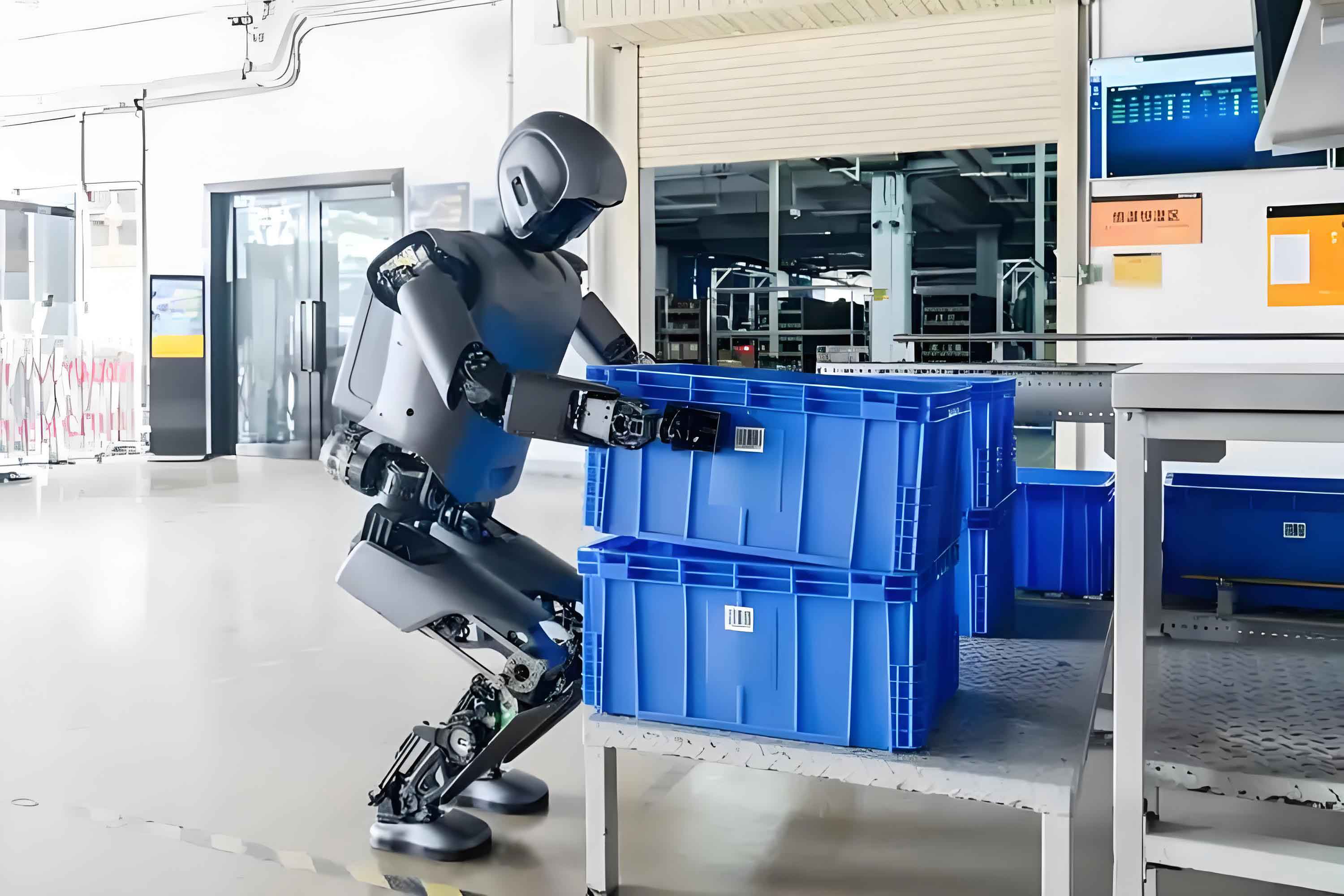
The integration of intelligent robot systems in automotive parts welding significantly enhances welding quality and precision. These systems possess precise motion control capabilities, operating along predefined welding paths and parameters to avoid deviations caused by human factors such as hand tremors or fatigue. Equipped with advanced sensors, they monitor real-time parameters like current, voltage, and temperature during welding, adjusting processes based on feedback to ensure uniform and robust welds while minimizing defects like porosity and cracks. High-quality welding improves the structural strength and stability of automotive components, thereby ensuring vehicle safety. For example, in welding engine blocks, the use of an intelligent robot can achieve a repeatability of ±0.05 mm, reducing defect rates by over 20% compared to manual methods. The relationship between welding parameters can be expressed using the following formula for weld quality $ Q $: $$ Q = k \cdot \int (I \cdot V \cdot \eta) \, dt $$ where $ I $ is current, $ V $ is voltage, $ \eta $ is efficiency factor, and $ k $ is a material-dependent constant. This demonstrates how the intelligent robot system optimizes these variables dynamically.
Moreover, the adoption of intelligent robot systems greatly improves production efficiency and flexibility. These robots can operate 24/7 without interruption, significantly reducing production cycles compared to manual welding. Their rapid programming and task-switching abilities allow them to quickly adapt to different types and specifications of automotive parts welding tasks, eliminating the need for lengthy equipment adjustments and personnel training. This high degree of flexibility meets the demands of multi-variety, small-batch production in the automotive manufacturing industry, enabling companies to respond swiftly to market changes and adjust production plans, thereby enhancing competitiveness and production benefits. For instance, in a production line for car door frames, the implementation of an intelligent robot system increased throughput by 30% while reducing changeover times by 50%. The efficiency gain can be modeled as: $$ E = \frac{T_{\text{manual}}}{T_{\text{robot}}} \cdot 100\% $$ where $ E $ is efficiency percentage, $ T_{\text{manual}} $ is time for manual welding, and $ T_{\text{robot}} $ is time for robot welding. This highlights the transformative impact of intelligent robot integration.
| Aspect | Traditional Welding | Intelligent Robot Systems |
|---|---|---|
| Precision | ±0.5 mm (variable) | ±0.05 mm (consistent) |
| Efficiency | 60-70% uptime | >95% uptime |
| Defect Rate | 5-10% | <2% |
| Flexibility | Low (requires retooling) | High (quick reprogramming) |
| Labor Intensity | High | Low (automated) |
Currently, in the welding of automotive parts, advanced sensing technologies and algorithms are widely used in intelligent robot systems. Sensing technologies accurately identify the position and orientation of components, providing precise guidance for welding paths, thereby improving welding accuracy and quality. The application of algorithms endows robots with a degree of autonomy, allowing them to dynamically adjust welding parameters based on real-time data. However, in complex environments such as significant light variations or components with indistinct surface features, the stability of sensing technologies still requires improvement. Intelligent algorithms also need optimization to adapt to more complex and variable welding conditions. For example, in welding car body frames, visual sensors might struggle with reflective surfaces, leading to inaccuracies. To address this, adaptive algorithms like $$ \Delta P = \alpha \cdot \sum (s_i – s_{\text{target}}) $$ can be used, where $ \Delta P $ is parameter adjustment, $ \alpha $ is a learning rate, and $ s_i $ are sensor inputs. This emphasizes the need for continuous refinement in intelligent robot systems.
In terms of adoption, large automotive manufacturers globally have a high application rate of intelligent robot systems in welding. Overseas advanced automotive companies, leveraging strong technical capabilities and financial support, have achieved a high degree of automation and intelligence in welding, with intelligent robot systems covering most key component welding processes. Leading domestic automotive manufacturers are also actively increasing investment in intelligent robot systems, gradually enhancing welding intelligence. However, overall, many small and medium-sized automotive manufacturers in various regions still have low adoption rates due to constraints in funding and technology, relying primarily on traditional welding methods. This disparity highlights the importance of scalable solutions for intelligent robot deployment. The adoption rate $ A $ can be expressed as: $$ A = \frac{N_{\text{robot}}}{N_{\text{total}}} \cdot 100\% $$ where $ N_{\text{robot}} $ is the number of factories using intelligent robots, and $ N_{\text{total}} $ is the total number of factories. In developed regions, $ A $ often exceeds 80%, whereas in emerging markets, it may be below 40%.
To effectively implement intelligent robot systems in automotive parts welding, scientific selection and precise configuration are essential. Based on welding process requirements, different welding technologies demand specific performance from intelligent robots. For example, arc welding processes require precise control of current, voltage, and speed to ensure weld quality and formation, so robots with high-precision control and parameter adjustment capabilities should be selected. In welding engine blocks, where the parts are intricate and quality demands are stringent, robots with a repeat positioning accuracy within ±0.05 mm are necessary to prevent deviations. Additionally, these robots must offer flexible programming to quickly adapt welding parameters and paths for different tasks. For large, complex-shaped components like automotive body frames, high-power welding sources and efficient wire feeding systems should be configured. For instance, in welding car side panels, a welding source with an output current above 500 A and high-precision wire feeding systems ensure stable operation, while suitable fixtures secure parts during welding. The selection process can be guided by a performance index $ PI $: $$ PI = w_1 \cdot A + w_2 \cdot S + w_3 \cdot F $$ where $ A $ is accuracy, $ S $ is speed, $ F $ is flexibility, and $ w $ are weights based on application needs.
| Component | Function | Example Specifications |
|---|---|---|
| Visual Sensors | Detect part position and defects | Resolution: 0.1 mm |
| AI Algorithms | Optimize welding parameters | Real-time adjustment frequency: 100 Hz |
| Drive System | Provide motion control | Repeatability: ±0.05 mm |
| Welding Source | Supply energy for welding | Current range: 50-600 A |
| Control Unit | Coordinate all components | Processing speed: 1 GHz |
Professional training and development are crucial for maximizing the benefits of intelligent robot systems. Customized, layered training content should be designed for different roles. For frontline operators, training should focus on basic robot operation, daily maintenance, and simple troubleshooting to ensure safe and proficient equipment use. This can include hands-on sessions on operation panels, startup/shutdown procedures, and manual teach programming for simple welding paths. For programming personnel, training should cover robot programming languages, advanced software features, and optimization of welding parameters, such as offline programming courses for precise trajectory planning based on 3D models. Introducing simulation training systems is an effective way to enhance practical skills; these systems replicate real welding scenarios, allowing practice in virtual environments to reduce costs and risks. For example, new employees can use simulators to familiarize themselves with operations for tasks like welding car seat frames, following steps from startup to parameter setting and path planning. Repeated practice in such environments builds competence and problem-solving abilities. The skill acquisition rate $ R $ can be modeled as: $$ R = \beta \cdot \ln(N + 1) $$ where $ \beta $ is a training efficiency factor, and $ N $ is the number of training sessions, showing how iterative learning improves proficiency with intelligent robot systems.
Preventive maintenance and fault management are vital for the stable operation of intelligent robot systems in automotive parts welding. Establishing a comprehensive periodic maintenance system is the first step, defining daily, weekly, monthly, and annual tasks. Daily maintenance includes cleaning robot surfaces and peripheral equipment and checking cable connections; weekly maintenance involves lubricating key components like transmission systems and inspecting welding gun tip wear; monthly maintenance requires calibrating robot accuracy and checking electrical insulation; annual maintenance entails thorough disassembly and replacement of aged parts. For instance, in welding car bodies, monthly calibration by technicians using high-precision tools ensures repeat positioning accuracy meets process requirements. Utilizing data analysis for fault预警 is another key aspect; by installing sensors to collect data on parameters like motor current, voltage, temperature, speed, and load, and applying algorithms for real-time monitoring, the system can issue alerts for anomalies. For example, temperature sensors on robots welding engine parts can trigger warnings if values exceed set limits, prompting checks on cooling systems to prevent downtime. The maintenance effectiveness $ ME $ can be expressed as: $$ ME = 1 – \frac{F_{\text{actual}}}{F_{\text{predicted}}} $$ where $ F_{\text{actual}} $ is actual failure rate, and $ F_{\text{predicted}} $ is predicted rate based on data, demonstrating how intelligent robot systems enable proactive management.
Intelligent production management and optimization leverage data from intelligent robot systems to achieve precise scheduling. By collecting real-time data on robot status, welding progress, and operating parameters, and analyzing it, bottlenecks and resource utilization can be identified to合理安排 production tasks and optimize sequences. For example, in a car door welding line, if data shows a particular intelligent robot takes longer for certain parts, production plans can be adjusted by redistributing parallel tasks to less loaded robots or prioritizing preparatory work. Simulation technology further optimizes welding processes; using specialized software to build virtual models based on part geometry, material properties, and welding requirements allows testing of different parameters and paths to observe deformation and stress distribution. In welding automotive chassis suspension components, simulations can determine optimal sequences and parameters, such as welding speed and current, to minimize defects. The optimization process can be described by: $$ O = \min \sum (D_i + S_i) $$ where $ O $ is the objective function, $ D_i $ is deformation, and $ S_i $ is stress, highlighting how intelligent robot systems facilitate iterative improvement.
| Maintenance Interval | Tasks | Tools/Parameters |
|---|---|---|
| Daily | Clean surfaces, check cables | Visual inspection, multimeter |
| Weekly | Lubricate传动 systems, inspect tips | Lubricant, calipers |
| Monthly | Calibrate accuracy, check insulation | Laser tracker, insulation tester |
| Annually | Full disassembly, part replacement | Manufacturer guidelines |
System integration and collaborative operation are essential for efficient automotive parts welding with intelligent robot systems. Integrating these systems with logistics equipment like automated guided vehicles (AGVs) and conveyors through unified communication protocols and data interfaces enables real-time data exchange. AGVs can deliver parts to robots based on production rhythms, and remove finished products post-welding. For instance, in a car seat frame welding line, AGVs programmed with specific paths transport components to robots, which then execute welding upon detection, followed by AGVs moving outputs to next stages. Additionally, integrating intelligent robot systems with enterprise information management systems such as ERP and MES allows comprehensive process management. Robots feed data on operation, progress, and quality back to these systems, enabling managers to make informed decisions on planning and resource allocation. In welding engine blocks, for example, MES systems set plans and parameters transmitted to robots, which in turn provide real-time data on welding time and parameters for monitoring and adjustment. The integration efficiency $ IE $ can be quantified as: $$ IE = \frac{D_{\text{sync}}}{D_{\text{total}}} \cdot 100\% $$ where $ D_{\text{sync}} $ is synchronized data flow, and $ D_{\text{total}} $ is total data, underscoring the seamless coordination possible with intelligent robot systems.
In conclusion, the application of intelligent robot systems in automotive parts welding has brought significant transformations to the manufacturing industry. These systems effectively enhance welding quality and precision, accelerate production efficiency, and reduce costs, with advantages evident throughout the welding process. Although current challenges include high system costs and a shortage of technical talent, ongoing innovation and industrial development are gradually addressing these issues. In the future, intelligent robot systems will evolve towards greater intelligence and flexibility. Automotive manufacturers should seize opportunities to integrate these systems with other technologies, increase investment, and enhance their core competitiveness, driving the industry toward higher quality and efficiency. The continuous advancement of intelligent robot technology promises to redefine automotive manufacturing standards, making processes more resilient and adaptive to global demands.