
The global energy transition, coupled with the imperative to achieve “carbon peak and carbon neutrality” goals, has fundamentally reshaped operational paradigms in the oil and gas industry. Within this context, the intelligent and safe operation of oil and gas stations—critical hubs for extraction, storage, transportation, and processing—has become paramount. Traditional manual inspection methods are increasingly untenable, plagued by significant challenges including inherent safety risks for personnel in hazardous environments, low efficiency leading to extended downtime, and poor consistency in data collection and interpretation. These limitations underscore an urgent need for a technological transformation. The emergence of the intelligent robot as an autonomous inspection platform offers a compelling solution. By integrating advanced multi-modal sensing, artificial intelligence (AI), and robust navigation, these intelligent robot systems promise to deliver 24/7 operational monitoring, dramatically缩短ing inspection cycles from days to hours, and enabling predictive maintenance through real-time data analytics.
However, deploying an intelligent robot in the complex and unforgiving environment of an oil and gas station presents formidable engineering challenges. The system must maintain high-fidelity perception under extreme and variable conditions such as intense glare, rain, snow, and low-light nighttime operations. Its sensing suite must possess a multi-scale capability, from macro-level detection of large storage tanks and pipelines to micro-level identification of pressure gauge readings, valve statuses, and millimeter-scale cracks. Furthermore, the detection of critical anomalies like gas leaks or equipment overheating demands near-instantaneous response, placing a premium on system stability, reliability, and decision-making speed. This article delves into the comprehensive technical architecture and implementation of an intelligent robot inspection system designed to meet these rigorous demands, presenting a five-layer analytical framework that orchestrates data flow from environmental perception to automated execution.
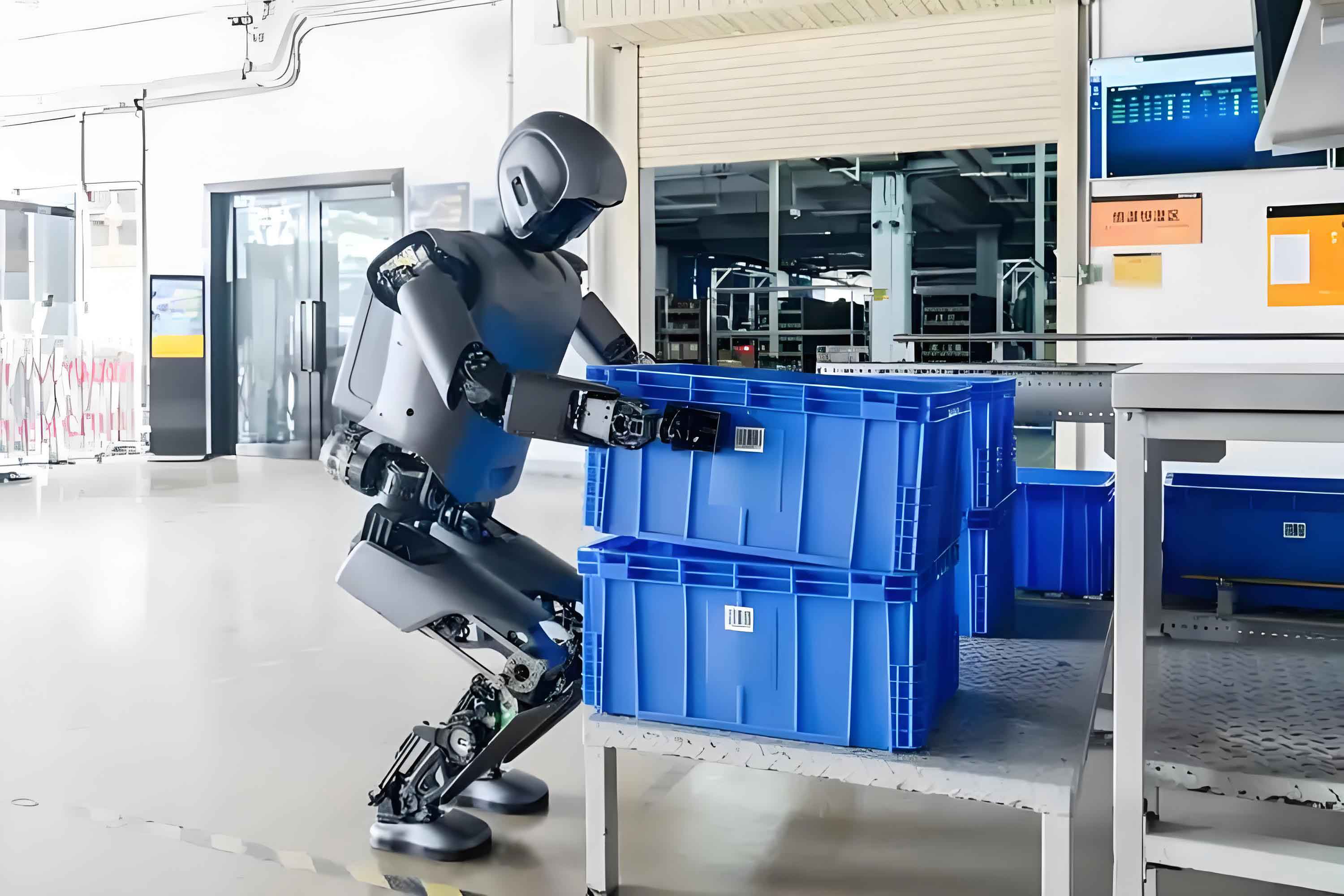
The core of our solution is a hierarchical, five-layer intelligent analysis architecture. This framework decomposes the complex inspection task into modular, synergistic layers, ensuring a seamless flow from raw sensor data to actionable insights and physical actions. The architecture is designed to be robust, scalable, and capable of full autonomy, representing a significant leap from scripted automation to context-aware intelligent operation for the intelligent robot.
1. The Five-Layer Intelligent Analysis Architecture
The system architecture is meticulously designed to emulate and extend human-like inspection capabilities within a robotic platform. The five layers work in concert to create a closed-loop, intelligent system.
Layer 1: Intelligent Perception Layer. This layer functions as the sensory system of the intelligent robot. It employs a heterogeneous suite of sensors to capture multi-dimensional data from the station environment. Key sensors include Light Detection and Ranging (LiDAR) for high-precision 3D mapping and obstacle detection, visual (RGB) cameras for detailed imagery and optical character recognition (OCR), infrared (IR) thermal imagers for temperature profiling, and an array of gas (e.g., methane, hydrogen sulfide) and acoustic sensors for leak detection and abnormal sound identification. The primary challenge and function of this layer are not just data collection, but the initial fusion and preprocessing of this multi-modal data to create a coherent representation of the environment for upstream layers.
Layer 2: Intelligent Analysis Layer. Acting as the cognitive core, this layer processes the preprocessed data from the perception layer. It houses the AI algorithms responsible for critical tasks: Simultaneous Localization and Mapping (SLAM) for real-time positioning and environment modeling; computer vision models (e.g., deep neural networks) for equipment status recognition, defect identification, and gauge digitization; point cloud processing for 3D scene understanding; and diagnostic algorithms that correlate sensor readings to identify potential faults. This layer transforms unstructured sensor data into structured, semantically meaningful information (e.g., “Pump P-101: pressure = 5.2 MPa, temperature anomaly detected on bearing housing”).
Layer 3: Intelligent Decision Layer. This is the strategic command center of the intelligent robot. It receives the structured insights from the analysis layer and, by consulting a knowledge base of operational rules, safety protocols, and optimization objectives, generates optimal action plans. For instance, upon receiving an “abnormal temperature” alert, the decision layer can autonomously trigger a high-priority inspection task, dynamically replan the robot’s path to the location, and decide which sensor modalities to prioritize. It manages task scheduling, determines whether an alert requires immediate human notification, and optimizes overall mission efficiency.
Layer 4: Intelligent Execution Layer. This layer serves as the neuromuscular system, translating high-level decisions into precise, low-level control commands. It encompasses motion control algorithms that govern the robot’s drivetrain to accurately follow planned paths, manipulator control for any robotic arms, and real-time actuator management. It ensures stable locomotion across varied terrain (gravel, slopes, etc.) and includes safety-monitoring loops that can trigger emergency stops (e.g., via safety-rated LiDAR) if an unexpected obstacle is detected.
Layer 5: Human-Machine Interaction & Cloud-Edge Collaboration Layer. This layer facilitates synergy between the autonomous intelligent robot and human operators, and between on-board edge computing and centralized cloud resources. It provides intuitive interfaces—such as a web-based dashboard, 3D digital twin visualizations, and AR overlays—for monitoring status, receiving alerts, and issuing commands. Crucially, it implements a cloud-edge computing paradigm: time-sensitive tasks (obstacle avoidance, immediate control) run on the robot’s edge computer, while compute-intensive tasks (detailed anomaly analysis, long-term trend prediction, multi-robot coordination) are offloaded to the cloud. This ensures both real-time responsiveness and access to powerful analytical capabilities.
2. Core Technical Systems for the Intelligent Robot
The realization of the five-layer architecture hinges on breakthroughs in three intertwined technical domains: Environmental Perception, Intelligent Decision & Path Planning, and Motion Control & Navigation.
2.1 Environmental Perception and Multi-Modal Fusion
Perception in an oil and gas station requires robustness and precision. Visual perception, while rich in information, is challenged by lighting variations. Infrared imaging provides vital thermal data but lacks texture. Therefore, fusion of visible and IR spectra is essential. Current state-of-the-art fusion methods leverage deep learning, as summarized below:
| Category | Representative Models | Key Technical Characteristics | |
|---|---|---|---|
| Generative Models (GAN-based) | FusionGAN, AttentionFGAN, MEF-GAN | Use adversarial training to learn fusion rules without manual design. Attention mechanisms help preserve critical thermal information from IR images. | |
| Transformer-Based Models | SwinFusion, CDDFuse, TransMEF | Utilize self-attention mechanisms to capture long-range dependencies in images, effective for high-resolution fusion and handling multi-exposure scenarios. | |
| Diffusion Models | DDFM, Dif-Fusion | Generate high-fidelity fusion results through iterative denoising processes, often achieving superior color and detail preservation. | |
| Task-Driven Fusion | TARL, STDFusionNet | Optimize the fusion process specifically to improve the performance of downstream tasks like object detection or salient target detection. |
Beyond vision, the intelligent robot integrates a multi-source sensor suite. LiDAR is indispensable for SLAM, providing centimeter-accurate ranging data. Gas detection employs a combination of catalytic bead, electrochemical, and laser-based sensors to identify and quantify leaks. Advanced Optical Gas Imaging (OGI) cameras can visualize hydrocarbon plumes. Acoustic sensors pick up abnormal noises from equipment like pumps and compressors, enabling early fault diagnosis. The fusion of these heterogeneous data streams typically follows a hierarchical model: low-level data preprocessing, mid-level state estimation (e.g., using Kalman Filters), and high-level decision-making based on the unified situational picture.
2.2 Intelligent Decision and Path Planning
Path planning for an intelligent robot in a cluttered, hazardous plant must balance efficiency with stringent safety constraints. Algorithms must incorporate “danger zones” (e.g., proximity to pressurized lines) with higher cost penalties. Common approaches include:
Graph Search Algorithms (e.g., A*): These algorithms search a discretized representation of the environment (grid map). The core of A* is the evaluation function \( f(n) \) for each node \( n \):
$$ f(n) = g(n) + h(n) $$
where \( g(n) \) is the actual cost from the start node to node \( n \), and \( h(n) \) is a heuristic estimate of the cost from \( n \) to the goal. For oil and gas stations, \( g(n) \) can be modified to heavily penalize traversal near hazards:
$$ g'(n) = g(n) + \lambda \cdot D(n) $$
where \( D(n) \) represents the proximity to a danger source and \( \lambda \) is a large weighting factor, ensuring the intelligent robot prioritizes safety.
Sampling-Based Algorithms (e.g., RRT): Rapidly-exploring Random Trees (RRT) operate in continuous space by randomly sampling points and connecting them to a growing tree from the start location. While faster for high-dimensional spaces, basic RRT can produce suboptimal, jerky paths. Variants like RRT* (asymptotically optimal) are preferred. The core expansion step for a sample \( q_{rand} \) involves finding the nearest node \( q_{near} \) in the tree and extending towards \( q_{rand} \) by a step size \( \epsilon \) to create \( q_{new} \), subject to collision checking.
Hybrid and Bio-Inspired Algorithms: Practical systems often use hybrid strategies. For example, a global path can be planned using an improved A* algorithm that incorporates a safety cost map, while local reactive obstacle avoidance is handled by the Dynamic Window Approach (DWA). Bio-inspired algorithms like Ant Colony Optimization (ACO) can be used for multi-objective planning, such as minimizing both path length and cumulative risk exposure. The pheromone update rule in ACO is central:
$$ \tau_{ij}(t+1) = (1 – \rho) \cdot \tau_{ij}(t) + \Delta \tau_{ij} $$
where \( \tau_{ij} \) is the pheromone on edge (i,j), \( \rho \) is the evaporation rate, and \( \Delta \tau_{ij} \) is the pheromone deposited by ants that used that edge, proportional to the quality of their solution.
2.3 Motion Control and Navigation
Accurate motion control is necessary to execute the planned paths. The choice of mobile platform—differential drive, tracked, or wheel-legged hybrid—dictates the kinematic model. For a common differential drive intelligent robot, the kinematic model is given by:
$$
\begin{bmatrix}
\dot{x} \\
\dot{y} \\
\dot{\theta}
\end{bmatrix}
=
\begin{bmatrix}
\frac{r}{2} \cos\theta & \frac{r}{2} \cos\theta \\
\frac{r}{2} \sin\theta & \frac{r}{2} \sin\theta \\
\frac{r}{L} & -\frac{r}{L}
\end{bmatrix}
\begin{bmatrix}
\omega_r \\
\omega_l
\end{bmatrix}
$$
where \( (x, y, \theta) \) is the pose, \( r \) is wheel radius, \( L \) is the distance between wheels, and \( \omega_r, \omega_l \) are the right and left wheel angular velocities.
Robust localization, often via SLAM, is foundational. LiDAR-based SLAM (e.g., LOAM, LIO-SAM) provides high accuracy. Visual-Inertial SLAM (e.g., VINS-Fusion) offers a cost-effective alternative but can be less robust in visually degraded environments. The core SLAM problem involves estimating the robot’s trajectory and map \( M \) given sensor observations \( z_{1:t} \) and control inputs \( u_{1:t} \):
$$ P(x_{1:t}, M | z_{1:t}, u_{1:t}) $$
where \( x_{1:t} \) represents the robot’s poses over time.
Control strategies range from classical PID for trajectory tracking to advanced methods. Model Predictive Control (MPC) solves an optimization problem over a receding horizon to determine control inputs. Reinforcement Learning (RL) controllers, such as Soft Actor-Critic (SAC), learn optimal control policies through interaction. The SAC objective includes an entropy term to encourage exploration:
$$ J(\pi) = \sum_{t=0}^{T} \mathbb{E}_{(s_t, a_t) \sim \rho_{\pi}} [r(s_t, a_t) + \alpha \mathcal{H}(\pi(\cdot|s_t))] $$
where \( \pi \) is the policy, \( r \) is the reward, \( \mathcal{H} \) is entropy, and \( \alpha \) is a temperature parameter.
3. System Implementation and Field Validation
The theoretical architecture and algorithms were realized in a ruggedized intelligent robot platform and validated in a real-world shale oil station.
3.1 Hardware Platform
The robot was built to meet explosion-proof standards (Ex d) and IP66 ingress protection. Key specifications are summarized below:
| Module | Component | Key Specification |
|---|---|---|
| Chassis & Mobility | Differential Drive | 4-wheel, All-terrain, Ground Clearance: 150mm |
| Core Sensors | Safety LiDAR | 270° FOV, Range: 40m, Positioning Error: < ±2cm |
| Visual Camera | 4K Resolution | |
| IR Thermal Imager | FLIR A700, Range: -20°C to +550°C, Accuracy: ±2°C | |
| Gas Sensors | CH₄ (Laser), H₂S (Electrochemical) | |
| Computing | Edge Computer | Intel i7 + NVIDIA Jetson Xavier NX for AI |
| Low-Level Controller | STM32, CAN Bus communication |
3.2 Software System
The software stack was developed on the Robot Operating System 2 (ROS 2) framework, ensuring modularity and robustness. Key nodes handled perception (using OpenCV and PCL libraries), navigation (integrated NAV2 stack with customized planners), and task execution. A cloud platform provided a unified dashboard for task management, data visualization, and multi-robot fleet oversight.
3.3 Experimental Results and Performance Analysis
The system underwent rigorous field testing involving over 300 inspection points. The performance metrics, compared against baseline systems, are compelling:
| Performance Metric | Proposed Intelligent Robot System | Baseline 1: Magnetic-Guide AGV | Baseline 2: Basic Navigation Robot |
|---|---|---|---|
| Instrument Recognition Accuracy | 98.5% | N/A (Manual Reading) | N/A (Manual Reading) |
| Obstacle Avoidance Success Rate | 100% | N/A (Fixed Path) | ~85% |
| Full Station Coverage | Yes (Autonomous) | No (Fixed Track Limited) | Partial (Requires Guidance) |
| Avg. Inspection Time for Key Route | 25 minutes | 45 minutes (Incomplete) | 70 minutes (Incl. Manual Ops) |
| Data Validity Rate | 99.5% | ~60% (Human Error) | ~75% |
| Emergency Response Time | < 1 minute (Auto-triggered) | Manual Process (>5 min) | Manual Process (>5 min) |
The field validation conclusively demonstrated that the intelligent robot system significantly outperforms traditional and semi-automated methods. It elevates inspection from a periodic, manual chore to a continuous, automated, and data-driven intelligent process. The integration of the five-layer architecture ensures that the robot is not merely a mobile sensor carrier but a truly cognitive agent capable of autonomous perception, analysis, decision, and action.
4. Conclusion and Future Outlook
This article has presented a comprehensive framework for an intelligent robot inspection system tailored for oil and gas stations. The proposed five-layer architecture—encompassing Intelligent Perception, Analysis, Decision, Execution, and Human-Cloud Collaboration—provides a scalable blueprint for building autonomous systems that can navigate complex industrial environments, accurately assess equipment health, and respond to anomalies in real-time. Field results from a shale oil station confirm the system’s practical efficacy, showing dramatic improvements in efficiency, safety, and data reliability over conventional methods.
The future trajectory for the intelligent robot in industrial inspection is pointed toward greater autonomy, intelligence, and collaboration. Key research and development frontiers include:
1. Enhanced Environmental Robustness: Developing perception algorithms that are invariant to extreme weather (heavy rain, fog, snow) and lighting conditions remains a critical challenge.
2. Predictive and Prescriptive Maintenance: Moving beyond fault detection, future systems will integrate deeper with plant Digital Twins and use historical data with AI models to predict failures (predictive maintenance) and even recommend specific actions (prescriptive maintenance).
3. Advanced Human-Robot Collaboration: Leveraging Large Language Models (LLMs) for natural, context-aware communication between operators and robot fleets will streamline supervision and tasking.
4. Multi-Robot and Heterogeneous Fleet Coordination: Deploying coordinated teams of ground and aerial intelligent robots will enable comprehensive, simultaneous inspection of large-scale facilities, optimizing coverage and time.
5. Cross-Industry Application: The core technology stack is readily adaptable to other critical infrastructure sectors such as chemical plants, power generation facilities (including nuclear), and sprawling pipeline networks.
The evolution of the intelligent robot from a novel tool to an integral component of industrial operational technology (OT) is well underway. By continuing to advance in perception, decision-making, and integration, these robotic systems are poised to become indispensable partners in ensuring the safety, efficiency, and sustainability of vital energy infrastructure worldwide.