
The advent of highly sophisticated intelligent robots marks a transformative era. The prospect of autonomous entities making independent decisions that may lead to severe societal harm raises profound legal and philosophical questions. A central debate in contemporary legal scholarship is whether intelligent robots can possess criminal responsibility. While some scholars posit that intelligent robots developing autonomous will through learning algorithms should be held criminally liable, this article argues from a first-person perspective that such a conclusion is deeply flawed. An intelligent robot cannot be said to have the capacity for criminal responsibility, fundamentally because it lacks free will, its actions are not “acts” in the criminal law sense, and imposing punishment upon it is neither meaningful nor justifiable. This analysis will deconstruct these premises and contrast the theoretical foundations for punishing corporations with the inherent nature of the intelligent robot.
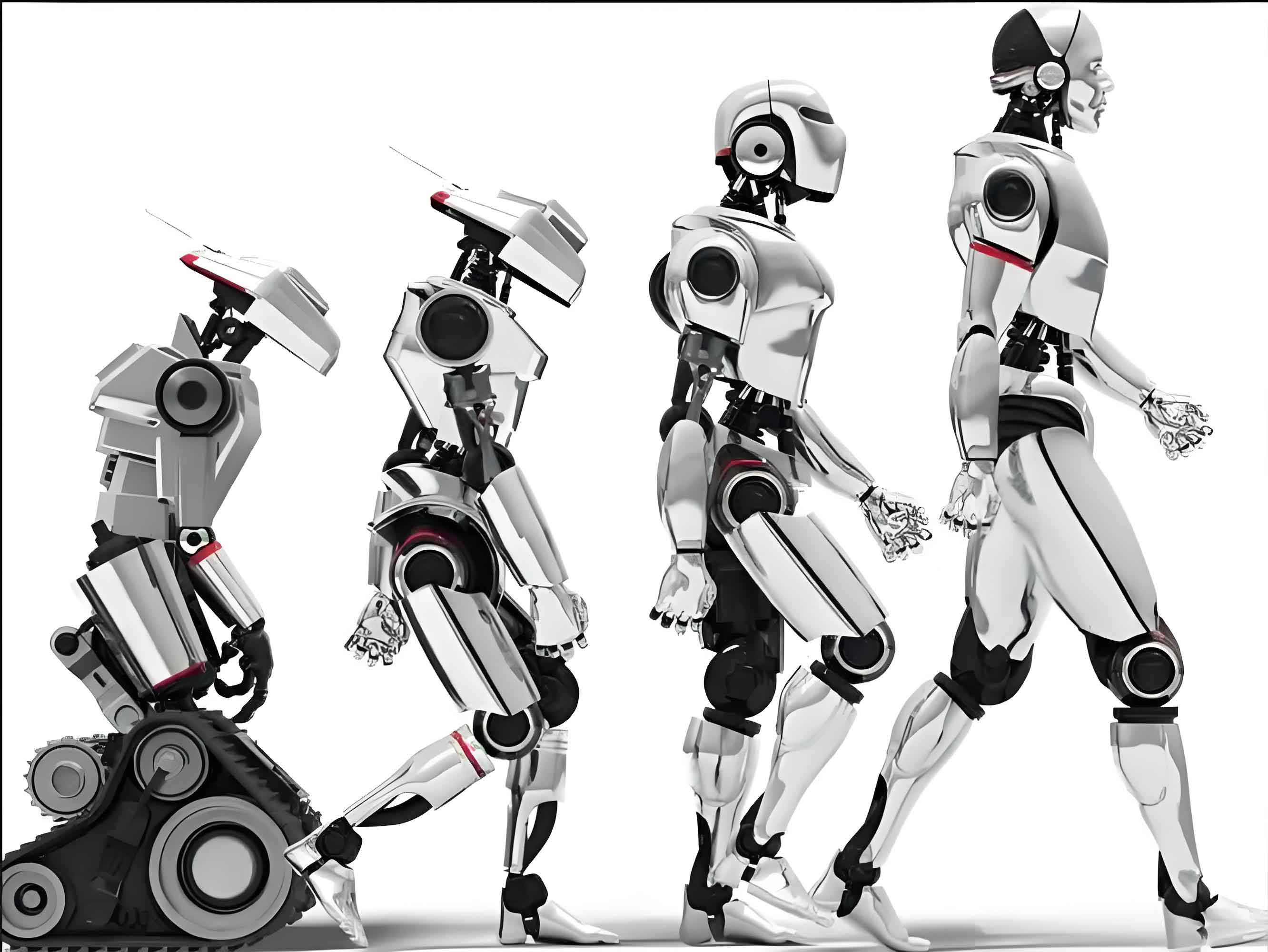
The cornerstone of modern criminal law theory is the concept of attributing responsibility to a moral agent. This attribution traditionally hinges on the possession of free will. For an entity to be held criminally responsible, it must be capable of making a culpable choice. The emergence of the intelligent robot, capable of complex operations and seemingly independent decision-making via deep learning algorithms, challenges this framework. Proponents of robotic responsibility suggest that once an intelligent robot operates beyond its initial programming, it acts on a “free will” of its own. However, this position conflates advanced computation with conscious volition. The operations of an intelligent robot, no matter how complex, remain the execution of deterministic or probabilistic algorithms. Deep learning, including unsupervised learning, is a sophisticated statistical modeling process. It identifies patterns and optimizes outputs based on vast datasets, but this process does not entail consciousness, self-awareness, or the qualitative experience of choice that underpins human moral and legal agency. The “decisions” of an intelligent robot are the results of calculations, not deliberations.
This distinction is crucial. Human free will, even as a legally constructed presumption, is understood as a process influenced by a confluence of rational calculation, emotion, moral intuition, impulse, and character. It is not a purely logical function. In contrast, the decision-making process of an intelligent robot is reducible to mathematical functions. Consider a classic ethical dilemma like the trolley problem. A human might struggle, influenced by deontological ethics (never kill an innocent), utilitarianism (minimize casualties), or sheer emotional paralysis. An intelligent robot, programmed to optimize for a specific variable (e.g., minimize loss of life), would “decide” instantly and without internal conflict: divert the trolley to kill one instead of five. This is not an ethical choice but the execution of a pre-defined (or learned) optimization rule. Therefore, to impute free will to an intelligent robot is to perform a double reduction: first, reducing the ineffable human will to a legal presumption, and then further reducing that presumption to mere computational output. This empties the concept of will of its essential moral content.
To formalize the necessary conditions for an entity to be a subject of criminal law, we can represent it as a set of prerequisites:
$$ C = \{ w, a, p \} $$
Where:
– $C$ represents the capacity for criminal responsibility.
– $w$ represents the possession of free will (or its legal presumption).
– $a$ represents the ability to perform a culpable act in the legal sense.
– $p$ represents the susceptibility to meaningful punishment (punishability).
For a natural person $(N)$, we operate under the presumption that $w_N \in C_N, a_N \in C_N, p_N \in C_N$. For an intelligent robot $(IR)$, the argument is that $w_{IR} \notin C_{IR}$. This foundational failure has cascading effects on the other elements.
The principle of *actus reus* holds that criminal liability is predicated on a guilty act, not a guilty mind alone. All major theories of action in criminal law—causal, social, purposive, and personality-based—converge on several core elements that an action must possess to be legally relevant. The behavior of an intelligent robot fails to satisfy one of these essential elements.
The following table summarizes how the operations of an intelligent robot map onto the core elements of a criminal act:
| Element of a Criminal Act | Description | Application to Intelligent Robot | Status |
|---|---|---|---|
| Corporality | An external, physical manifestation (an act or omission). | An intelligent robot can produce physical movements and cause changes in the external world through its hardware. | ✅ Present |
| Harmfulness/Social Significance | The act must cause or threaten harm of a sufficient degree to warrant state intervention. | The physical actions of an intelligent robot can undoubtedly cause significant material, physical, or financial harm. | ✅ Present |
| Volitionality/Intentionality | The act must be willed or controlled by the agent’s conscious mind. It is the link between mind and body. | The “act” of an intelligent robot is the output of an algorithmic process. It lacks consciousness, intentionality in the phenomenological sense, and true volition. It executes, it does not “will.” | ❌ Absent |
The absence of volitionality is fatal. Without a *mens rea* grounded in a conscious, willing mind, there can be no *actus reus* to which that mental state attaches. The behavior of an intelligent robot is more analogous to a natural force or a complex machine malfunction than to a human action. One does not put a hurricane or a faulty industrial press on trial, no matter the devastation caused. The chain of culpability runs to those who designed, deployed, or controlled the system. Classifying an intelligent robot’s operations as “acts” within the meaning of criminal law would stretch the concept beyond its philosophical and legal breaking point, rendering it devoid of its essential link to human agency. Therefore, $a_{IR} \notin C_{IR}$.
Even if one were to bypass the issues of will and act, the final hurdle is punishability. The imposition of criminal punishment is not an automatic response to harm; it is a societal institution with specific aims: retribution (just deserts) and prevention (deterrence, rehabilitation, incapacitation). Punishment, by its nature, implies the infliction of a deprivation or pain upon a moral agent who deserves it and can be influenced by it. The intelligent robot fails on both counts.
First, retribution requires a moral agent that has committed a wrongful choice. Since the intelligent robot lacks free will, it cannot make a morally culpable choice. Punishing it would be an act of injustice, akin to punishing an object. Second, the preventive goals of punishment are unattainable with an intelligent robot.
- Special Prevention: Punishment aims to deter the specific offender from re-offending through fear of consequences (deterrence) or moral reform (rehabilitation). An intelligent robot has no “fear.” It cannot experience the subjective sting of punishment—it has no sense of shame, loss, or suffering. “Rehabilitating” an intelligent robot means recalibrating its algorithms or updating its software, which is a technical maintenance procedure, not a moral or psychological transformation. The threat of being “deleted” or “dismantled” does not create a deterrent *for the robot itself*; it is simply a potential change in its operational state. The robot, devoid of a sense of self-preservation or future-oriented desires, remains indifferent to these threats.
- General Prevention: Punishment also serves to deter potential offenders in society and to reaffirm social norms. For this to work, the punished entity must be recognized by society as a legitimate moral and legal agent. Societal intuition is unlikely to accept the dismantling of an intelligent robot as a “punishment” in the same sense as imprisoning a human. It would be perceived as decommissioning a dangerous tool. The normative messaging of criminal law is lost when applied to a non-conscious entity.
Proposals to grant intelligent robots “electronic personhood” with attendant rights and duties, including the duty to repair damage, are essentially about civil liability and risk allocation, not criminal responsibility. Creating a legal fiction for economic purposes (like corporate personhood) is fundamentally different from asserting that the entity possesses the moral attributes necessary for criminal blame. The mechanisms suggested as “punishment” for an intelligent robot—data deletion, program alteration, physical destruction—are control measures, not penal sanctions. They aim to neutralize a risk, not to hold a moral agent accountable. Thus, $p_{IR} \notin C_{IR}$.
$$ P_{effect} = f(R, D_s, D_g, Inc) $$
Where $P_{effect}$ is the overall effectiveness of punishment, a function of Retributive justice ($R$), Special deterrence ($D_s$), General deterrence ($D_g$), and Incapacitation ($Inc$). For an intelligent robot, $R \approx 0$, $D_s \approx 0$, and the normative component of $D_g \approx 0$. Only $Inc$ remains, which is a security measure, not a penal one.
A common counter-argument draws an analogy to corporate criminal liability. If a legal fiction like a corporation, which is not a conscious human being, can be held criminally responsible, why not an intelligent robot? This analogy is critically flawed because it misidentifies the foundational rationale for corporate liability.
Corporations do not possess free will. A corporation’s “will” is a legal construct derived from the aggregated decisions of its human agents (directors, officers, employees) acting within specific roles. The corporation is a vessel for human action and human interest. The true grounds for imposing criminal liability on corporations are pragmatic and rooted in social control and effective governance:
- Attribution & Deterrence: It allows the law to attribute blame to the collective entity when a crime is committed for its benefit or through its organized structure, overcoming the difficulty of pinning intent on a single individual in complex organizations.
- Risk Distribution & Control: It creates a powerful financial deterrent (fines) that impacts the collective asset pool of the corporation’s human beneficiaries (shareholders), incentivizing them to demand better internal controls.
- Symbolic & Regulatory Function: It enables the state to regulate powerful economic actors directly, imposing sanctions that can include dissolution—a powerful regulatory tool.
Punishing a corporation is ultimately a mechanism to influence and control the behavior of the natural persons behind it. The punishment (e.g., a fine) is felt by human stakeholders. In contrast, punishing an intelligent robot is an endpoint. There are no human “mind and will” behind the robot’s action in the same constitutive sense. The robot’s designers and users may be liable for their own faults (negligence, product liability, intentional misuse), but the robot itself is not a conduit to punish another responsible human agent in the way a corporation is. The following table highlights the disanalogy:
| Aspect | Corporation (Unit) | Intelligent Robot |
|---|---|---|
| Source of “Will” | Aggregation of natural persons’ decisions within a legal structure. | Output of autonomous algorithms, not aggregating human consciousness. |
| Primary Rationale for Liability | Social control, economic regulation, and indirect deterrence of humans. | Purported direct moral responsibility of the machine itself. |
| Who Ultimately Bears the Burden? | Human stakeholders (through asset depletion). | |
| Nature of “Punishment” | Fines, dissolution, probation—aimed at the human collective. | |
| Moral Agency | A legal fiction for practical ends; no inherent claim to it. |
Therefore, using corporate liability as a template to argue for the criminal responsibility of an intelligent robot is a category error. The former is a tool of social policy; the latter would be a metaphysical claim about machine consciousness.
In conclusion, the journey from assessing natural persons to assessing an intelligent robot under criminal law is not one of gradual extension but of fundamental discontinuity. The intelligent robot, for all its computational prowess and behavioral complexity, resides outside the conceptual and moral universe of criminal responsibility. It lacks the free will that is the bedrock of culpability. Its operations do not qualify as voluntary acts in the legal sense. Any “punishment” levied upon it fails to serve the retributive or preventive purposes that justify the criminal sanction and instead resolves into mere risk-management. The analogy to corporate liability collapses upon scrutiny, revealing that holding corporations accountable is a strategy for managing human collectives, not a recognition of non-human personhood.
The appropriate legal response to harms caused by an intelligent robot lies elsewhere: in robust regimes of product liability, strict regulatory standards for design and deployment, and clear attribution of negligence or intent to the human designers, manufacturers, owners, and users who create, profit from, and control these systems. Legislating a special “Robotics Management Act” to define strict control, certification, and decommissioning protocols is a prudent path forward. This approach addresses the real risks without engaging in the philosophical and legal contradictions of trying to fit the intelligent robot into the defendant’s chair. The formula for criminal responsibility $C = \{ w, a, p \}$ remains unsatisfied for the entity we call an intelligent robot. Until a fundamental revolution occurs in our understanding of consciousness and agency, the intelligent robot must remain an object of law, not a subject of it.