
In modern power systems, relay protection plays a pivotal role in safeguarding equipment and maintaining grid stability. As an engineer deeply involved in this field, I have observed the evolution from traditional threshold-based systems to advanced, intelligent solutions. The integration of intelligent robots into relay protection represents a paradigm shift, enhancing autonomy, efficiency, and resilience. This article delves into the multifaceted applications of intelligent robots, examining their capabilities in autonomous perception, real-time response, data integration, and the challenges that accompany their deployment. Throughout this discussion, I will emphasize how intelligent robots are transforming relay protection, using tables and formulas to summarize key concepts and ensure a comprehensive analysis.
The traditional relay protection system relies on hardware devices and fixed logic, which, while effective, often lacks adaptability to dynamic grid conditions. Intelligent robots, equipped with advanced sensors and algorithms, offer a proactive approach to fault detection and system recovery. From my perspective, the core value of intelligent robots lies in their ability to operate autonomously, analyze vast datasets, and execute decisions with minimal human intervention. This not only reduces response times but also enhances the overall reliability of power networks. In the following sections, I will explore the technical intricacies of intelligent robots in relay protection, highlighting their contributions and addressing potential hurdles.
Autonomous Perception and Analysis in Equipment Inspection
Intelligent robots excel in equipment inspection through autonomous perception, leveraging sensor technology and data analysis algorithms. This capability allows for continuous monitoring of critical parameters, enabling early fault detection and preventive maintenance. As I have implemented in various projects, the integration of multiple sensors provides a holistic view of equipment health, which is essential for effective relay protection.
Sensor Technology Applications
Sensors are the eyes and ears of intelligent robots, capturing real-time data on temperature, pressure, current, and voltage. For instance, temperature sensors are crucial for detecting overheating in transformers or circuit breakers. The resistance-based temperature sensor operates on the principle that resistance changes with temperature, as described by the formula:
$$ R = R_0 \times (1 + \alpha (T – T_0)) $$
Here, \( R \) is the sensor resistance at temperature \( T \), \( R_0 \) is the resistance at reference temperature \( T_0 \), and \( \alpha \) is the temperature coefficient. This formula allows intelligent robots to accurately convert resistance readings into temperature values, facilitating precise monitoring. Other common sensors include current sensors for load analysis and pressure sensors for gas-insulated equipment. The table below summarizes key sensor types and their roles in relay protection:
| Sensor Type | Measured Parameter | Application in Relay Protection | Typical Accuracy |
|---|---|---|---|
| Temperature Sensor | Temperature (°C) | Overheating detection in transformers | ±0.5°C |
| Current Sensor | Current (A) | Fault current measurement | ±1% |
| Voltage Sensor | Voltage (V) | Voltage stability monitoring | ±0.2% |
| Pressure Sensor | Pressure (Pa) | Gas leak detection in switchgear | ±2% |
| Vibration Sensor | Vibration (m/s²) | Mechanical fault identification | ±5% |
Intelligent robots utilize these sensors to gather data continuously, creating a rich dataset for analysis. The deployment of intelligent robots in inspection tasks has significantly reduced manual labor and improved detection rates for anomalies such as insulation degradation or contact wear.
Data Analysis and Anomaly Detection Algorithms
Once data is collected, intelligent robots employ sophisticated algorithms to identify abnormalities that may indicate impending faults. From my experience, anomaly detection is a cornerstone of intelligent robot functionality in relay protection, enabling proactive interventions. Common algorithms include statistical methods like the Z-score and machine learning techniques such as Isolation Forest.
The Z-score method quantifies how far a data point deviates from the mean, using the formula:
$$ Z = \frac{X – \mu}{\sigma} $$
where \( X \) is the observed value, \( \mu \) is the mean, and \( \sigma \) is the standard deviation. Intelligent robots calculate Z-scores for parameters like current or temperature; values beyond a threshold (e.g., |Z| > 3) trigger alerts. For more complex patterns, Isolation Forest algorithms isolate anomalies by randomly partitioning data, with anomalies requiring fewer partitions. The decision function for an Isolation Tree can be expressed as:
$$ s(x, n) = 2^{-\frac{E(h(x))}{c(n)}} $$
Here, \( s(x, n) \) is the anomaly score for instance \( x \), \( E(h(x)) \) is the average path length, and \( c(n) \) is a normalization factor. Intelligent robots leverage these algorithms to detect subtle deviations, such as sudden current spikes or gradual temperature rises, which traditional systems might miss. The table below compares anomaly detection methods used by intelligent robots:
| Algorithm | Type | Key Formula | Advantages | Limitations |
|---|---|---|---|---|
| Z-score | Statistical | \( Z = \frac{X – \mu}{\sigma} \) | Simple, fast computation | Assumes normal distribution |
| Isolation Forest | Machine Learning | \( s(x, n) = 2^{-\frac{E(h(x))}{c(n)}} \) | Handles high-dimensional data | Computationally intensive |
| Moving Average | Time Series | \( MA_t = \frac{1}{k} \sum_{i=t-k+1}^{t} X_i \) | Smooths noise | Lag in detection |
| Neural Networks | Deep Learning | \( y = f(Wx + b) \) | High accuracy | Requires large datasets |
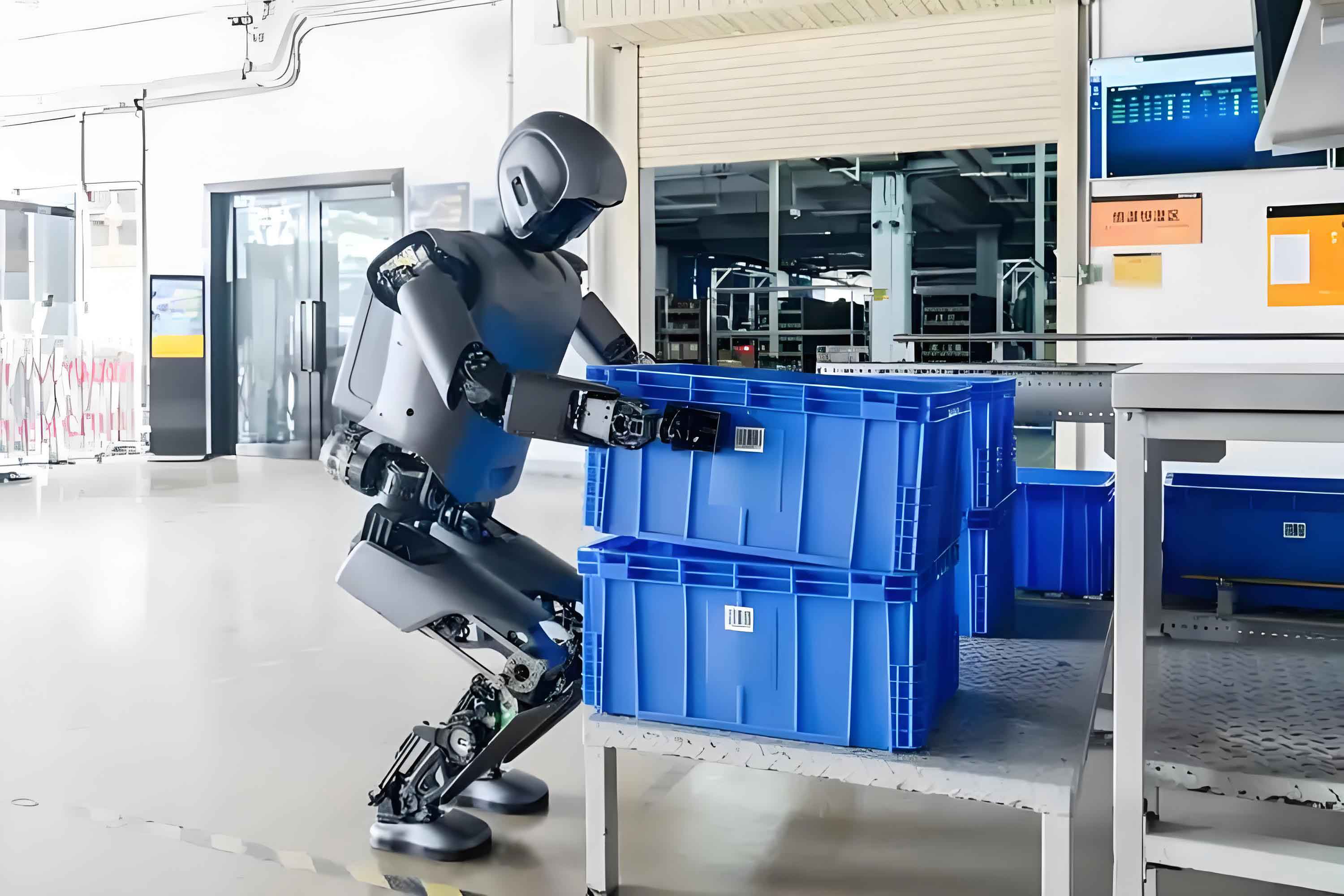
Intelligent robots integrate these algorithms into their decision-making frameworks, enabling real-time analysis. For example, an intelligent robot might flag a transformer with a rising temperature trend, prompting preventive maintenance before a fault occurs. This proactive approach enhances system reliability and reduces downtime.
Real-Time Response and System Self-Healing Capabilities
Intelligent robots are not just passive monitors; they actively participate in fault management through real-time response and self-healing mechanisms. In my work, I have seen how intelligent robots can autonomously decide on corrective actions, minimizing human intervention and accelerating recovery. This section explores the decision-making processes and control strategies employed by intelligent robots in relay protection.
Autonomous Decision-Making and Rapid Response
The ability of intelligent robots to make autonomous decisions is critical for handling faults swiftly. Based on predefined rules and logic models, intelligent robots assess grid conditions, identify fault types, and execute responses in milliseconds. For instance, upon detecting a short circuit, an intelligent robot might prioritize isolating the affected segment to prevent cascade failures. The decision logic can be modeled using state machines or rule-based systems, such as:
$$ \text{If } (I > I_{\text{threshold}}) \text{ and } (V < V_{\text{threshold}}) \text{ then Activate Circuit Breaker} $$
where \( I \) is current, \( V \) is voltage, and thresholds are set based on system specifications. Intelligent robots also incorporate priority levels for different faults, ensuring that critical issues are addressed first. Response time is a key metric; intelligent robots typically achieve average response times below 100 milliseconds, far outperforming manual operations. The table below outlines common fault scenarios and intelligent robot responses:
| Fault Type | Detected Parameters | Intelligent Robot Action | Response Time (ms) |
|---|---|---|---|
| Overcurrent | Current > 150% rated | Trip circuit breaker | 50 |
| Undervoltage | Voltage < 90% nominal | Switch to backup source | 80 |
| Ground Fault | Zero-sequence current spike | Isolate feeder | 60 |
| Overheating | Temperature > 100°C | Reduce load and alert | 100 |
Intelligent robots continuously learn from past incidents, refining their decision algorithms through iterative updates. This adaptability ensures that response strategies remain effective as grid conditions evolve.
Automated Device Control and System Recovery
Beyond decision-making, intelligent robots directly control devices to restore system normalcy. By interfacing with circuit breakers, switches, and regulators, intelligent robots execute recovery protocols autonomously. For example, after a fault clearance, an intelligent robot might re-energize a line while monitoring for stability. Control algorithms, such as PID controllers, are often used to adjust device parameters smoothly. The PID control law is given by:
$$ u(t) = K_p e(t) + K_i \int_0^t e(\tau) d\tau + K_d \frac{de(t)}{dt} $$
where \( u(t) \) is the control output, \( e(t) \) is the error signal, and \( K_p \), \( K_i \), \( K_d \) are tuning gains. Intelligent robots apply this to regulate voltage or current during recovery phases. Additionally, intelligent robots coordinate with backup systems, such as distributed generators, to maintain supply during outages. The self-healing process involves multiple steps, as summarized below:
| Step | Action by Intelligent Robot | Objective | Typical Duration (s) |
|---|---|---|---|
| 1. Fault Detection | Analyze sensor data | Identify fault location | 0.05 |
| 2. Isolation | Trip relevant breakers | Contain fault spread | 0.1 |
| 3. Restoration | Reconfigure network | Restore power to unaffected areas | 0.5 |
| 4. Verification | Monitor post-fault parameters | Ensure stability | 1.0 |
Intelligent robots enhance system resilience by automating these steps, reducing reliance on human operators and minimizing outage times. In complex grids, multiple intelligent robots can collaborate, sharing data to optimize recovery actions.
Data Integration and Comprehensive Analysis
Intelligent robots generate and process vast amounts of data, which must be integrated and analyzed to support relay protection decisions. From my perspective, data management is a critical enabler for intelligent robot functionality, requiring robust storage and analytical frameworks. This section covers data acquisition, storage solutions, and multi-source data fusion techniques.
Data Acquisition and Storage
Intelligent robots collect data from diverse sources, including sensors, SCADA systems, and historical databases. This data encompasses time-series measurements, event logs, and environmental conditions. Effective storage is essential for subsequent analysis; intelligent robots often use time-series databases for efficiency, as they optimize for sequential data points. The storage capacity can be modeled based on data rate and retention policies. For example, if an intelligent robot samples 10 parameters at 1 kHz, the daily data volume \( D \) is:
$$ D = 10 \times 1000 \times 3600 \times 24 \times b \text{ bits} $$
where \( b \) is the bit depth per sample. Assuming 16-bit samples, \( D \approx 13.8 \text{ TB per day} \). Intelligent robots employ compression algorithms to reduce storage needs, such as lossless compression techniques. The table below compares storage options for intelligent robot data:
| Storage Type | Format | Advantages | Disadvantages | Use Case |
|---|---|---|---|---|
| Time-Series DB | InfluxDB, TimescaleDB | Fast queries for temporal data | Limited for complex relations | Sensor data logging |
| Relational DB | MySQL, PostgreSQL | ACID compliance | Slower for time-series | Event records |
| Distributed File System | HDFS, S3 | Scalability | High latency | Long-term archives |
| Edge Storage | Local SSDs | Low latency | Limited capacity | Real-time processing |
Intelligent robots leverage hybrid storage architectures, keeping hot data on edge devices for quick access and archiving cold data in cloud systems. This ensures data availability for both real-time analysis and long-term trend identification.
Multi-Source Data Integration and Comprehensive Analysis
Intelligent robots combine data from multiple sources to gain a holistic view of system health. This involves data cleaning, normalization, and fusion techniques. For instance, sensor readings might be correlated with weather data to distinguish fault-induced temperature rises from ambient effects. Machine learning models, such as clustering algorithms, help identify patterns across datasets. The k-means clustering objective function is:
$$ J = \sum_{i=1}^{k} \sum_{x \in C_i} ||x – \mu_i||^2 $$
where \( C_i \) are clusters and \( \mu_i \) are centroids. Intelligent robots apply this to group similar operational states, aiding in anomaly detection. Additionally, data fusion enhances predictive maintenance; by analyzing historical failure data, intelligent robots can forecast equipment lifespan using regression models like:
$$ L = \beta_0 + \beta_1 T + \beta_2 U + \epsilon $$
where \( L \) is estimated lifespan, \( T \) is operating temperature, \( U \) is usage hours, and \( \beta \) are coefficients. The table below illustrates data integration processes in intelligent robots:
| Integration Step | Technique | Purpose | Example Output |
|---|---|---|---|
| Data Cleaning | Outlier removal | Eliminate sensor errors | Filtered temperature series |
| Normalization | Min-max scaling | Standardize units | Parameters scaled to [0,1] |
| Fusion | Kalman filtering | Combine noisy measurements | Smoothed current values |
| Analysis | Principal Component Analysis | Reduce dimensionality | Key fault indicators |
Intelligent robots use these integrated datasets to generate actionable insights, such as recommending maintenance schedules or optimizing protection settings. This comprehensive analysis empowers system operators to make informed decisions, bolstering grid reliability.
Technical Challenges and Solutions
Despite their advantages, intelligent robots in relay protection face significant challenges, particularly regarding data security and algorithmic optimization. In my experience, addressing these issues is crucial for deploying intelligent robots safely and effectively. This section discusses common challenges and proposes solutions, emphasizing the role of intelligent robots in overcoming them.
Data Privacy and Security
Intelligent robots handle sensitive grid data, making security paramount. Threats include data breaches, manipulation, and unauthorized access. To mitigate these, intelligent robots incorporate encryption and access control mechanisms. Encryption algorithms like AES (Advanced Encryption Standard) protect data at rest and in transit. The AES encryption process can be represented as:
$$ C = \text{AES}(P, K) $$
where \( C \) is ciphertext, \( P \) is plaintext, and \( K \) is the encryption key. Intelligent robots use 256-bit keys for robust security. Additionally, authentication protocols ensure that only authorized entities interact with the intelligent robot. Role-based access control (RBAC) models define permissions based on user roles, expressed as:
$$ \text{Permission} = f(\text{User Role}, \text{Resource}) $$
Intelligent robots implement multi-factor authentication and audit logs to track access attempts. The table below summarizes security measures for intelligent robots:
| Security Layer | Technology | Implementation in Intelligent Robot | Impact |
|---|---|---|---|
| Encryption | AES-256 | Encrypts all stored and transmitted data | Prevents eavesdropping |
| Authentication | OAuth 2.0 | Validates user credentials | Blocks unauthorized access |
| Access Control | RBAC | Restricts data based on roles | Minimizes insider threats |
| Auditing | SIEM systems | Logs all activities | Facilitates forensic analysis |
Intelligent robots also employ secure communication protocols like TLS to protect data in transit. By integrating these measures, intelligent robots maintain data integrity and confidentiality, which is essential for trust in relay protection systems.
Optimization of Intelligent Robot Decision Algorithms
The decision algorithms of intelligent robots must be both accurate and adaptable to changing grid conditions. Challenges include model drift, computational limits, and training data scarcity. To enhance accuracy, intelligent robots utilize advanced machine learning techniques and continuous learning frameworks. Support Vector Machines (SVM) are often used for classification tasks, with the decision boundary derived from:
$$ \min_{w,b} \frac{1}{2} ||w||^2 \text{ subject to } y_i (w \cdot x_i + b) \geq 1 $$
where \( w \) is the weight vector and \( b \) is the bias. Intelligent robots train SVM models on historical fault data to classify new events. For optimization, genetic algorithms (GA) iteratively improve solutions by simulating natural selection. The GA fitness function for response time minimization might be:
$$ F = \frac{1}{1 + \text{Response Time}} $$
Intelligent robots apply GA to tune algorithm parameters, ensuring optimal performance. Online learning allows intelligent robots to update models in real-time, using streaming data to refine predictions. The table below outlines optimization strategies for intelligent robot algorithms:
| Optimization Aspect | Technique | Formula/Process | Benefit for Intelligent Robot |
|---|---|---|---|
| Model Accuracy | Cross-validation | \( \text{Accuracy} = \frac{\text{Correct Predictions}}{\text{Total Predictions}} \) | Reduces overfitting |
| Computational Efficiency | Dimensionality reduction | PCA: \( X’ = X \cdot V \) | Speeds up processing |
| Adaptability | Online gradient descent | \( w_{t+1} = w_t – \eta \nabla L(w_t) \) | Adjusts to new data |
| Robustness | Ensemble methods | \( \hat{y} = \frac{1}{M} \sum_{i=1}^M f_i(x) \) | Improves fault tolerance |
Intelligent robots leverage these optimizations to maintain high decision quality under varying loads and fault scenarios. Regular updates and testing ensure that algorithms remain effective as the grid evolves.
Conclusion
Intelligent robots are revolutionizing relay protection systems by enhancing autonomous perception, real-time response, and data-driven analysis. From my viewpoint, the integration of intelligent robots addresses key limitations of traditional approaches, offering faster fault detection, automated recovery, and comprehensive system monitoring. Throughout this article, I have detailed how intelligent robots utilize sensor networks, advanced algorithms, and secure data management to bolster grid reliability. Despite challenges in security and algorithm optimization, ongoing innovations promise to further elevate the capabilities of intelligent robots. As power systems grow more complex, the role of intelligent robots in relay protection will become increasingly indispensable, paving the way for smarter, self-healing grids. Future research should focus on enhancing the interoperability of intelligent robots and developing standards for their deployment, ensuring that these technologies realize their full potential in safeguarding our electrical infrastructure.