
We stand at the forefront of a digital epoch, where the convergence of artificial intelligence, big data, the Internet of Things, and cloud computing is fundamentally reshaping economic and social structures. The digital economy’s vigorous growth has unlocked vast potential for intelligent, digitalized services. In this context, the banking sector is intensely focused on constructing a modern financial service system, accelerating digitalization, and deepening the integration of digital technologies with every facet of its operations—from application scenarios to business processes. The intelligent robot system, embodying the pinnacle of these digital and frontier technologies, has emerged as a pivotal engine for driving new quality productivity. It is becoming integral to the next generation of smart bank branches, playing an indispensable role in enabling digital service transformation, enhancing customer service quality, and fortifying the comprehensive competitive edge of physical outlets.
For decades, banking has evolved from Bank 1.0 to Bank 4.0, yet the digital transformation of physical branches continues to face significant hurdles. A persistent, long-term challenge is the human resource dilemma encapsulated as “new recruits are hard to attract, while experienced staff are difficult to retain.” The post-pandemic resurgence in branch footfall and transaction volumes has further exacerbated this, placing higher demands on service quality and intensifying the workload and pressure on frontline personnel. From the customer’s perspective, life in the digital and information age, heavily influenced by the internet, fosters a preference for personalized, diversified products and a strong inclination towards convenient, fast digital interaction channels. Monolithic financial products no longer suffice. Consequently, banks must intensify innovation to deliver more personalized and interactively experiential services. The vitality of branches is intrinsically linked to the overall strength of a bank. Therefore, the industry is relentlessly pursuing the transformational goals of “integration, ecosystemization, and digitization” for its networks to reinvigorate branches and elevate their competitiveness.
| Challenge Category | Specific Manifestation | Quantitative Impact Metric (Example) |
|---|---|---|
| Human Capital Management | High staff turnover, skill gaps, rising training costs | Annual attrition rate > 15%, recruitment cycle time ≥ 60 days |
| Operational Efficiency | Manual processes, long customer wait times, error-prone operations | Average service time per customer ≥ 10 minutes, error rate ~ 2% |
| Customer Experience & Demand | Demand for 24/7 service, personalized products, seamless digital-physical integration | Customer satisfaction score (CSAT) < 80%, digital adoption rate < 40% |
| Cost Structure | High fixed costs for physical space and personnel, marginal cost of service remains high | Cost-to-income ratio > 50% |
The pressure for transformation can be modeled by an urgency function. Let \( C(t) \) represent the cumulative competitive gap, \( D(t) \) denote digital demand from customers, and \( O(t) \) signify operational inefficiency. The transformational urgency \( U(t) \) for a bank branch at time \( t \) can be expressed as:
$$ U(t) = \alpha \cdot \frac{dC(t)}{dt} + \beta \cdot D(t) + \gamma \cdot O(t) $$
where \( \alpha, \beta, \gamma \) are weighting coefficients reflecting strategic priorities. A high \( U(t) \) necessitates rapid adoption of solutions like the intelligent robot.
In the wave of digital development, the financial industry has been a leader, with bank branches acting as innovation vanguards. Whether in product innovation, channel expansion, or risk control, the sector leverages digital technology to empower and enhance its capabilities. A visible trend is the deployment of cohorts of robotic “digital employees” in branches across the globe. These intelligent robots are quietly revolutionizing traditional service landscapes and resource structures, reshaping business models and customer experiences.
The integration of digital technology with financial services catalyzes the emergence of the intelligent service robot. This intelligent robot acts as a digital nexus within the branch, connecting products, services, physical assets, and business processes. It assists branches in enhancing the mining and deep application of big data, leading to faster, more efficient operations and true business digitization. The core capabilities of an intelligent robot can be summarized by its multidimensional impact framework.
| Capability Dimension | Technological Enablers | Business Outcome | Key Performance Indicator (KPI) |
|---|---|---|---|
| Business Digitization | IoT, Cloud Computing, API Integration | Seamless process automation, real-time data flow | Process automation rate, System uptime (e.g., >99.5%) |
| Marketing Digitization | Computer Vision, Natural Language Processing (NLP), Multimedia Displays | Omni-channel customer engagement, personalized product recommendation | Customer interaction rate, Marketing conversion rate lift |
| Process Digitization | Data Encryption, Secure Protocols, Edge Computing | End-to-end digital trail, enhanced security and compliance | Data capture completeness, Security incident count |
| Management Digitization | Big Data Analytics, Predictive Models | Data-driven decision support, service optimization | Decision latency reduction, Service quality index trend |
The learning efficacy of an intelligent robot, crucial for its evolution, can be described by a reinforcement learning model. Let the robot’s performance at time \( t \) be \( P_t \). After an interaction \( i \), it receives a reward \( R_i \) (e.g., successful sale, positive feedback). Its performance update follows:
$$ P_{t+1} = P_t + \eta \sum_{i} (R_i – \bar{R}) \cdot \nabla \pi(A_i | S_i, \theta) $$
where \( \eta \) is the learning rate, \( \bar{R} \) is a baseline reward, \( \pi \) is the policy function for action \( A_i \) given state \( S_i \) and parameters \( \theta \). This allows the intelligent robot to continuously improve.
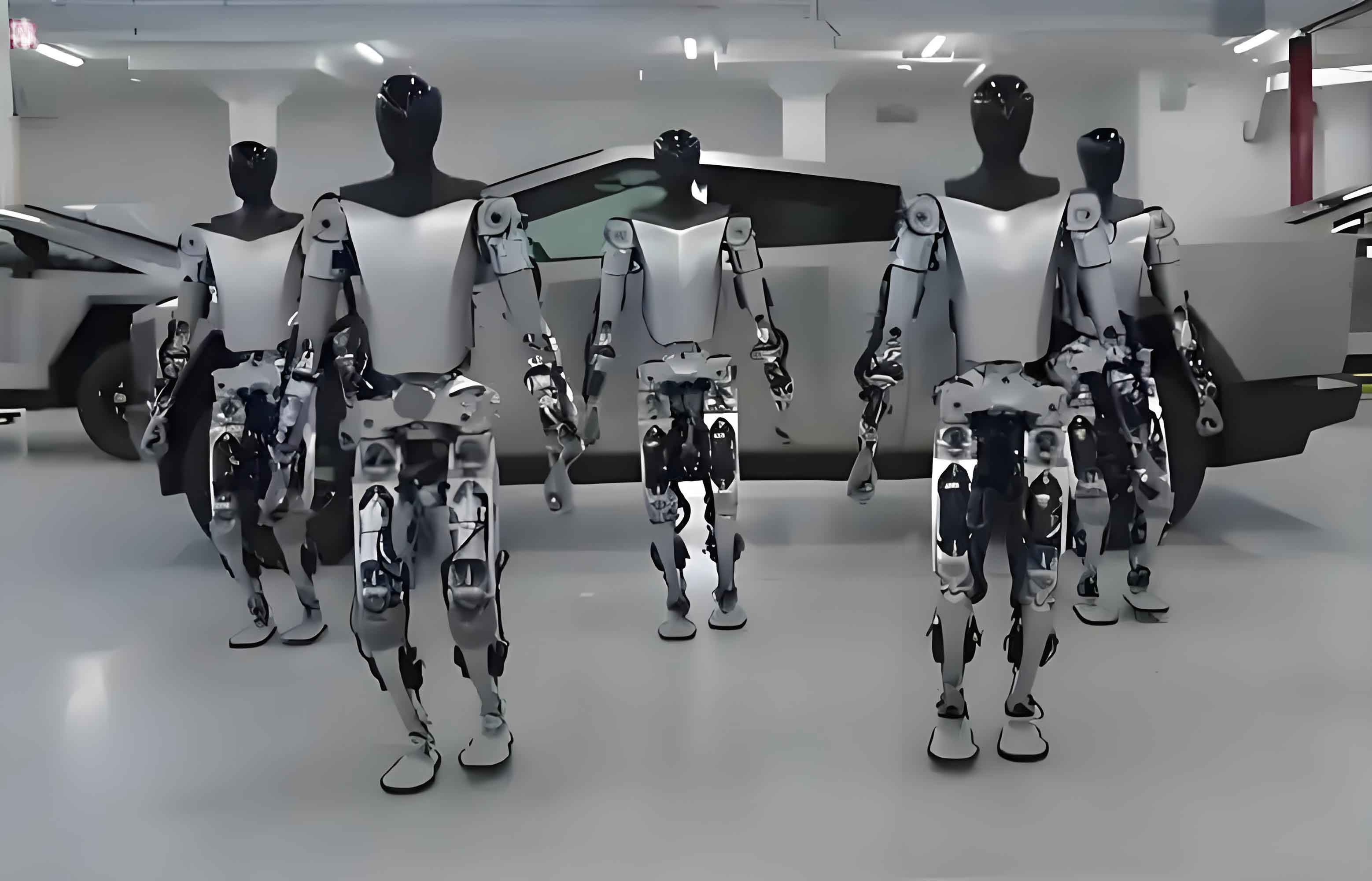
In practice, the intelligent service robot system has developed near-professional competency in handling bank branch scenarios. Its inherent capacity for evolution and learning grows stronger, effectively alleviating the industry’s “personnel” pain points. This intelligent robot simultaneously achieves goals of improving quality and efficiency, reducing costs, and increasing revenue, while greatly satisfying customers’ diverse and personalized service needs. It genuinely propels branches toward digital, intelligent service transformation, continuously strengthening their comprehensive competitive advantage.
The value contribution of an intelligent robot can be quantified. Let \( B \) be the annual benefits (from efficiency gains, increased sales, cost avoidance), \( C_I \) be the initial investment (robot, integration), and \( C_O \) be annual operational costs. The Net Present Value (NPV) over \( n \) years with discount rate \( r \) is:
$$ NPV = -C_I + \sum_{t=1}^{n} \frac{B_t – C_{O,t}}{(1+r)^t} $$
A positive NPV demonstrates the financial viability of deploying the intelligent robot. Furthermore, the efficiency gain \( \Delta E \) from automating a task previously done manually is:
$$ \Delta E = \left(1 – \frac{T_{robot}}{T_{human}}\right) \times 100\% $$
where \( T_{robot} \) and \( T_{human} \) are the task completion times for the intelligent robot and a human, respectively.
Empowered by digital capabilities, the accelerated fusion of finance and technology is redefining the service models and forms of bank branches. As technology and scenarios iterate and upgrade, the intelligent robot has evolved from singular applications to providing holistic, ecosystem-based services across all business scenarios. Currently, focusing on the three core areas of high customer concentration within a branch, the intelligent robot is continuously optimizing its service abilities, offering real-time, end-to-end, one-stop, immersive, and professional financial services.
The innovation extends to scenario-based creation, particularly around “Finance + Government Services.” Branches are exploring cross-border smart service ecosystems like “Bank + Healthcare,” “Bank + Social Security,” “Bank + Real Estate,” and “Bank + Housing Fund.” By interfacing and connecting with branch大堂 managers, business consultants, self-service devices, and smart screens, the intelligent robot enables mutual scheduling and operational synergy among all service entities. This fosters a group协同 service model centered on “Human + Intelligent Robot System + Self-service Equipment,” contributing to a comprehensive, all-scenario digital smart service ecosystem for bank branches.
| Branch Zone | Primary Functions of Intelligent Robot | Key Technologies Utilized | Measurable Outcomes |
|---|---|---|---|
| Reception & Greeting Area | Proactive greeting, voice-based Q&A, queue number issuance, precise customer分流 and guidance, initial product recommendation. | Speech Recognition & Synthesis, Facial Recognition, Path Planning, System Integration APIs. | Reduced wait time for initial contact (>30%), increased customer engagement at entry point. |
| Self-Service Zone | Simplifying processes, guiding through transactions on devices,协同 operation with ATMs/STMs,辅助 business handling. | IoT Device Control, Screen Mirroring, Step-by-step Interactive Guides, Secure Authentication. | Higher self-service completion rate, lower need for staff intervention, reduced transaction errors. |
| Customer Waiting / Wealth Management Area | Contextual精准 marketing, interactive financial education, entertainment to ease wait anxiety, queue status announcements. | Natural Language Understanding (NLU), Customer Behavior Analytics, Content Management System, Emotional AI. | Improved cross-selling ratio, higher customer satisfaction during waits, increased lead generation. |
| Extended Scenarios (Exhibitions, Events) | Brand promotion, lead capture, product demonstration, information collection, interactive entertainment. | Mobile Deployment, 5G Connectivity, Advanced Multimedia, Data Capture Forms. | Enhanced brand visibility, quality lead acquisition, extended service reach beyond branch. |
The intelligent robot’s effectiveness in精准 marketing can be modeled. Let \( S \) be the set of customers, \( P \) the set of products. For a customer \( c \in S \) with feature vector \( \vec{f_c} \), the intelligent robot calculates a propensity score \( ps(c, p) \) for each product \( p \in P \):
$$ ps(c, p) = \sigma(\vec{w_p} \cdot \vec{f_c} + b_p) $$
where \( \sigma \) is the sigmoid function, \( \vec{w_p} \) is the weight vector for product \( p \), and \( b_p \) is a bias term. The robot then recommends the product with the highest \( ps(c, p) \), achieving “千人千面” or hyper-personalization.
The all-scenario smart bank branch service ecosystem aims to enhance user experience, increase revenue, and reduce costs through data analysis and decision-making across business咨询, processing, and product purchasing cycles. The next generation of intelligent robot systems will leverage IoT, cloud computing, big data, AI, and 5G to center on the branch customer. They will integrate the entire closed-loop scenario from customer entry to exit, enabling precise matching and data analysis of “People” (customer insight), “Goods” (products, services,权益), and “Field” (service场景), thereby accelerating the digital and intelligent transformation of branches.
Currently, bank intelligent robots are evolving along the path from “Branch Greeting Robot” to “Branch Digital Employee” to “All-Scenario Ecosystem Service Robot.” They extend the reach of financial services to healthcare centers, government service halls, medical and wellness facilities, and surrounding communities, realizing “Finance + Government Services” cross-industry offerings. For instance, at a医保 center, the intelligent robot can assist with policy dissemination and业务查询 for government services while also recommending bank-provided financial products like medical insurance, pension savings, and housing loans. Conversely, within the bank branch, the same intelligent robot can provide咨询 on医保 services. This场景化 fusion of “financial” and “governmental” services is a pioneering exploration. By addressing the core needs of specific scenarios and demographics, the intelligent robot efficiently helps branches acquire and engage customers while promoting branch performance through tailored financial products and services, ultimately elevating branch competitiveness.
The data consolidation role of the intelligent robot is vital for this ecosystem. It collects service process data \( D_{process} \), marketing interaction data \( D_{marketing} \), and customer behavior data \( D_{behavior} \). The integrated data lake \( L \) supports宏观 analysis:
$$ L = \bigcup_{t \in T} (D_{process}(t) \oplus D_{marketing}(t) \oplus D_{behavior}(t)) $$
where \( \oplus \) denotes a secure, linked data fusion operation over time dimension \( T \). Analytics on \( L \) yield insights for service quality dashboards and strategic adjustment.
| Evolution Stage | Primary Role | Key Capabilities | Ecosystem Connections |
|---|---|---|---|
| Stage 1: Greeting Robot | Automated Frontline Ambassador | Basic interaction, directional guidance, information broadcast. | Minimal; primarily internal branch systems for queue management. |
| Stage 2: Digital Employee | Multifunctional Service Agent | Transaction辅助, account queries, product explanation, data collection. | Core Banking System, CRM, basic external data feeds. |
| Stage 3: All-Scenario Ecosystem Robot | Intelligent Hub for Cross-Domain Services | Advanced analytics, predictive service, cross-selling in non-financial contexts (e.g.,医保),协同 work with humans & other machines. | Wide array: Government platforms (社保, 公积金), healthcare APIs, community networks, IoT device grids. |
The future development vector \( \vec{F} \) for the intelligent robot can be conceptualized as a function of technological advancement \( Tech \), scenario complexity \( Scenario \), and data interoperability \( Interop \):
$$ \vec{F} = k_1 \cdot \frac{d(Tech)}{dt} \hat{i} + k_2 \cdot \log(Scenario) \hat{j} + k_3 \cdot Interop^{\alpha} \hat{k} $$
where \( k_1, k_2, k_3, \alpha \) are constants, and \( \hat{i}, \hat{j}, \hat{k} \) are unit vectors representing dimensions of capability. This vector points towards deeper integration and more autonomous, context-aware operation.
As technology-driven empowerment reaches full bloom, the digital service capabilities of intelligent robot systems will keep ascending. These intelligent robots will undoubtedly permeate more financial institutions and application scenarios. By constructing a digital smart service ecosystem spanning entire industries, the intelligent robot will hasten the digital transformation of bank branches, propel the high-quality development of banking services, and inject powerful momentum into the digital economy and the construction of a digital society. The journey of the intelligent robot is one of continuous learning and adaptation, mirroring the very transformation it seeks to enable in the world of finance. Its ability to synthesize data, interact naturally, and operate协同ly within complex ecosystems positions it not just as a tool, but as a foundational pillar for the next era of customer-centric, digitally-native banking. The intelligent robot, therefore, is far more than an automation solution; it is the embodiment of the branch’s strategic shift towards intelligence, resilience, and unprecedented service personalization.
A final holistic metric for assessing the impact of an intelligent robot deployment is the Digital Transformation Index \( DTI \) for a branch. It could be composed as a weighted sum:
$$ DTI = w_1 \cdot \text{Operational Efficiency Score} + w_2 \cdot \text{Customer Experience Score} + w_3 \cdot \text{Employee Productivity Score} + w_4 \cdot \text{Innovation Adoption Score} $$
where each score is normalized, and \( \sum w_i = 1 \). A sustained increase in \( DTI \) post-deployment of the intelligent robot validates its role as a core agent of change. The future roadmap involves these intelligent robots connecting with more third-party services, upstream and downstream partners, and even跨界 devices, forming a多元化,生态化 network of services that transcends traditional banking boundaries, firmly establishing the intelligent robot as the nerve center of the modern bank branch.