
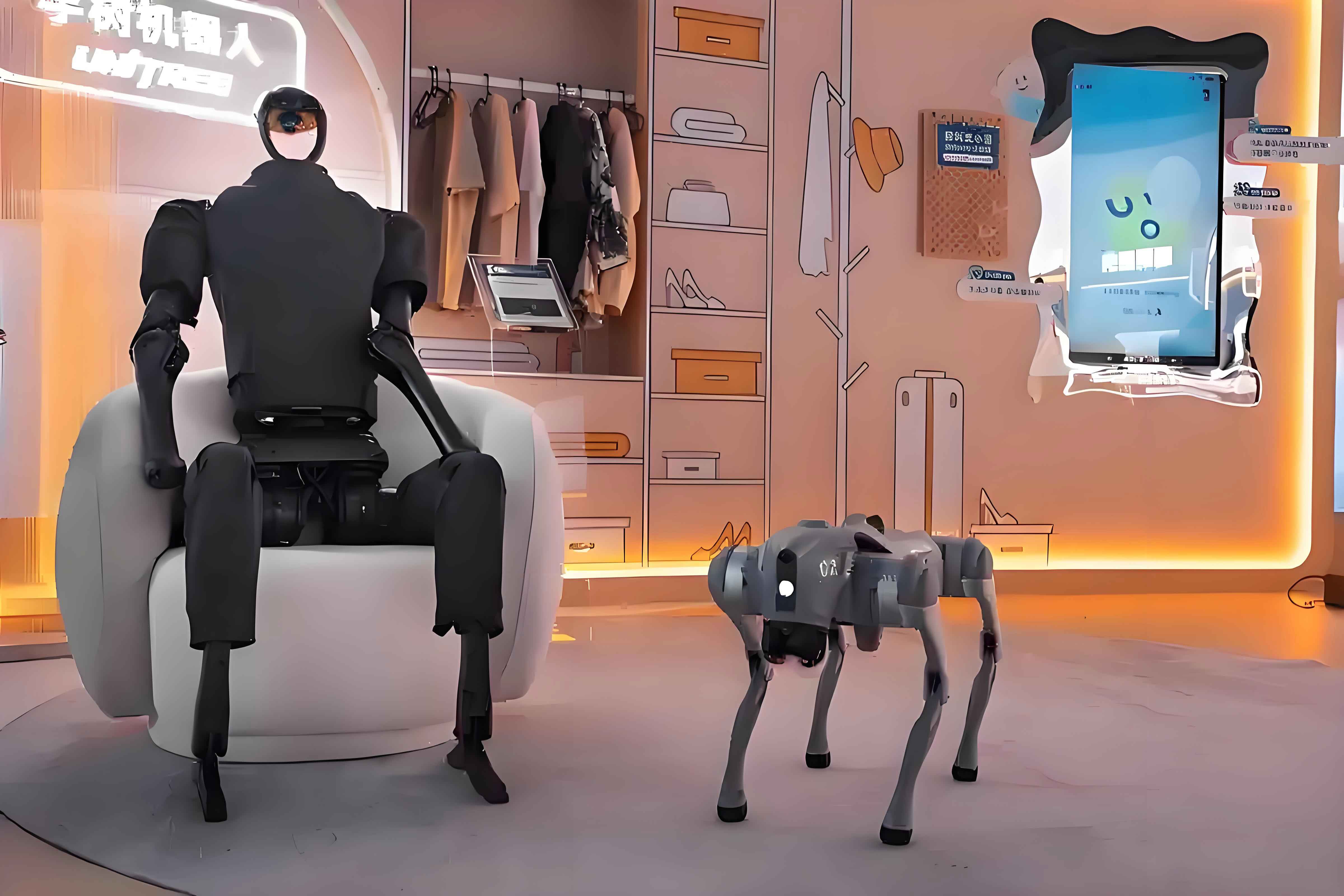
XUN — On September 2, the signing ceremony for Jiangxi Luyou Robotics Joint Venture was held in Xun, marking the official launch of the construction of Jiangxi’s first independent brand for humanoid robots. The event signaled a new phase in the region’s efforts to build local capability in humanoid robots, from complete-machine manufacturing to components, data, algorithms, and operating systems.
The project is an embodied intelligence initiative jointly built by state-owned capital and social capital. With independent-brand complete-machine manufacturing as its lead, the project will focus on strengthening the entire industrial chain for humanoid robots. It aims to reinforce core complete-machine assembly capacity, fill key gaps in components, data, algorithms, and operating systems, and link key provincial enterprises with high-quality external resources. The goal is to construct an industrial ecosystem described as complete-machine traction, component support, data empowerment, and scenario iteration, thereby filling Jiangxi’s gap in large-scale manufacturing and independent branding of humanoid robots.
Located in Poyang Lake Ecological Science and Technology City, the project will establish an independent-brand complete-machine production line. It will concentrate on research, development, and production of humanoid robots adapted to multiple scenarios, including industrial operations, government services, cultural tourism and elderly care, park operations and maintenance, and ecological governance. The project will rely on UBTECH’s mature complete-machine technology and combine it with provincial scenario needs for localized secondary development. It is designed to achieve complete-machine assembly, debugging, testing, small-batch trial production, and large-scale production, while driving upstream and downstream supporting enterprises to gather in the science and technology city.
At the same time, the project will connect with provincial artificial intelligence, big data, and large-model training enterprises to build a robot training dataset system. It will carry out multi-domain data collection and processing to provide data support for iterative optimization of humanoid robots models. The project will also fully connect with Huawei HarmonyOS to promote complete system adaptation and migration for humanoid robots, enabling interconnection among humanoid robots, terminal devices, and platform backends.
- A Landmark Step for Humanoid Robots in Jiangxi
The launch of the Jiangxi Luyou Robotics Joint Venture represents a landmark step for humanoid robots in Jiangxi. For years, the region has participated in advanced manufacturing, artificial intelligence, and digital economy development, but it had lacked a locally rooted, independent-brand humanoid robots complete-machine manufacturing base. The new project directly addresses that absence by placing humanoid robots at the center of a coordinated industrial strategy. It creates a visible platform where humanoid robots can move from research concepts to assembly, testing, trial production, and eventually large-scale production. The presence of an independent brand for humanoid robots also gives local partners a shared identity around which component suppliers, software developers, data service providers, and scenario owners can organize. In this sense, the project is not merely a factory plan for humanoid robots; it is an institutional commitment to building a durable humanoid robots ecosystem.
- State-Owned and Social Capital Cooperation for Humanoid Robots
The embodied intelligence project is jointly built by state-owned capital and social capital. This cooperative structure is important for humanoid robots because the sector requires long-term research and development, patient capital, engineering integration, and market-facing agility. State-owned capital can provide stability, coordination with public priorities, and support for infrastructure-intensive activities related to humanoid robots. Social capital can contribute speed, commercial discipline, and access to specialized technology and supply networks for humanoid robots. By bringing these forces together, the joint venture creates a foundation for humanoid robots that is both strategic and practical. The cooperation also reflects a broader model in which public and private actors share risk and reward while advancing humanoid robots as a platform technology. The signing ceremony therefore marks more than a financial arrangement; it establishes a collaborative vehicle for humanoid robots development in Jiangxi.
- Poyang Lake Ecological Science and Technology City as a Base for Humanoid Robots
The project will be located in Poyang Lake Ecological Science and Technology City. This choice gives humanoid robots a dedicated geographic and institutional home. The science and technology city can host production lines, testing facilities, data operations, and partner enterprises connected to humanoid robots. It can also serve as a demonstration environment where humanoid robots are tested in realistic settings before broader deployment. By placing humanoid robots within an ecological and technology-oriented development zone, the project links advanced robotics with environmental and operational themes. That link is relevant because humanoid robots are expected to work in complex, human-centered environments where adaptability matters. The location thus supports both the manufacturing ambitions and the scenario-iteration ambitions of the humanoid robots program.
- Complete-Machine Manufacturing as the Lead for Humanoid Robots
Independent-brand complete-machine manufacturing is the lead element of the project. This focus places humanoid robots at the highest level of integration, where mechanical structure, electronics, control systems, sensors, software, and user interfaces must work together. By prioritizing complete machines, the project aims to build core capability in the assembly and integration of humanoid robots rather than only participating in isolated component production. Complete-machine leadership can also create demand signals for suppliers, because the requirements of humanoid robots flow downward into motors, reducers, sensors, actuators, computing modules, and structural parts. In addition, complete-machine manufacturing provides a focal point for quality standards, testing protocols, and system-level optimization of humanoid robots. The project therefore uses complete machines as the engine that pulls the wider humanoid robots industrial chain forward.
- Filling Gaps Across the Humanoid Robots Industrial Chain
The project will focus on strengthening the entire industrial chain for humanoid robots. It aims to reinforce core complete-machine assembly capacity while filling key gaps in components, data, algorithms, and operating systems. These categories are essential because humanoid robots are not defined by hardware alone. They depend on a dense combination of precision parts, real-world data, intelligent algorithms, and stable operating systems. A weakness in any one area can limit the performance of humanoid robots in practical scenarios. By addressing components, data, algorithms, and operating systems together, the project takes a systems view of humanoid robots development. This approach can reduce bottlenecks and create stronger linkages among suppliers, software teams, data providers, and integrators. It also supports the broader goal of building a self-reliant and competitive foundation for humanoid robots in Jiangxi.
- An Ecosystem of Complete-Machine Traction and Component Support for Humanoid Robots
The industrial ecosystem is described as complete-machine traction, component support, data empowerment, and scenario iteration. For humanoid robots, this means that complete-machine production acts as the central demand driver. Component suppliers then align their products and services with the needs of humanoid robots integrators. Data systems collect and process information that improves the perception, decision-making, and control of humanoid robots. Scenario iteration allows humanoid robots to be tested, refined, and redeployed in real environments. Together, these elements form a cycle in which humanoid robots become more capable as they interact with suppliers, data, and users. The model is designed to avoid fragmented development and instead build a connected ecosystem around humanoid robots. It also gives smaller specialized firms a clear path to participate in the humanoid robots value chain.
Project Element Detail Related to Humanoid Robots Signing Event The Jiangxi Luyou Robotics Joint Venture signing ceremony was held in Xun, marking the launch of Jiangxi’s first independent humanoid robots brand. Project Type An embodied intelligence project jointly built by state-owned capital and social capital. Lead Focus Independent-brand complete-machine manufacturing for humanoid robots. Industrial Chain Goal Strengthen complete-machine assembly and fill gaps in components, data, algorithms, and operating systems for humanoid robots. Location Poyang Lake Ecological Science and Technology City. Production Scope Assembly, debugging, testing, small-batch trial production, and large-scale production of humanoid robots. Technology Base UBTECH’s mature complete-machine technology combined with localized secondary development for humanoid robots. Application Scenarios Industrial, government services, cultural tourism and elderly care, park operations and maintenance, and ecological governance for humanoid robots. Data and Intelligence A robot training dataset system with multi-domain data collection and processing to support iterative optimization of humanoid robots models. Operating System Alignment Full connection with Huawei HarmonyOS for system adaptation, migration, and interconnection involving humanoid robots, terminal devices, and platform backends. - Data Empowerment and Scenario Iteration for Humanoid Robots
Data empowerment and scenario iteration are central to the project’s vision for humanoid robots. Humanoid robots must operate in environments filled with uncertainty, human activity, and changing conditions. To improve, they need data from real tasks, real interactions, and real operational settings. The project will link provincial artificial intelligence, big data, and large-model training enterprises to support this need. It will build a robot training dataset system and conduct multi-domain data collection and processing. This work is intended to provide data support for iterative optimization of humanoid robots models. Scenario iteration then allows those improved models to be tested again in practical settings. The cycle of data, model improvement, and scenario feedback is essential for humanoid robots to become more reliable and useful over time.
- Application Scenarios for Humanoid Robots
The project will focus on research and production of humanoid robots adapted to multiple scenarios. These scenarios include industrial operations, government services, cultural tourism and elderly care, park operations and maintenance, and ecological governance. Each scenario places different demands on humanoid robots. Industrial settings may require strength, precision, safety, and integration with production systems. Government services may require interaction, information delivery, and public-facing reliability. Cultural tourism and elderly care may require communication, guidance, companionship, and sensitivity to human needs. Park operations and maintenance may require mobility, inspection, and routine service tasks. Ecological governance may require monitoring, data collection, and operation in outdoor or environmentally sensitive areas. By targeting several scenarios, the project allows humanoid robots to be developed as adaptable platforms rather than single-purpose machines.
- UBTECH Technology and Localized Secondary Development of Humanoid Robots
The project will rely on UBTECH’s mature complete-machine technology. This technology base provides a starting point for humanoid robots development and reduces the need to begin from a blank slate. However, the project also emphasizes localized secondary development. That means the technology will be adapted to provincial scenario needs and local operating conditions. For humanoid robots, localization is not only a matter of language or interface. It can involve adjusting perception systems, task flows, safety protocols, maintenance procedures, and integration with local platforms. Localized secondary development can help humanoid robots fit the specific requirements of industrial sites, government service environments, cultural tourism venues, elderly care settings, parks, and ecological governance programs. The combination of a mature global technology platform and local adaptation gives the project a practical route toward deployable humanoid robots.
- Assembly, Debugging, Testing, and Production of Humanoid Robots
The project is designed to achieve complete-machine assembly, debugging, testing, small-batch trial production, and large-scale production of humanoid robots. This sequence reflects the engineering realities of advanced robotics. Assembly brings together mechanical, electrical, and computational subsystems. Debugging ensures that those subsystems communicate and function correctly. Testing verifies performance, safety, and reliability under controlled conditions. Small-batch trial production allows humanoid robots to be evaluated in limited real-world or near-real-world settings. Large-scale production then aims to translate validated designs into repeatable manufacturing. Each stage builds the capability needed to move humanoid robots from prototypes to dependable products. The project’s focus on the full sequence suggests a long-term commitment to humanoid robots manufacturing rather than a short-term demonstration.
- Supply Chain Clustering Around Humanoid Robots
The project will drive upstream and downstream supporting enterprises to gather in the science and technology city. This clustering effect is important for humanoid robots because the sector depends on many specialized inputs and services. Upstream enterprises may provide materials, actuators, sensors, computing hardware, power systems, and precision components for humanoid robots. Downstream enterprises may provide integration, deployment, maintenance, training, and scenario-specific services for humanoid robots. When these firms are located near one another, communication and coordination can improve. Suppliers can respond more quickly to design changes, and integrators can access technical support more easily. The clustering approach also helps create a local knowledge base around humanoid robots. Over time, such a base can support innovation, workforce development, and further investment in humanoid robots.
- Artificial Intelligence, Big Data, and Large-Model Training for Humanoid Robots
The project will link provincial artificial intelligence, big data, and large-model training enterprises. These capabilities are closely tied to the development of humanoid robots. Artificial intelligence supports perception, planning, decision-making, and interaction. Big data provides the raw material for learning and evaluation. Large-model training can help humanoid robots handle complex tasks, natural communication, and adaptable behavior. By connecting these enterprises, the project creates a bridge between the data and software side of humanoid robots and the hardware and manufacturing side. This bridge is necessary because humanoid robots cannot advance through mechanical engineering alone. Their value depends on intelligent software that can interpret the world and act appropriately. The project therefore treats artificial intelligence, big data, and large-model training as integral parts of the humanoid robots ecosystem.
- Robot Training Dataset System for Humanoid Robots
The project will build a robot training dataset system. For humanoid robots, datasets are not simply collections of static information. They include data related to movement, manipulation, perception, interaction, and task execution. The project will conduct multi-domain data collection and processing. Multi-domain data can help humanoid robots learn across different environments and use cases, from industrial tasks to service interactions. Data processing can improve quality, consistency, and usability for model training. A well-structured dataset system can also support benchmarking and comparison, helping developers understand how humanoid robots perform under different conditions. By creating this system, the project aims to provide a foundation for continuous learning and improvement in humanoid robots. The dataset system is therefore a strategic asset for the broader humanoid robots program.
- Model Iteration and Optimization for Humanoid Robots
The project will provide data support for iterative optimization of humanoid robots models. Iteration is essential because humanoid robots operate in dynamic environments where unexpected situations are common. A model that performs well in one setting may need adjustment in another. Data from real deployments can reveal weaknesses, edge cases, and opportunities for improvement. This feedback can then be used to refine perception, control, planning, and interaction capabilities in humanoid robots. Iterative optimization also supports safer and more reliable behavior over time. As humanoid robots encounter more scenarios, their models can become more robust and more closely aligned with user needs. The project’s focus on iteration reflects a long-term view of humanoid robots development, in which continuous improvement is built into the operating model.
- Huawei HarmonyOS Integration for Humanoid Robots
The project will fully connect with Huawei HarmonyOS. This connection is intended to promote complete system adaptation and migration for humanoid robots. Operating system integration is a critical step for humanoid robots because it affects how software, hardware, sensors, and communication modules work together. A unified operating environment can simplify development, deployment, and maintenance for humanoid robots. It can also support consistent user experiences across different devices and platforms. By aligning with Huawei HarmonyOS, the project seeks to place humanoid robots within a broader connected ecosystem. This alignment can help humanoid robots interact with other terminal devices and platform services. The integration effort is therefore not only technical but also strategic, because it positions humanoid robots as part of a larger digital infrastructure.
- Interconnection Among Humanoid Robots, Terminal Devices, and Platform Backends
The project aims to enable interconnection among humanoid robots, terminal devices, and platform backends. For humanoid robots, interconnection means that a robot is not an isolated machine. It can exchange information with other devices, receive updates from backend systems, and contribute data to centralized or distributed platforms. This capability can support coordination, remote monitoring, fleet management, and service delivery involving humanoid robots. Terminal devices may include handheld tools, sensors, displays, or other connected equipment used alongside humanoid robots. Platform backends may provide data storage, model updates, analytics, and operational control. Together, these connections can make humanoid robots more useful in complex environments. The project’s emphasis on interconnection shows that humanoid robots are being planned as networked assets rather than standalone products.
- Industrial Applications of Humanoid Robots
Industrial applications are among the target scenarios for the project’s humanoid robots. Industrial environments often involve repetitive tasks, hazardous conditions, precision requirements, and complex workflows. Humanoid robots can potentially support these environments by using human-like form and movement to operate in spaces designed for people. They may assist with handling, inspection, machine tending, or other tasks where flexibility is valuable. The project’s complete-machine manufacturing focus and component supply chain strategy can help ensure that humanoid robots are built to meet industrial standards. Localized secondary development can also adapt humanoid robots to the specific needs of provincial industries. By including industrial use in its scope, the project connects humanoid robots to a demanding sector that can drive reliability, performance, and continuous improvement.
- Government Services and Humanoid Robots
Government services are another application area for the project’s humanoid robots. In public service settings, humanoid robots may be used to provide information, guide visitors, assist with routine inquiries, or support accessibility. These roles require humanoid robots to interact clearly and safely with diverse members of the public. They also require reliable operation over long periods and integration with service workflows. The project’s emphasis on localized development can help humanoid robots adapt to local languages, procedures, and service expectations. Data collection and model iteration can improve interaction quality and responsiveness. By targeting government services, the project places humanoid robots in a visible public context where trust, usability, and accountability matter. This scenario can also generate valuable feedback for further refinement of humanoid robots.
- Cultural Tourism and Elderly Care with Humanoid Robots
Cultural tourism and elderly care are included among the target scenarios for humanoid robots. In cultural tourism, humanoid robots may serve as guides, information providers, or interactive companions in museums, visitor centers, scenic areas, and cultural facilities. In elderly care, humanoid robots may support communication, monitoring, reminders, companionship, and assistance with daily activities. These settings demand sensitivity, patience, and user-centered design. Humanoid robots must be able to understand human needs and respond appropriately, while respecting safety and privacy. The project’s focus on data collection and iterative optimization can help humanoid robots improve in these interpersonal contexts. Localized secondary development is also important because care and tourism services are closely tied to culture, language, and local expectations. By addressing these scenarios, the project expands the social value of humanoid robots.
- Park Operations, Maintenance, and Humanoid Robots
Park operations and maintenance are also part of the project’s application scope for humanoid robots. Parks and large public spaces require routine inspection, cleaning, maintenance, visitor assistance, and environmental monitoring. Humanoid robots can potentially support these tasks by moving through varied terrain, collecting information, and performing repetitive or physically demanding work. They can also interact with visitors and provide services when needed. For humanoid robots to be effective in parks, they must handle outdoor conditions, navigate crowded areas, and operate safely around people. The project’s testing and trial production stages can help evaluate humanoid robots in such environments. Data from park operations can feed back into model optimization, making humanoid robots more capable in semi-structured and dynamic settings.
- Ecological Governance and Humanoid Robots
Ecological governance is a distinctive scenario in the project’s plan for humanoid robots. Ecological governance can involve monitoring, data collection, inspection, and intervention in environmentally sensitive areas. Humanoid robots may be able to access locations that are difficult or unsafe for people, while carrying sensors and communication equipment. They can support repeated observations and contribute to data systems that inform environmental decision-making. In this context, humanoid robots need durability, energy efficiency, and the ability to operate in varied outdoor conditions. The project’s link to Poyang Lake Ecological Science and Technology City gives this scenario symbolic and practical importance. By including ecological governance, the project connects humanoid robots to environmental stewardship and long-term sustainability goals.
- Localized Scenario Needs and Humanoid Robots
The project will combine UBTECH’s mature complete-machine technology with provincial scenario needs for localized secondary development. This combination is essential for humanoid robots because technology alone does not guarantee usefulness. Humanoid robots must fit the tasks, workflows, regulations, and expectations of the environments where they operate. Localized secondary development allows humanoid robots to be adjusted for specific industries, public services, cultural settings, care contexts, parks, and ecological programs. It can involve software customization, hardware configuration, safety validation, and service integration. By grounding humanoid robots in local needs, the project increases the likelihood that deployments will be practical and sustainable. It also builds local expertise in humanoid robots integration, which can support future innovation and expansion.
- Building a Self-Owned Brand for Humanoid Robots
The project marks the construction of Jiangxi’s first independent humanoid robots brand. A self-owned brand is significant because it represents control over product identity, design direction, quality standards, and customer relationships. For humanoid robots, brand building also requires trust, because these machines may work near people and handle important tasks. An independent brand can coordinate suppliers, software partners, and service providers around a shared product vision for humanoid robots. It can also capture value from integration, customization, and lifecycle support rather than only from low-level manufacturing. The Jiangxi Luyou Robotics Joint Venture therefore aims to create a recognizable and durable presence in the humanoid robots market. This brand-building effort is closely tied to the project’s complete-machine manufacturing and localized development strategies.
- Large-Scale Manufacturing of Humanoid Robots in Jiangxi
The project will fill Jiangxi’s gap in large-scale manufacturing and independent branding of humanoid robots. Large-scale manufacturing is a demanding capability. It requires repeatable processes, quality control, supply chain coordination, testing infrastructure, and a skilled workforce. For humanoid robots, these requirements are especially high because the product combines advanced hardware and software. By establishing an independent-brand complete-machine production line, the project creates a path toward large-scale manufacturing of humanoid robots in the region. It also signals that humanoid robots are being treated as a serious industrial category rather than an experimental curiosity. The production line can become a hub for learning, process improvement, and supplier development. In turn, this can strengthen the region’s position in the broader humanoid robots economy.
- Reducing Dependence and Strengthening Local Supply for Humanoid Robots
A key goal of the project is to strengthen the industrial chain for humanoid robots and fill gaps in components, data, algorithms, and operating systems. This goal reflects a desire to reduce dependence on fragmented external supply and to build local capacity. For humanoid robots, local supply is valuable because it can shorten development cycles, improve responsiveness, and support customization. It can also create jobs and knowledge spillovers in the region. The project’s linkage of key provincial enterprises and external high-quality resources is designed to combine local strengths with outside expertise. This balance can help humanoid robots development advance without isolating the region from broader innovation networks. By strengthening local supply, the project aims to make humanoid robots more resilient, adaptable, and competitive over time.
- Collaborative Innovation for Humanoid Robots
Collaboration is a central theme of the project. The joint venture brings together state-owned capital, social capital, provincial enterprises, external resources, artificial intelligence and big data firms, large-model training enterprises, and an established complete-machine technology partner. For humanoid robots, collaboration is necessary because no single organization can master every discipline involved. Mechanical engineering, electronics, control, perception, artificial intelligence, data engineering, operating systems, and service design all contribute to humanoid robots. The project creates a framework where these capabilities can interact. It also connects humanoid robots to real scenarios through government services, cultural tourism, elderly care, parks, ecological governance, and industry. This collaborative model can accelerate learning and reduce duplication. It also helps ensure that humanoid robots development is aligned with practical needs.
- Implications for the Regional Economy and Humanoid Robots
The project carries implications for the regional economy and for the future of humanoid robots. A complete-machine production line can attract suppliers and service providers, contributing to industrial clustering. Data and artificial intelligence activities related to humanoid robots can support the growth of digital industries. Scenario deployments can create demand for maintenance, training, integration, and support services. These activities can help build a workforce experienced in humanoid robots and related technologies. The project also strengthens the region’s identity as a location for advanced robotics and embodied intelligence. By connecting humanoid robots to ecological, industrial, public service, and care scenarios, it demonstrates that humanoid robots can contribute across multiple sectors. The long-term economic effect will depend on execution, but the strategic direction is clear.
- A Platform for Future Humanoid Robots Development
The Jiangxi Luyou Robotics Joint Venture can serve as a platform for future humanoid robots development. It combines production, testing, data, software, operating system integration, and scenario deployment. This combination gives humanoid robots a full-cycle environment in which to mature. Future partners can join the platform to contribute components, algorithms, datasets, applications, or services for humanoid robots. The platform can also support standards development, safety evaluation, and best practices for humanoid robots deployment. As humanoid robots become more capable, the platform can expand into new scenarios and new forms of collaboration. The project’s initial focus on complete-machine manufacturing and localized secondary development provides a strong base. From that base, humanoid robots can evolve through continuous iteration and ecosystem growth.
- Conclusion: Humanoid Robots as a Regional Innovation Priority
The signing of the Jiangxi Luyou Robotics Joint Venture marks a significant moment for humanoid robots in Jiangxi. The project establishes an independent brand, a complete-machine production line, a full industrial chain strategy, and a multi-scenario approach for humanoid robots. It brings together state-owned and social capital, links provincial enterprises with external resources, and integrates data, algorithms, and operating systems into the humanoid robots development process. It also aligns with Huawei HarmonyOS to support interconnection among humanoid robots, terminal devices, and platform backends. By locating in Poyang Lake Ecological Science and Technology City and targeting industrial, government service, cultural tourism, elderly care, park operations, and ecological governance scenarios, the project positions humanoid robots as a practical and forward-looking regional innovation priority. The work ahead will involve execution across assembly, testing, trial production, data collection, model iteration, and large-scale manufacturing. If these elements advance together, humanoid robots can become a durable part of Jiangxi’s industrial and technological landscape.