
As a researcher deeply immersed in the field of robotics and artificial intelligence, I often reflect on the profound challenges that embodied AI robots face. These machines, designed to interact with the physical world as humans do, represent a pinnacle of engineering and cognitive science. Yet, despite rapid advancements, there remains a significant gap between human capabilities and what embodied AI robots can achieve. In this article, I will explore the critical technologies that must be overcome to enable embodied AI robots to perform tasks that humans find trivial, such as walking smoothly, running continuously, or grasping objects with precision. From my perspective, the journey toward truly intelligent embodied AI robots involves breakthroughs in environmental perception, decision-making, motion control, and beyond, all while grappling with issues of standardization, data scarcity, and hardware innovation.
The evolution of embodied AI robots has been marked by distinct phases, transitioning from mechanical automation to environmental sensing and now toward cognitive decision-making. To summarize this progression, I have compiled a table that outlines the key milestones and technological shifts.
| Era | Technological Focus | Capabilities of Embodied AI Robot Precursors | Limitations |
|---|---|---|---|
| 1950s-1980s | Mechanical Automation | Pre-programmed tasks; fixed operations in industrial settings. | Lacked adaptability; no real-time perception. |
| 1990s-2000s | Environmental Perception | Sensor-based feedback for adaptive behaviors, e.g., walking on uneven terrain. | Limited cognitive functions; reactive rather than proactive. |
| 2010s-Present | Cognitive Decision-Making | Integration of deep learning, reinforcement learning, and large language models for task understanding and planning. | Gaps in world modeling, generalization, and physical interaction. |
From this historical context, it becomes clear that embodied AI robots are defined by their ability to perceive, decide, act, and feedback in dynamic environments. The technical framework for an embodied AI robot can be broken down into four interconnected modules: perception, decision-making, action, and feedback. Each module relies on sophisticated algorithms and hardware, which I will delve into with mathematical formulations where applicable.
In the perception module, an embodied AI robot must accurately sense its surroundings. This involves multi-modal data fusion from cameras, LiDAR, tactile sensors, and more. For instance, visual perception can be modeled using convolutional neural networks (CNNs), where an image \(I\) is processed to extract features \(F\): $$F = \text{CNN}(I; \theta)$$ with parameters \(\theta\) learned from vast datasets. However, for an embodied AI robot, perception isn’t just about recognition; it’s about understanding spatial relationships and physical properties. This requires integrating sensory inputs over time, often expressed as a state estimation problem: $$s_t = f(s_{t-1}, u_t, z_t)$$ where \(s_t\) is the state at time \(t\), \(u_t\) is the control input, and \(z_t\) is the observation from sensors. The challenge lies in achieving robustness against noise and variability, which is crucial for embodied AI robots operating in unstructured settings.
Decision-making in embodied AI robots has been revolutionized by large language models (LLMs) and reinforcement learning. The “brain” of an embodied AI robot must translate high-level instructions into actionable plans. Consider a task where an embodied AI robot needs to sort fruits into colored bowls. Traditional robots would fail if objects are moved, but an embodied AI robot uses a planner that incorporates real-time perception. This can be formalized as a Markov Decision Process (MDP): $$M = (S, A, P, R, \gamma)$$ where \(S\) is the state space, \(A\) is the action space, \(P\) is the transition probability, \(R\) is the reward function, and \(\gamma\) is the discount factor. The goal is to find a policy \(\pi: S \rightarrow A\) that maximizes cumulative reward. With LLMs, embodied AI robots can parse natural language commands, but as I’ve observed, this “language intelligence” doesn’t fully translate to “world intelligence”—a gap that hinders embodied AI robots from handling complex scenarios.
The action module, or “small brain,” deals with motion control and physical interaction. For an embodied AI robot to walk or manipulate objects, it must solve dynamics equations. For example, the dynamics of a humanoid embodied AI robot can be described using Lagrangian mechanics: $$L = T – V$$ where \(T\) is kinetic energy and \(V\) is potential energy. The equations of motion are derived from: $$\frac{d}{dt} \left( \frac{\partial L}{\partial \dot{q}} \right) – \frac{\partial L}{\partial q} = \tau$$ with \(q\) as generalized coordinates and \(\tau\) as joint torques. Controlling these systems requires real-time adjustments based on sensory feedback, a task that remains challenging due to non-linearities and uncertainties. Modern embodied AI robots employ learning-based controllers, such as deep reinforcement learning, to adapt parameters online: $$\theta_{control} \leftarrow \theta_{control} + \alpha \nabla J(\theta_{control})$$ where \(J\) is a performance metric. Yet, as I’ve seen in experiments, embodied AI robots often lack the agility and efficiency of human movement, pointing to bottlenecks in actuator design and energy utilization.
To contrast traditional robots with embodied AI robots, I present a table highlighting key differences in their technological cores.
| Aspect | Traditional Robots | Embodied AI Robots |
|---|---|---|
| Perception | Limited to pre-defined sensors; static environment assumptions. | Multi-modal, real-time sensing; dynamic environment adaptation. |
| Decision-Making | Fixed programming; no autonomous planning. | AI-driven planning; integration of LLMs for task understanding. |
| Action Control | Precise but inflexible motion trajectories. | Adaptive control with learning capabilities; emphasis on dexterity. |
| Feedback Loop | Minimal or absent; error-prone in changes. | Continuous feedback for self-correction and learning. |
| Generalization | None; task-specific only. | Aimed at generalization across scenarios via world models. |
Despite progress, embodied AI robots face significant bottlenecks. From my experience, the “brain” and “small brain” intelligence levels are insufficient. While LLMs have advanced language understanding, embodied AI robots require world models that encompass spatial reasoning, physical interaction, and contextual awareness. This limitation is evident when an embodied AI robot struggles in unpredictable environments, even with state-of-the-art AI. Moreover, the lack of standardized hardware modules impedes scalability. Different embodied AI robot platforms use proprietary components, hindering interoperability and innovation. Below, I summarize the core technical challenges for embodied AI robots in a table.
| Challenge Category | Specific Issues | Impact on Embodied AI Robot Performance |
|---|---|---|
| Cognitive Limitation | Gap between language models and world models; insufficient reasoning in physical contexts. | Poor adaptation to novel tasks; slow decision-making in complex settings. |
| Motion Control | Non-standardized robot morphologies; high energy consumption; rigidity in actuation. | Clumsy movements; inefficient power use; limited dexterity compared to humans. |
| Hardware Standardization | Absence of universal module ecosystems; diverse designs across manufacturers. | High development costs; slow iteration; fragmentation in the embodied AI robot industry. |
| Data Scarcity | Lack of high-quality, diverse datasets from real-world physical interactions. | Limited generalization ability; overfitting to simulation environments. |
| Sensor Integration | Difficulties in fusing multi-modal data (e.g., vision, touch) reliably. | Inaccurate perception; failures in delicate manipulation tasks for embodied AI robots. |
Data is the lifeblood for training embodied AI robots. In my work, I’ve emphasized that without rich datasets, embodied AI robots cannot learn to generalize across scenarios. Consider the analogy to autonomous driving: vast amounts of real-road data have propelled advancements. Similarly, embodied AI robots need datasets that capture interactions in varied environments—from homes to factories. I propose a formula for dataset quality \(Q\) that influences an embodied AI robot’s performance \(P\): $$P = \alpha \cdot \log(Q) + \beta \cdot D$$ where \(Q\) incorporates factors like diversity, realism, and annotation accuracy, \(D\) represents the dataset size, and \(\alpha, \beta\) are coefficients. To illustrate, I’ve created a table of typical data acquisition scenarios for embodied AI robots.
| Scenario Type | Tasks for Embodied AI Robot | Data Metrics Collected | Importance for Embodied AI Robot Learning |
|---|---|---|---|
| Industrial | Parts assembly, material handling, precision operations. | Joint angles, force/torque readings, visual streams. | Enables embodied AI robots to master repetitive yet variable tasks. |
| Domestic | Cleaning, cooking, object manipulation. | Depth images, tactile feedback, motion trajectories. | Teaches embodied AI robots to navigate cluttered, human-centric spaces. |
| High-Risk Inspection | Exploration in hazardous environments, maintenance checks. | Sensor fusion data, anomaly detection logs. | Prepares embodied AI robots for unpredictable, safety-critical roles. |
| Retail and Office | Sorting items, serving, collaborative tasks. | Human-robot interaction logs, spatial mapping data. | Fosters social intelligence and coordination in embodied AI robots. |
Acquiring such data often involves teleoperation or simulation. For instance, in simulation, we can model an embodied AI robot’s dynamics using physics engines, generating synthetic data. However, the sim-to-real gap remains a hurdle, described by a domain adaptation problem: $$\min_{f} \mathcal{L}(f(X_s), Y_s) + \lambda \cdot d(X_s, X_t)$$ where \(f\) is the model, \(X_s\) and \(X_t\) are source (simulation) and target (real) data distributions, and \(d\) is a distance metric. This underscores the need for real-physical world data to train robust embodied AI robots.
On the hardware front, breakthroughs in materials and design are pivotal. The “body” of an embodied AI robot must be both durable and flexible. Innovations like soft robotics, inspired by octopus tentacles, offer new possibilities for embodied AI robots. These systems can grip objects of varying sizes and shapes, enhancing versatility. The mechanics can be modeled using continuum robot theory, where the shape is parameterized by arc length \(s\): $$\mathbf{r}(s) = \int_0^s \mathbf{u}(\sigma) d\sigma$$ with \(\mathbf{u}\) representing the tangent vector. Such advancements allow embodied AI robots to perform delicate tasks, such as picking up an ant or lifting a bucket, which were previously unthinkable. Moreover, components like reducers—akin to human joints—have seen improvements in precision and durability, enabling smoother motions for embodied AI robots. For example, the efficiency of a reducer can be quantified by its backlash \(\beta\) and transmission error \(\epsilon\): $$\eta = 1 – \frac{\beta + \epsilon}{\theta_{input}}$$ where \(\eta\) is the efficiency and \(\theta_{input}\) is the input angle. Reducing these errors is crucial for high-fidelity control in embodied AI robots.
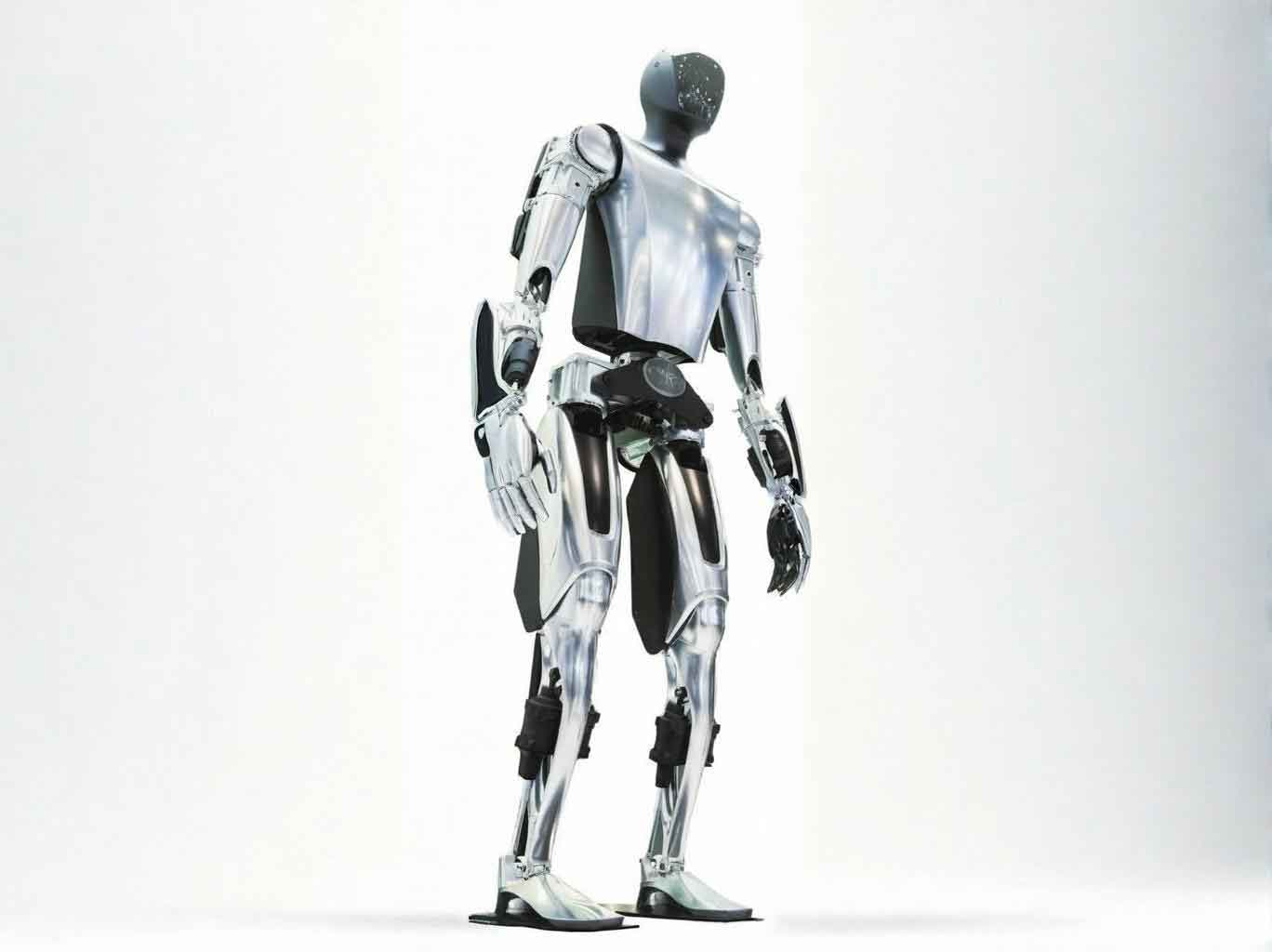
Inserting the image here highlights the tangible progress in manufacturing embodied AI robots, showcasing how hardware integration is evolving. From my perspective, this visual reinforces the synergy between mechanical design and AI that defines modern embodied AI robots.
Looking ahead, the path forward for embodied AI robots involves co-evolution of software and hardware. We need standardized modules that allow for plug-and-play components across different embodied AI robot platforms. This could be analogous to the PC industry, where standardization spurred innovation. A potential framework involves defining interface specifications for actuators, sensors, and controllers in embodied AI robots. Mathematically, we can represent a module’s compatibility as a graph \(G = (V, E)\), where vertices \(V\) are modules and edges \(E\) represent allowable connections. Ensuring connectivity while permitting customization is key.
Furthermore, advancing world models for embodied AI robots requires integrating physics-based reasoning with deep learning. Imagine a model that predicts outcomes of actions in a latent space: $$z_{t+1} = g(z_t, a_t; \phi)$$ where \(z\) is a latent state encoding both visual and physical properties, and \(\phi\) are learnable parameters. Training such models on diverse datasets will enable embodied AI robots to plan more effectively. Additionally, energy efficiency must be addressed through novel actuators and materials. For example, using variable impedance actuators, the torque \(\tau\) can be adjusted based on task demands: $$\tau = I \ddot{q} + b \dot{q} + k q$$ with \(I\), \(b\), and \(k\) as adjustable inertia, damping, and stiffness. This mimics human muscle control, a goal for embodied AI robots.
In conclusion, the journey toward advanced embodied AI robots is multifaceted, demanding breakthroughs in perception algorithms, decision-making architectures, control systems, and hardware design. As I’ve outlined, the embodied AI robot of the future will rely on rich datasets, standardized components, and continuous learning from real-world interactions. By addressing these technological hurdles, we can unlock the full potential of embodied AI robots, transforming industries and everyday life. The convergence of AI and robotics promises a new era where embodied AI robots work alongside humans, but it is our responsibility to steer this innovation with careful attention to these core challenges.