
The ability to grasp and manipulate objects with human-like dexterity remains a cornerstone of advanced robotics. While traditional parallel-jaw grippers have seen significant progress, their adaptability is fundamentally limited when confronting the vast array of shapes, sizes, and functional purposes found in tools within industrial and collaborative settings. The emergence of the dexterous robotic hand, with its multi-fingered, articulated design, promises to bridge this gap, enabling a rich repertoire of grasps that mirror human capability. This potential is particularly critical for human-robot collaboration, where a robot must not only pick up a tool but also grasp it in a manner appropriate for its intended use—be it wielding a hammer to strike or presenting it handle-first to a human partner. Therefore, generating context-aware, functional grasp poses for a dexterous robotic hand is a problem of paramount importance.
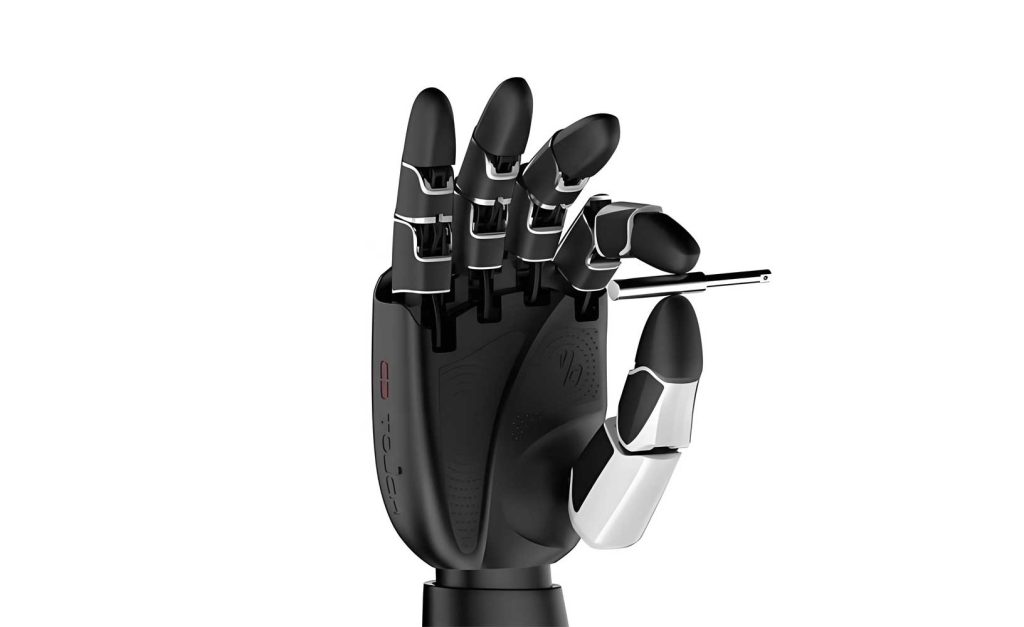
The core challenge we address is threefold. First, a functional grasp is inherently tied to intent. The way a human hand grasps a screwdriver for use differs markedly from how it grasps the same object to pass it to someone. Most prior grasp synthesis methods, whether based on physical simulation (e.g., force-closure analysis) or deep learning, optimize primarily for stability, often overlooking this crucial element of functionality. Second, the industrial domain features a wide variety of tools, each class (e.g., hammers, drills) containing numerous instances with variations in dimensions, proportions, and geometry. Training a data-hungry deep network from scratch for every possible tool is impractical. Finally, even with a perfect human grasp pose, transferring it to a dexterous robotic hand with different kinematic structure and joint limits is a non-trivial mapping problem that can result in poor contact, inter-finger collisions, or unstable holds.
To overcome these challenges, we propose a comprehensive, three-stage algorithmic framework for functional grasp generation. Our approach leverages the power of learning from limited human demonstration data and enhances it with geometric reasoning and optimization to achieve robust and adaptable performance for dexterous robotic hands.
Methodological Framework: A Three-Stage Synthesis Pipeline
Our method is architected as a sequential pipeline that transforms a tool’s 3D model and a specified use intention into a feasible joint angle configuration for a dexterous robotic hand. The process consists of: 1) Intent-Conditioned Grasp Generation on a base tool; 2) Functional Knowledge Transfer to novel, intra-class tools; and 3) Kinematic Mapping from the human hand model to the target dexterous robotic hand.
Stage 1: Learning Intent-Based Priors with IntContact
The foundation of our system is a generative model that learns the correlation between a tool’s geometry, a categorical intention, and a plausible human grasp. We construct a Conditional Variational Autoencoder (CVAE)-based network, IntContact, which extends prior work by explicitly incorporating intention as a conditioning signal.
During training, the network takes as input a down-sampled point cloud O of a base tool (e.g., a canonical hammer), a one-hot encoded intention vector (e.g., “use” or “pass”), and—crucially—pre-computed *interaction maps* derived from real human grasp data. These maps describe the probability of contact (Oc), the semantic region of the hand making contact (Op), and the direction of contact force (Od) for each point on the tool. The network is trained to reconstruct these three interaction maps. The learned latent space thus encapsulates the combined knowledge of tool shape and intent-specific grasping patterns.
At inference time, given a novel tool point cloud and a desired intention, we sample from the prior distribution in the latent space and decode it to produce a set of predicted interaction maps (O’c, O’p, O’d). An optimization procedure then iteratively adjusts the parameters (joint angles, global rotation, and translation) of a parameterized human hand model (MANO) to maximize alignment with these predicted maps, yielding a functional human grasp pose for the specified intent. The network structure can be summarized as:
Input: Tool Point Cloud O + Intention I → Encoder → Latent Vector z → Decoder → Output: Predicted Interaction Maps O’c, O’p, O’d.
Stage 2: Transferring Functional Grasps to Intra-Class Tools
A model trained on a single base tool will inevitably fail when presented with a different hammer or drill of varying size and shape. To achieve generalization with limited data, we employ a knowledge transfer strategy, enhanced with two critical improvements for robustness.
First, we perform Principal Component Analysis (PCA) alignment between the base tool point cloud Pt and the target intra-class tool point cloud Ps. This accounts for arbitrary initial pose differences. We calculate their centroids ct and cs and covariance matrices Rt and Rs.
$$ \mathbf{c_t} = \frac{1}{n}\sum_{i=1}^{n} \mathbf{p_i}, \quad \mathbf{p_i} \in P’_t $$
$$ \mathbf{R_t} = \sum_{i=1}^{n} (\mathbf{p_i} – \mathbf{c_t})(\mathbf{p_i} – \mathbf{c_t})^T $$
Similarly for cs and Rs. The transformation (rotation R0 and translation T0) that aligns the target tool to the base tool’s principal axes is derived from the eigenvectors of these matrices via Singular Value Decomposition (SVD):
$$ \mathbf{R_0} = \mathbf{V_s} \mathbf{V_t}^{-1} $$
$$ \mathbf{T_0} = \mathbf{c_t} – \mathbf{R_0} \mathbf{c_s} $$
The aligned target cloud is Ps→t = R0 Ps + T0.
Second, the core knowledge transfer operates in three sub-steps:
1. Implicit Shape Interpolation: Both tools are encoded into a DeepSDF latent space. Linear interpolation between their shape codes generates a sequence of morphing shapes bridging the geometric gap.
2. Explicit Contact Mapping: The contact maps from the base tool grasp are progressively “transported” across this morphological sequence onto the surface of the target tool.
3. Iterative Pose Refinement: Starting from the base tool’s grasp pose, the hand pose is iteratively optimized to align with the newly transferred contact maps on the target tool.
Key Improvement – Mitigating Self-Collision: A significant issue in transferring grasps, especially to larger tools, is that the optimized hand posture may result in fingers intersecting each other. To enforce physical plausibility, we introduce a self-collision loss term during the iterative refinement. We define 21 keypoints on the MANO hand model and penalize penetrations between non-adjacent finger segments. The self-collision loss Lself is:
$$ L_{\text{self}} = \sum_{i=1}^{21} \sum_{j\neq i}^{21} k_{ij} \cdot \max(\delta_{ij} – \text{dis}(\mathbf{h_i}, \mathbf{h_j}), 0) $$
where $\mathbf{h_i}$ and $\mathbf{h_j}$ are keypoint positions, $\delta_{ij}$ is a safe distance threshold, and $k_{ij}$ is a weighting factor. This loss actively discourages finger inter-penetration, leading to more kinematically feasible grasps for a dexterous robotic hand.
Stage 3: Kinematic Mapping from Human to Robotic Hand
The final step is to map the functional human grasp pose onto the specific kinematics of the target dexterous robotic hand (e.g., a Schunk SVH 5-finger hand). We formulate this as an optimization problem that minimizes the distance between corresponding keypoints on the human hand and the dexterous robotic hand.
Let $ \mathbf{v}_i^H(\theta, \beta, t) $ represent the position of the $i$-th keypoint on the human hand, parameterized by pose $\theta$, shape $\beta$, and translation $t$. Let $ \mathbf{v}_i^R(\text{qpos}) $ represent the position of the corresponding keypoint on the dexterous robotic hand calculated via forward kinematics from its joint position vector $\text{qpos}$. The objective is:
$$ \min_{\text{qpos}} \sum_{i=1}^{n} \| \mathbf{v}_i^H(\theta, \beta, t) – \mathbf{v}_i^R(\text{qpos}) \| $$
subject to the joint limits of the dexterous robotic hand. The choice of corresponding keypoints (the mapping rule) is critical. We evaluated several rules:
- Rule A (Fingertips & Wrist): Only fingertips and wrist are matched. Simple but can lose intermediate joint fidelity.
- Rule B (Full Kinematic Chain): Matches wrist, fingertips, and proximal interphalangeal (PIP) joints for all fingers. Constrains entire finger posture but may be overly restrictive for auxiliary fingers.
- Rule C (Optimized Rule): Matches wrist, all fingertips, and PIP joints only for the primary fingers (thumb, index, middle). This balances accuracy for functional contact while allowing flexibility for the ring and pinky fingers.
Our experiments show that Rule C provides the best trade-off, yielding accurate mappings for the primary contact points while ensuring convergence and feasibility.
Experimental Validation and Results
We validated our framework on two common tool categories: hammers and power drills. For each, we designated a base tool for training the IntContact network and selected distinct intra-class target tools for testing the full pipeline.
Evaluation Metrics
We employed quantitative metrics to assess grasp quality:
1. Penetration Volume: The volume (cm³) of interpenetration between the hand mesh and the tool mesh, indicating physical plausibility. Lower is better.
2. Simulation Displacement: The distance (m) the tool’s center of mass moves under gravity in a physics simulator when the grasp is executed, indicating stability. Lower is better.
3. Inter-Finger Self-Collision Rate: The percentage of generated grasps where non-adjacent finger segments intersect. Lower is better.
4. Mapping Penetration Depth: The average maximum penetration depth (mm) between the mapped dexterous robotic hand and the tool’s collision hull.
5. Mapping Convergence Rate: The percentage of mapping optimizations that converge below an error threshold within a set number of iterations.
Ablation Studies and Comparative Analysis
1. Effectiveness of IntContact: We compared our IntContact network against GraspTTA (trained per-intention) and IntGen.
| Model | Intent (Hammer) | Penetration Vol. (cm³) | Sim. Disp. (m) |
|---|---|---|---|
| GraspTTA | Use | 1.235 | 0.012 |
| IntGen | Use | 0.741 | 0.011 |
| IntContact (Ours) | Use | 0.654 | 0.009 |
IntContact consistently produced grasps with lower penetration and competitive displacement, confirming its ability to generate intent-specific, functional interactions.
2. Impact of Knowledge Transfer & Self-Collision Loss: We ablated the components of Stage 2 on target tools (Hammer_2, Drill_2).
| Model for Hammer_2 | Intent | Penetration Vol. (cm³) | Self-Collision Rate (%) |
|---|---|---|---|
| IntContact Only | Use | 0.900 | 58 |
| + Knowledge Transfer (KT) | Use | 0.170 | 35 |
| + KT + Self-Collision Loss (Full) | Use | 0.169 | 4 |
The results are striking. While the base IntContact network fails on the novel tool (high penetration and collision), adding knowledge transfer dramatically improves physical plausibility. The incorporation of our self-collision loss then reduces the inter-finger collision rate by an average of nearly 50% across tests, which is vital for the mechanical feasibility of a dexterous robotic hand. The full pipeline outperformed the base network, reducing average penetration by 0.917 cm³ and simulation displacement by 5.25 mm.
3. Optimal Mapping Rule: We evaluated the three mapping rules for transferring human grasps to the Schunk dexterous robotic hand.
| Mapping Rule | Intent (Drill_2) | Avg. Max Penetration (mm) | Convergence Rate (%) |
|---|---|---|---|
| A (Fingertips) | Use | 29.2 | 0 |
| B (Full Chain) | Use | 4.2 | 100 |
| C (Optimized) | Use | 3.1 | 100 |
Rule C (our optimized rule) achieved the lowest penetration depth and maintained a 100% convergence rate, outperforming Rule A by a large margin and slightly improving upon Rule B. This rule also demonstrated good generalization when tested on other dexterous robotic hand models like the Shadow Hand and Ability Hand, producing visually plausible and functional grasp postures.
Real-World Deployment
We deployed the generated grasp poses on a physical robotic platform comprising a Schunk SVH 5-finger dexterous robotic hand mounted on a collaborative robot arm. Using the 3D model of a tool, our pipeline generated intent-specific grasp parameters. Motion planning was used to position the hand at the pre-grasp pose, after which the joint angles were executed. The real-world tests confirmed that the grasps generated by our method were not only visually appropriate for the intent (e.g., holding a hammer by the handle for use, or pinching the head for passing) but also resulted in stable physical holds, validating the practical utility of our approach for a real dexterous robotic hand.
Conclusion
In this work, we have presented a robust, three-stage framework for generating functional grasp poses for a dexterous robotic hand. Our key contributions address the core challenges in this domain. First, we developed IntContact, a generative model that explicitly conditions grasp synthesis on functional intent, learning the priors of how tools are held for different purposes from limited human demonstration data. Second, to overcome the data scarcity for countless tool variants, we enhanced a geometric knowledge transfer method with PCA-based alignment and a novel self-collision loss. This allows the system to adapt functional grasps from a base tool to novel intra-class tools while ensuring kinematic feasibility and minimizing finger intersections—a critical consideration for any multi-fingered dexterous robotic hand. Finally, we refined the kinematic mapping process from the human hand model to the target dexterous robotic hand, identifying an optimized keypoint correspondence rule that ensures accurate and convergent transfer of the functional grasp posture.
Our comprehensive experimental evaluation, encompassing quantitative metrics, ablation studies, and real-world deployment, demonstrates the effectiveness of the integrated pipeline. The system successfully generates stable, intent-appropriate, and collision-aware grasps for various tools, providing a solid foundation for subsequent dexterous manipulation tasks in collaborative industrial environments. This work marks a significant step towards enabling dexterous robotic hands to interact with the world of tools with a level of understanding and adaptability that approaches human-like functionality.