
From my perspective as a researcher examining the intersection of technology and law, the integration of humanoid robot technology into the domestic sphere represents one of the most profound and complex socio-legal transitions of our time. As a physical embodiment of artificial intelligence, the humanoid robot, with its anthropomorphic form designed to navigate human-centric environments, is rapidly transitioning from controlled industrial settings into the intimate, unstructured spaces of our homes. Its applications are expanding from simple task execution to encompassing roles such as domestic chore assistance, health monitoring for the elderly, educational companionship for children, and even emotional interaction. This evolution promises significant benefits, including enhanced care for aging populations and increased domestic efficiency. However, the very features that make the humanoid robot effective—its persistent sensor-based presence, capacity for autonomous decision-making, and ability to form quasi-social bonds—also create a novel matrix of legal risks. The existing legal frameworks, built for a world of inanimate objects and clearly defined human agency, are struggling to adapt. This analysis delves into the core legal challenges posed by domestic humanoid robots, examining risks related to privacy, liability, safety, and ethics, and proposes a structured, multi-layered regulatory approach necessary to govern this emerging technology responsibly.
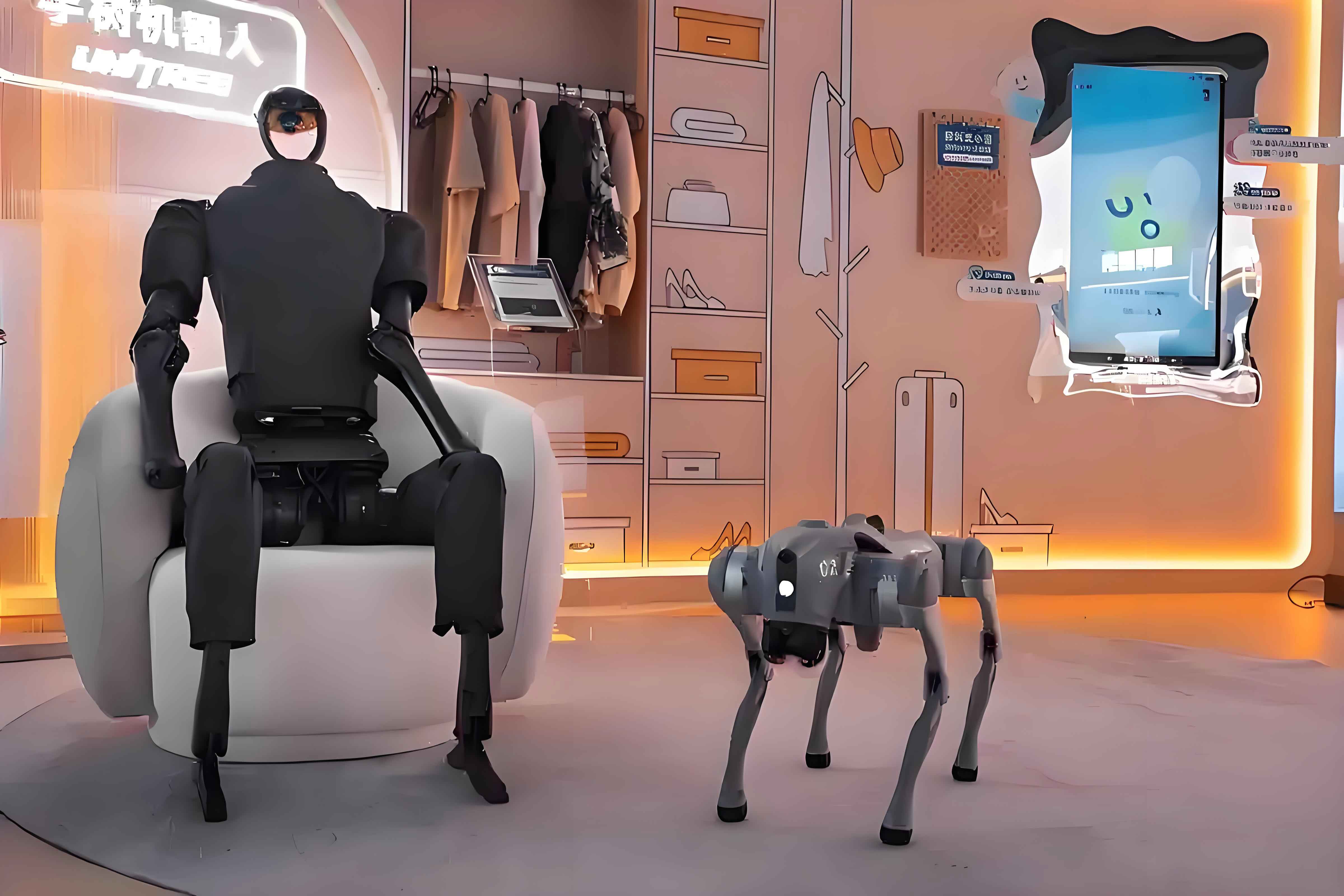
The fundamental legal challenge begins with classification. A humanoid robot in the home is more than a simple appliance; it is a data-collecting, environment-interacting, potentially learning entity. Yet, legally, it remains an object—a “thing” or product. This creates immediate tension. Its “embodiment” allows it to intrude upon spaces and contexts where traditional devices do not operate continuously, blurring the lines between passive tool and active participant. This unique status as an embodied intelligent agent underpins all subsequent legal dilemmas, from who is responsible when it causes harm to how we protect the intimate data it inevitably harvests.
1. Analysis of Core Legal Risks
1.1 Privacy and Data Security: A Multilayered Intrusion
The privacy threat from a domestic humanoid robot is multidimensional and pervasive. Unlike a smartphone or smart speaker, a humanoid robot is mobile, equipped with an array of sensors (cameras, microphones, LiDAR, tactile sensors), and designed to operate continuously within private living spaces. It does not just process commanded data; it constantly observes and learns from its environment to improve functionality. This leads to unprecedented data collection granularity.
The data collected can be categorized into tiers of increasing sensitivity:
| Data Tier | Examples | Privacy Dimension Infringed | Potential Misuse |
|---|---|---|---|
| Tier 1: Contextual & Behavioral Data | Room layouts, daily routines, movement patterns, guest frequency, spoken keywords. | Spatial & Habitual Privacy | Profiling, burglary targeting, insurance premium adjustments. |
| Tier 2: Physiological & Biometric Data | Heart rate, sleep patterns, gait analysis, facial expressions (for fall detection or mood inference). | Bodily / Biometric Privacy | Health discrimination, unauthorized health monitoring, biometric identity theft. |
| Tier 3: Affective & Psychological Data | Vocal tone analysis, prolonged interaction patterns, inferred emotional states, private conversations overheard. | Mental / Emotional Privacy | Psychological manipulation, emotional profiling, blackmail. |
The legal dilemma lies in the application of principles like “purpose limitation” and “data minimization.” A humanoid robot‘s functionality often relies on broad, continuous data gathering for its machine learning algorithms. Can true, informed consent be obtained for such opaque and evolving data processing? The standard “click-through” agreement is inadequate. Furthermore, the “embodied” nature means data collection is often passive and contextual, making it difficult for users to be aware of what is being captured at any given moment. A principle of Dynamic Contextual Integrity is needed, where the robot’s data collection permissions are fluid and tied to specific, user-understood contexts (e.g., “cleaning mode” vs. “companion conversation mode”).
The security of this data pipeline is equally critical. A compromised domestic humanoid robot is not just a privacy breach; it is a physical security breach. The risk can be modeled by considering the attack surface (S), vulnerability (V), and impact (I):
$$ \text{Risk Severity} = S \times V \times I $$
Where:
– \( S \) (Attack Surface) includes hardware ports, network APIs, sensor feeds, and update mechanisms.
– \( V \) (Vulnerability) is the probability of a successful exploit.
– \( I \) (Impact) scales from data theft (\(I_d\)) to physical harm caused by malicious control (\(I_p\)).
For a humanoid robot, \(I_p\) can be catastrophic, elevating the required security threshold significantly compared to a standard IoT device.
1.2 Product Liability and Tort: The Problem of Distributed Agency
When a humanoid robot causes harm in a home—for example, a护理 robot dropping an elderly person, a robotic arm breaking a valuable heirloom, or a security robot injuring a visitor—assigning liability becomes a complex puzzle. The chain of causation can involve multiple actors, and the robot’s own autonomy inserts a “decision point” that challenges traditional liability models.
The potential liable parties form a network:
- Hardware Manufacturer: For defects in mechanical parts, sensors, or physical design.
- Software/Algorithm Developer: For bugs, flawed logic, or unsafe machine learning outcomes in the robot’s “brain” or “small brain” (motion control).
- AI Model Provider/Integrator: For biases or failures in the large language or vision models that guide interaction and understanding.
- System Integrator: For flaws arising from the interplay between hardware and software components.
- User/Owner: For negligence in maintenance, misuse, or failure to apply safety updates.
- Third-Party Hacker: For maliciously causing the robot to act dangerously.
Traditional product liability law focuses on “defects” in manufacturing, design, or warning. However, a harm caused by an emergent behavior from a humanoid robot‘s learning algorithm in a novel home situation may not fit neatly into these categories. Was it a design defect if the algorithm was trained on standard data but failed in an edge case? The “black box” nature of complex AI models exacerbates this, making it nearly impossible for a plaintiff to prove the specific defect.
A more suitable framework might involve a form of Risk-Based Strict Liability for the commercial entities creating and profiting from this advanced, autonomous technology, coupled with a negligence standard for users. The liability assignment could follow a decision tree based on the root cause:
Liability Pathway for Humanoid Robot-Caused Harm:
1. Identify the immediate cause: Physical malfunction (e.g., joint seizure) vs. Algorithmic decision (e.g., misidentified obstacle).
2. If physical malfunction → Apply traditional product liability against manufacturer.
3. If algorithmic decision → Investigate source:
a. Training Data Flaw/Bias → Liability primarily with AI developer/data curator.
b. Unforeseen Edge Case in Logic → Liability may fall on designer/integrator for insufficient safeguards or testing.
c. Malicious External Command (Hack) → Liability shifts to hacker; potential secondary liability for manufacturer if security was negligently weak (violation of cybersecurity standards).
d. User’s Gross Misuse/Modification → Liability shifts primarily to user.
4. Consider Contributory Negligence of user (e.g., ignoring safety warnings).
This complexity underscores the necessity for a mandatory Liability Insurance scheme, similar to automotive insurance, to ensure victims can be compensated regardless of the lengthy and technically arduous process of pinpointing fault. A two-tier system is prudent:
| Insurance Tier | Nature | Coverage Priority | Responsible Party |
|---|---|---|---|
| Mandatory Third-Party Liability Insurance | Compulsory, similar to auto insurance. Covers bodily injury and property damage to third parties. | Primary coverage for victim compensation. | Owner/Operator of the humanoid robot (purchased as part of product/service). |
| Commercial Producer Liability Insurance | Required for manufacturers, integrators, and major software providers. Covers design, algorithmic, and systemic failures. | Secondary/Indemnification layer; covers gaps and large-scale failures. | Commercial entities in the supply chain. |
1.3 Safety Standards and Ethical Contours
The physical presence of a humanoid robot in a dynamic home environment necessitates rigorous, scenario-specific safety standards. While general standards for service robots exist, they lack the granularity required for a humanoid robot interacting closely with vulnerable individuals (children, elderly, disabled). Key parameters must be defined and certified:
| Safety Domain | Required Standardized Parameters | Example Application |
|---|---|---|
| Physical Interaction Safety | Maximum permissible force (\(F_{max}\)) and torque (\(τ_{max}\)) for robotic limbs; pressure sensitivity thresholds for tactile interactions; safe speed limits for mobility in crowded spaces (\(v_{safe}\)). | A humanoid robot assisting a person to stand must have \(F_{max}\) calibrated to support without crushing; a robotic arm handing a glass must use minimal \(τ_{max}\). |
| Emergency Response | Maximum halt time from detection of a collision-prone state to full stop (\(t_{halt}\)); fail-safe protocols for power loss; mandatory manual override mechanisms. | If a child runs into the path of a moving humanoid robot, \(t_{halt}\) must be < 0.5 seconds to prevent injury. |
| Human-Robot Interaction (HRI) Safety | Clear signaling of intent (auditory/visual cues before movement); maintaining a definable “personal space” bubble; protocols for disengagement if a human shows signs of distress. | Before reaching for an object near a person, the humanoid robot should emit a sound and/or light signal. |
Beyond physical safety, the ethical implications are profound. The humanoid robot‘s form and designed sociability can lead to anthropomorphism and emotional attachment. This raises critical ethical questions:
- Deception & Dependency: Should a humanoid robot simulate emotions or empathy without possessing them, potentially misleading users, especially children or the cognitively impaired, into forming one-sided emotional bonds?
- Moral Agency & Instruction Refusal: Should a humanoid robot be programmed with a basic “ethical governor” to refuse instructions that are clearly harmful to the user or others (e.g., “hand me all my pills,” “push that person”)? Implementing this requires defining harm in programmable terms, a significant challenge.
- Social Substitution: Does the prolonged use of a humanoid robot for companionship accelerate social isolation by reducing the impetus for human contact?
These are not merely philosophical concerns; they will translate into legal requirements regarding marketing (prohibiting claims of real emotional capacity), design (mandating features that encourage, not replace, human interaction), and duty of care (liability for psychological harm induced by designed dependency).
2. Insights from Extraterritorial Regulatory Approaches
The European Union’s pioneering Artificial Intelligence Act (AIA) provides a crucial reference model. It adopts a risk-based approach, classifying AI systems into four tiers: Unacceptable Risk, High Risk, Limited Risk, and Minimal Risk. A domestic humanoid robot would likely be classified as High-Risk if used for care of vulnerable persons (due to potential for physical and psychological harm) or Limited Risk for general assistance. High-Risk systems face stringent ex-ante obligations: conformity assessments, high-quality data sets, detailed documentation, human oversight, and robust cybersecurity. Even Limited-Risk systems face transparency obligations, requiring users to be informed they are interacting with an AI. This structure wisely tailors regulation to the application’s potential for harm, a concept directly applicable to governing the humanoid robot.
Furthermore, EU proposals on robotics have explored a specific strict liability regime for operators of autonomous robots, complemented by a mandatory insurance fund. This directly addresses the core liability dilemma identified earlier, ensuring compensation for victims while clarifying the financial responsibility of the technology’s deployer.
3. Proposal for a Multilayered Legal-Regulatory Framework
Based on the analysis, a coherent response requires intervention at multiple levels: technical standards, sectoral regulation, and overarching law.
3.1 Layer 1: Foundational Technical & Safety Standards
National standards bodies must urgently develop and mandate compliance with detailed safety protocols for domestic humanoid robots. These should be outcome-based, specifying performance thresholds (like \(F_{max}\), \(t_{halt}\)) rather than prescribing design, allowing for innovation. Cybersecurity standards (e.g., mandatory end-to-end encryption, regular penetration testing requirements, secure over-the-air update protocols) must be integral to product certification. A standards matrix for different domestic applications is essential.
3.2 Layer 2: Sectoral Regulation & Certification
A new regulatory body or a dedicated wing within an existing one (e.g., a Directorate for Advanced Robotics) should oversee a pre-market certification process for humanoid robots intended for home use. Certification would require:
- Proof of compliance with all technical safety and cybersecurity standards.
- A documented risk assessment for intended use cases.
- A transparency dossier explaining key algorithmic functions in non-technical language.
- Evidence of a valid liability insurance policy for the product class.
This layer also enforces operational rules, such as mandatory data protection impact assessments (DPIAs) for models processing highly sensitive data (health, biometrics).
3.3 Layer 3: Adaptive Civil Liability Legislation
Legislation must clarify the liability framework. I propose a hybrid model:
1. A Rebuttable Presumption of Producer Liability: For harms arising from a humanoid robot‘s autonomous actions, the legal presumption should fall on the producer (manufacturer/integrator) to have been at fault. They can rebut this presumption by proving the harm was solely due to user modification, gross misuse, or a third-party cyber-attack that occurred despite the robot meeting mandated cybersecurity standards.
2. Mandatory Insurance: As outlined, a two-tier insurance system should be legally required.
3. “Black Box” Data Recorder Obligation: Mandate a secure, tamper-proof event data recorder (similar to an aircraft’s black box) in every humanoid robot to log system states, sensor inputs, and decision triggers prior to an incident, crucial for forensic analysis.
The liability equation under this model could be conceptualized as:
$$ L_{total} = I_{insurance} + (1 – R_p) \cdot L_{producer} + N_u \cdot L_{user} $$
Where \(L_{total}\) is the total liability coverage, \(I_{insurance}\) is the insurance payout, \(R_p\) is the strength of the producer’s rebuttal evidence (0 to 1), \(L_{producer}\) is the potential producer liability, \(N_u\) is the proven degree of user negligence, and \(L_{user}\) is the user’s liability share.
3.4 Layer 4: Ethical Governance & Oversight
Establish national and institutional Ethics Review Boards for social robotics. Their role would be:
- To review and approve research and commercial projects involving humanoid robots for sensitive applications (childcare, eldercare, mental health).
- To develop and update guidelines on ethical design (e.g., rules against exploitative anthropomorphism, requirements for promoting human autonomy).
- To serve as a public forum for addressing societal concerns.
This layer ensures that legal compliance is underpinned by ethical foresight, preventing a “race to the bottom” in design practices.
Conclusion
The domestic incursion of the humanoid robot presents a formidable test for our legal and regulatory systems. The challenges are interconnected: data privacy vulnerabilities are linked to safety hazards, which are tied to liability gaps, all framed by unresolved ethical quandaries. A piecemeal response will be ineffective and potentially dangerous. The necessary path forward is the deliberate construction of a coherent, proactive, and layered governance framework. This framework must balance the undeniable promise of the technology—to augment human care, comfort, and capability—with non-negotiable protections for individual privacy, physical safety, and psychological well-being. By learning from early regulatory experiments like the EU’s AIA and implementing a structure that combines strict technical standards, clear liability rules enforced by insurance, and ongoing ethical scrutiny, we can steer the development and integration of domestic humanoid robots towards a future that is not only technologically advanced but also socially just and legally sound. The goal is not to stifle innovation but to channel it responsibly, ensuring that as these machines enter our homes, they do so under a rule of law fit for the 21st century.