
The integration of Artificial Intelligence (AI) and robotics within the medical domain represents one of the most transformative technological advancements of our era. From my perspective as a researcher examining the intersection of law, ethics, and emerging technology, the rise of the medical robot is not merely an incremental improvement but a paradigm shift in healthcare delivery. These systems, encompassing surgical, rehabilitative, and diagnostic functions, promise unprecedented precision, efficiency, and accessibility in medical care. However, this rapid integration into sensitive clinical environments brings forth a complex array of latent legal risks that challenge our existing regulatory frameworks and ethical norms. The core of the challenge lies in the unique nature of these medical robot systems: they engage in direct physical interaction or intimate data exchange with patients, often operating under a veil of algorithmic complexity that obfuscates decision-making processes. This analysis will explore the current clinical landscape, delineate the primary legal vulnerabilities, and propose a structured governance strategy to ensure that the development of medical robot technology proceeds in a manner that is both innovative and ethically sound, firmly prioritizing patient safety and rights.
I. Current Clinical Landscape of AI Medical Robots
The clinical application of medical robot systems is rapidly diversifying. Based on their primary function, they can be categorized into three dominant types, each with distinct operational paradigms and benefits. The following table summarizes their key applications and advantages:
| Type of Medical Robot | Core Application | Key Technological Advantages | Primary Clinical Benefit |
|---|---|---|---|
| Surgical Robot | Minimally invasive and remote surgical procedures (e.g., prostatectomy, cardiac surgery). | 3D visualization with high magnification, tremor filtration, motion scaling, teleoperation via 5G. | Enhanced precision, reduced trauma and blood loss, shorter recovery times, potential for telesurgery. |
| Rehabilitation Robot | Motor and cognitive function recovery (e.g., post-stroke gait training, assistive exoskeletons). | Active compliant control, biofeedback, dynamic body weight support, intent detection via sensors. | Objective, data-driven therapy; consistent, intensive training; reduced physical burden on therapists. |
| Diagnostic Robot | Patient triage, preliminary consultation, and medical image analysis (e.g., radiology, pathology screening). | Natural Language Processing (NLP) for patient interaction; deep learning for pattern recognition in images (CT, MRI, X-ray). | Triage efficiency, reduction in diagnostic errors, handling of repetitive screening tasks, 24/7 availability for preliminary consultation. |
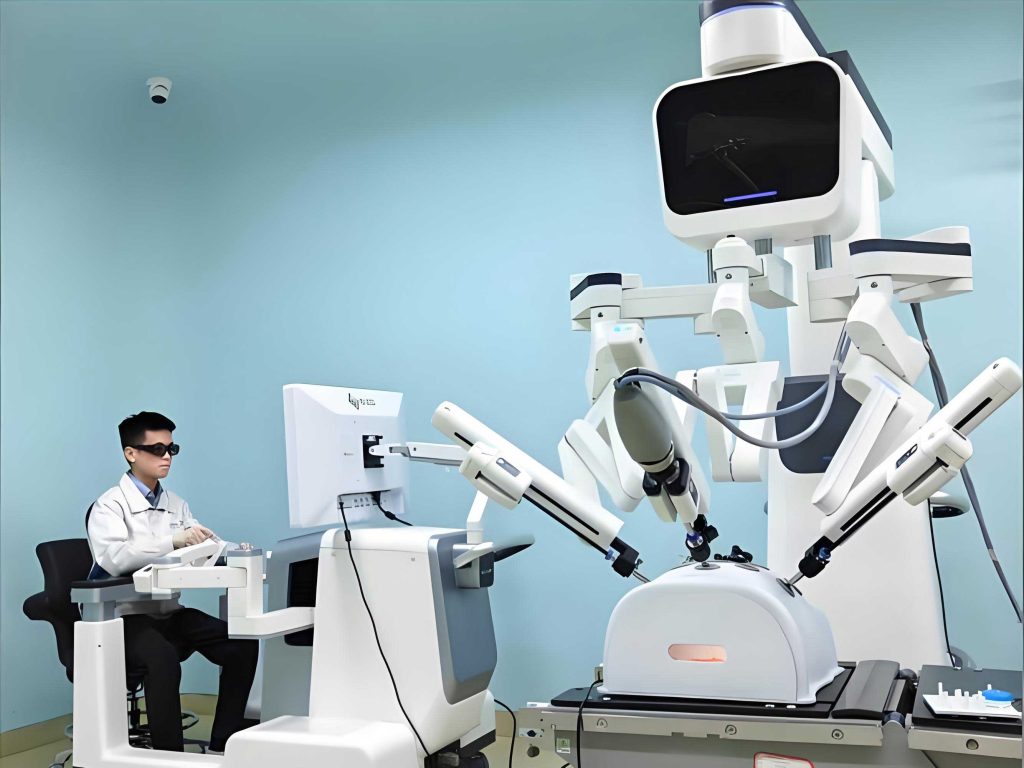
In my observation, the evolution is particularly noteworthy in the shift from passive tool-holding systems to intelligent partners. A modern surgical medical robot is not just a remote-controlled manipulator; its AI components can provide haptic feedback, suggest optimal instrument paths, or identify critical anatomical structures in real-time. Similarly, a rehabilitation medical robot uses sensor fusion and machine learning to adapt therapy protocols dynamically to a patient’s progress and fatigue levels. The diagnostic medical robot, especially those powered by generative AI, is moving beyond simple classification to generating differential diagnoses and personalized follow-up plans. This increasing autonomy and decision-making capacity is precisely what fuels both their immense potential and the accompanying legal quandaries.
II. Deconstruction of Primary Legal Risks in Clinical Application
The deployment of medical robot systems in clinical settings creates novel points of failure and accountability gaps. I identify three concentric rings of legal risk: the redefinition of the clinician’s role, the ambiguity surrounding liability for adverse events, and the pervasive threats to data security.
A. The Erosion of Clinical Autonomy and the “Black Box” Dilemma
A fundamental tension arises from the changing dynamic between the human clinician and the medical robot. The traditional physician-patient relationship, grounded in professional judgment and direct responsibility, is being reconfigured into a clinician-medical robot-patient triad. The risk is a gradual attenuation of clinical autonomy. When a diagnostic medical robot presents a high-confidence analysis or a surgical medical robot suggests a specific maneuver, it can create a powerful automation bias. Clinicians, especially under time pressure or in complex cases, may defer to the algorithm’s output, effectively ceding decision-making authority. This is compounded by the “black box” nature of many advanced AI models. The reasoning process behind a medical robot‘s recommendation is often opaque, not just to the patient but also to the treating physician. This lack of explainability undermines informed clinical judgment and makes it difficult to challenge or validate the machine’s suggestion on medical grounds.
This leads directly to the unresolved question of legal personhood. Should an autonomous medical robot that contributes significantly to a diagnostic or therapeutic decision be considered a mere tool (an object), or does it warrant some form of limited legal subjectivity? From my analysis, attributing legal personality to a medical robot is currently untenable and undesirable. It lacks consciousness, intentionality, and the capacity to bear moral or financial responsibility. Treating it as a sophisticated instrument or agent of the healthcare provider is the more coherent legal approach, but this requires clear rules on how responsibility for the instrument’s “actions” is allocated.
B. The Multi-Factor Liability Labyrinth Following an Adverse Event
When a patient is harmed during a procedure involving a medical robot, assigning liability becomes a formidable challenge. The incident could stem from a confluence of factors, creating a labyrinth of potential responsible parties. The core difficulty is disentangling the chain of causation among multiple actors: the surgeon (user error), the hospital (training/supervision failure), the medical robot manufacturer (hardware defect), and the AI software developer (algorithmic flaw).
The legal claims can arise from two primary, and often overlapping, doctrines: medical malpractice (tort) and product liability. A malpractice claim focuses on the negligent conduct of the healthcare provider in using the medical robot. A product liability claim focuses on a defect in the medical robot system itself. The table below breaks down the potential sources of failure:
| Potential Source of Failure | Category | Examples | Likely Legal Basis |
|---|---|---|---|
| Clinical Misoperation | User/Hospital Error | Inadequate training leading to misuse; ignoring safety alerts; failure to sterilize components; poor patient selection for robot-assisted procedure. | Medical Malpractice |
| System Malfunction | Product Defect (Manufacturing) | Mechanical arm seizure due to faulty part; power supply failure mid-surgery; sensor calibration error. | Product Liability |
| Algorithmic Error | Product Defect (Design) | Image recognition algorithm missing a tumor due to biased training data; path planning software causing a collision with unseen anatomy; drug interaction database error in a diagnostic assistant. | Product Liability (Complex to prove) |
The most insidious risks are embedded in the AI software. Algorithmic bias can lead to a diagnostic medical robot being less accurate for demographic groups underrepresented in its training data. A medical robot‘s “autonomous” learning post-deployment could lead to unexpected and unsafe behavioral drift. Proving that a specific algorithmic flaw caused a specific harm is a monumental evidentiary hurdle for a plaintiff, given the proprietary and complex nature of the software. This creates a potential accountability gap where serious harm occurs without a clear, legally actionable cause.
We can model the total risk ($R_{total}$) of an adverse event as a function of interacting component risks:
$$R_{total} = f(R_{tech}, R_{human}, R_{system})$$
$$R_{tech} = \alpha \cdot C_{algorithm} + \beta \cdot C_{hardware}$$
$$R_{human} = \gamma \cdot (1 – P_{training}) \cdot I_{workload}$$
$$R_{system} = \delta \cdot (1 – P_{maintenance}) \cdot (1 – P_{oversight})$$
Where:
- $C_{algorithm}$ and $C_{hardware}$ represent the inherent complexity (and thus failure potential) of the AI software and physical machine.
- $P_{training}$, $P_{maintenance}$, and $P_{oversight}$ are probabilities (0 to 1) representing the quality of clinician training, system maintenance, and institutional oversight.
- $I_{workload}$ is an intensity factor for clinical workload.
- $\alpha, \beta, \gamma, \delta$ are weighting coefficients specific to the procedure and environment.
This model illustrates that risk is non-linear and multiplicative, not additive. A small increase in algorithmic complexity ($C_{algorithm}$) combined with a slight drop in training quality ($P_{training}$) can exponentially increase $R_{total}$.
C. Data Security and Privacy in an AI-Driven Ecosystem
The operational foundation of any AI-driven medical robot is data—vast quantities of highly sensitive patient health information. A surgical medical robot records real-time video and kinematic data; a rehabilitation medical robot collects continuous motion and physiological feedback; a diagnostic medical robot processes medical images, lab results, and personal health histories. This creates a sprawling attack surface for data breaches. A compromised medical robot system could lead to theft of personal health information (PHI), ransomware attacks paralyzing hospital operations, or even malicious manipulation of treatment parameters—a terrifying prospect for patient safety.
Beyond external threats, there are intrinsic privacy concerns within the data utilization process. The training of AI models for medical robots often requires aggregating datasets from millions of patients. While anonymization is standard, advances in re-identification techniques pose a constant risk. Furthermore, the principle of patient consent becomes strained. Can a patient truly provide informed consent for how their data might be used to train a future, more advanced version of a medical robot? The secondary use of data for research and development, often buried in broad consent forms, challenges traditional notions of data autonomy.
III. Proposed Framework for Legal Governance and Risk Mitigation
Addressing these risks requires a proactive, multi-layered governance framework. The goal is not to stifle innovation but to create guardrails that ensure the safe, ethical, and accountable integration of medical robot technology. My proposed strategy rests on three pillars: clarifying foundational legal status, establishing a clear liability regime, and enforcing rigorous data governance.
A. Pillar 1: Affirm the “Tool” Status and Mandate Human Oversight
The law must provide unambiguous clarity: an AI medical robot is a tool, a product, and a legal object. It cannot hold rights or bear ultimate responsibility. This formal designation directs accountability squarely onto human and corporate entities—the manufacturers, software developers, healthcare institutions, and clinicians. Concurrently, we must legally enshrine the principle of meaningful human oversight. Regulations should mandate that any clinical decision with significant consequence for a patient must involve a final review and authorization by a qualified human practitioner. The role of the medical robot should be framed as “decision support,” not decision replacement. This can be formalized through a required “human-in-the-loop” (HITL) or “human-on-the-loop” (HOTL) protocol for critical actions, ensuring the clinician remains the responsible authority.
B. Pillar 2: Develop a Tailored Liability and Accountability Framework
We need a liability model that reflects the multi-actor reality. I propose a stratified approach based on the source of failure, as identified in the previous section.
- For Clinical Misoperation: Standard medical malpractice law applies. The hospital is vicariously liable for the negligent acts of its employees (surgeons, nurses) in using the medical robot. This includes negligence in selection, pre-op planning, intra-operative control, and post-op monitoring related to the robotic procedure.
- For Product Defects: Product liability law applies, but must be adapted. The definition of a “defect” must explicitly include algorithmic flaws and inadequate warnings about system limitations (e.g., known failure modes in certain anatomies). Crucially, liability should extend jointly and severally to both the hardware manufacturer and the AI software developer/designer. Holding only the manufacturer accountable for an algorithmic flaw created by a separate software firm is unjust and ineffective.
- For Hybrid Causation: In cases where both clinical error and product defect contribute, courts should employ comparative fault principles to apportion liability. To alleviate the patient’s evidentiary burden, a form of “procedural burden-shifting” could be applied. Once a plaintiff makes a prima facie case that a medical robot was involved and harm occurred, the defendant healthcare provider and manufacturer/developer should bear the burden of demonstrating, through access to logs and algorithm audits, that their respective components did not cause the harm.
This framework can be summarized in the following accountability matrix:
| Scenario | Primary Responsible Party | Legal Basis | Key Evidentiary Focus |
|---|---|---|---|
| Surgeon error (e.g., wrong input, ignoring alerts) | Hospital/Surgeon | Medical Malpractice | Standard of care in robotic surgery; training records; procedure logs. |
| Mechanical failure of robotic arm | Hardware Manufacturer | Product Liability (Manufacturing Defect) | Forensic engineering analysis; maintenance history; part defect rates. |
| Algorithm misidentifies tissue, leading to incorrect action | AI Software Developer & Manufacturer | Product Liability (Design Defect) | Algorithm training data audit; validation study results; explainability report for the specific case. |
| Combination of ambiguous algorithm suggestion and surgeon’s fatigued judgment | Apportioned between Developer, Manufacturer, and Hospital | Comparative Fault (Malpractice + Product Liability) | Logs of AI suggestions; surgeon’s response time and actions; data on system’s known edge-case performance. |
Furthermore, the concept of a “locked-in audit trail” or digital “black box” for the medical robot is essential. Similar to aviation recorders, these systems must immutably log all critical inputs, AI recommendations, user overrides, and system states. This data is vital for post-incident investigation and should be accessible to certified regulators and expert witnesses in litigation under protective orders.
C. Pillar 3: Implement Robust Data Governance and Security-by-Design
Protecting patient data in the age of the connected medical robot requires a “security-by-design” and “privacy-by-design” approach, mandated by regulation.
- Technical Safeguards: Mandate end-to-end encryption for all data in transit and at rest within the medical robot ecosystem. Require strict, multi-factor authentication and role-based access controls for any interface. Systems must be designed with regular, automated security patch management.
- Transparency and Patient Rights: Move beyond opaque consent forms. Patients should be provided with clear, layered information about what data the medical robot collects, how it is used for their immediate care, and how it may be used for R&D. They should retain core rights: to access an explanation of an AI-assisted diagnosis (a “right to explanation”), to opt-out of data use for secondary purposes where feasible, and to be informed of any data breaches involving their information without undue delay.
- Algorithmic Auditing and Bias Mitigation: Regulators should require pre-market and periodic post-market audits of AI algorithms used in medical robots. Audits must assess not just accuracy, but also fairness across different demographic groups. Developers should be required to document their training data sources, data curation processes, and steps taken to identify and mitigate bias.
The decision-making process in a human-medical robot team can be conceptualized by a weighted formula, where the final decision ($D_{final}$) must remain under human control:
$$D_{final} = H_{auth} \cdot \left( \omega_{AI} \cdot R_{AI} + \omega_{Human} \cdot J_{Human} \right)$$
Subject to: $\omega_{Human} > \omega_{AI}$ and $H_{auth} \in \\{0, 1\\}$
Where:
- $R_{AI}$ is the recommendation/output of the medical robot.
- $J_{Human}$ is the independent judgment of the clinician.
- $\omega_{AI}$ and $\omega_{Human}$ are the weights given to each input, with the human judgment mandated to have greater weight for consequential decisions.
- $H_{auth}$ is the human authorization function. It is a binary gate (0 or 1) representing the clinician’s final approval. $D_{final}$ is only executed if $H_{auth} = 1$.
This formalizes the requirement that the AI is an advisor, not an autonomous decider.
IV. Conclusion
The integration of AI into medical robot systems is an irreversible and largely beneficial trend. However, as I have analyzed, its clinical application is fraught with significant legal risks centered on eroded accountability, blurred liability lines, and amplified data vulnerabilities. These are not mere technical glitches but fundamental challenges to our healthcare liability and privacy paradigms. A passive, wait-and-see legal approach is inadequate and potentially dangerous. The path forward requires proactive, thoughtful governance. By legally anchoring the medical robot as a tool under ultimate human command, constructing a clear and fair liability framework that embraces the complexity of hybrid failures, and enforcing stringent, design-level standards for data security and algorithmic transparency, we can foster an environment of trust. In this environment, innovation in medical robot technology can flourish responsibly, maximizing its profound benefits for patient care while steadfastly upholding the ethical and legal safeguards that protect patient safety, autonomy, and dignity.