
As an expert in the field of artificial intelligence and robotics, I have closely observed the rapid evolution of embodied robots, which are increasingly integrated into various real-world applications. These machines, equipped with advanced sensors and AI capabilities, collect vast amounts of environmental data, including facial recognition, voice inputs, and geographical locations. However, this technological advancement brings forth significant legal challenges that developers must address to ensure sustainable growth. In this article, I will delve into the primary legal risks associated with embodied robot operations, focusing on data privacy, intellectual property, and cross-border data transmission, while offering practical solutions through technical and managerial frameworks. Throughout this discussion, I will emphasize the importance of proactive compliance and innovation in the embodied robot sector, using tables and formulas to summarize key concepts.
The proliferation of embodied robot technologies has led to unprecedented data collection capabilities, raising concerns about user privacy and security. For instance, an embodied robot deployed in a smart home environment might continuously gather sensitive information, such as biometric data or behavioral patterns. If not managed properly, this could violate regulations like the General Data Protection Regulation (GDPR) or similar laws, resulting in hefty fines and reputational damage. From my perspective, the core issue lies in balancing the data needs of embodied robot functionalities with robust privacy safeguards. I believe that by implementing structured approaches, such as data classification and encryption, companies can mitigate these risks effectively.
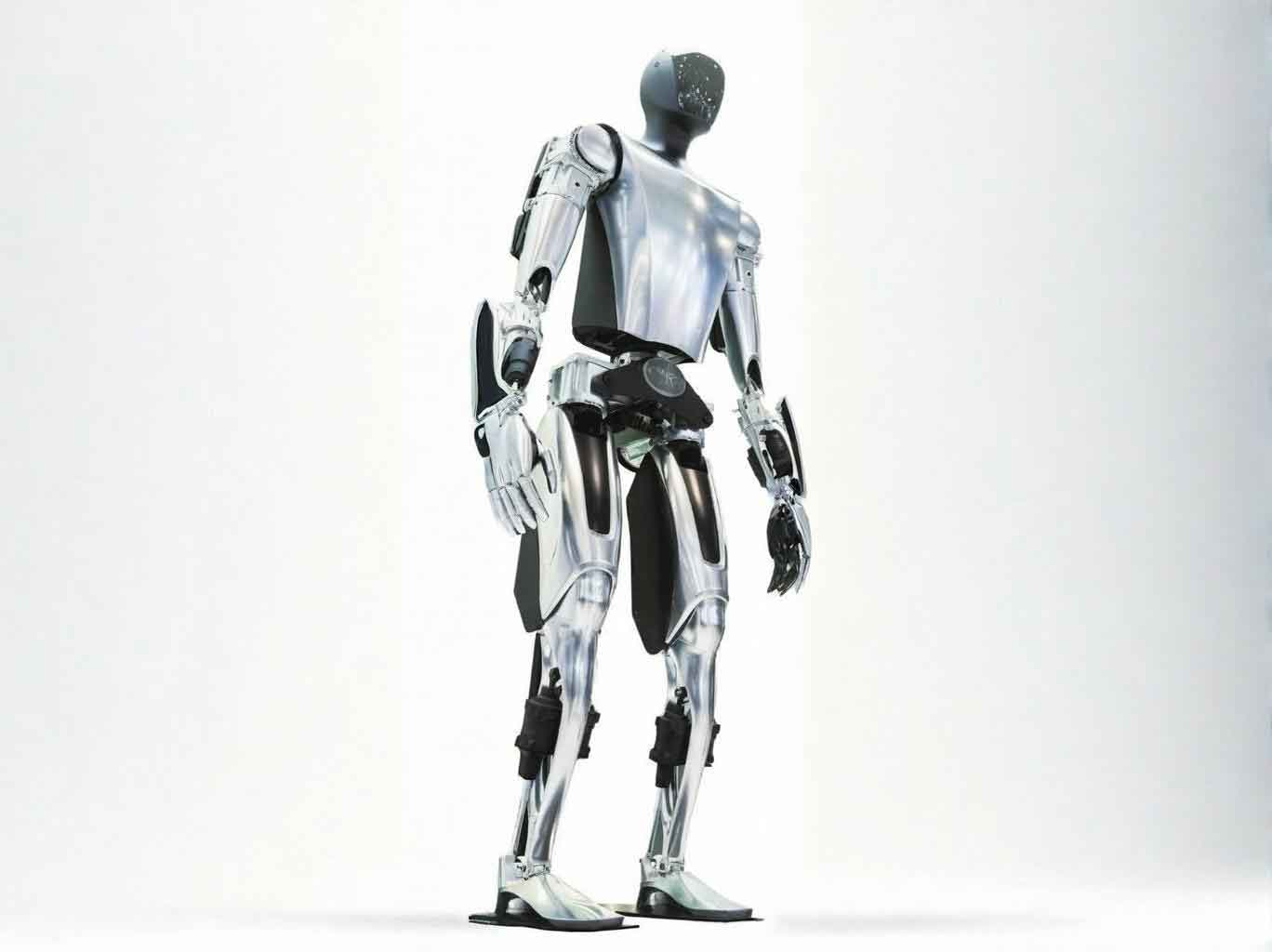
One of the most critical aspects I have encountered is the triple threat of legal risks in embodied robot development. First, personal privacy protection is paramount; embodied robots often collect data without explicit user consent, leading to potential breaches. For example, if an embodied robot captures audio or visual data in a public space, it must adhere to the “minimal necessity” principle to avoid over-collection. Second, intellectual property risks arise when embodied robots process copyrighted materials, such as text or images, without proper authorization. This is especially relevant for open-source models used in training embodied robot AI systems. Third, data跨境 transmission poses compliance challenges, as embodied robots may rely on cloud services or international collaborations, requiring strict adherence to data localization laws. To illustrate these risks, I have compiled a table summarizing their implications and mitigation strategies.
| Risk Category | Description | Potential Consequences | Mitigation Measures |
|---|---|---|---|
| Personal Privacy | Unauthorized data collection of sensitive information (e.g., faces, voices) by embodied robots | Fines, lawsuits, reputational harm | Implement privacy impact assessments (PIA) and data minimization techniques |
| Intellectual Property | Use of copyrighted content in embodied robot training datasets without licenses | Infringement claims, financial penalties | Conduct audits of open-source materials and secure necessary permissions |
| Data跨境 Transmission | Transfer of data collected by embodied robots across borders without safety evaluations | Legal sanctions, operational disruptions | Adopt encryption and comply with local data sovereignty laws |
In my analysis, data compliance is the cornerstone of safe embodied robot operations. I recommend that companies adopt a multi-layered approach to data security, starting with classification and encryption. For instance, data collected by an embodied robot can be categorized into personal, sensitive, and non-personal types, each requiring different protection levels. A mathematical representation of data classification can be expressed using set theory: let \( D \) be the dataset collected by an embodied robot, then we can partition it into subsets such as \( D_{\text{personal}} \), \( D_{\text{sensitive}} \), and \( D_{\text{non-personal}} \), with associated protection functions \( P(D_i) \) for each subset \( i \). This ensures that embodied robot systems handle data proportionally to its sensitivity.
Moreover, I have found that technical measures like differential privacy and federated learning are essential for embodied robot data protection. Differential privacy adds noise to data to prevent re-identification, which can be modeled as: $$ y = f(x) + \text{Noise} $$ where \( y \) is the output, \( f(x) \) is the original data function from an embodied robot, and Noise follows a distribution like Laplace or Gaussian. Federated learning, on the other hand, allows embodied robots to train models locally without sharing raw data, reducing exposure risks. The update rule in federated learning for an embodied robot system can be represented as: $$ w_{t+1} = w_t – \eta \nabla L(w_t; D_{\text{local}}) $$ where \( w \) represents model weights, \( \eta \) is the learning rate, and \( L \) is the loss function based on local data \( D_{\text{local}} \) from multiple embodied robots.
To address cost concerns related to data security in embodied robot development, I propose optimized strategies that integrate privacy-enhancing technologies (PETs). For example, by using automated tools for privacy impact assessments, embodied robot companies can identify high-risk data processing scenarios efficiently. The cost-benefit analysis can be framed as an optimization problem: minimize \( C_{\text{security}} \) subject to \( R_{\text{risk}} \leq \tau \), where \( C_{\text{security}} \) is the security cost for an embodied robot system, \( R_{\text{risk}} \) is the risk level, and \( \tau \) is a threshold. This approach ensures that embodied robot functionalities are not compromised while maintaining compliance.
In terms of policy, I advocate for harmonized standards to support the embodied robot industry. Currently, fragmented regulations across regions increase compliance burdens for embodied robot developers. A unified framework could include baseline requirements for data security and ethical reviews, as outlined in the table below. This would facilitate innovation and cross-border collaboration for embodied robot technologies.
| Standard Area | Key Elements | Implementation Tips for Embodied Robots |
|---|---|---|
| Data Security | Encryption protocols, access controls | Use end-to-end encryption in embodied robot communication channels |
| Ethical Review | Bias mitigation, transparency | Incorporate ethical audits in embodied robot design phases |
| 跨境 Data Flow | Safety assessments, localization | Conduct regular evaluations for embodied robot data exports |
Furthermore, I emphasize the importance of building a robust data protection barrier for embodied robot systems. This involves not only technical safeguards but also organizational measures, such as appointing a Data Protection Officer (DPO) to oversee embodied robot data practices. The role of a DPO can be quantified in terms of risk reduction: let \( R_{\text{total}} \) be the total risk in an embodied robot project, then with a DPO, the mitigated risk \( R_{\text{mitigated}} = R_{\text{total}} \times (1 – \epsilon) \), where \( \epsilon \) represents the efficiency of compliance oversight. Additionally, embodied robot companies should establish crisis management plans to handle data breaches, ensuring quick response and minimal damage.
In conclusion, as embodied robots become more pervasive, the legal landscape will continue to evolve. From my experience, companies that prioritize data compliance and risk management will not only avoid penalties but also gain a competitive edge. By integrating privacy-by-design principles and adhering to international standards, embodied robot developers can foster trust and drive innovation. I encourage ongoing research and collaboration in this field to address emerging challenges, ensuring that embodied robots contribute positively to society while safeguarding individual rights.
Finally, I would like to highlight that the future of embodied robot technology depends on a balanced approach to regulation and innovation. Through continuous improvement and adherence to best practices, the embodied robot industry can navigate legal complexities and achieve long-term success. As I reflect on these issues, it is clear that embodied robots represent a transformative force, and with careful planning, their potential can be fully realized without compromising ethical standards.