
The integration of Artificial Intelligence (AI) with robotic technology represents a paradigm shift in modern healthcare, enabling breakthroughs in clinical treatment and post-operative rehabilitation. AI-powered medical robot systems are transitioning from mere assistive tools to entities capable of automated medical decision-making. This evolution, while promising unprecedented precision and efficiency in procedures ranging from surgery to patient care, introduces profound legal complexities. When an accident occurs involving an AI medical robot, the traditional legal frameworks for accident liability, predicated on clear human fault and simple tool use, face significant challenges in attribution and remedy. This article explores the unique dilemmas posed by AI medical robot accidents and proposes a structured approach for constructing a responsive liability regime.
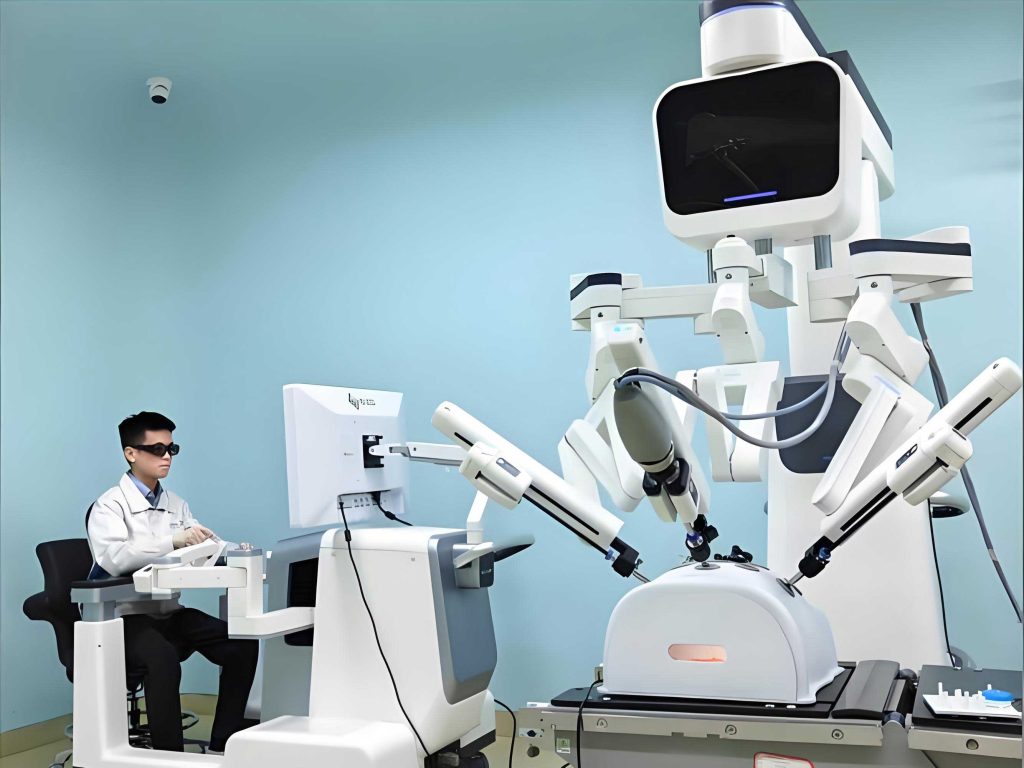
The core challenge stems from the technological triad defining modern AI medical robot systems: Artificial Intelligence, Human-Machine Hybrid Control, and Remote Navigation. Unlike a traditional scalpel or imaging device, an AI medical robot possesses software capable of deep learning and algorithmic decision-making, granting it a degree of operational autonomy. Its function is not solely determined by immediate human command but emerges from a complex, often opaque, interplay between pre-programmed algorithms, learned data, and real-time human input. This medical robot autonomy operates within a hybrid control loop, where a surgeon or technician initiates and oversees actions, but the machine may execute subtasks independently. Furthermore, remote navigation capabilities allow a surgeon to operate a medical robot from a separate location, introducing variables like data transmission latency. These features collectively create a scenario where the cause of an adverse event is multifactorial and difficult to disentangle.
This complexity directly challenges the foundational pillars of traditional tort liability. The law traditionally seeks a responsible human agent whose fault—intent or negligence—caused the harm. With an AI medical robot, the “fault” may be distributed or even reside within the machine’s algorithmic processes. Determining the liable party becomes a puzzle involving multiple potential actors: the medical institution (user/hospital), the device manufacturer (producer), the software/algorithms designer, and potentially others in the supply chain. The legal status of the medical robot itself is ambiguous—is it merely a tool (an object) or could it be considered an agent with some form of derived legal personhood? This ambiguity complicates the selection of the appropriate legal cause of action. Should the case be treated under medical malpractice rules, product liability laws, or perhaps as a case involving ultrahazardous activity? Each path has its own doctrinal hurdles concerning duty, standard of care, defect, and causation.
A critical step in deconstructing this problem is to typologize the potential causes of an accident involving a medical robot. The root cause is rarely singular and often involves a confluence of factors.
| Cause Category | Sub-Type | Description & Example | Traditional Legal Challenge |
|---|---|---|---|
| Human Error | User Error (Medical Staff) | Negligent operation, incorrect data input, or failure to monitor the medical robot appropriately during a procedure. | Fits within medical malpractice, but isolating human error from machine contribution is difficult. |
| Design/Production Error | Flaw in mechanical design, hardware manufacturing, or initial software programming of the medical robot. | Fits within product liability, but algorithmic “defects” are hard to define and prove. | |
| Algorithmic Failure | General Software Malfunction | Bug causing system freeze, loss of feedback, or failure to execute a commanded action. | Comparable to traditional product defect. |
| Machine Learning/Decision Flaw | Bias in training data leading to erroneous diagnostic suggestions, or a flawed decision-making model in an autonomous medical robot. | Novel challenge; defect is in dynamic data/model, not static code. “Black box” problem obscures analysis. | |
| Ethical Algorithmic “Choice” | A robot’s AI, facing an unforeseen critical scenario, executes a harm-minimizing action that nonetheless causes injury (e.g., diverting surgical tool to avoid a major artery, nicking a minor one). | No human intent or negligence. Challenges core premise of fault-based liability. | |
| Hybrid Causation | Human-Machine Interactive Error | A combination where, for instance, a surgeon’s slight tremor is misinterpreted and amplified by the medical robot‘s control algorithm, leading to a severe error. | Extremely difficult to apportion causal contribution and corresponding liability between human and machine agents. |
The table illustrates that while some causes map onto existing legal categories, others, particularly those involving advanced AI behavior, create novel “gaps” in the liability framework. The “black box” nature of many AI systems means that even the designer may not be able to fully explain why a specific decision was made, impeding the causal investigation essential to tort law.
Constructing a Liability Framework for AI Medical Robots
Addressing these challenges requires moving beyond ad-hoc applications of old rules. A coherent liability framework for the age of AI medical robots must be built on clarified legal statuses, defined applicable liabilities, and fair allocation mechanisms.
1. Clarifying Legal Status and Subject
The debate on whether to grant AI or robots legal personhood is intense. For the foreseeable future, the most practical and coherent approach is to maintain that an AI medical robot is a legal object, not a subject. It is a highly advanced tool/product. Granting it personhood is fraught with conceptual and practical issues, primarily its inability to bear moral responsibility or own assets for damage compensation. The chain of liability must ultimately resolve upon human or corporate entities.
However, the traditional product liability chain needs expansion. The medical robot‘s designer—the entity responsible for the core AI algorithms and software ecosystem—must be recognized as a liable party co-equal with the hardware manufacturer. Given the primacy of software in these systems, holding only the manufacturer responsible for algorithmic failures is inequitable and inefficient. Explicitly including the designer in the liability regime ensures that the party with the greatest insight into the system’s logic can be directly accountable and participate in legal proceedings.
2. Defining Applicable Liability Types and Their Triggers
A multi-layered liability approach is necessary, where the applicable rule depends on the primary nature of the failure, as discerned from the typology above.
A. Medical Malpractice Liability (Organizational Fault): When the predominant cause is error by the medical team (user error), standard medical liability principles apply, but with a crucial adaptation. The focus should shift to organizational fault. The hospital or clinic is liable for the systemic failure in the clinical process involving the medical robot, including staff training, procedural protocols, and device monitoring. The plaintiff need only prove treatment occurred and an injury resulted that falls below the accepted standard of care involving such technology. The hospital’s duty is to manage the integrated human-medical robot system safely.
$$ \text{Liability}_{\text{med}} = \exists(\text{Injury}) \land (\text{Standard of Care}_{\text{org}} \text{ not met}) $$
B. Product Liability (Strict Liability for Defects): When the accident stems primarily from a defect in the medical robot itself, product liability rules apply. This must cover manufacturing defects (hardware), design defects (both hardware and software), and inadequate warnings or instructions. A key innovation is needed for evaluating AI design “defects.” We can adopt a “reasonably prudent algorithm” standard, analogous to the “reasonable person” in negligence law. A design defect exists if the algorithm’s performance in the specific context creates an unreasonable safety risk that could have been avoided by a practicable alternative design.
$$ \text{Defect}_{\text{design}} = \text{Risk}_{\text{algorithm}} > \text{Risk}_{\text{alternative}} \land \text{Feasible}_{\text{alternative}} = \text{True} $$
The liable parties are the Manufacturer (M) and the Designer (D), jointly and severally liable for defects within their respective domains.
| Defect Type | Primarily Liable Party | Basis of Liability |
|---|---|---|
| Manufacturing (Hardware) | Manufacturer (M) | Strict Liability |
| Design (Hardware/Software) | Manufacturer (M) & Designer (D) | Strict Liability (Unreasonably dangerous design) |
| Inadequate Warnings/Instructions | Manufacturer (M) & Designer (D) | Fault-Based Liability |
C. Limited Application of Ultrahazardous Activity Liability: For certain high-risk applications of advanced medical robots (e.g., non-experimental autonomous robotic surgery classified as a Class III medical device), a residual strict liability rule akin to that for ultrahazardous activities could serve as a final backstop. This would apply only when no product defect can be proven and organizational fault is absent, yet the inherent high risk of the activity materialized in harm. Liability would fall on the medical institution employing the technology.
$$ \text{Liability}_{\text{ultra}} = \text{High Risk}_{\text{inherent}} \land \text{Injury}_{\text{realized}} \land \neg(\text{Defect} \lor \text{Org. Fault}) $$
3. Allocating Liability and Managing Proof
With multiple potential defendants and complex causation, clear allocation principles and procedural fairness in evidence are paramount.
A. Apportionment Principles:
- Clear Single Cause: If the accident is attributable solely to medical staff error, the hospital bears full liability under medical malpractice. If solely due to a product defect, the Manufacturer and/or Designer bear liability.
- Concurrent Causes (Product Defect & User Error): If both a defect and medical staff negligence substantially contributed, they should be held jointly and severally liable (as concurrent tortfeasors), allowing the victim full recovery from either, with rights of contribution between them.
- Indeterminate Cause (Hybrid/Uncertain): In cases where the exact division of causation between human and machine action cannot be determined, courts should apply a theory of alternative liability or enterprise liability. The hospital, manufacturer, and designer could be held jointly liable unless one proves its conduct could not have caused the harm. This prevents the victim from failing to recover due to evidential opacity inherent to the technology they faced.
This can be modeled as a liability function:
$$ L_{\text{total}} = f(H, R, A) $$
where $L$ is total liability, $H$ is the contributory factor of human error, $R$ is the factor of medical robot autonomy failure, and $A$ is the factor of algorithm/system reliability. The legal framework must define the function $f$ for different causal combinations.
B. Burden of Proof Mitigation: The “black box” problem creates an evidentiary imbalance favoring the technology providers. To ensure fairness, procedural rules must adjust the burden of proof.
- Res Ipsa Loquitur / Prima Facie Case for Gross Defects: If a medical robot exhibits a gross, catastrophic malfunction during normal use (e.g., complete uncommanded movement), the occurrence itself should create a rebuttable presumption of a product defect, shifting the burden of explanation and proof to the manufacturer and designer.
- Access to Evidence (Algorithmic Transparency): Courts must have the power to compel the designer/manufacturer to disclose relevant algorithm logic, training data sets (with privacy protections), and decision logs. Protective orders can safeguard trade secrets while enabling plaintiffs to meet their burden of proof.
- Shifting the Burden for Causation: Once a plaintiff proves a duty was owed (e.g., a surgical procedure was performed) and a harmful outcome occurred that is of the type preventable by proper functioning of the medical robot system, the burden could shift to the defendants (hospital, manufacturer, designer) to prove their respective components were not the substantive cause.
| Situation | Primary Liability Rule | Key Evidentiary Mechanism |
|---|---|---|
| Predominant Human Operator Error | Medical Malpractice (Org. Fault) | Standard proof of breach of standard of care. |
| Predominant Product Malfunction | Product Liability (Strict for Defects) | Presumption for gross malfunctions; compelled disclosure of algorithmic data. |
| Mixed/Uncertain Causation | Joint & Several / Alternative Liability | Burden shifts to defendants to prove non-causation after plaintiff proves basic injury from the system’s operation. |
The advent of the AI-powered medical robot signals a new era in healthcare, demanding an equally evolved legal framework. A fit-for-purpose liability system cannot cling to antiquated distinctions. By clarifying the medical robot‘s status as a sophisticated object, legally elevating its designer alongside its manufacturer, and adopting a multi-modal liability approach with fairness-driven evidence rules, the law can achieve its dual aims: providing just compensation for victims and creating clear accountability incentives for developers and users. This structured approach fosters an environment where innovation in medical robot technology can proceed responsibly, with legal channels ready to address the inevitable complexities of human-machine collaboration in the sacred domain of healing.